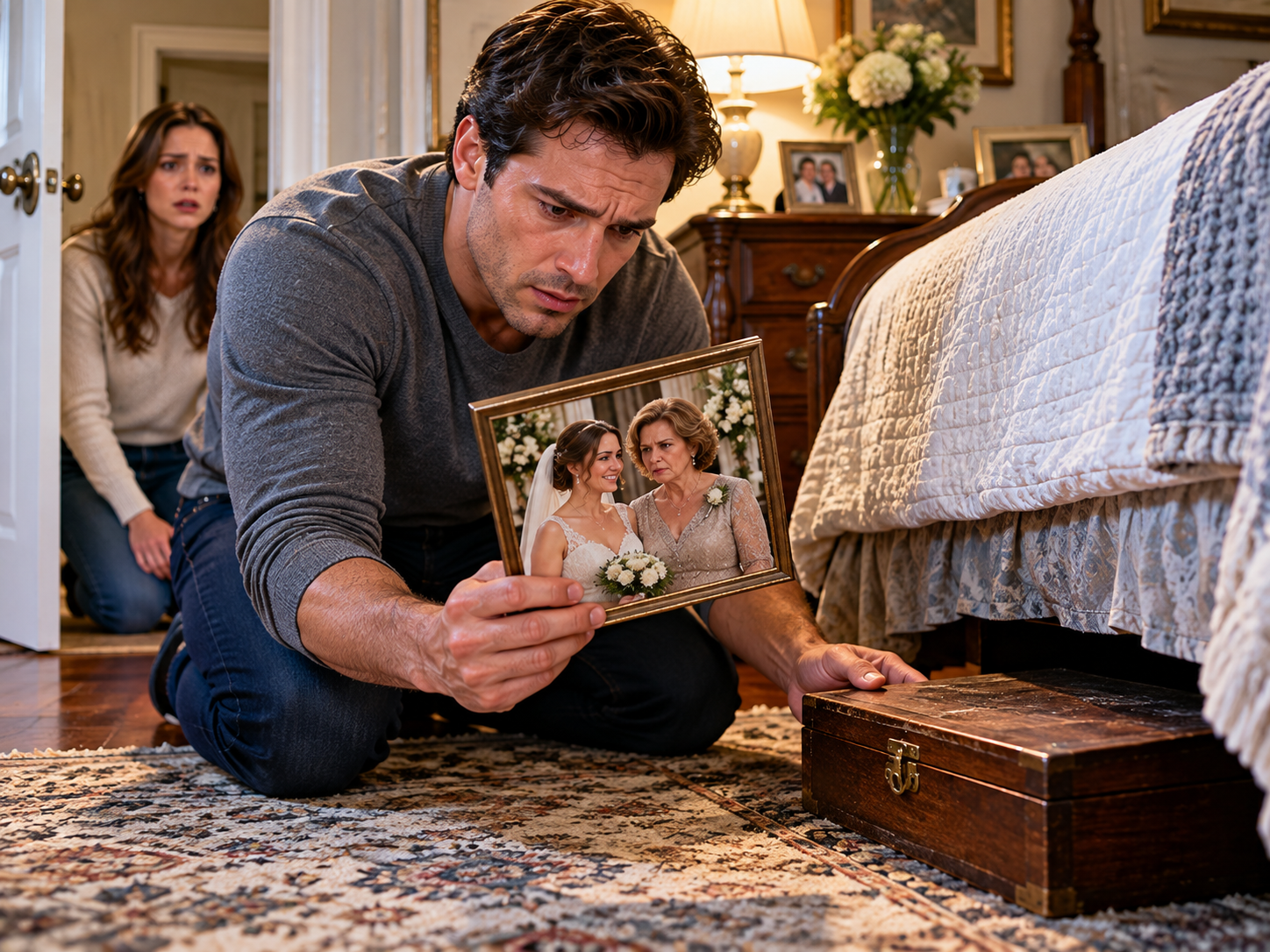
The wooden box had been in our home for many years.
We rarely opened it anymore.
Not because the contents had become unimportant.
Because they had become understood.
The documents had been copied.
The important letters had been preserved.
The medical information had been reviewed.
The photographs had been framed.
The mystery was gone.
The box itself remained.
One morning, our child came to me with a question.
“Can I have it?”
I knew immediately what they meant.
“The box?”
“Yes.”
I looked at it.
Then at them.
“Why?”
“Because it's part of our family.”
I smiled.
“That it is.”
They were old enough now to understand why the box mattered.
Not because it contained something magical.
Not because it held a secret capable of changing their life.
It was simply an object that had once carried information nobody was ready to discuss.
Now it could belong to the next generation.
I picked it up.
The wood was worn smooth.
There were tiny scratches along the edges.
The key to Locker 314 had long since been moved to a separate archival envelope.
The box itself was empty except for copies of a few letters and photographs.
“Take it,” I said.
Our child looked surprised.
“Really?”
“Yes.”
“You're not keeping it?”
“No.”
“Why?”
“Because protecting something doesn't mean holding it forever.”
They smiled.
Claire was watching from the doorway.
She understood.
The moment was larger than the box.
It was the opposite of what my mother had done.
She had hidden information because she feared what would happen if I knew.
I was giving information away because I trusted our child to decide what it meant.
That was the difference between control and protection.
Before they left, I gave one instruction.
“Keep the original documents with the family archive.”
“I will.”
“And if you ever need to make a decision about your health, talk to your doctor.”
“I know.”
“And talk to us.”
“I know.”
“And don't—”
They laughed.
“Dad.”
I stopped.
“Okay.”
Claire smiled.
“You're becoming Grandma.”
I stared at her.
“That is cruel.”
She laughed.
Our child carried the box upstairs.
I watched them go.
For a moment, I felt the strange ache parents feel when they realize a child no longer needs every answer from them.
It was not sadness exactly.
It was the awareness that protection had an expiration date.
You could walk beside someone.
You could teach them.
You could warn them.
But eventually, they had to hold the information themselves.
That evening, our child returned.
“I read Grandma's letter.”
I looked up.
“What did you think?”
“She loved you.”
“Yes.”
“She was scared.”
“Yes.”
“She was wrong.”
“Yes.”
“And you still love her.”
“Yes.”
Our child nodded.
“I think I understand.”
I smiled.
“What do you understand?”
“That people aren't one thing.”
I leaned back.
That was exactly it.
My mother had not been simply loving.
Or simply controlling.
Or simply afraid.
She had been all those things.
Our child had grown up with enough distance to see that without carrying the original anger.
I wondered whether that was what healing looked like.
Not forgetting.
Not rewriting.
Seeing clearly.
A few weeks later, our child asked about Claire's mother.
“What do you remember about her?”
Claire looked surprised.
“I remember very little.”
“Anything?”
“A voice.”
She smiled.
“Sometimes a smell. Her perfume. The way she used to hum while cooking.”
Our child listened.
“Were you close?”
“I was young.”
Claire looked toward the photograph.
“But I remember feeling safe with her.”
Our child nodded.
“That's enough.”
Claire smiled.
“Yes.”
Later that evening, I asked Claire whether she ever wished she had known more.
“About your mother?”
“No. About yours.”
Claire thought.
“Sometimes.”
“Do you regret not asking more when you were younger?”
“I was too young to know what questions to ask.”
That answer stayed with me.
It was another reason children needed adults to communicate.
You cannot demand questions from someone who does not know what they do not know.
My mother had waited for me to ask.
I had been too young.
Then I had been too confused.
Then she had died.
Silence had filled the gap.
We had spent years trying to cross it afterward.
I did not want our child to inherit that kind of silence.
Not because every family conversation needed to be serious.
Most didn't.
But important truths should not depend entirely on someone asking the perfect question.
That became another family principle.
If something matters, say it.
The following year, we celebrated a milestone in our child's life.
The house filled with relatives.
There were speeches.
Photographs.
Food.
Laughter.
At one point, someone asked me to say a few words.
I stood.
I looked at Claire.
Then at our child.
Then at the photographs on the wall.
I could have told the obvious story.
How proud we were.
How quickly time had passed.
How our child had grown.
Instead, I talked about uncertainty.
Not in a frightening way.
In an honest one.
“I used to think parents protected their children by knowing everything,” I said.
Claire smiled because she knew where I was going.
“I was wrong.”
Everyone listened.
“I learned that protection is sometimes giving someone enough information to make their own decisions. It means admitting when you don't know. It means asking instead of assuming. And sometimes it means stepping back.”
Our child looked at me.
I continued.
“My mother taught me that lesson in the hardest possible way.”
There was a pause.
“She made mistakes because she was afraid. But those mistakes taught me what I don't want to repeat.”
I looked at Claire.
“And the person who helped me understand that was the woman my mother once warned me against.”
Claire smiled.
The room laughed softly.
I raised my glass.
“To the people who teach us.”
The celebration continued.
Later, our child found me outside.
“That speech was about Grandma.”
“Yes.”
“Were you trying to make everyone forgive her?”
“No.”
“Then why talk about her?”
“Because she was part of how I became your father.”
Our child looked at me.
“That makes sense.”
We stood together quietly.
Then they asked, “Are you afraid of me growing up?”
I laughed.
“Yes.”
“Why?”
“Because I love you.”
“That doesn't make sense.”
“It doesn't have to.”
They smiled.
“Are you going to become controlling?”
“I'll try very hard not to.”
“Mom won't let you.”
I laughed.
“That is also true.”
Inside, Claire called us.
We went back in.
The evening continued.
Years later, I would remember that conversation more clearly than the speech.
Because it was another moment when I could have chosen control.
Instead, I chose honesty.
I was afraid.
I said so.
That was enough.
The wooden box eventually moved into our child's home.
The archive remained with us.
The photographs remained on the wall.
The family story continued.
And the secret beneath my mother's bed became something different.
It was no longer a secret.
It was a lesson.
A reminder that information hidden out of love could still cause pain.
A reminder that fear should be named rather than disguised.
A reminder that families inherit more than blood.
They inherit habits.
Silences.
Stories.
And choices.
We could not choose what our parents had passed down to us.
But we could choose what we passed forward.
That was the freedom my mother had never understood.
And the freedom I wanted our child to have.
Click here to continue reading: PART 19: I Thought the Family Story Was About My Mother and My Wife, Until I Realized It Was Really About What Every Generation Chooses to Do With Fear
My Mother Warned Me Before the Wedding, Yet Two Years Later Her Empty House Held a Secret She Had Never Trusted Me Enough to Reveal
Part 18 of 20