
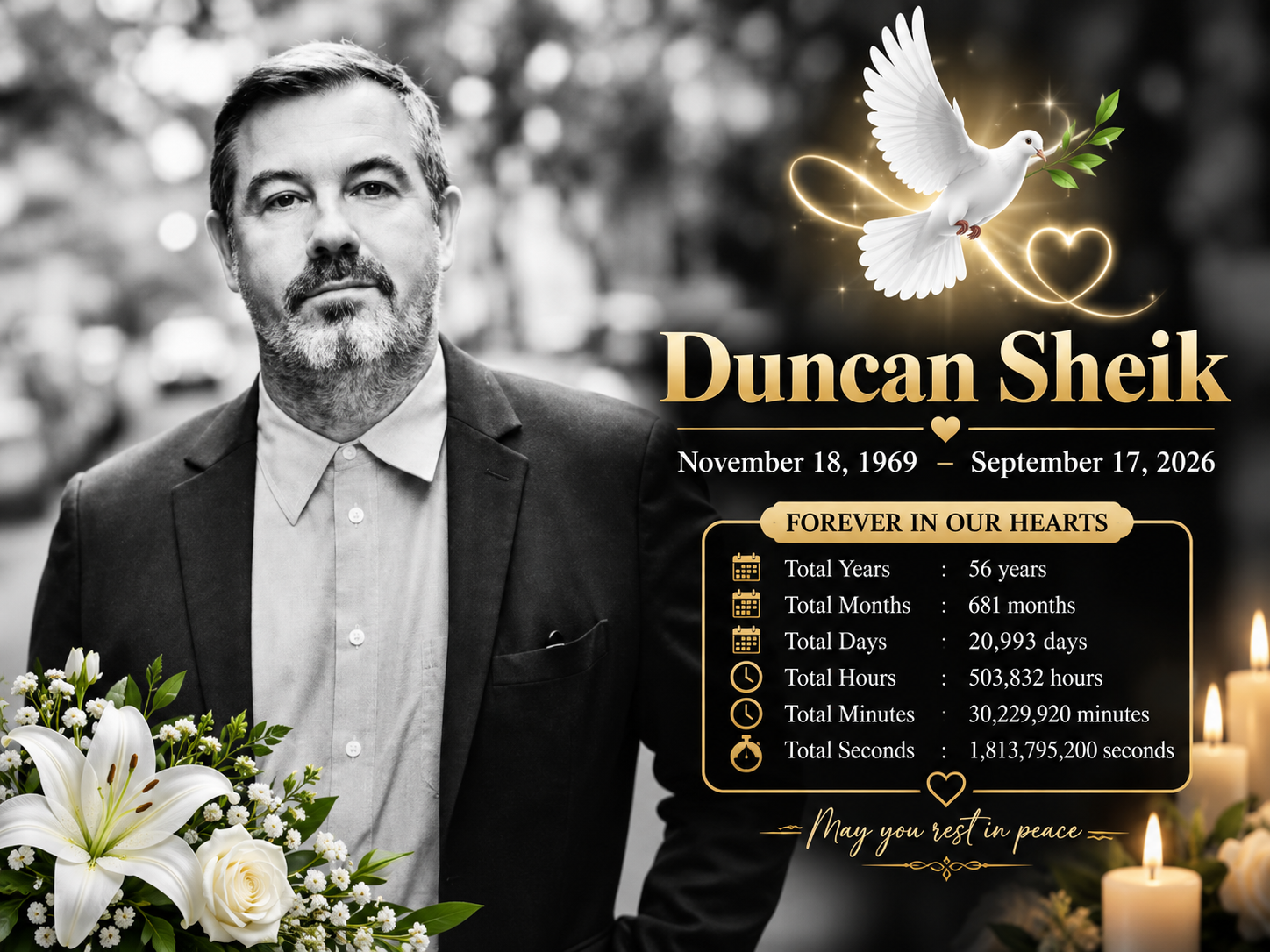
Duncan Sheik’s death did not create a single definitive “last work.” Instead, it left several projects at different stages of completion. Some had already been released. Some were fully prepared for performance. Others belonged to a wider catalog that could potentially be revisited. The difference matters because artistic careers rarely end with one perfectly positioned final statement.
Claptrap, released in 2022, was his final studio album released during his lifetime. By then, his relationship with popular music had changed substantially from the period when “Barely Breathing” dominated radio. The album’s ambient electronic character reflected a musician who had spent decades exploring sounds beyond the singer-songwriter format that first made him famous. ([Broadway.com][1])
The distance between the two records was more than twenty-five years. His debut album had introduced his voice to a mass audience. Claptrap arrived after years of theatrical composition, collaborations and experiments. The contrast does not mean that one period replaced the other. It shows how much musical territory Sheik had crossed.
His theater work became the more visible expression of that expansion. Spring Awakening was followed by projects such as American Psycho, Alice by Heart, The Secret Life of Bees, Whisper House and others. Broadway.com’s obituary also lists Because of Winn-Dixie, Bob & Carol & Ted & Alice, Noir and additional projects among his theatrical credits. ([Broadway.com][1])
Those titles represent different genres and different dramatic environments. Sheik was not writing the same musical repeatedly under different names. Each required new decisions about sound, character and structure. The variety itself became part of his professional identity.
American Psycho was particularly revealing because it demonstrated that a major Broadway composer could move into material far removed from the emotional world of Spring Awakening. The project was based on Bret Easton Ellis’s controversial novel and had first been produced at London’s Almeida Theatre before reaching Broadway in 2016. Sheik supplied music and lyrics while Roberto Aguirre-Sacasa wrote the book. ([Broadway.com][1])
The production had a relatively short Broadway life, but its existence still mattered to the trajectory of his work. It showed that he remained willing to take on challenging material rather than treating the Tony-winning Spring Awakening score as a template that had to be repeated.
The same can be said of Alice by Heart. Developed with Steven Sater, the musical brought the Alice in Wonderland material into the context of wartime London. The setting changed, the characters changed and the dramatic questions changed. The partnership between Sheik and Sater therefore continued beyond the musical that had first made their names inseparable.
The Secret Life of Bees introduced another creative team, with Sheik working alongside lyricist Susan Birkenhead and book writer Lynn Nottage. It premiered at Atlantic Theater Company in 2019. Again, the composer entered a story already carrying its own literary history and had to create music capable of giving the stage version an independent identity. ([Broadway.com][1])
Memoirs of Amorous Gentlemen extended that pattern into his final period. The source material was Moyoco Anno’s manga, while Leah Nanako Winkler wrote the book. Rob Ashford directed and choreographed. Or Matias served as musical supervisor. The production had its own cast and immersive venue. Sheik’s contribution was music and lyrics, but the final theatrical experience belonged to the entire company. ([Memoirs of Amorous Gentlemen][2])
Because performances were scheduled only days after his death, the production became the most immediate example of his work continuing without him. There was no opportunity to regard the project as something that would happen someday after a long period of reflection. It was already scheduled, already rehearsed and already moving toward its audience.
The official production website continued to list performances from September 25, 2026, through January 3, 2027. That schedule demonstrates the practical reality of theater after an artist’s death: the production has its own life, independent of the personal timetable of its creator. ([Memoirs of Amorous Gentlemen][2])
The work’s content also made it distinct from Sheik’s best-known earlier material. The official description places the action in a Paris maison close and follows Colette as she confronts the difference between being observed and becoming the author of her own story. That emphasis on writing and perspective creates another connection to Sheik’s career as a composer working through other people’s narratives. ([Memoirs of Amorous Gentlemen][2])
But it would be too easy to turn that connection into a hidden message from Sheik. There is no evidence that he designed the musical as a statement about his own mortality. The production was simply a work he was creating with collaborators. Its later circumstances are dramatic because of what happened afterward, not because the story was secretly predicting his death.
That distinction protects the biography from becoming fiction. His life already contains enough genuine reversals without inventing signs that were never documented. His rise from a relatively private young musician to a major pop name was real. His move from pop into theater was real. His awards were real. His final hospitalization and death were real. The rest should remain within the evidence.
The evidence also shows that Sheik’s personal interests extended beyond his professional credits. He practiced Buddhism and spoke publicly about its influence on his understanding of human experience. In a Washington Post interview, he described the inspiration he drew from Buddhist ideas about different states of being while discussing Spring Awakening. ([The Washington Post][7])
That perspective offers a useful way to understand why his music could move between emotional extremes. Spring Awakening does not remain in one mood. Its characters experience desire, shame, anger, confusion, tenderness and grief. Sheik’s score gives those states different musical forms.
Yet his work cannot be reduced to Buddhism either. His influences included alternative and experimental musicians, his academic training, his classical exposure through his grandmother and his years of listening to popular music. Artistic identity is rarely produced by one influence.
His relationship with fame was similarly complicated. The enormous success of “Barely Breathing” placed him in a category he had not expected. He later described a sense of cognitive dissonance between the person he understood himself to be and the context in which the music industry suddenly placed him. The theater career allowed him to shift the center of attention from celebrity performance toward composition. ([The Washington Post][7])
That shift did not make him invisible. Winning Tony Awards made him highly visible within theater. But the visibility was different. A composer can become famous for the work without being the person audiences watch for two hours. Sheik’s music could fill a theater while another actor occupied the emotional center of the scene.
That may be why his legacy now belongs to several communities at once. Pop listeners know “Barely Breathing.” Broadway audiences know Spring Awakening. Musicians know the singer-songwriter catalog. Theater professionals know his later scores. Collaborators remember particular rehearsals, performances and projects.
His family remembers something else entirely. Public reports identified Nora Ariffin, their daughter Ines, his parents and his half-siblings among those who survived him. Those relationships cannot be reconstructed from his public career, and they should not be turned into invented scenes. What can be said is that his public legacy existed alongside a private family life. ([Broadway.com][1])
The final medical events should also remain factual. He had been in and out of hospitals during the month before his death, according to reporting. On September 17, he died in Manhattan. Major outlets reported organ failure or cardiac arrest based on family information, with some accounts describing the medical sequence differently. The public record does not justify adding an unsupported diagnosis. ([The Guardian][3])
That restraint is especially important because Sheik’s death came at only 56. A younger death can create pressure to search for a single explanation. But the available reporting already supplies the essential fact: a serious medical crisis preceded his death, and his family disclosed the cause only in limited terms.
His artistic story, by contrast, is unusually well documented. There is a clear progression from Glen Ridge to Brown University, from Los Angeles to a recording contract, from “Barely Breathing” to Spring Awakening, and from Broadway success to later experimental theater and music. The path was not straight, but the major turns are visible.
One of those turns was his decision to remain active after the first major wave of fame had passed. Many artists become trapped by the expectation that their second success should resemble their first. Sheik’s catalog shows a different approach. He allowed the medium itself to change.
That choice created risks. Not every project could become Spring Awakening. Not every album could repeat the commercial impact of “Barely Breathing.” But a career built entirely around repeating a past success would have produced a much smaller body of work.
Instead, Sheik left unfinished possibilities. Memoirs of Amorous Gentlemen was one. The new Spring Awakening production was another. Future revivals and recordings may bring other pieces back into public attention, but no one can know which works will matter most to audiences decades from now.
That uncertainty is part of the honest ending. A biography can document what Sheik accomplished, but it cannot dictate how history will rank the individual works. It can identify awards, chart positions, productions and collaborations. It cannot responsibly turn those facts into a score for an artistic life.
What can be stated is that his career crossed boundaries that were often treated as separate. He moved between popular recording and musical theater. He wrote for himself and for actors. He worked with established collaborators and younger performers. He created commercially successful music and material that existed farther from the mainstream.
His death therefore leaves behind not one legacy but a collection of works with different kinds of futures. “Barely Breathing” remains a recording. Spring Awakening remains a stage musical. His later scores remain available for future productions. His albums remain part of his discography. His collaborations remain part of the histories of the people who worked with him.
The final chapter was never designed to close all of those doors. Sheik died before he could see the full public life of his newest work. That is the clearest unresolved fact in the story.
And perhaps that is where a factual biography should leave him: not with an invented final message, but with a body of work that had already moved beyond the moment of its creator’s death.
Click Here to continue read next: PART12: Duncan Sheik’s name now belongs to the record of American music and theater, while every future performance decides how his unfinished artistic story will be heard
Days before new work was supposed to reach New York audiences, Duncan Sheik’s story suddenly ended, leaving behind a career that had begun far from Broadway
Part 11 of 16

