
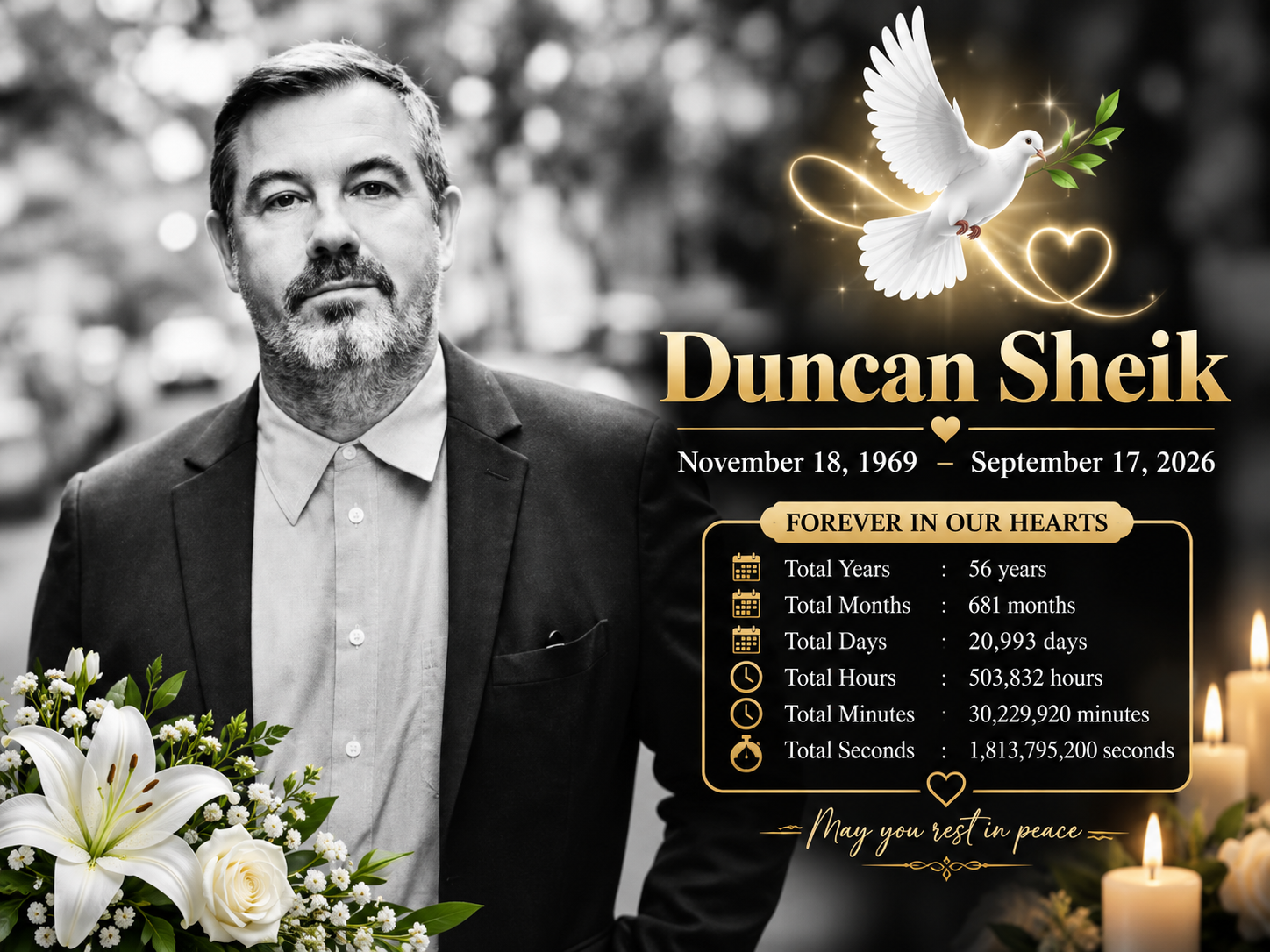
The first days after Duncan Sheik’s death brought an unusual situation for the theater community. His death was still fresh, yet several of his projects were already moving toward performances that could not simply be postponed forever. Rehearsals, contracts, musicians, actors and production schedules existed independently of the composer’s final days. His absence therefore arrived not at the end of a completed chapter, but in the middle of an artistic process. That circumstance made the question of legacy immediate rather than abstract: who would carry the work forward when its creator was no longer available to make another decision?
Memoirs of Amorous Gentlemen was the clearest example. The new musical, with music and lyrics by Sheik and a book by Leah Nanako Winkler, was based on Moyoco Anno’s manga graphic novel. Rob Ashford was directing and choreographing, with Or Matias serving as musical supervisor. Performances were scheduled to begin September 25, only eight days after Sheik’s death, at the Night Egg at the Culture Club in New York. Opening night was scheduled for October 15, with the engagement announced to continue into January 2027. ([DKC/O&M][1])
The production had already reached the point where Sheik’s music belonged to a company of artists. Sophia Anne Caruso was announced as Colette, with Cory Jeacoma as Léon, Nkeki Obi-Melekwe as Nana, Andy Bakun as Sakae and Jenny Powers as Madame. The production also included a larger ensemble. Those performers had to step onto a stage carrying material whose author could no longer sit in the room, hear a rehearsal and make a small alteration to a melody or lyric.
That distinction is easy to overlook when discussing a composer’s death. A finished recording can remain exactly as it was made. Theater is different. A musical is repeatedly interpreted. A director may change pacing. An actor may discover an unexpected emotional emphasis. A musical supervisor may adjust an arrangement for a particular performer. The work continues to breathe through people who did not create it. Sheik had spent much of his career working within precisely that environment, and now his own absence became part of the circumstances surrounding a new production.
The timing was particularly striking because Memoirs of Amorous Gentlemen was not a revival of an old success. It was a new work. Sheik had therefore been looking forward rather than merely revisiting his past. His career had begun with a pop record that made him famous in 1996, then moved through albums, theater projects and collaborations. The new musical represented another step in that continuing process. Its arrival after his death would not prove what he might have thought of its eventual reception, but it would demonstrate that his creative activity had continued almost to the end.
The other major production awaiting audiences was Spring Awakening. The musical that had transformed Sheik’s professional identity was scheduled for a new Off-Broadway production in November 2026. The original Broadway production had opened in 2006, won eight Tony Awards in 2007 and later received a Broadway revival in 2015. A new generation of performers was preparing to encounter the score again, twenty years after the original production first introduced it to Broadway audiences. ([Monorepo Sample1][2])
That recurrence gave the story an unusual shape. Sheik’s newest work was arriving almost simultaneously with a new version of the work that had established him as a major theater composer. One project represented the future of his writing; the other demonstrated that his earlier work remained capable of being reinterpreted. Neither needed his physical presence to exist, yet both carried evidence of decisions he had made years or months earlier.
Spring Awakening also preserved the partnership that had been essential to Sheik’s theater career. Steven Sater wrote the book and lyrics, while Sheik composed the music. Their collaboration had produced a musical that connected contemporary rock sounds with a story set in 19th-century Germany. The partnership mattered because neither man was simply adapting the other’s finished material. The score and words were built to operate together, allowing the characters’ emotional conflicts to emerge through music.
The original show’s success had been unusually broad. It won Best Musical at the Tony Awards, while Sheik and Sater received the Tony for Best Original Score, and Sheik also won for orchestrations. The original cast recording later received a Grammy for Best Musical Show Album. Those awards established a documented professional achievement, but they did not explain why the work continued to attract productions. That answer belonged partly to the score itself and partly to the changing generations of performers who continued to discover it. ([Reuters][3])
For younger performers, Sheik’s name could therefore mean something different from what it meant to listeners who first heard “Barely Breathing.” To one audience, he was the quiet singer behind a long-running 1990s radio hit. To another, he was the composer whose music gave Spring Awakening its contemporary sound. To theater artists, he could also be the person behind American Psycho, Alice by Heart, The Secret Life of Bees and other stage projects.
His career was not a clean progression from success to greater success. American Psycho, for example, received attention for its unusual material and music but closed relatively quickly during its 2016 Broadway run. That outcome did not erase the work. It became another piece of evidence that Sheik’s theatrical career was defined by experimentation as much as by awards. His willingness to enter projects with uncertain commercial outcomes separated the later composer from the expectations surrounding the singer who had once been measured by radio charts.
That willingness also appeared in his recording career. Sheik did not stop making albums after theater became his principal public association. He released Covers 80s in 2011, revisiting songs connected to British artists of the 1980s, and later released Claptrap in 2022. The latter was described as an ambient electronic work, showing how far his sound had moved from the straightforward presentation of his first album. His final studio recording therefore belonged to the same pattern that had marked much of his career: movement rather than repetition. ([Monorepo Sample1][2])
The public record also contains a revealing statement from Sheik about the relationship between an artist and finished work. In a 1997 interview, he discussed the “death-of-the-author” idea, expressing the view that once a cultural product is released into the world, it no longer remains attached entirely to its creator. That idea becomes especially striking after his death because so much of his later career was built around collaborative forms in which ownership of the final experience was naturally divided among writers, actors, directors, musicians and audiences. ([Monorepo Sample1][2])
That philosophy did not mean that Sheik’s intentions became irrelevant. A composer still makes decisions about melody, rhythm, instrumentation and dramatic timing. But once the score reaches performers, interpretation begins. A note can be played differently. A phrase can acquire a new emotional weight. A song written for one historical moment can suddenly sound different when performed by people living in another.
Spring Awakening had already demonstrated this before Sheik’s death. Its 2015 Broadway revival showed that a musical written a decade earlier could be reconstructed with a new company. The 2026 production extended that process again. The score had survived not because it was frozen, but because it could be inhabited by different performers. Sheik’s death did not create that quality. It made the quality impossible to ignore.
The same principle applied to his final musical. Memoirs of Amorous Gentlemen had been developed with collaborators who knew the work from the inside. Winkler had written the book. Ashford was responsible for direction and choreography. Matias was handling musical supervision. The cast had been assembled. The production had a venue and dates. Sheik’s role remained visible in the music and lyrics, even though the person who had written them was gone.
His family’s public statement after his death emphasized that he was more than an artist. He was described as a father, husband, son, brother and friend, and the statement remembered the personal qualities people close to him associated with him. Public tributes from performers connected to Spring Awakening similarly emphasized relationships and memories rather than merely listing awards. Those recollections belong to the people who experienced them, but they help show the human network surrounding the work. ([People.com][4])
Sheik was survived by his wife, Nora Ariffin, and their daughter, Ines, as well as his parents and half-siblings Peter and Kacie. His family therefore faced the same separation between public mourning and private grief that often follows the death of a well-known artist. The public could count albums, awards and productions. The family knew a person whose life could not be reduced to a discography or theater résumé. ([Monorepo Sample1][2])
The distinction became even more important because Sheik’s death followed a period of hospitalization. In August 2026, he had publicly indicated that he would rather have been home making music. By September, his family announced that he was receiving medical care and was in critical but stable condition. The next public announcement was his death on September 17. Contemporary reports have differed in how they described the medical cause, with some reporting cardiac arrest and others reporting organ failure; the public record does not justify adding a more specific underlying diagnosis than those reports provide. ([The Guardian][5])
The speed of those final developments explains why the scheduled productions felt so immediate. There was no long public period in which audiences could watch Sheik gradually withdraw from professional life. Instead, the calendar continued moving while his health changed. Rehearsal schedules did not know what would happen. Theater contracts did not pause because a composer was hospitalized. The work had to be considered on its own terms.
That was perhaps the most difficult form of continuity. The people around the productions had to distinguish mourning from rehearsal. A score could carry memories of its composer while still needing to be performed with precision. A cast could grieve and still have to learn entrances, harmonies, choreography and scene transitions. The audience would eventually arrive expecting a musical, not a memorial service.
The coming performances therefore represented neither a substitute for Sheik nor a final judgment on his career. They were simply the next stage in the life of works he had already created. That distinction preserved something important about his own artistic philosophy: the work could leave the author and continue through other people.
By late September, the first of those works was preparing to meet its audience. Sheik would not be there to hear the opening notes. But the songs he had written were already inside the production, carried by actors and musicians who had their own responsibility to the material.
His absence could not be repaired. It could only be acknowledged. And once the curtain rose, the question would no longer be whether Duncan Sheik was present. The question would be what his music sounded like when other people carried it into the room.
Click Here to continue read next: PART6: Beyond the famous song and the Tony Awards, Duncan Sheik’s later years reveal an artist still changing direction when the world expected him to repeat himself
Days before new work was supposed to reach New York audiences, Duncan Sheik’s story suddenly ended, leaving behind a career that had begun far from Broadway
Part 5 of 16

