
When Spring Awakening returned to New York in 2026, it carried a history that stretched back twenty years. The original Broadway production had opened in December 2006 after an earlier Off-Broadway run at the Atlantic Theater Company. Michael Mayer directed the original Broadway staging, while Duncan Sheik and Steven Sater supplied the musical foundation that turned Frank Wedekind’s 19th-century drama into a contemporary rock musical. ([Broadway.com][1])
The original production had become a launching point for several young performers. The cast included Jonathan Groff, Lea Michele and John Gallagher Jr., among others. For those actors, the musical became part of their professional histories. For Sheik, it became the work through which many theater audiences would know him from then onward.
The 2026 production belonged to another generation. Directed by Danya Taymor, it was scheduled to begin Off-Broadway performances at Studio Seaview on November 27. Vanity Fair reported that the cast was largely under 26, meaning some performers were younger than the musical itself. The casting process reportedly drew about 2,500 hopefuls. ([Vanity Fair][4])
That fact changed the atmosphere around the revival without changing its basic purpose. The production was not created solely to commemorate Sheik. It was being staged because the musical remained part of the theatrical repertoire. The performers had their own work to do, their own characters to develop and their own interpretation of the score to discover.
Yet Sheik’s absence could not be separated from the production’s history. The original composer would not attend rehearsals, watch previews or hear the audience response. There would be no possibility of a last-minute conversation in which he explained a chord or reconsidered a musical phrase.
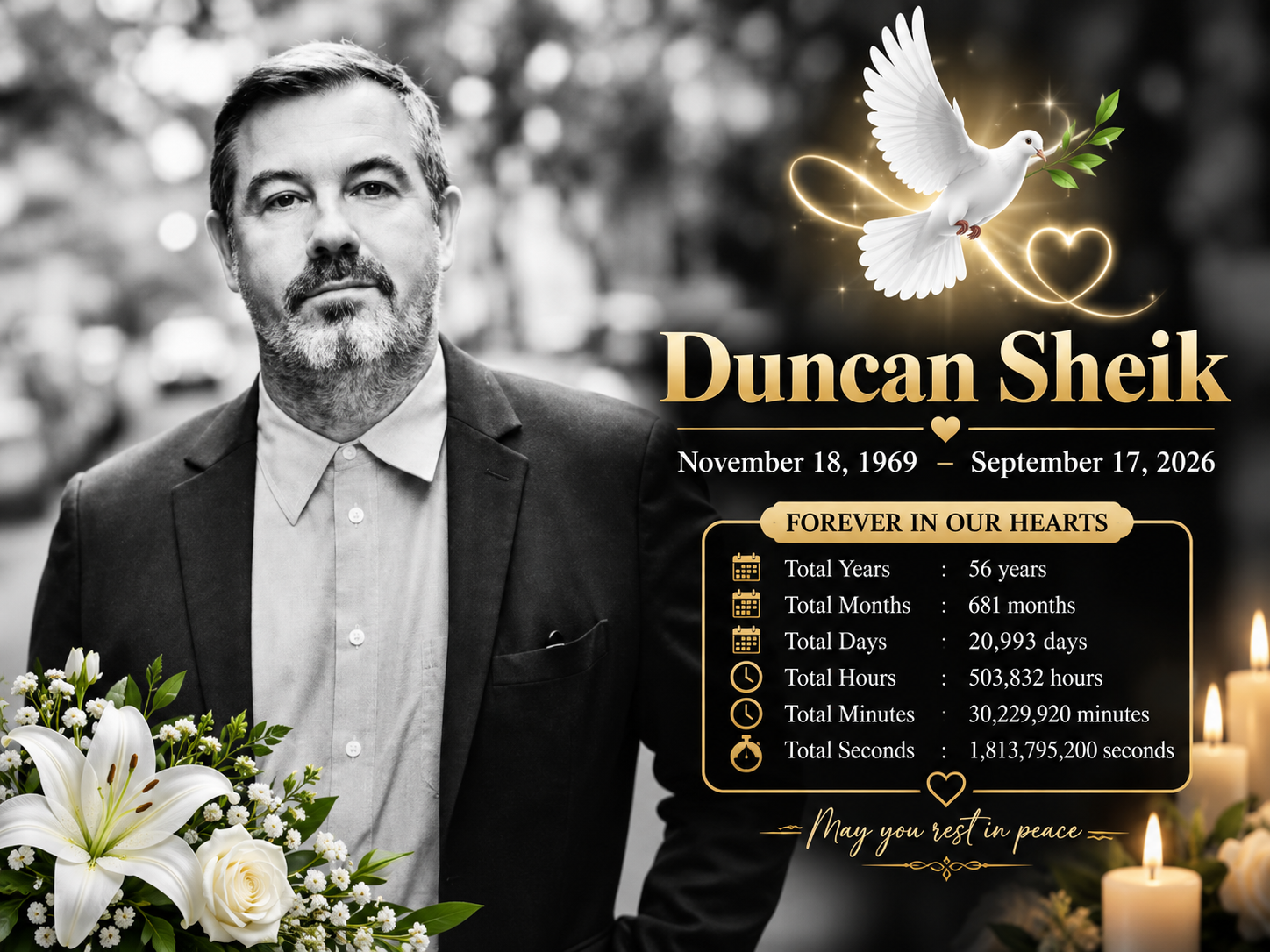
That absence is different from the ordinary distance between a historical work and its creator. Many composers of older musicals are already gone when new productions appear. In Sheik’s case, the gap was created abruptly. The 2026 production was being prepared while he was still alive, and his death occurred only weeks before its scheduled opening.
The score therefore crossed a boundary almost overnight. Before September 17, it was the work of a living composer. After September 17, it was also part of the catalog of a deceased artist. The notes had not changed. The historical circumstances had.
This is one reason the phrase “legacy” can be misleading if it suggests that an artist’s work becomes fixed immediately after death. In reality, the meaning of a work can keep changing. New casts may discover different relationships between characters. Directors may emphasize different elements. Audiences may bring contemporary concerns that earlier audiences did not have.
Spring Awakening was already built for that kind of movement. Its story concerns young people whose access to information is restricted by adults. Its music uses contemporary rock language against a historical setting. That structure makes it possible for different generations to hear their own questions inside the same material.
Sheik’s role was to create the music that carried those questions. He did not write the historical play itself. Wedekind’s original drama provided the source material. Sater adapted the story and wrote lyrics and book. Mayer shaped the original Broadway staging. The performers embodied the characters. The final work emerged from all of those contributions.
That collaborative history prevents the musical from being reduced to a single person. Sheik was indispensable to its sound, but he was not the only creator. His death therefore did not erase the identities of the other artists involved. It changed the circumstances in which they and their successors continued working.
The 2026 cast also represented a practical transfer of responsibility. A young performer who had never worked with Sheik would now sing a song he had written decades earlier. That performer could not ask him how to approach the melody. Instead, the answer had to come from the score, the director and the actor’s own interpretation.
The process is ordinary in theater, but Sheik’s recent death made it unusually visible. A musical survives because people repeatedly learn it from people who learned it before them. Every revival is therefore partly an act of inheritance.
The same process had happened during the 2015 Broadway revival, which incorporated American Sign Language through Deaf West Theatre. That production demonstrated that Spring Awakening could be transformed without abandoning the underlying music and story. The 2026 production represented another transformation, with a younger company approaching the material from another moment. ([Broadway.com][1])
Sheik had once described Spring Awakening as a work that kept giving back to him. That comment became especially poignant after his death because the musical continued to do exactly that without requiring new music from its creator. It could produce new experiences simply by being performed again.
The distinction between creation and continuation is central to Sheik’s later legacy. His job was to create. The work of future artists is to continue, reinterpret and sometimes challenge what he created. Those are different responsibilities.
His other theater projects may follow the same path, though their futures cannot be predicted. American Psycho, Alice by Heart, The Secret Life of Bees, Whisper House and other works belong to the catalog now available to future theaters and artists. Some may return often; others may be revived less frequently. The historical record does not justify predicting which will become the most enduring.
The music from his albums faces another kind of afterlife. “Barely Breathing” is preserved through its original recording, which means Sheik’s voice remains directly available to listeners. The song can be heard without requiring a new performer to reconstruct it.
That permanence is different from theatrical longevity. A recording preserves one moment. A musical preserves a structure that can be repeatedly re-created. Sheik therefore left behind two distinct kinds of artistic survival.
His 2022 album Claptrap adds another layer. It was the final studio album released during his lifetime, but nothing about its existence suggests that he had intended it as a farewell. It was simply another recording in a career that had continued to evolve. Calling it a “final album” is accurate only because no later studio album was released before his death.
The same caution applies to his final musical projects. Memoirs of Amorous Gentlemen was not announced as a farewell work. Spring Awakening was not intended to be his final production. They became final chapters only because his life ended before their full public life could unfold.
That difference matters emotionally and historically. A planned farewell contains deliberate closure. Sheik’s final projects contained none. They were part of an ongoing career, and the interruption came from outside the artistic plan.
His family had also kept details of his medical condition private. On September 17, a statement said he was receiving medical care and was in critical but stable condition. The death announcement followed later. The public therefore saw only a narrow window into the final stage of his illness. ([CBS News][5])
Major news organizations subsequently reported organ failure or cardiac arrest as the cause, with some wording the medical sequence differently. The most responsible account remains tied to the family-reported information rather than speculation about a more detailed diagnosis. ([Los Angeles Times][6])
The clarity returns when the story moves back to his professional life. He was 56. He had been working on new theater. He had released music as recently as 2022. He had maintained relationships with collaborators from different generations. His artistic career had not entered a dormant period.
That makes the 2026 Spring Awakening production more than a simple revival. It becomes a record of how an artwork can move beyond its maker while remaining recognizably connected to him. Every new performer becomes another link between the composer’s original work and an audience he could never meet.
The production also allows Sheik’s earliest theatrical ambitions to remain visible. The man who once felt constrained by the expectations attached to “Barely Breathing” had found a form in which he could write for characters rather than only for himself. Twenty years later, those characters were still waiting for new actors.
The new cast would not reproduce the original performances exactly. That would be impossible and undesirable. Their job was to create their own version within the boundaries of the material. In doing so, they would demonstrate the very independence that makes theater a living art.
The audience would therefore encounter two timelines simultaneously. One belonged to 2006, when Sheik’s score first reached Broadway. The other belonged to 2026, when a new generation inherited it after his death. The distance between those moments was the distance of an entire artistic career.
In that space were albums, awards, disappointments, experiments, collaborations, family life and unfinished projects. The score remained only one part of that history, but it was the part capable of speaking directly through the new performers.
And so the composer’s absence became inseparable from the continuation of his music. The stage could not bring him back. It could do something more ordinary and more lasting: perform what he had written.
Click Here to continue read next: PART11: The final chapter was never meant to be final, because Duncan Sheik left behind new music, unfinished possibilities and collaborators who had to carry the work forward
Days before new work was supposed to reach New York audiences, Duncan Sheik’s story suddenly ended, leaving behind a career that had begun far from Broadway
Part 10 of 16

