
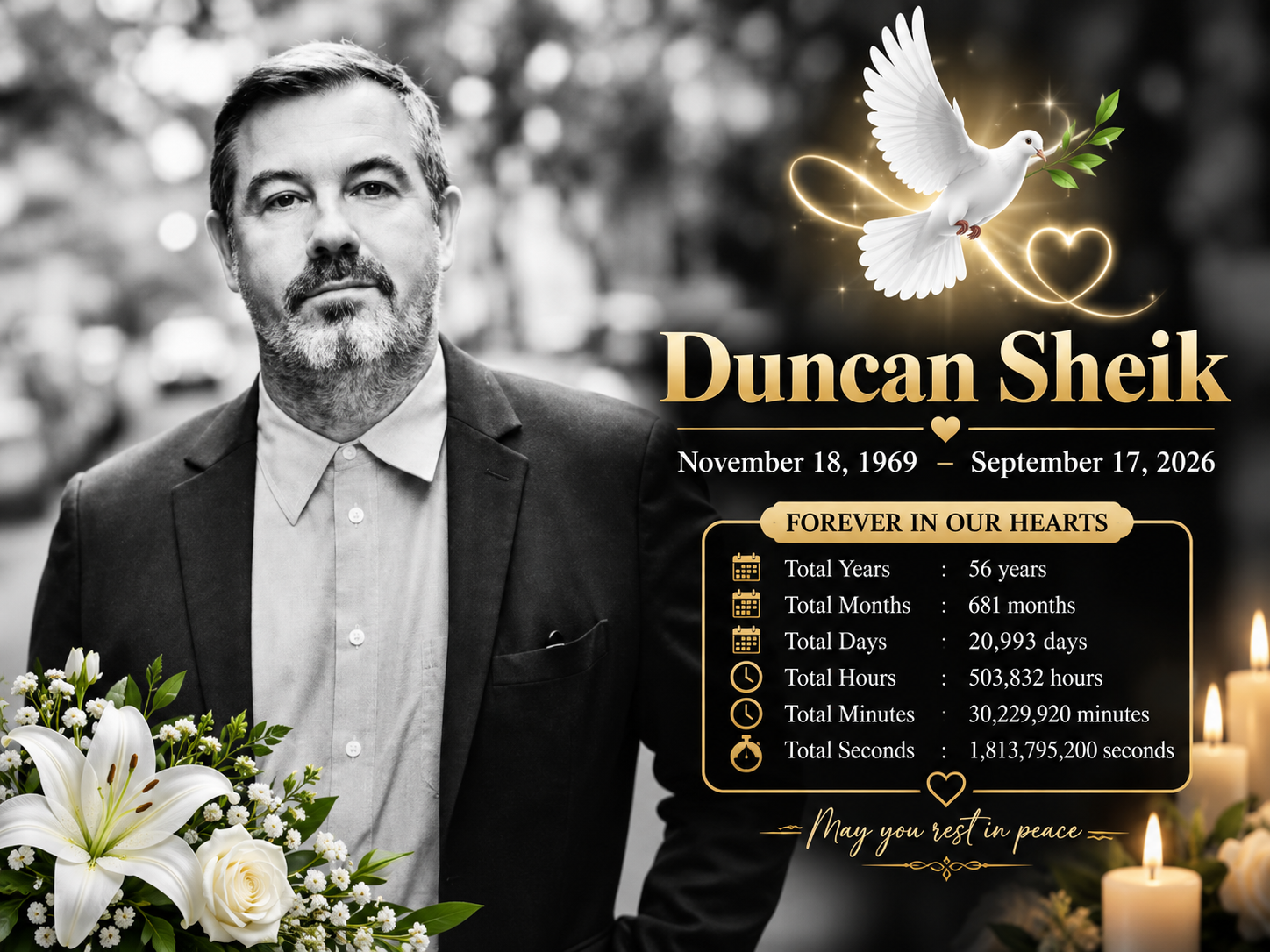
By the third week of September 2026, New York had become the place where two different chapters of Duncan Sheik’s theatrical career were about to meet. One was a brand-new musical that had never been performed for an audience. The other was Spring Awakening, the work that had changed his professional identity twenty years earlier. Sheik was gone, but both productions remained on the calendar. The contrast between his death and the movement of those productions gave the final stage of his biography an unusual precision: his life had stopped, while the theater schedule continued. ([Broadway.com][1])
Memoirs of Amorous Gentlemen was scheduled to begin performances on September 25 at The Night Egg inside the Culture Club in Manhattan. The production had been built around music and lyrics by Sheik, a book by Leah Nanako Winkler, and direction and choreography by Rob Ashford. Or Matias served as musical supervisor. The cast included Sophia Anne Caruso, Cory Jeacoma, Nkeki Obi-Melekwe, Andy Bakun and Jenny Powers. These were not plans waiting for a composer to begin writing. They were plans already moving toward the public. ([Broadway.com][1])
That distinction mattered because Sheik had not written Memoirs of Amorous Gentlemen as a memorial. It was not conceived as the last statement of a dying artist. It was a new musical based on Moyoco Anno’s manga, created while Sheik was alive and still working. The meaning attached to it changed only after September 17, when the composer died in Manhattan at 56. The work itself had not changed. The circumstances around it had. ([Broadway.com][1])
The production’s setting was also far removed from the world of Spring Awakening. The official production description places the story in a Parisian maison close and centers on Colette, a young woman whose position within that world becomes increasingly connected to observation, writing and authorship. It was a different dramatic landscape from the provincial German town of Spring Awakening. That difference showed that Sheik had not spent his later years trying to reproduce the musical that had made his name. ([Studio Seaview][2])
His career had always contained those changes. “Barely Breathing” had established a recognizable singer-songwriter identity in 1996, but the albums that followed moved through different sounds and arrangements. Humming, Phantom Moon, Daylight, White Limousine, Legerdemain and later Claptrap formed a catalog that could not be summarized by the sound of his first hit. Theater eventually became an increasingly important place for his musical ideas to develop. ([Broadway.com][1])
That movement was partly a response to the strange experience of becoming famous. Sheik had not entered the music business with a plan to become an archetypal pop celebrity. The sudden success of “Barely Breathing” placed him inside a public identity that he later described as producing a kind of personal dissonance. He was recognized by millions of listeners, yet the artistic questions occupying him were not necessarily the questions that commercial success wanted him to answer. ([The Washington Post][3])
Theater offered another possibility. He could still write melodies, but those melodies could now belong to characters. Instead of standing in front of the audience and embodying the song himself, he could place the song in the mouth of another performer. That distance allowed the music to participate in narrative rather than merely describe the songwriter’s own perspective.
Spring Awakening became the decisive example. Working with Steven Sater, Sheik helped turn Frank Wedekind’s 1891 drama into a contemporary rock musical. The historical setting remained intact, but the score gave the teenagers a musical vocabulary that felt immediate. Their confusion, desire and frustration could sound like something happening in the present rather than something sealed inside a historical costume drama.
When the musical opened on Broadway in December 2006, Sheik’s career changed again. The singer known for “Barely Breathing” was now the composer of a major theatrical production. In 2007, Spring Awakening won eight Tony Awards, including Best Musical. Sheik received awards for Best Original Score and Best Orchestrations, while the original cast recording later won the Grammy for Best Musical Show Album. ([Broadway.com][1])
The success did not freeze the show in its original form. Spring Awakening returned in a Broadway revival in 2015, this time through Deaf West Theatre, integrating American Sign Language into the production. That revival demonstrated that the score could remain recognizable while the physical language of the staging changed. The musical was no longer dependent on the exact circumstances of its first Broadway production. ([Broadway.com][1])
The planned 2026 production continues that process. Studio Seaview lists performances beginning November 27 and running for twelve weeks through February 14, 2027. Danya Taymor is directing, with Celia Rowlson-Hall as choreographer. The production is described as an intimate new staging, with a cast largely under 26. Some performers are therefore younger than the musical itself. ([Studio Seaview][2])
That fact creates a precise generational divide. When Sheik and Sater were developing Spring Awakening, the young performers involved were living through a particular moment in American theater. Twenty years later, another group of young actors is approaching the same characters after growing up in a different cultural and technological environment.
The score remains, but the circumstances surrounding it have changed. A new actor singing a song written in the early 2000s does not reproduce the original performer simply by following the notes. The actor brings another voice, another body and another understanding of adolescence. The director brings another staging language. The audience brings another set of experiences.
That is why Sheik’s death does not turn the 2026 revival into a museum piece. The production is still a living theatrical event. It must work for the people sitting in the theater now, not only for people remembering the Broadway production of 2006.
The same principle applies to his newest musical. Memoirs of Amorous Gentlemen would have been different even if Sheik had lived to attend every performance. The actors would still interpret the characters in their own ways. Ashford would still make staging decisions. Matias would still shape the musical presentation. Winkler’s book would still determine the dramatic architecture. The composer’s presence would have been another creative voice, not the entire production.
His absence therefore changes the emotional circumstances without changing the fundamental division of artistic responsibility. That distinction protects the work from becoming a fictionalized memorial. The production has its own purpose.
There was another reason the timing felt particularly sharp. Sheik had continued creating music after the success of Spring Awakening rather than treating the musical as a career endpoint. His 2022 album Claptrap showed that his interest in sound remained active. His later theater projects demonstrated the same willingness to move into unfamiliar territory. Memoirs of Amorous Gentlemen was evidence that this process was still continuing in 2026. ([Broadway.com][1])
The final weeks also revealed how little warning the public had. On September 16, his family announced that he was receiving medical care and was in critical but stable condition, while asking for privacy. The following day, his death was confirmed. Reports about the exact medical cause have used different formulations: The New York Times reported organ failure through his mother, while other major reports described cardiac arrest or heart failure leading to cardiac arrest. ([Broadway.com][1])
The safest conclusion is therefore limited. Sheik died on September 17, 2026, in Manhattan at 56 after a serious medical crisis. The publicly reported cause varies in wording, and there is no need to supply an unsupported underlying diagnosis. What matters to the chronology is that his illness interrupted an active professional life.
That interruption left collaborators facing a situation they had not planned for. A composer who could have answered questions was suddenly unavailable. A production that could have been discussed with him had to continue using the material already created. A revival of his best-known musical had to proceed without the person who had written its music.
Yet that is also exactly what theatrical collaboration is designed to withstand. A musical cannot depend upon its composer being physically present at every performance. Once the score is complete, it becomes part of a larger structure. Sheik had spent much of his career learning how to create within that structure.
The audience approaching these productions therefore encounters two facts at once. Duncan Sheik is absent, and Duncan Sheik is everywhere inside the music. His name appears in the credits. His melodies remain in the score. His choices determine what the musicians play. His collaborators continue the process he helped begin.
The paradox is quiet rather than dramatic. There is no supernatural return, no imagined final message, and no evidence that Sheik intended his last projects to become memorials. There is simply an artist whose work had already moved beyond the point where his physical presence was required for it to exist.
That was the condition waiting for the next generation of performers. They could not continue his life, but they could continue working with what he had made. And when the lights finally came up, the audience would hear the clearest possible proof that a finished piece of music can outlive the person who wrote it.
Click Here to continue read next: PART14: The second life of Spring Awakening began before Duncan Sheik died, but his absence changed how a new generation would encounter the score
Days before new work was supposed to reach New York audiences, Duncan Sheik’s story suddenly ended, leaving behind a career that had begun far from Broadway
Part 13 of 16

