
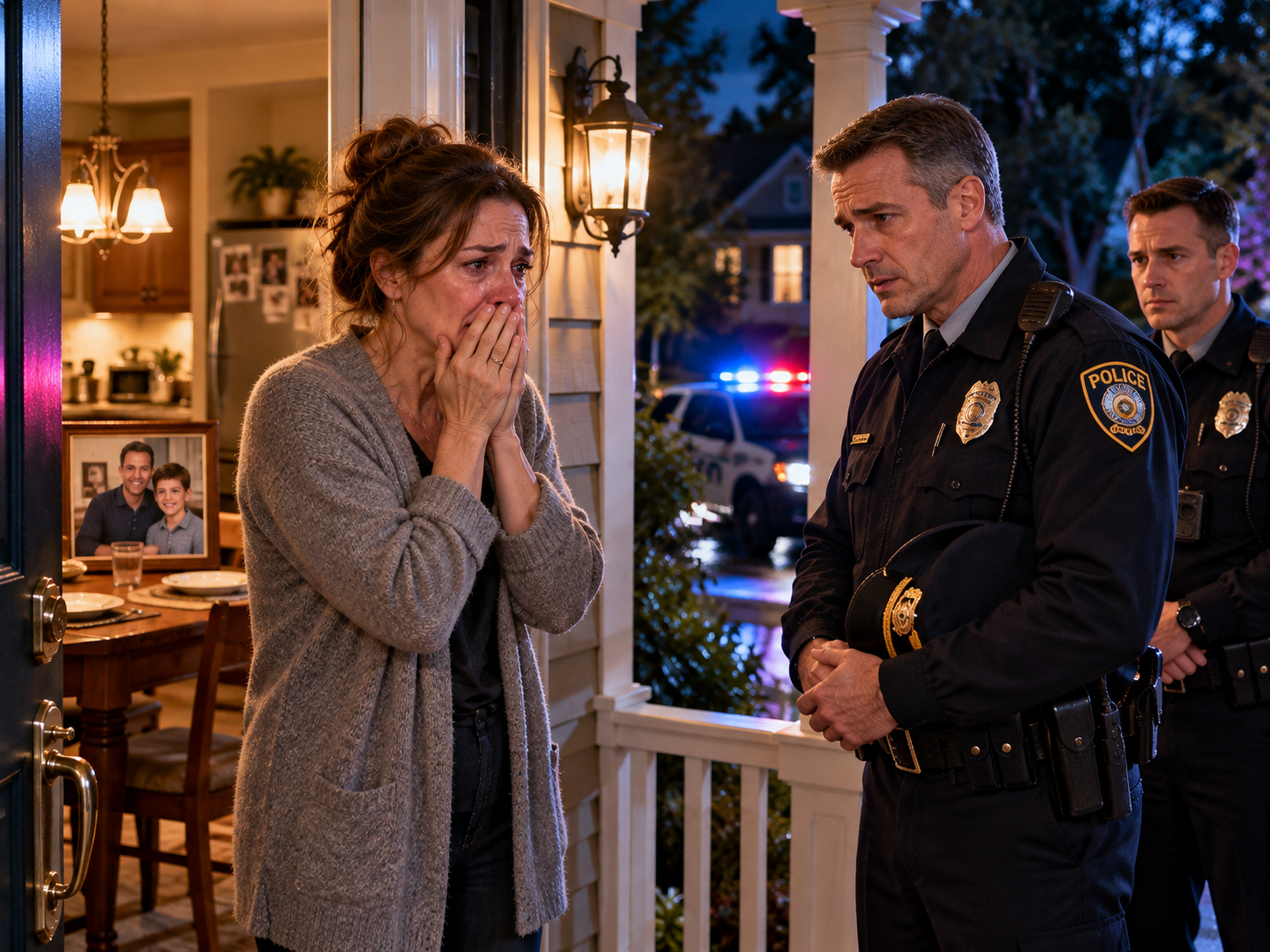
By the time another season had passed, my life had settled into a rhythm I could recognize. I worked, managed the apartment, met Sarah for coffee, and visited my family when I felt ready. Some days were full of ordinary tasks, and others were shaped by memories that arrived without warning. I still missed Jack when I made coffee in the morning, and I still caught myself expecting Matthew to call from another room. Their absence remained part of every version of my future. But the days no longer felt like a continuous emergency.
The apartment had become a stable part of my financial life. I maintained the lease, kept records of expenses, and set aside money for repairs. The tenant treated the place respectfully, and the building manager contacted me when something needed attention. I did not think of the apartment every time I spoke to my family, and I no longer felt compelled to explain why Veronica and Ruben could not return. The decision had been made, and I had learned to let it remain made.
I occasionally thought about the day the movers carried their belongings out. At the time, I had been running on a mixture of grief, anger, and clarity. I had packed their things carefully because I did not want to destroy anything or turn the apartment into a scene of revenge. I had arranged for everything to be delivered to my parents’ house, replaced the locks, and canceled the payments that had kept several households comfortable. I had not known exactly what would happen afterward. I had only known that I could not continue living as though my own needs did not matter.
The family had reacted with anger, accusations, and demands. For a while, I had wondered whether I had become cruel in their eyes. I had spent so many years making their lives easier that any refusal felt like a betrayal. But the months that followed showed me something I had been unable to see before: the conflict had not begun when I changed the locks. It had begun when the people I loved started treating my help as something they were entitled to receive, even when I was suffering. The locks had simply made the change visible.
My parents and I now spoke more honestly. My father still struggled at times to express regret without explaining his intentions, but he had become better at listening. My mother had learned to ask for help without assuming that I would provide money. She still wished I would forgive her completely, and I still could not promise that I would ever stop hurting when I remembered Cancun. We had found a way to maintain contact without pretending the past had been harmless.
Veronica and Ruben had continued building their own household. The baby was growing, and they had become more confident in managing the demands of parenthood. They sometimes asked for advice, but they no longer treated my finances as an extension of theirs. Veronica and I were closer in some ways because we had learned to speak more directly. In other ways, the relationship remained more cautious than it had been before Matthew died. I could accept that. Trust was not a switch I could turn back on simply because I wanted my sister to feel comfortable.
One Saturday, Veronica brought the baby to visit me. He was old enough to explore the room, reaching for anything within his grasp and making a determined sound whenever he wanted something just beyond his reach. I watched him crawl toward a cushion, pause, and try again. The sight reminded me of Matthew learning to walk, and for a moment I felt the familiar ache in my chest. Veronica noticed my expression and asked whether I wanted to take a break. I told her I was all right, though I might need a quiet moment later.
She did not insist that I stay cheerful. She simply continued playing with her son while I watched. I was grateful for that. In the past, my family had often expected me to manage my grief privately so that it would not interfere with their happiness. Now, at least sometimes, they were learning that my sadness did not need to be corrected or hidden. I could be happy for the baby and sad for Matthew in the same room.
When Veronica left, I stood by the window and watched her carry the baby toward her car. I thought about how much life had changed since the fishing trip on Lake Michigan. Jack had gone out expecting an ordinary day with his son, and Matthew had gone with him believing there would be another weekend, another game, another chance to learn something new. A drunk driver had ended that future without warning. Nothing I had done afterward could make the accident fair or the loss understandable.
For a long time, I had tried to make sense of the tragedy by controlling everything I could still control. I arranged appointments, organized paperwork, paid bills, and made sure other people were taken care of. Perhaps I had hoped that if I kept enough of the world in order, I would not have to feel how completely it had changed. When my family failed to show up at the funeral, the last part of that strategy collapsed. I could not make them care by being useful, and I could not make grief manageable by taking responsibility for everyone else.
That realization had been devastating, but it had also become the beginning of a different life. I had learned that being strong did not mean never asking for help. It did not mean accepting every demand or smiling through every disappointment. Strength could mean admitting that I needed rest, that I was angry, that I could not afford to keep paying other people’s expenses, and that I wanted relationships in which my presence mattered beyond what I could provide.
I had not learned those things all at once. There had been difficult calls, family meetings, apologies that felt incomplete, and conversations that ended with someone disappointed. There had been mornings when I wanted to undo the apartment decision simply to stop feeling like the person who had divided the family. There had also been moments when I saw my parents handling their own bills, watched Veronica and Ruben solve a financial problem, or sat at dinner without being asked for money. Those moments showed me that boundaries could change relationships, even when they could not change the past.
One evening, I found the original folder containing the screenshots from Cancun. I opened it and looked at the photographs again. Veronica in the yellow dress, Ruben wearing sunglasses, my parents raising their glasses, and the caption about family showing up when needed. The pictures still hurt, but the pain had changed. I no longer felt compelled to prove to myself that my anger had been justified. I knew what I had experienced. I did not need to revisit the evidence every time someone in my family behaved kindly.
I kept the screenshots, then closed the folder. I was not preserving them because I wanted to remain angry. I was preserving the truth of what had happened, just as I preserved the notes from Matthew’s classmates. One set of images showed the people who had failed me at a critical moment. The other reminded me that people had shown up, too. Sarah had stayed beside me. Mrs. Moore had brought the letter. Neighbors and colleagues had offered support without expecting anything in return. My family’s absence had been painful, but it had not meant that I had been entirely alone.
The following weekend, Sarah and I walked near the lake. The water was restless, and the wind made us pull our coats closer around ourselves. I told her I had been thinking about how different my life felt now. She asked whether I was happier. I considered the question. I was not happy in the simple way I had been before the accident, and I did not expect to return to that version of myself. But I felt more stable. I could make plans without fearing that someone else’s problem would erase them. I could remember Jack and Matthew without treating every day as a test of how much pain I could endure.
Sarah said that sounded like progress. I laughed softly and told her I wished progress did not hurt so much. She replied that perhaps the goal was not to stop hurting, but to stop adding unnecessary pain to the pain I already carried. I thought about that long after we parted. I could not prevent grief from hurting. I could prevent myself from continuing to sacrifice my own well-being in the hope that my family would finally recognize how much I mattered.
I began making plans for things I had postponed. I arranged a short trip with Sarah, chose a few books I wanted to read, and set aside time to learn a skill I had always been curious about. None of these plans was grand, and none was intended to prove anything to my family. They were simply things I wanted to do. I no longer believed that wanting something for myself required a justification based on productivity, necessity, or someone else’s approval.
My family noticed the changes. My mother asked about the trip and told me she hoped I enjoyed it. My father asked whether I had arranged everything for the apartment before leaving, and I told him I had. Veronica wished me a good time and sent a picture of the baby waving his hands toward the camera. Their responses were ordinary and supportive. I did not need them to understand every reason behind my choices. It was enough that they were learning to let me make them.
On the trip, I spent one afternoon sitting by the water with a book in my lap. I thought about Jack’s love of fishing and Matthew’s excitement whenever he imagined catching something bigger than the last time. The memory made me sad, but I did not leave. I watched the water move and allowed myself to stay where I was. For years, I had believed that if I stopped doing things, I would be overwhelmed by grief. Now I was learning that stillness could also be a place where I remembered them.
When I returned home, I placed a small stone I had collected near the photograph of Jack and Matthew. It was not a symbol of closure. I did not believe in closing the chapter of their lives or moving beyond them as though they were obstacles. I wanted to carry their memory forward in a way that allowed me to continue living. The photographs, the fishing checklist, and Matthew’s notebook remained part of my home, but they no longer dictated every decision I made.
My mother called one night and told me she had been thinking about the funeral again. She said she was sorry that she had left me alone and that she understood why I could not simply forget it. I thanked her for saying so. She asked whether I believed our relationship could become closer over time. I told her I hoped it could, as long as we continued being honest and respecting each other’s choices. She said she wanted that, too. We talked for a few more minutes about ordinary things, then said goodbye.
Afterward, I sat in the living room and considered what forgiveness might eventually mean for me. I no longer thought of it as a decision that would erase the past or return my family to the way they had been before. If forgiveness came, it would mean I could remember the choice they made without allowing it to control every interaction that followed. It would mean I could recognize their efforts to change without denying the pain they had caused. It would not mean restoring the apartment, resuming the payments, or agreeing that the funeral was simply a disagreement everyone should forget.
I could love my family and still remember that they had failed me. I could accept their apologies without declaring the consequences over. I could help when I chose to help and refuse when I needed to protect my own stability. I could remain open to a closer relationship without making closeness dependent on my willingness to sacrifice everything. Those truths no longer seemed contradictory. They were the foundation of the life I was learning to build.
Sometimes I still imagined the day Jack and Matthew would have returned from the lake if the accident had never happened. I imagined Jack complaining about the traffic and Matthew rushing inside to tell me about the biggest fish he had ever caught. I imagined the ordinary interruptions that had once filled our home. Those imagined moments could make the loss feel unbearable, and I did not try to stop them from coming. I let myself miss the life we had been given and the future that had been taken away.
But I also returned to the present. I paid my bills, worked, saw friends, managed the apartment, and spoke with my family when I wanted to. I kept Matthew’s notes and wrote down memories before they became blurred by time. I did not require myself to be cheerful every day, and I did not require my family to be perfect before allowing them into my life. I required only that we continue learning to treat one another honestly.
I understood, finally, that saying no had not been the end of my love for my family. It had been the end of an arrangement in which my love was measured by how much I could provide. I had stopped paying for their comfort because I needed to protect what remained of my own life. In doing so, I had given them the opportunity to take responsibility for theirs, and I had given myself the chance to discover who I was when I was not constantly rescuing everyone else.
My family had returned from Cancun expecting their keys, their financial support, and their old lives to remain waiting for them. They had expected me to be the same woman they had left behind: the dependable daughter, the generous sister, the person who could handle anything as long as everyone else continued with their plans. They had found that I had changed the locks, ended the payments, and made decisions they could not reverse by being angry or disappointed.
I had not done those things because I stopped loving them. I had done them because love without limits had begun to cost me my own future. The apartment was mine to manage, the money was mine to allocate, and the grief was mine to carry in whatever way I could. I could share my life with my family, but I could no longer let them decide the price of my belonging.
There would never be a perfect ending to this story. Jack would not come home from the lake. Matthew would not walk through the door with a baseball cap crooked on his head and a new story to tell. My family could not return to the funeral and stand beside me. Those losses would remain part of my life for as long as I lived. Yet they did not have to be the only things my future contained.
I could remember the people who had shown up when I needed them, remain open to the family members who were learning to show up differently, and protect the boundaries that allowed me to keep going. I could let trust grow slowly, without demanding that the past disappear. I could build a life that held sorrow and affection, independence and connection, memory and possibility.
And when I thought about the woman I had been before Cancun, I no longer saw someone foolish for giving so much. I saw a woman who had loved her family and believed that generosity would keep them close. I wished she had known that she was allowed to rest, that she was allowed to ask for help, and that her worth had never depended on being indispensable. I could not go back and tell her those things. But I could live by them now.
Jack and Matthew remained at the center of my heart. Their photographs stayed on the shelf, their memories filled my notebook, and the fishing checklist remained in the wooden box. I would always grieve the life we had lost. But I would also continue building the life that remained, one honest decision at a time.
I had once believed that keeping the family together meant never closing a door. Now I understood that a door could be closed to an unhealthy arrangement without being closed forever to love. I could leave room for reconciliation without surrendering my peace. I could offer kindness without offering unlimited money. I could forgive without forgetting, and I could remember without remaining trapped in the worst day of my life.
The locks had changed, the payments had ended, and the apartment had become someone else’s home. Those were the visible signs of what I had done. The deeper change was quieter. I had stopped waiting for my family to decide that my needs mattered. I had stopped believing that their comfort was my responsibility. I had stopped trying to purchase belonging through sacrifices nobody had asked me to survive.
For the first time in years, my life belonged to me again. It was not the life I would have chosen if Jack and Matthew were still here, and it would never be free of grief. But it was honest, and it was mine. I could carry their memories forward, care for the people I loved, and protect the future I still had. I could say no when I needed to, say yes when I meant it, and finally understand that neither answer made me less deserving of love.
The End
Read more original stories on Feel Every Story.
The Night I Learned My Family Had Chosen a Vacation Over My Son’s Funeral, Something Inside Me Went Quiet, and Nothing Would Ever Be the Same
Part 20 of 20

