
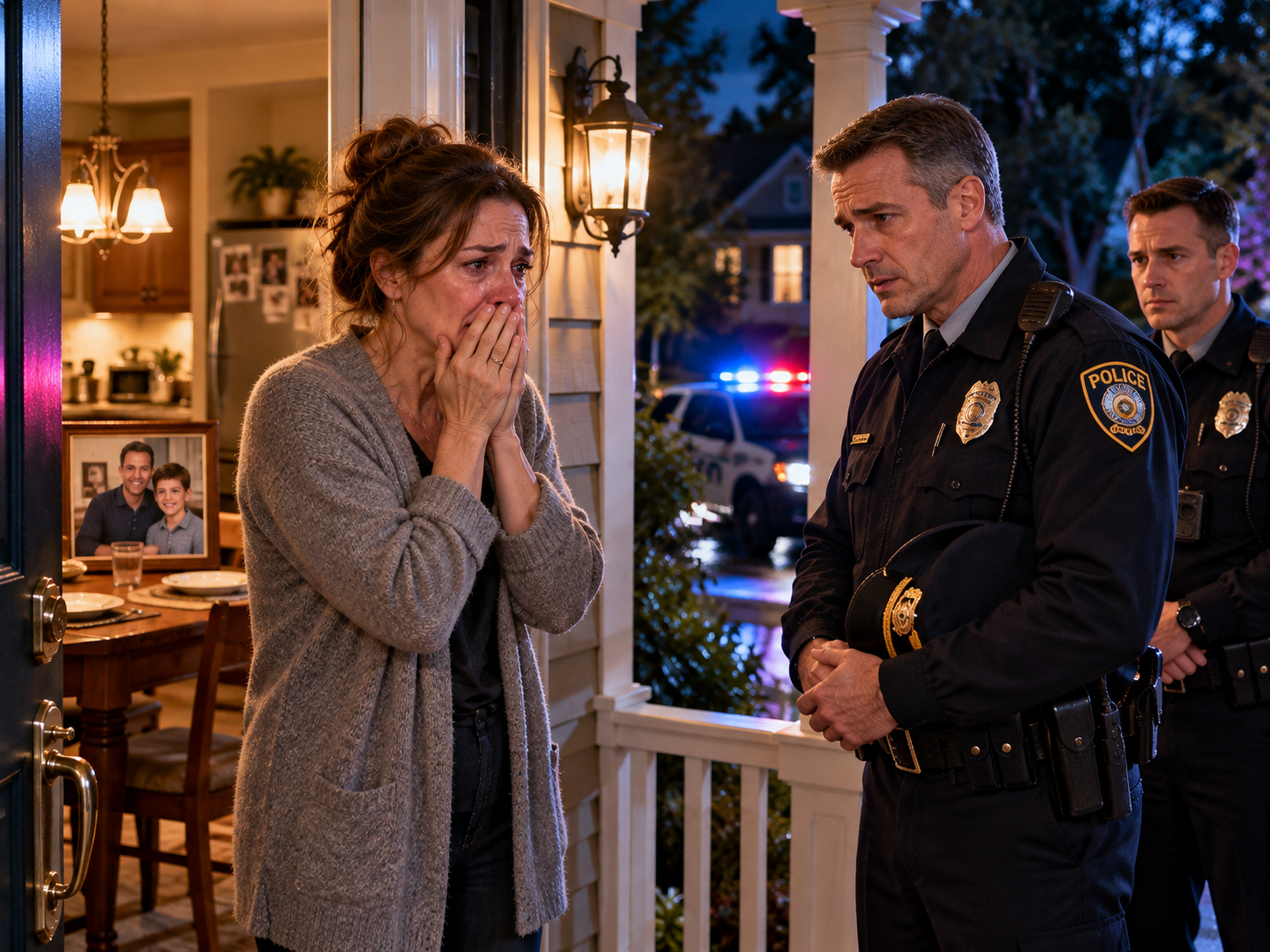
The message came early on a rainy morning. Veronica had gone into labor, and Ruben was taking her to the hospital. My mother called a few minutes later, her voice full of excitement and worry. She asked whether I could come to the hospital when I was able. I told her I would finish getting ready and head over, then checked the weather and drove carefully through the traffic. As I approached the hospital, I felt the familiar tension of a place where I had spent so many months waiting for news about Matthew.
I parked and sat behind the steering wheel for a moment. The entrance looked almost exactly as I remembered it, with automatic doors sliding open for families carrying bags and nurses moving quickly through the lobby. I could still recall the smell of disinfectant and the sound of monitors from Matthew’s room. My hands began to tremble, and I wondered whether I could walk inside without being pulled back into those memories. Then I reminded myself that I was there for Veronica, not to repeat the past. I took a breath, gathered my bag, and went in.
Ruben was waiting near the maternity unit. He looked exhausted and frightened, and when he saw me, his shoulders dropped with relief. He said Veronica was being monitored and that the medical team would update them when there was more information. I asked whether he needed anything immediately. He said he had brought water and snacks but had forgotten to charge his phone. I gave him the charging cable from my bag and sat beside him. It was a small practical favor, offered because I wanted to offer it, not because anyone expected me to take responsibility for the entire situation.
My mother arrived shortly afterward, carrying a bag with baby clothes and toiletries. She began asking Ruben whether he had packed everything and whether he had contacted the right people. I recognized her anxiety, but I did not step in to organize every detail. Ruben answered her questions, and when he did not know something, he checked his phone. I stayed beside them, listening, and reminded myself that I could be present without becoming the person who managed everyone’s emotions.
The waiting stretched into hours. I walked to the cafeteria for coffee and returned with water for my mother. She thanked me, then looked at me as though she wanted to ask whether I was all right. I told her the hospital brought back memories, but I was managing. She touched my arm and said she was sorry. I appreciated the concern, though I did not want the day to become another discussion about my grief. Veronica needed her family now, and I wanted to be there for her.
When the nurse finally told us that the baby had arrived and Veronica was recovering, Ruben covered his face with both hands. My mother began to cry with relief. I felt my own eyes fill, surprised by the strength of the emotion. A new life had entered the family, and for a moment the room seemed full of possibilities. But the joy was complicated by the memory of Matthew, who would never grow into an older brother, an uncle, or a man who might one day stand beside this child at a family gathering. I let the sadness remain beside the happiness instead of forcing one to disappear.
We were allowed to see Veronica later that afternoon. She looked tired and overwhelmed, but when she held the baby, her expression changed completely. Ruben stood close to her, one hand resting on the bed. I approached slowly and asked whether she wanted me to hold the baby or simply sit with her. She smiled faintly and said I could hold him for a few minutes. I washed my hands and accepted the small bundle carefully, feeling the warmth of his body through the blanket.
The baby’s face was scrunched in sleep, and his tiny fingers curled against the fabric. I looked at him and thought about how much Matthew had changed in twelve years, from a newborn I had been afraid to hold too tightly into a boy who could run across a baseball field and argue about fishing equipment. The memory came so suddenly that my throat closed. Veronica noticed and asked whether I wanted her to take the baby back. I said I was all right, then admitted that holding him reminded me of Matthew as a baby. She reached for my hand and said she was sorry.
I handed the baby back before the emotion became overwhelming. Veronica did not ask me to stay longer or tell me I should be happy. That mattered more than she could know. She was experiencing one of the biggest moments of her life, yet she allowed my grief to exist in the same room without treating it as a threat to her happiness. I congratulated her and Ruben, then stepped outside for a few minutes to breathe.
In the corridor, I leaned against the wall and closed my eyes. The hospital sounds were familiar, but they no longer belonged only to the worst months of my life. I could be here for a birth and still remember the room where Matthew had been treated. I could feel joy for Veronica without pretending that our family had not hurt me. I did not need to choose between loving the baby and mourning the child I had lost. My heart could hold both, even if it hurt.
When I returned to the room, my father had arrived. He stood beside the bed, looking at his new grandchild with a tenderness I had not seen from him in months. He greeted me and asked whether I was feeling better. I said I was, and he thanked me for coming. Then he turned back to Veronica and asked how she was doing. He did not ask me to handle anything, and he did not bring up the apartment. For once, the family had gathered around a shared event without making my boundaries the subject.
Over the next few days, Veronica sent me photographs of the baby. She and Ruben had chosen a name and were adjusting to the demands of caring for a newborn in their smaller apartment. They sounded tired, and sometimes Veronica admitted she was overwhelmed. I listened and offered suggestions when she asked, but I did not volunteer to buy furniture, cover medical expenses, or pay for help. I had already helped her build a budget, and she and Ruben had made their own plans. Their challenges were real, but they were not proof that I needed to resume the old arrangement.
One evening, Veronica called while the baby was crying in the background. She said she had not slept much and felt as though she was failing at everything. I heard the exhaustion in her voice and remembered how frightening the first days of caring for a child could be. I told her that feeling overwhelmed did not mean she was failing, and that she and Ruben should ask their medical team for guidance if they had concerns about the baby. I also encouraged her to accept practical help from people who had offered it. I did not promise to be available at every hour, but I told her I could talk for a little while.
We spoke for twenty minutes. She told me about the baby’s feeding schedule, how little she and Ruben were sleeping, and how much she missed having more space. I let her talk without turning the conversation into a lecture about responsibility. When she said she wished the old apartment arrangement had never ended, I reminded her gently that the apartment was no longer available and that we needed to keep that decision separate from the challenges of becoming parents. She was quiet for a moment, then said she knew. She had not called to ask me to change it. She had simply been remembering how comfortable things had been before.
I told her I understood that she missed the convenience, but the arrangement had not been sustainable for me. She admitted she had not thought much about what the rent-free apartment had meant to my finances until she had to manage housing costs herself. I appreciated the honesty. I also reminded her that the hardest part had never been only the money. It had been how quickly my family had expected me to continue giving when I was the person who most needed care. She said she understood more now, though she knew that understanding did not undo what she had said about Matthew.
As the weeks passed, my mother began bringing Veronica meals and helping with small tasks. She asked me once whether I could contribute toward a larger baby item, then caught herself and said she knew Veronica and Ruben had already planned their expenses. I told her I was glad she had noticed the difference. She looked embarrassed and admitted she was still learning not to treat my help as the first solution to every difficulty. I did not scold her. I said I was learning, too, to help without automatically taking over.
The baby’s arrival changed the rhythm of family contact, but it did not erase the past. There were more photographs, more updates, and more conversations about sleep and feeding. Sometimes the ordinary excitement made me happy. Other times, it reminded me of all the milestones Matthew would never reach. I stopped expecting myself to react consistently. I could smile at a picture in the morning and cry over his baseball glove that evening. Neither response meant I was betraying the baby or failing Matthew.
One Saturday, Veronica invited me to visit her and Ruben’s apartment. I hesitated before accepting, remembering how the last apartment had become the center of our conflict. But the new place was theirs, and I wanted to see the home they were building. When I arrived, the rooms were small but tidy, with the secondhand dresser near the crib and a narrow table beside the window. Ruben had fixed a loose shelf, and Veronica had arranged the baby’s clothes in baskets. They had made the space work without expecting me to make it larger or more comfortable.
Veronica showed me the baby’s sleeping area and told me how they had decided which items they truly needed. She seemed proud of the choices they had made. I complimented the arrangement and asked how they were managing their expenses. She showed me a simple list she and Ruben had been updating each week. They had made mistakes, she admitted, and had underestimated a few costs, but they were adjusting. I did not offer to take over the budget. I told her it looked like they were learning what worked for them.
Before I left, Ruben thanked me for helping Veronica think through the costs before the baby arrived. He said they would have been more stressed without that conversation. I told him I was glad the advice had helped, but that the work belonged to them. He nodded, and I believed he understood. I had spent years being the person who solved problems behind the scenes, leaving everyone else with the comfort of believing the solution had appeared on its own. It felt different to offer advice and watch another household use it.
On the drive home, I thought about how family roles can become fixed without anyone deliberately choosing them. I had become the responsible one, the person who could always find money, make a plan, and absorb the consequences. My parents had come to rely on that role, and Veronica had grown up expecting it to be available. Their assumptions had not made them incapable of change, but change required more than an emotional conversation. It required each person to take responsibility for the life they were building.
That evening, I looked through the latest pictures of the baby, then put my phone away and took out Matthew’s fishing checklist. I wanted to remember both children as they were: one beginning a life, one whose life had ended far too soon. The feelings did not cancel each other. I could welcome my nephew with affection and still wish Matthew were here to meet him. I could support Veronica in small ways without becoming financially responsible for her household. I could love my family and still keep the boundary that had protected me when they had abandoned me.
The following week, my father called to ask whether I wanted to join them for a short visit with the baby. I said I would come if I was feeling up to it, and he replied that he understood. He did not demand a commitment or imply that declining would hurt the family. It was a modest change, but I recognized it. We were learning to make invitations rather than obligations, to offer help rather than assume it, and to accept that love could exist without a permanent claim on someone else’s time or money.
When I thought about the future, I knew there would be difficult days. The baby would grow, and every birthday would remind me of the birthdays Matthew would never celebrate. My family might slip back into old expectations, especially when life became stressful. I could not control those possibilities. What I could control was whether I returned to the role that had left me depleted and unseen. The arrival of a new child had given us something joyful to share, but it had not asked me to forget the child I had lost or the boundaries I had set.
I left the hospital on the day of the birth with tears on my face and a feeling I could not easily name. It was not simple happiness, and it was not only sadness. It was the recognition that life continued in ways I had never wanted, bringing new beginnings beside permanent absences. I could not protect myself from every reminder of Matthew, nor did I want to. I wanted to remember him honestly, without allowing grief to become a reason for others to decide what I owed them.
The family had once expected me to keep their lives comfortable no matter what happened in mine. Now I was beginning to show them a different way to be together. I could arrive at a hospital, hold a newborn, offer advice, and celebrate a sister’s joy. I could also leave when I was tired, decline requests for money, and refuse to make promises I could not keep. Those choices did not make me less loving. They made my love more honest, and for the first time, I was willing to let that be enough.
Click here to continue reading: PART 15: A Year After the Locks Were Changed, My Family Asked Me to Help Plan a Gathering for Matthew, and I Had to Decide Whether Their Regret Had Finally Become Something I Could Trust
The Night I Learned My Family Had Chosen a Vacation Over My Son’s Funeral, Something Inside Me Went Quiet, and Nothing Would Ever Be the Same
Part 14 of 20

