
The first call came at 9:12 on the morning my family returned from Cancun. I was sitting at the kitchen table with a cup of coffee I had barely touched when my phone began vibrating against the wood. Veronica's name appeared on the screen.
I let it ring.
A second call followed almost immediately, then a third. When I finally looked at the messages, I saw that they were not asking where I was or whether I had received their luggage. They were demanding to know why the apartment was empty and why their keys no longer worked.
I placed the phone facedown.
For the next several hours, I went about my day as best I could. I answered a call from the funeral home, confirmed a document with Jack's employer, and spoke briefly with Sarah. I did not feel triumphant. I felt exhausted, as though my body had been carrying a weight for so long that even setting it down required effort.
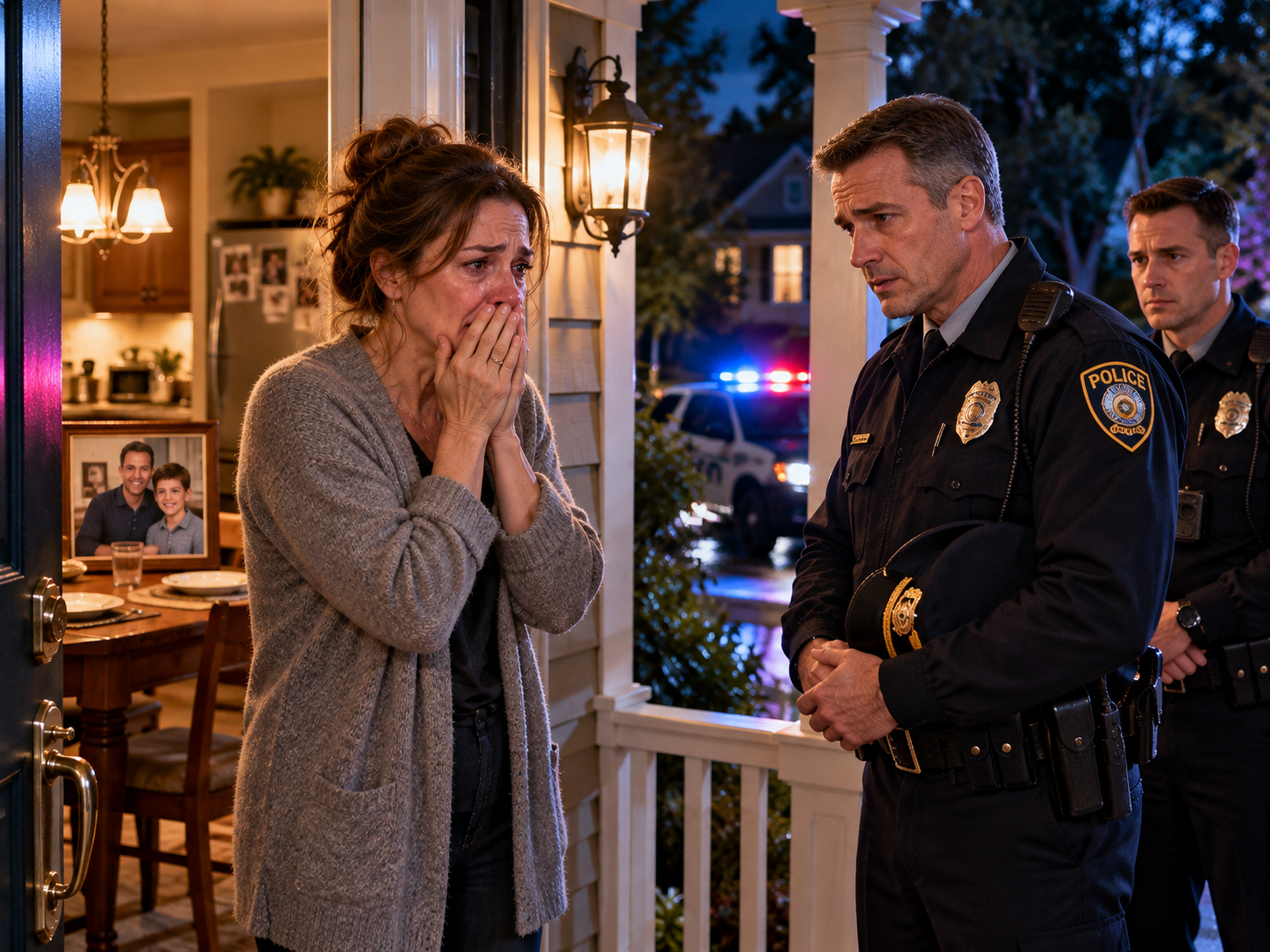
At around ten that night, the pounding began.
It was hard enough to rattle the front door. Veronica shouted my name from the porch, and Ruben's voice followed hers. My parents were there too. They had apparently driven directly from the airport to my house after discovering that the apartment was no longer available to them.
“Angela! Open the door!”
I sat still for a moment. On the table beside me was a photograph of Matthew in his baseball uniform. He was grinning at the camera, his cap tilted sideways, his cheeks flushed from a game. I looked at his face, drew a slow breath, and stood.
When I opened the door, Veronica pushed forward as though she expected to walk past me.
“What have you done?” she demanded. “Our apartment is empty. The locks have been changed. All our things are at Mom and Dad's house!”
I stepped aside just enough to keep the doorway clear, but I did not invite them in.
“Your belongings were packed carefully and delivered to your parents' house. Nothing was thrown away or damaged. The apartment is no longer available for you to occupy.”
Ruben stared at me. “You can't be serious.”
“I am.”
My mother moved closer, her face flushed from anger and the late hour. “Angela, this is outrageous. You should have spoken to us before doing something like this.”
“I did speak to you,” I said. “I told you my son had died. I asked you to help me bury him. You chose to go on vacation.”
My father lifted a hand as if to interrupt. “That has nothing to do with the apartment.”
“It has everything to do with why I am ending the arrangement. You have all treated my support as something you could count on forever, even when you could not make time for me during the worst week of my life.”
Veronica's expression hardened. “You are using Matthew's death to punish me because I went on a trip.”
I felt the sentence strike, but I did not let it change my voice.
“No. I am no longer providing free housing to you and Ruben. Those are different things. You made your choice about the funeral. I am making my choice about the apartment.”
“You can't throw us out just because you're upset!”
“I have not thrown your belongings out. They are safe at your parents' house. And I am not required to continue an arrangement simply because it has lasted for years.”
Ruben took a step forward. “We have lived there for years. We have furniture, bills, plans. You can't just decide we're homeless overnight.”
“You have your belongings, and you have your parents' house available while you make other arrangements. I gave you notice of the decision through the move and the delivery. I did not destroy anything, and I did not remove anything that belonged to you from the building without arranging its safe transport.”
He looked at my father, expecting support.
My father turned to me instead. “You need to reverse this. They have a baby coming. They cannot be expected to find somewhere else to live at the last minute.”
I looked at him for a long moment.
“When Jack died, I needed help. When Matthew died, I asked you to stand beside me. You told me you had already paid for a vacation. Now you're asking me to protect Veronica's comfort because she is pregnant. Why was her situation urgent enough to deserve my money and my property, but my son's funeral was not urgent enough to deserve your presence?”
My mother began to cry, though I could not tell whether she was grieving the conflict or the consequences. She said she had never imagined I would do something so cruel. She reminded me that she was my mother and that family should not abandon one another during difficult times.
I almost laughed at the word abandon, but there was nothing funny about it.
“I called you because Matthew had died,” I said. “You knew I was arranging his funeral alone. You knew I was trying to bury the child I had spent six months praying would wake up. You still went to Cancun. I did not force you to make that decision. You made it yourselves.”
Veronica folded her arms across her chest. “I was pregnant. I needed the trip. You don't know what it's like to be worried about a baby and have everyone expecting you to put your own needs aside.”
“I know what it is like to lose a child,” I replied. “And I know what it is like to ask your family for help and be told that your grief is inconvenient.”
She looked away. For a moment, I thought she might say something about Matthew, perhaps even acknowledge the way she had spoken to me. Instead, she returned to the apartment.
“You should have at least told us before we flew home.”
I looked at her carefully. “Would you have canceled the trip if I had told you I was ending the arrangement?”
She did not answer.
“Would you have come to the funeral?”
She turned toward Ruben, then toward our parents. Nobody spoke. The silence was the only honest response they had given me that evening.
My father stepped closer to the door. “We can discuss this privately. You don't need to involve everyone in the family.”
“There is nothing private about it. The apartment belongs to me, and I have ended the free housing arrangement. Your belongings are safe. You can discuss your next steps at your own house.”
“You're making us look terrible,” my mother said.
I glanced toward the photograph of Matthew on the table behind me.
“I didn't post a picture from Cancun while my grandson was being buried,” I said. “I didn't write that my family always showed up for me. I didn't choose a vacation over a funeral. I am not responsible for how your choices look.”
Veronica's face reddened. “That caption was not about you.”
“Then you should have thought about what it meant before posting it.”
Ruben rubbed his forehead and asked whether they could at least retrieve their keys and enter the apartment to check that everything had been packed. I explained that the movers had completed the work, the new locks were in place, and their belongings had been delivered to my parents' house. If they believed something was missing or damaged, they could identify the item and we could address it properly. I would not restore their access to the apartment.
He began to argue again, but my father interrupted him. He seemed to have realized that shouting would not change the facts. He asked me to reconsider for the sake of the family.
I told him I had considered the decision carefully. The apartment was an asset I had inherited through Jack, and I had allowed Veronica and Ruben to use it without rent for years. I had not promised that they could live there indefinitely. The arrangement was over, and I would handle the property responsibly.
I did not threaten them or claim that they had no rights. I told them to arrange their housing and, if they believed there was a legal issue, to seek independent advice. I would do the same if necessary. I would not turn the situation into a public argument, but neither would I surrender the property because they were angry.
My mother looked at me as though she were seeing a stranger.
“You've changed,” she whispered.
I thought of the woman who had paid the insurance, the medications, the grocery bills, the car installments, and the wedding reception. I thought of the woman who had stood beside Matthew's hospital bed for six months, telling him stories while waiting for him to wake. I thought of the woman who had begged her family to come to a funeral and received a discussion about the cost of a vacation.
“No,” I said. “I have finally stopped pretending that giving you everything means you will care for me when I need you.”
Nobody replied.
I closed the door gently. The pounding did not resume. Through the window, I watched them stand on the porch for several moments before walking toward their car. They had arrived expecting me to explain myself, apologize, and restore the comfort they had enjoyed for years. Instead, they had heard the decision without the familiar softening that usually followed my refusals.
I leaned against the closed door and let myself breathe.
Then I went to Matthew's room and sat beside his bed. The anger had carried me through the confrontation, but grief remained underneath it, deep and unchanging. I touched the edge of his baseball glove and whispered that I wished he were there. I wished he could see how the backyard looked in summer, how Jack's fishing gear still waited in the garage, how his classmates had written him letters and his teacher had come to say goodbye.
I did not want my son to become the reason for every decision I made. I wanted to remember him as a child who loved baseball, fishing, and terrible jokes, not only as the person whose death had exposed my family's failures.
Over the following days, the family tried different ways to reverse the situation. My mother sent messages about forgiveness and the importance of keeping relatives together. My father called to say I was being unreasonable. Veronica accused me of using the apartment to control her life. Ruben asked whether I would consider allowing them to return for a few weeks while they searched for another place.
I responded to practical questions and ignored the accusations. I confirmed that their belongings remained safe and that they could arrange a convenient time to collect anything they needed from my parents' house. I did not restore their access to the apartment or resume the payments I had canceled. I also consulted a local attorney to make sure the property arrangements were documented properly and that I was meeting my legal responsibilities.
The attorney reviewed the ownership records and the history of the housing arrangement. She advised me to preserve the relevant communications, keep receipts for the movers and locksmith, and avoid making claims about the legal status of the occupancy without considering the applicable requirements. I followed her advice. I wanted the matter handled correctly, not merely forcefully.
Veronica and Ruben stayed with my parents while they made new arrangements. It was uncomfortable for everyone. The boxes filled much of the living room, and my mother complained that the house felt crowded. My father began asking Veronica how long they expected to remain there. For the first time in years, my family had to confront the practical consequences of their own decisions instead of expecting me to absorb them.
I did not celebrate their discomfort. I knew that finding a home while preparing for a baby would be stressful. But I also knew that the apartment had been a privilege, not a permanent entitlement. They had received years of rent-free housing and had chosen not to build an alternative plan. Their circumstances deserved compassion, but they did not obligate me to continue an arrangement I no longer wanted.
A week later, Veronica asked to meet. She arrived without Ruben and sat across from me at a small café. She looked tired, and for the first time since the funeral, she did not begin by criticizing my decision. She said she had not expected me to end the arrangement and that she was frightened about where they would live when the baby arrived.
I listened. Then I told her that I understood the fear, but I could not make it disappear by pretending the past had not happened. She had told me Matthew's death was my problem. She had said she would not ruin her happiness because my son had died. Those were her words, and I could not unhear them.
Veronica began crying. She said she had been overwhelmed by the pregnancy, had wanted the vacation for months, and had not known how to face the sadness surrounding Matthew's death. She said she had thought I would manage the funeral because I always managed everything. She admitted that she had not considered what it meant to leave me alone at such a time.
I told her that her fear and exhaustion might explain why she wanted the trip, but they did not make her words harmless. She had treated my grief as an inconvenience because she assumed I would continue supporting her regardless of how she treated me. I could not return to that arrangement.
“Are you never going to forgive me?” she asked.
“I don't know what forgiveness will look like yet,” I said. “But forgiving you would not mean giving you the apartment back. It would not mean paying your bills again. And it would not mean pretending you came to Matthew's funeral when you didn't.”
She wiped her face and nodded. She did not apologize perfectly, and I did not offer immediate reassurance. We ended the meeting without resolving everything, but it was the first conversation in which she had listened rather than demanded that I reverse my decision.
My parents took longer to acknowledge their part. My mother continued to insist that the vacation had been paid for and that the family could not afford to lose the money. I finally told her that I understood the financial concern; I simply did not accept that it mattered more than attending her grandson's funeral. She said she had thought I would be able to cope. I told her I had coped because I had no choice, not because I had not needed them.
My father did not offer an apology. He said he hoped time would help us move past the conflict. I told him time could help, but it could not replace honesty or change what had happened. I was willing to speak to him, but I would not resume the financial support simply to make family life comfortable again.
Sarah remained beside me through those conversations. She helped me keep track of practical matters and reminded me to eat when I forgot. She never told me that I should hate my family, nor did she insist that I forgive them. She understood that I needed time to grieve Matthew and decide what kind of relationships I could sustain without sacrificing my own well-being.
The apartment was eventually prepared for a new tenant. I arranged the necessary repairs, reviewed the costs, and made sure the property was managed properly. The rental income would become part of my financial future, but I did not think of the decision as a way to make money from my family's suffering. It was simply the next step in managing an asset that belonged to me.
I kept the photographs from Cancun. I did not post them publicly or send them around the family. I kept them because they recorded what I had seen when I needed the truth most. When I occasionally doubted whether I had overreacted, I could look at the pictures and remember that I had not imagined the choice they made.
In the months that followed, I began to reclaim small parts of my life. I went for walks with Sarah, returned to work gradually, and spent time organizing Matthew's belongings at a pace I could tolerate. I did not force myself to empty his room. Some things remained exactly where he had left them, and others I packed carefully when I felt ready.
I learned that grief did not follow a straight line. Some mornings I could think about Matthew and smile at a memory. On other days, the sight of a baseball field or the smell of coffee reminded me of Jack, and the loss came back so sharply that I had to sit down. Ending the apartment arrangement had not healed me. It had simply stopped one source of pain from continuing to dictate my life.
My relationship with Veronica remained strained. We exchanged occasional messages, mostly about practical matters. She and Ruben eventually found a place they could afford, though it required them to reduce expenses and make choices they had postponed for years. I did not pay their deposit or cover their monthly bills. They had to organize their own finances, and they did.
My parents and I began speaking again, but the relationship was different. I stopped automatically paying their expenses. If they needed help, they had to ask, and I considered each request according to my own circumstances. Sometimes I offered practical advice instead of money. Sometimes I declined. My father did not always like the change, and my mother sometimes reminded me of everything I had done for the family in the past. I told her I remembered, too.
I did not need to punish them forever. I needed to stop repeating the arrangement that had taught them my support would continue regardless of their behavior. If we were going to have a relationship, it would have to become something more honest than an endless list of obligations.
One afternoon, several months after the funeral, I visited the cemetery alone. I placed flowers beside Jack and Matthew and sat quietly for a while. I told them about the apartment, the family arguments, and the changes I had made. I did not imagine they were judging me or waiting to approve my choices. I simply wanted to speak the words aloud.
I told Matthew that I missed his laugh, his questions, and the way he tried to negotiate every bedtime. I told Jack that I was learning to take care of myself, even though he had always been the one who made our home feel steady. I wished we had more time. I wished the accident had never happened. There were no decisions I could make that would change those facts.
But I could decide what happened next.
I would remember Jack as the man who took our son fishing and came home with stories about the things they had seen. I would remember Matthew as the boy who loved baseball and packed too many snacks. I would not let their final days become the only story I told about them.
And I would remember the truth about my family without allowing it to consume every other part of my life. They had made choices that hurt me. I had made a choice in response. The consequences were real, and the relationships would take time to change, if they changed at all.
When I left the cemetery, I carried the empty flower wrapping to the bin and walked back to my car. The sky was clear, and the afternoon light fell across the rows of stones. I was still a grieving mother and widow. I was still learning how to live in a house that had once been filled with Jack's voice and Matthew's footsteps.
But I was no longer the person who believed that loving her family meant paying for everything while asking for nothing in return.
The apartment was secure. The recurring payments had ended. My family had found that the comforts they expected were not guaranteed forever. I had not destroyed their belongings or tried to humiliate them. I had simply stopped providing what I no longer wished to provide.
There would be difficult days ahead, and there would be moments when I wondered whether a different decision might have caused less conflict. I would allow myself those questions without mistaking doubt for proof that I had been wrong. I had acted after a devastating loss, but I had taken practical steps, preserved their belongings, checked my responsibilities, and made a clear decision about my own property.
Most importantly, I had stopped asking my family to recognize my pain before I allowed myself to set a boundary.
They had gone to Cancun expecting the world they left behind to remain exactly as they had arranged it. They returned expecting their keys, their free housing, and the financial support they had come to regard as ordinary. Instead, they found that I had made a different choice.
I could not bring Jack back. I could not bring Matthew back. I could not recover the years in which I had confused endless giving with belonging.
But I could protect what remained of my life.
And for the first time in years, I understood that doing so was not a betrayal of family.
It was a responsibility to myself.
Click here to continue reading: PART 5: My Family Thought Time Would Make Me Forget Cancun, Until Their Requests for Money Began Arriving and I Finally Saw What My Generosity Had Cost Me
The Night I Learned My Family Had Chosen a Vacation Over My Son’s Funeral, Something Inside Me Went Quiet, and Nothing Would Ever Be the Same
Part 4 of 20

