
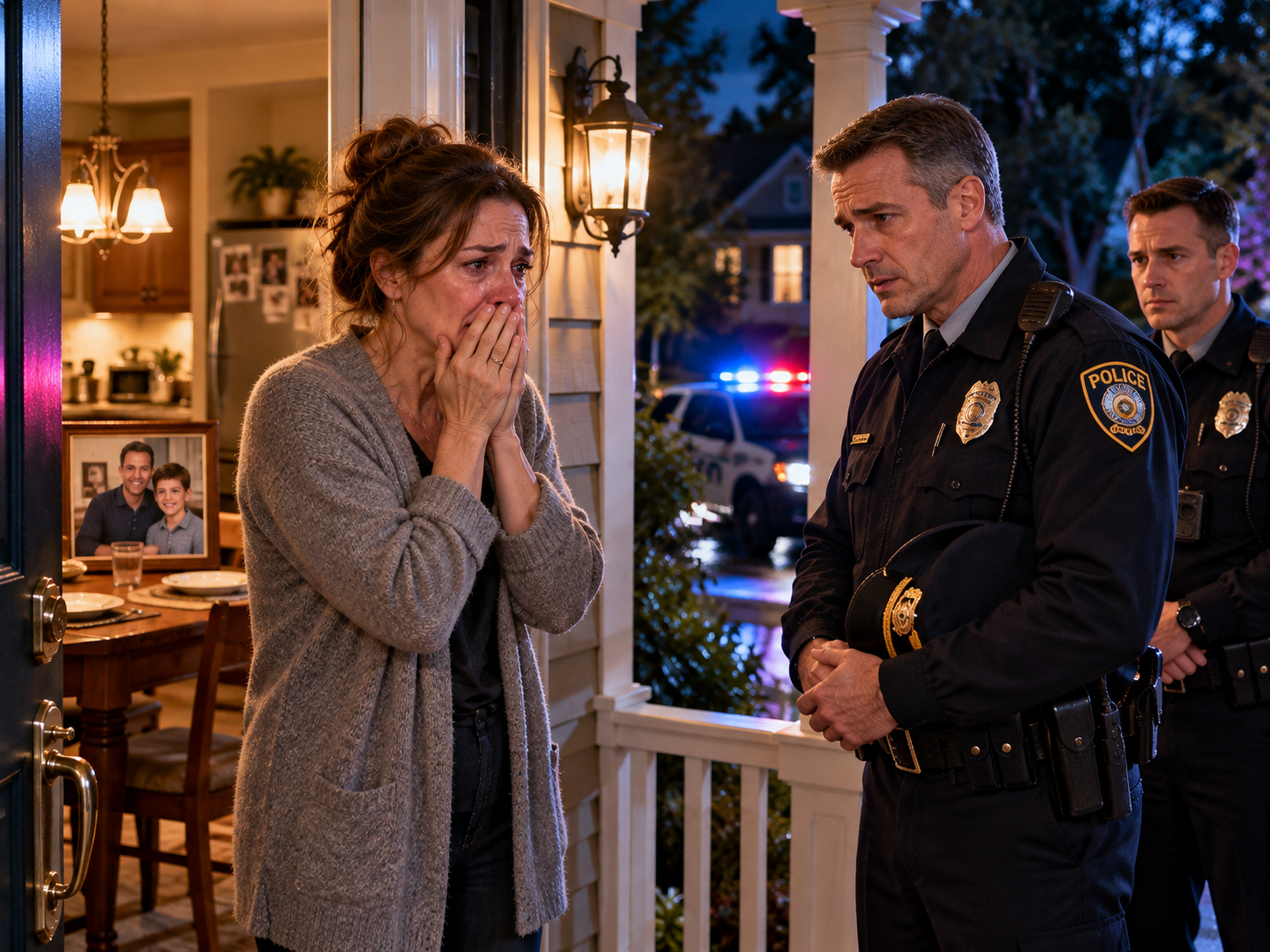
My mother called the following Tuesday and asked whether she could visit my house. She said she had been thinking about Matthew and wanted to see the things I had kept in his room. I was surprised by the request. Since the funeral, she had spoken about the apartment, the bills, and the strain on the family far more often than she had spoken about her grandson. I asked whether she wanted to come because she missed him or because she hoped the visit would help us move past our disagreement. She went quiet, then admitted that both reasons were probably true.
I told her she could come, but I needed her to understand that the visit was not a promise of reconciliation. I was not going to use Matthew’s belongings as a way to make her feel better, and I did not want to spend the afternoon discussing the apartment. She said she understood. I was not entirely sure she did, but I agreed to let her come on Saturday. After we hung up, I stood in the hallway outside Matthew’s room, wondering whether I was ready to share that space with someone who had chosen not to be beside me at his funeral.
Saturday arrived cold and bright. I spent the morning deciding what I wanted to leave untouched. Matthew’s baseball glove sat on the shelf above his desk, and his fishing checklist remained inside the wooden box with the classmates’ notes. His schoolbooks were stacked beside the bed. I had not arranged the room for visitors, and I did not want to turn it into a display. I left everything as it was, allowing the familiar disorder to remain part of the boy who had lived there.
When Dolores arrived, she carried a small paper bag. Inside was a framed photograph of Matthew from a school event, one I had given her years earlier. She said she had found it in a drawer and thought I might want it. I thanked her and placed it on the desk. She stood near the doorway, looking around without moving farther into the room. Her expression changed when she saw the baseball glove. She touched the edge of the desk and whispered that she remembered Matthew asking her to come to one of his games.
I remembered that day, too. He had been excited and had asked his grandparents to sit near the third-base line because he thought he might hit the ball in that direction. My mother had come late and stayed only until the game ended. At the time, I had told myself that everyone had busy lives and that Matthew would remember the fact that she came, not how long she stayed. Now I wondered how many times I had translated someone else’s absence into an explanation that would hurt less.
Dolores sat on the edge of the bed and began to cry. She said she had thought there would be more time, that Matthew was young and there would be birthdays, school events, and ordinary family dinners in the years ahead. I sat in the desk chair and listened. I knew that her grief was real. Matthew had been her grandson, and she had lost him too. But her pain did not erase the decision she had made when I asked her to help me bury him.
“I wish I had been there,” she said. “I wish I had come home.” I looked at her hands folded in her lap. “I wish you had come, too,” I replied. “But I needed you then, not afterward.” She nodded, wiping her face with a tissue. For once, she did not tell me that I was strong enough to handle things or that the family had already paid for the trip. She sat with the fact that she had not been there, and I allowed the silence to continue.
After a while, she asked whether I had kept the letter from Matthew’s classmates. I showed her the box and let her read a few of the notes. She lingered over the drawing of a fishing boat with two figures standing inside it, one tall and one small. The child who had drawn it had written Matthew’s name above the smaller figure. My mother traced the edge of the paper without touching the drawing. She said she had not realized his classmates had sent so many messages. I told her Mrs. Moore had brought them to the funeral, and Sarah had helped me keep them together.
My mother asked if I had been alone at the funeral. I explained that Sarah had stayed beside me and Mrs. Moore had brought the letter. A few people from work had sent flowers, and some neighbors had offered food. I did not need to exaggerate the emptiness to make it clear. There had been kindness, but the absence of my parents and sister had left a space no number of flowers could fill. Dolores covered her mouth and began crying again. I did not reach for her immediately. I was learning that comforting someone was a choice, not a reflex I had to obey.
When her tears eased, she asked whether I could forgive her. The question frightened me more than her crying had. I wanted to say yes because I wanted my mother back. I also wanted to say no because I was afraid that forgiveness would become permission for everyone to return to the old arrangement. I told her I did not know what forgiveness would look like yet. I could accept that she regretted her choice, but I could not make myself feel that the choice had been undone.
She said she was not asking me to restore the apartment or pay her bills. I looked at her carefully, trying to determine whether she understood the distinction or was simply repeating the words she thought I wanted to hear. She continued, saying she had spoken with my father about their budget and that they were making changes to manage their expenses. She said they would contact the insurance company themselves if they needed different coverage and would postpone some nonessential purchases. It was the first time she had described a plan that did not begin with my money.
I told her I was glad they were making arrangements. I also told her that I would not be responsible for making sure those arrangements worked. If she wanted help reading a form or understanding a letter, she could ask, and I might be able to assist. But she would have to accept that I could say no, and that a no would not mean I had stopped loving her. She listened without arguing. I could not tell whether she fully accepted it, but she did not ask me to promise anything more.
Before she left, Dolores stood beside Matthew’s bed and asked whether she could say goodbye to him. I stepped into the hallway and gave her a few minutes alone. I heard her speak softly, though I could not make out every word. When she came out, her eyes were swollen, and she thanked me for letting her visit. I told her that Matthew had been loved, and that I hoped she would remember him as a boy who had jokes, plans, and a future he had believed was waiting for him. His life had been more than the tragedy that ended it.
At the front door, she asked whether I would come to dinner the following week. I said I would consider it, depending on how I felt. She did not press me for an answer. That small restraint mattered. For years, my mother had often treated hesitation as a problem she needed me to solve for her. This time, she accepted the uncertainty and left without demanding reassurance.
After she was gone, I returned to Matthew’s room. The framed photograph she had brought sat on the desk, beside his schoolbooks. I moved it slightly so it would not cover the corner of his baseball schedule. I felt both tenderness and anger, and I no longer tried to force one feeling to cancel the other. My mother had loved Matthew. She had also failed me when I needed her. Both things were true, and pretending otherwise would not make either truth easier to carry.
That evening, Sarah asked how the visit had gone. I told her that my mother had cried, that she had read the classmates’ notes, and that she had finally said she wished she had been at the funeral. Sarah asked whether I felt better. I thought about the question before answering. I felt lighter in one way because the truth had been spoken without being argued away. I felt sadder in another because hearing my mother acknowledge the loss reminded me that she had been capable of understanding it all along.
Sarah said I did not have to decide what to call the visit. It could be a beginning without being a resolution. I liked that. I had become suspicious of moments that were presented as turning points, especially when they required me to forget what had happened before. My mother had taken a step toward me. I could let that step matter without opening every door she had once been able to walk through.
Over the next few days, Dolores sent a short message asking how I was doing. She did not mention money, the apartment, or the family meeting. I replied honestly that some days were manageable and others were difficult. She wrote that she was sorry the difficult days were still there and that she hoped I would take care of myself. The message was simple, and I did not read more into it than it contained. I appreciated the concern without assuming it meant everything had changed.
I continued working, managing the property, and sorting Matthew’s belongings a little at a time. Some mornings, I could look at his photograph and remember his smile without immediately collapsing. Other mornings, I could not enter his room at all. I stopped judging those differences. Grief did not follow a schedule, and neither did trust. My mother’s visit had not returned the people I had lost or repaired the months of disappointment that came before it. It had simply allowed us to stand in the same room with the truth.
When I placed the classmates’ notes back in their box, I understood that forgiveness, if it came, would not be a single decision made because someone had cried or apologized. It would depend on what happened next, on whether my mother could respect the limits I had set and whether I could speak honestly without being told to soften every difficult truth. I did not have to reject her forever, and I did not have to welcome her back completely. For now, I could let the door remain open only as far as I was ready to open it.
Click here to continue reading: PART 12: The First Family Dinner After Cancun Tested Every Boundary I Had Set, but I Finally Learned That Peace Was Possible Without Pretending Nothing Had Happened
The Night I Learned My Family Had Chosen a Vacation Over My Son’s Funeral, Something Inside Me Went Quiet, and Nothing Would Ever Be the Same
Part 11 of 20

