
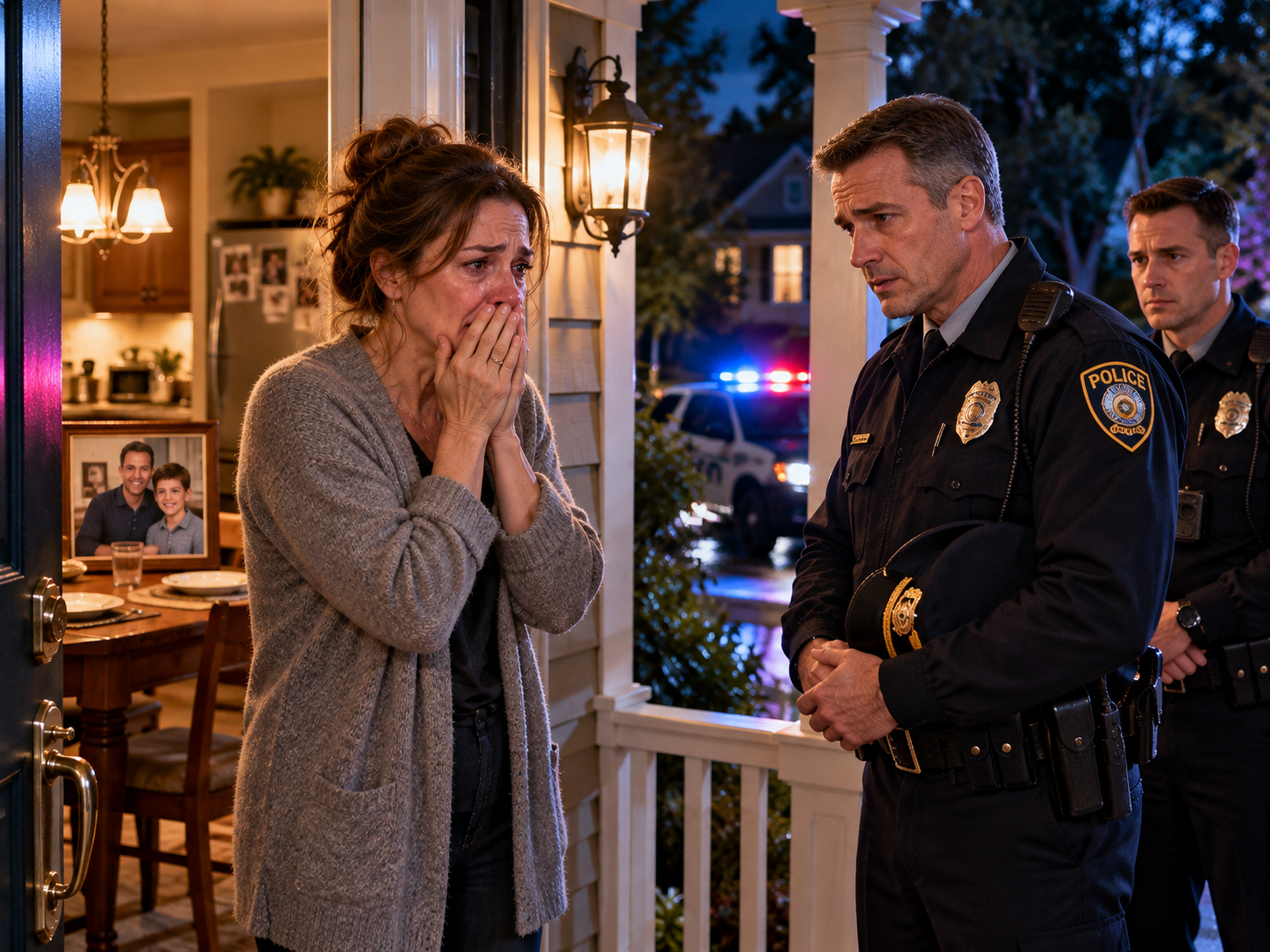
Sarah arrived at the hospital less than an hour after I called her. She found me sitting beside Matthew, staring at the small baseball glove resting on his belongings. I had brought it to the hospital months earlier, thinking that when he woke, he might want to hold something familiar. I had never imagined it would become one of the few things I could carry home without him.
Sarah did not ask me to explain what my mother had said. She sat beside me, took my hand, and waited until I could speak.
“They're going to Cancun tomorrow,” I finally told her.
Her face tightened. “All of them?”
“My parents. Veronica. Ruben. The trip costs eight thousand dollars, and apparently that matters more than being at Matthew's funeral.”
Sarah looked toward the window, then back at me. I could see anger in her expression, but she did not turn it into a speech about how awful my family was. She knew that I had spent years defending them. She understood that hearing someone else condemn them would not immediately undo the loyalty I had built around them.
“What do you need me to do?” she asked.
The question nearly broke me. It was so simple, so ordinary, and so different from everything I had heard that day.
“Help me make the arrangements,” I said. “I can't think clearly enough to do it alone.”
She nodded and reached for her notebook.
We spent the next several hours speaking with the funeral home, confirming the date, and arranging for Matthew's casket to be placed beside Jack's. I wanted them together. Jack had spent six months gone while I sat beside our son, and now I could not bear the thought of burying Matthew somewhere separate from the father who had taken him fishing on that last morning.
The funeral director spoke gently and gave me time to consider each choice. Sarah wrote down the costs and the details I kept forgetting. When I struggled to decide what clothes Matthew should wear, she reminded me that he had loved his baseball uniform and asked whether I wanted to bring it.
I said yes.
It was a small decision, but it gave me something tangible to do for him. I chose a photograph of Matthew smiling after a game, his cap tilted sideways and dirt streaked across one cheek. He had been so proud of the double he hit that afternoon. Jack had taken the picture, and I had complained that both of them looked as though they had been rolling in the grass.
Now I wanted everyone at the funeral to see that boy: not the child in a hospital bed, but the funny, bright, stubborn twelve-year-old who had been so certain that life would always give him another chance.
My mother sent a message that evening.
“Let us know what arrangements you make. We are sorry this has happened.”
I read it twice. She had not asked what Matthew would wear, whether I had found a funeral home, or whether I had eaten anything. She wanted information, as if she were an acquaintance waiting to learn when a service would take place.
I did not reply.
The following morning, I called the funeral home to confirm the final details. Sarah brought me coffee and toast, but I managed only a few bites. I kept thinking about the last conversation I had with Matthew before the accident. He had asked whether his father would let him keep fishing if he caught something small enough to release. I had laughed and told him that Jack would probably make him write an essay about responsible fishing before agreeing.
The memory hurt so sharply that I had to put the phone down.
Sarah sat beside me until I was ready to continue.
By Wednesday afternoon, I had begun to understand how much practical work grief required. There were certificates, signatures, calls to Jack's employer, and questions about the cemetery. People wanted answers when all I wanted was to lie down beside my son and refuse to accept that the world had moved on without him.
I called my father once more. I asked whether he could at least attend the funeral and help with the arrangements that morning.
He said he would see what could be done.
“Dad, I need a yes or a no.”
He paused. “Your mother has already explained the situation. We have commitments, Angela.”
“Your grandson is being buried.”
“I know that.”
“Then why am I having to beg you to be there?”
His voice hardened. “Don't talk to me as if we don't care. We are trying to manage a difficult situation, too.”
I closed my eyes. My father had always been skilled at turning a question about his behavior into a complaint about my tone. I had learned to soften every request before making it, because if he felt criticized, the conversation became about his dignity rather than the thing I needed.
“I can't do this right now,” I said.
Neither of us apologized. He ended the call, and I sat with the phone in my lap, feeling as though I had been asked to comfort someone else for the pain of my son's death.
Veronica posted a photograph that afternoon. I saw it because Sarah, who had been checking messages from relatives, asked whether I wanted to know what my sister was sharing. I almost told her no. Then I remembered the way Veronica had spoken to me and decided I would rather see the truth myself than have it delivered later as a surprise.
The picture showed her on a beach in Cancun, wearing a yellow dress and holding a bright tropical drink. Ruben stood beside her in dark sunglasses. My mother and father were behind them, smiling beneath the sun. Veronica's hand rested over her pregnant belly.
The caption said she was thankful for a family that always showed up when she needed them most.
I stared at the screen.
For a moment, I could not reconcile the picture with the woman who had told me that her nephew's death was my problem. My mother had said they could not lose eight thousand dollars. Now I could see them spending money on drinks, meals, and the comfort of being together. They had not simply been unable to attend the funeral. They had chosen not to.
Sarah reached for the phone, then stopped when she saw my expression.
“Angela, you don't have to keep looking at it.”
“I need to remember it exactly.”
I took screenshots of the picture, the caption, and the time it had been posted. I saved them in a folder on my computer. I did not know whether I would ever show them to anyone. I only knew that I had spent too many years accepting vague explanations that made me doubt my own understanding of events. I wanted a record of what I had actually seen.
Then I put the phone away.
That evening, I sat in Matthew's bedroom. His schoolbooks were stacked on the desk, his baseball trophies lined the shelf, and his favorite hoodie hung over the back of the chair. A half-finished homework assignment lay beside a pencil with teeth marks near the eraser. I had kept the room exactly as it was because moving anything felt like another admission that he would not return.
I picked up his baseball glove and ran my fingers along the worn leather. He had received it for his tenth birthday and had insisted on sleeping with it beside his bed for three nights. Jack had taught him how to soften the leather, and Matthew had complained that the process was taking too long.
I could hear their voices in my memory, overlapping in the backyard.
For a while, I cried so hard I could not breathe properly. Then the tears slowed, leaving me exhausted and strangely clear. My family had spent years relying on my willingness to absorb the inconvenience of their choices. I had paid bills, arranged celebrations, provided housing, and quietly covered the gaps when their plans exceeded their means.
I had believed that generosity was a bridge between people.
Now I understood that a bridge could become a road everyone expected to use, even when nobody cared whether it was collapsing beneath the person who built it.
Jack and I had inherited a small apartment near downtown Chicago from his grandmother. We already had a home, and the apartment was an asset we intended to keep as a modest investment. When Veronica and Ruben complained that they could not save enough for a down payment, Jack suggested that we let them use the apartment temporarily.
“We can help them get settled,” he had said. “Family helps family.”
I had agreed. At first, the arrangement seemed sensible. They would save money, build their finances, and eventually move into a place of their own. We would not charge rent, though they were expected to cover their utilities and look after the property. We trusted them to respect the arrangement because they were family.
Years passed. Veronica and Ruben furnished the apartment, replaced small items, and began speaking about it as though it were already theirs. Whenever I asked whether they had made progress toward buying a home, Veronica said they were trying. Whenever Jack mentioned that we might eventually need the apartment, Ruben assured him that they would move when the time came.
There was always a reason to wait.
Meanwhile, I continued helping my parents. I paid part of their insurance, covered some medications, helped with repairs to my father's truck, and regularly paid down my mother's grocery-store credit card. None of those expenses seemed enormous when viewed separately. Together, they had become a substantial part of my monthly budget.
When Veronica married Ruben, I paid most of the reception costs because she had been upset about the possibility of a modest celebration. I did not want her to feel inferior to friends whose families had more money. I told myself that a wedding happened once, and I could afford to help.
After Matthew's death, those memories returned with a different weight. I thought of every transfer I had made without being asked for repayment, every bill I had covered before it became overdue, and every time I had rearranged my own plans because someone else needed help.
I did not regret every dollar. I had chosen to help, and much of that help had come from genuine affection. What hurt was realizing that my family had begun to treat the assistance as permanent. They expected my support to continue even when they could not spare a day to stand beside me.
On Thursday morning, Sarah arrived before sunrise. She helped me dress and drove me to the funeral home. Matthew's baseball uniform had been prepared, and the photograph I had chosen was placed near the casket. His teacher, Mrs. Moore, arrived carrying a letter from his classmates. She had driven more than an hour to be there, and her eyes were red.
She hugged me and told me how much the children loved Matthew. They had written messages about his jokes, his kindness, and the way he always offered to help when someone struggled with an assignment. One child had written that Matthew made even the worst school days better because he could always find something funny to say.
I read the letter slowly, pausing whenever my vision blurred.
My parents did not come.
Veronica and Ruben did not come.
The people who had been given free housing, financial support, and years of my attention were enjoying a vacation while strangers and school friends helped me bury my son.
The casket was placed beside Jack's. I watched the workers make the arrangements and felt the ground beneath me become unreal. The priest spoke about love and the hope of reunion. I listened, but my mind kept returning to the picture of Veronica in her yellow dress.
I imagined my parents sitting at a restaurant near the water. I imagined Ruben ordering food while my mother discussed the baby's arrival. I imagined Veronica raising her drink and thanking the people who had supposedly always shown up for her.
I wondered whether any of them had thought about Matthew at all.
After the burial, Sarah offered to stay at my house. She was afraid that I would return to an empty home and become overwhelmed by the silence.
“You shouldn't have to be alone tonight,” she said.
I looked at her, grateful for the concern. Then I thought about the apartment near downtown, the one Jack had inherited and we had allowed Veronica and Ruben to occupy for years without rent.
“I have something I need to do first,” I told her.
She studied my face. “What is it?”
“I'm going to the apartment.”
“Do you want me to come with you?”
“No. Not yet.”
I did not want an audience. I did not want to shout or explain myself to anyone. I wanted to see the apartment and make the first decision that belonged entirely to me.
I drove through Chicago with the funeral program on the passenger seat. The streets were busy, and people moved between shops and offices as though the day were no different from any other. I parked near the building and took out my key.
For years, I had opened that door to deliver groceries, collect paperwork, or check whether a repair had been completed. I had walked through rooms filled with furniture purchased with money Veronica and Ruben should have been saving. I had listened to their plans and reassured them that they had time.
That afternoon, I unlocked the door and stepped inside.
The apartment smelled of scented candles and laundry detergent. A decorative bowl sat on the counter, and a pair of Ruben's shoes lay beside the sofa. Veronica's pregnancy magazines were stacked on a side table. A framed photograph of the couple stood near the television.
Everything looked comfortable.
Everything looked permanent.
I walked from room to room without touching anything. I checked the cabinets, the closets, and the storage area. Their belongings filled the apartment, but the title and legal documents were not in their names. Jack's grandmother had left the property to him, and the estate records showed that it had passed to me after his death. I had continued allowing Veronica and Ruben to live there because I had believed they would eventually become independent.
I stood in the living room and looked at the framed photograph.
They had a home because I had given them one.
My parents had financial breathing room because I had helped pay their bills.
Veronica had enjoyed a wedding she could not otherwise afford because I had paid for it.
And when my son died, they had chosen a vacation.
I took out my phone and called a locksmith.
“Are you looking to change one lock or replace the entire set?” he asked.
“Everything,” I said. “I want every old key to stop working.”
He asked whether I owned the property. I told him I could provide the documents. He scheduled the work and explained that he would verify my authority before proceeding.
After the call, I sat on the edge of the sofa and looked around the apartment one last time before the movers arrived. I did not hate Veronica and Ruben's furniture. I did not want to damage their belongings or make the move harder than necessary. I wanted to end an arrangement that had become an entitlement.
I contacted a moving company and arranged for their possessions to be packed carefully and delivered to my parents' house, where the family could collect them after returning from Cancun. I paid the additional cost to have the work completed promptly. The apartment would be cleared, the locks changed, and the property secured according to the legal requirements.
The movers arrived that afternoon. I showed them the rooms and told them to pack everything without breaking or discarding anything. They worked methodically, wrapping dishes, carrying boxes, and labeling furniture. I watched from the doorway as the apartment gradually emptied.
When the final box was loaded, the rooms looked larger than I remembered. I walked through them once more, checking that nothing had been left behind. Then I handed the movers the delivery instructions for my parents' house.
I had not decided what I would say when my family returned.
But I had decided that the apartment would no longer be waiting for them.
Click here to continue reading: PART 3: I Packed My Sister’s Belongings Without Breaking a Single Plate, Then Discovered How Much My Family Had Been Taking From Me Every Month
The Night I Learned My Family Had Chosen a Vacation Over My Son’s Funeral, Something Inside Me Went Quiet, and Nothing Would Ever Be the Same
Part 2 of 20

