
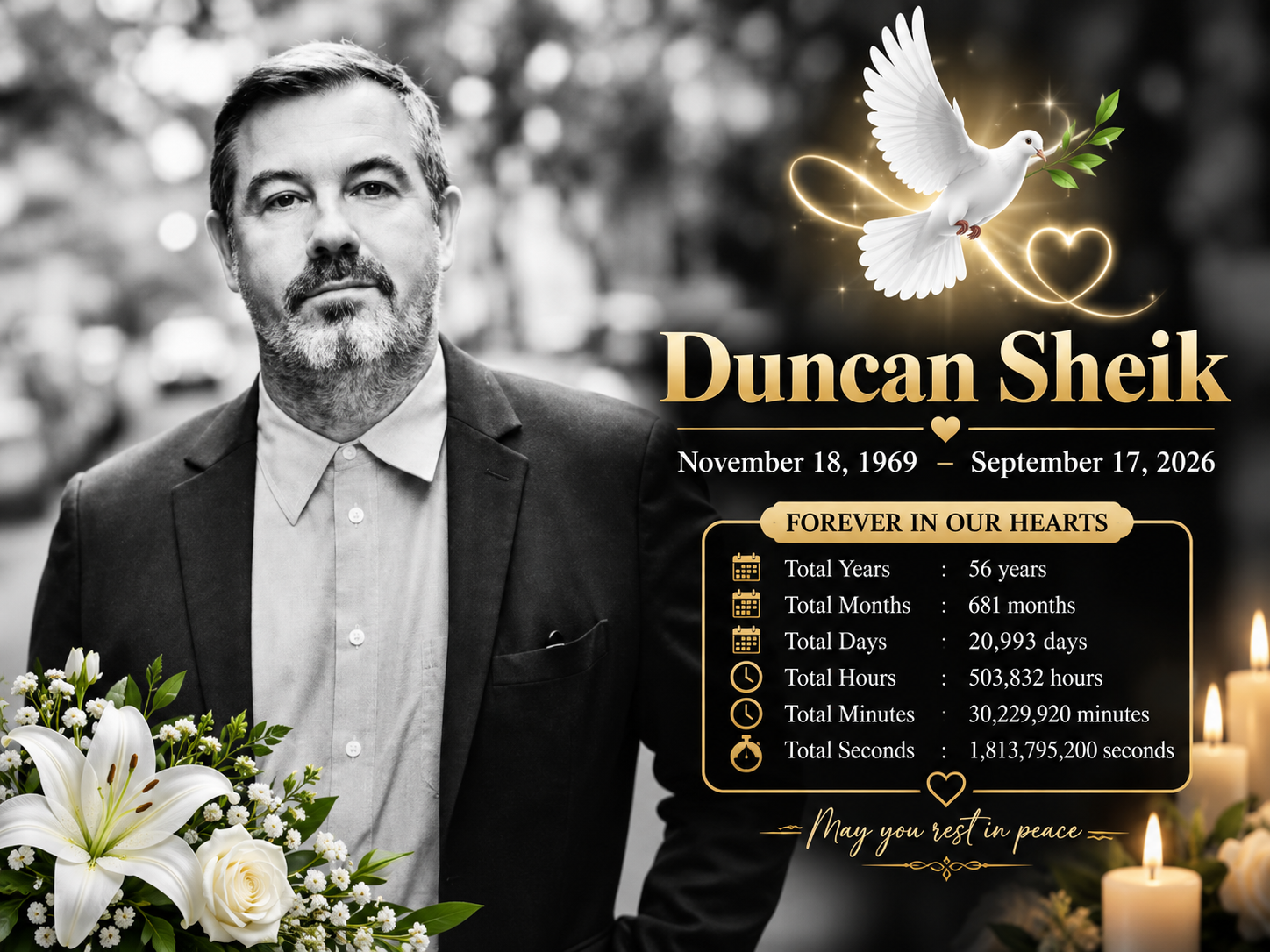
The temptation after Duncan Sheik’s death was to organize his life around two achievements: “Barely Breathing” and Spring Awakening. Both deserve their place at the center of the story, but neither explains the full distance he traveled. Between those milestones were years of albums, theater collaborations, workshops, performances and experiments that rarely fit the simplest version of his biography.
His 1996 debut had made him recognizable almost overnight. “Barely Breathing” remained on the Billboard Hot 100 for 55 weeks, an unusually long run that turned a quiet singer-songwriter into a nationally known recording artist. The album eventually went gold, and Sheik received a Grammy nomination for Best Male Pop Vocal Performance. Those were measurable achievements, and they established the public identity from which the rest of his career would have to move. ([Los Angeles Times][6])
The difficulty was that the identity created by the market was narrower than the person making the music. Sheik had studied semiotics at Brown University and had spent years listening to music that did not fit comfortably inside commercial pop categories. He was interested in atmosphere, structure and meaning. His ambitions were therefore broader than reproducing the sound that had worked once.
His later albums reflected that. Humming followed the debut without simply becoming a second version of it. Phantom Moon in 2001 became an important bridge toward his theater work, particularly because of his collaboration with Steven Sater. The connection between the two writers eventually became one of the most consequential partnerships of his career.
Their collaboration was not built around the assumption that every song needed to function as a radio single. Instead, the music had to belong to characters. A song could begin in one emotional state and end somewhere else. A melody could return with different lyrics. An instrumental sound could help define an environment. Theater required Sheik to think about what happened between songs as carefully as what happened inside them.
Spring Awakening became the clearest expression of that approach. The musical’s young characters were living under severe restrictions, and the contrast between their historical surroundings and the contemporary rock score gave the production its distinctive tension. The music did not attempt to make the 19th century sound safe or distant. It made the characters sound emotionally immediate.
Sheik later explained that his Buddhist outlook influenced the way he thought about human emotional states while working on Spring Awakening. In a 2015 interview, he described an interest in how people move between radically different states of being. That perspective helps explain why the score could shift quickly between intimacy, anger, fear, desire and release without treating any one emotional state as permanent. ([The Washington Post][7])
The musical’s success established a second identity for him. He was no longer simply the singer who had once been nominated for a Grammy. He was now a Tony-winning composer whose music had become part of a major Broadway production. That change was not merely a career promotion. It changed the kind of artistic responsibility placed on him.
A pop album can disappear from the charts while remaining important to listeners. A musical has another kind of afterlife. Schools, regional theaters, professional companies and revival productions can continue staging it. Each production creates another interpretation. Spring Awakening therefore became larger than the original Broadway cast, even though that cast remained central to the show’s history.
Sheik’s later projects showed that he did not intend to spend the rest of his life recreating that particular success. American Psycho was radically different in tone. Alice by Heart shifted into wartime London and drew on Alice in Wonderland. The Secret Life of Bees brought another set of characters, themes and musical textures. Each project demanded that he begin again.
Some of those works developed through long processes. Theater frequently requires workshops and revisions before an audience sees the finished result. That means the public record of a composer’s career can make the work appear more sudden than it actually was. A musical that opens in one year may have been developing quietly for years beforehand.
Memoirs of Amorous Gentlemen was another example. The production announced in 2026 was built around a Japanese manga by Moyoco Anno, with a book by Leah Nanako Winkler and direction and choreography by Rob Ashford. Sheik supplied music and lyrics. The combination placed his writing inside a new theatrical world, far removed from the teenage rebellion of Spring Awakening. ([DKC/O&M][1])
The production also showed how much his professional life had become collaborative. In the original Spring Awakening partnership, he worked closely with Sater. Decades later, he was again one part of a larger creative team. The pattern was consistent even when the names and stories changed: Sheik’s music became most powerful when it interacted with another person’s dramatic structure.
That collaborative identity extended beyond theater. His work as a recording artist continued, although the scale of attention varied. Covers 80s allowed him to reinterpret music by artists associated with the British scene of the 1980s. The project was another indication that he was comfortable entering someone else’s musical vocabulary and finding his own way through it.
Then came Claptrap in 2022. Its ambient electronic character demonstrated that Sheik’s interest in sound had not narrowed with age. The album could be heard as part of a later period in which he was less concerned with proving himself within a commercial category and more willing to explore texture and atmosphere.
This is where the timeline becomes important. His final studio album was released four years before his death. Yet he continued working on theater. The absence of a new solo album after 2022 does not mean that he had stopped creating. His creative energy had shifted toward other forms, particularly stage work.
Theater also allowed him to collaborate with younger artists. That mattered because his own early career had been shaped by relationships with musicians around his age. At Brown, he had played with Lisa Loeb. Later, Spring Awakening brought him into a creative environment filled with emerging performers. His work therefore repeatedly crossed generations.
The tributes after his death reflected that history. Actors from Spring Awakening remembered not only the music but their experiences of working with him. Lea Michele, Skylar Astin and other original cast members publicly mourned him, describing the importance of the composer behind the production. Such recollections are subjective, but they document the continuing personal connection between Sheik and the people whose careers intersected with his work. ([People.com][4])
His influence is therefore visible in more than award counts. A score can become part of another artist’s professional beginning. A song can be performed by someone who was not alive when it was written. A musical can be revived by actors who were children when the original production opened. That is a different form of longevity from chart success.
It also explains why Sheik’s death generated reactions from both music and theater communities. He occupied two professional worlds that are often treated separately. The singer-songwriter audience remembered “Barely Breathing.” Broadway audiences remembered Spring Awakening. Composers and theater artists remembered the wider body of work.
The two sides were never completely separate. The songwriter’s attention to melody helped the theater composer. The theater composer’s understanding of character changed the later songwriter. The result was a career in which the boundaries between popular music and stage composition gradually became less important.
His private philosophy about authorship fits this pattern. If a work becomes independent after it is released, then the artist cannot fully determine what it becomes. The audience completes the process. In Sheik’s case, that idea was visible throughout his career: a radio hit became a memory for one generation; a theater score became a starting point for another.
There is also a quieter lesson in the timing of his death. He was still attached to new work. His final weeks were not a retirement period. He had productions scheduled, collaborators working and music waiting to be heard. His death interrupted a career that was still producing material rather than closing neatly after a final achievement.
That makes the phrase “final work” difficult to use. Memoirs of Amorous Gentlemen was his latest major theatrical project, but audiences may encounter other pieces of his writing in future productions, recordings or revivals. A composer’s final work is often discovered only after the fact, when there is no possibility of asking what would have come next.
Sheik’s biography therefore ends without the tidy resolution that a conventional career narrative might suggest. He did not return to the exact sound of his first success. He did not spend his final years simply repeating Spring Awakening. Instead, he continued moving through different artistic forms.
The man who once became famous for a song about emotional distance eventually wrote music for characters who were desperate to speak. The composer who won major awards continued working on projects whose outcomes were uncertain. The artist whose first major success made him highly visible eventually became increasingly comfortable allowing other performers to stand in front of his music.
That movement is the strongest thread connecting the different chapters. It began with a boy learning piano from his grandmother, continued through guitar and Brown University, moved into pop recording, and then entered theater. It passed through success, disappointment, experimentation and collaboration.
And when his life ended in Manhattan at 56, the process had not naturally reached its conclusion. The calendar simply stopped. The work did not.
Click Here to continue read next: PART7: The people who had known Duncan Sheik through music began remembering the man behind the records, while his unfinished stages waited for their own voices
Days before new work was supposed to reach New York audiences, Duncan Sheik’s story suddenly ended, leaving behind a career that had begun far from Broadway
Part 6 of 16

