
After the announcement of Duncan Sheik’s death, the first public memories came from the people whose lives had intersected with his music. Their recollections revealed something that a list of awards could not. They remembered a composer who had entered their careers at a moment when many of them were still young performers, and whose music became inseparable from one of the most important productions they had worked on.
The Spring Awakening company was particularly affected. Members of the original cast shared messages mourning Sheik and describing his importance to the musical and to their own professional lives. Lea Michele, Skylar Astin and other performers were among those who publicly remembered him. Their accounts were personal, so they cannot be treated as objective measurements of his entire character, but they provide direct evidence of how collaborators experienced the relationship. ([People.com][4])
For audiences who knew only the name on the cast album, the distinction may have been easy to miss. Theater is a collective art. The composer writes music, but actors give it a body. Musicians give it sound. Designers create the environment. Directors shape movement and emphasis. Audiences supply attention and interpretation. Sheik’s work lived inside that network.
That was already true when Spring Awakening opened in 2006. The score did not exist separately from the young performers who sang it. Their voices gave the songs identities that became attached to the original production. Over time, later casts inherited the same melodies but created different performances.
Sheik’s relationship with performers therefore became part of his artistic legacy. He had once been the person standing at the microphone, carrying his own songs. In theater, he became the person whose music had to trust other people. That required a different kind of control—one based not on performing every note himself, but on building material strong enough to survive interpretation.
The success of Spring Awakening made that process visible. Eight Tony Awards followed the Broadway production, including Best Musical. Sheik and Sater shared the award for Best Original Score, while Sheik also received the Tony for orchestrations. The cast recording won the Grammy for Best Musical Show Album. Those facts remain the clearest formal markers of the show’s achievement. ([Reuters][3])
But awards do not explain why people continued to remember the music. For that, the songs themselves mattered. The score had a contemporary rock language that made historical characters feel close to modern audiences. It allowed the show to discuss subjects that could otherwise have seemed distant or safely contained in the past.
That was one reason the planned 2026 revival carried significance. A new cast would encounter the score under circumstances different from those surrounding the original production. The actors were not the teenagers of 2006. The audience was not the audience of 2006. Yet the questions embedded in the material remained available for interpretation.
Sheik would not be present to watch that new generation. The revival therefore became another example of the author’s separation from his work. He had created the score, but the next production would belong to its own company.
Memoirs of Amorous Gentlemen created an even more immediate version of the same situation. Its performances were scheduled to begin only days after his death. The production team had already announced its complete cast and creative staff. The music and lyrics were Sheik’s, but the production had become a living collaboration involving Winkler, Ashford, Matias and the performers. ([DKC/O&M][1])
There was no way for the audience to experience the show as though Sheik were simply absent from one rehearsal. His death changed the historical context before the first performance. Every note written by him would be heard knowing that he was no longer alive.
Yet that knowledge did not transform the musical into a memorial by itself. The performers still had to tell the story. The director still had to shape the production. The musical supervisor still had to make the score work in performance. The work retained its own purpose.
This separation between grief and artistic responsibility is one of the quiet difficulties of a death during production. People can mourn someone and still have a job to do. They can remember a collaborator while concentrating on timing, pitch, choreography and stage movement. The result may carry emotional weight without becoming a formal tribute.
Sheik’s family also had to confront that separation. Public reports identified Nora Ariffin as his wife and their daughter Ines, along with his parents and half-siblings. His family’s statement described him in ordinary human terms—father, husband, son, brother and friend—before describing his professional influence. That ordering matters because it reminds readers that a career biography records only part of a life. ([Monorepo Sample1][2])
The public record does not provide enough information to reconstruct his final private hours in detail, and it would be misleading to invent such a scene. What is documented is that he had been receiving medical care, that a statement on September 17 described his condition as critical but stable, and that he died later that day in Manhattan. His family said he died surrounded by loved ones. ([Los Angeles Times][6])
Reports about the medical cause require the same care. Some outlets reported cardiac arrest, while the New York Times and several publications citing it reported organ failure based on information from his mother, Suzanne Sheik. Other reports described heart failure leading to cardiac arrest. Without a detailed medical record made public, the safest account is to preserve that distinction rather than invent a more specific diagnosis. ([Los Angeles Times][6])
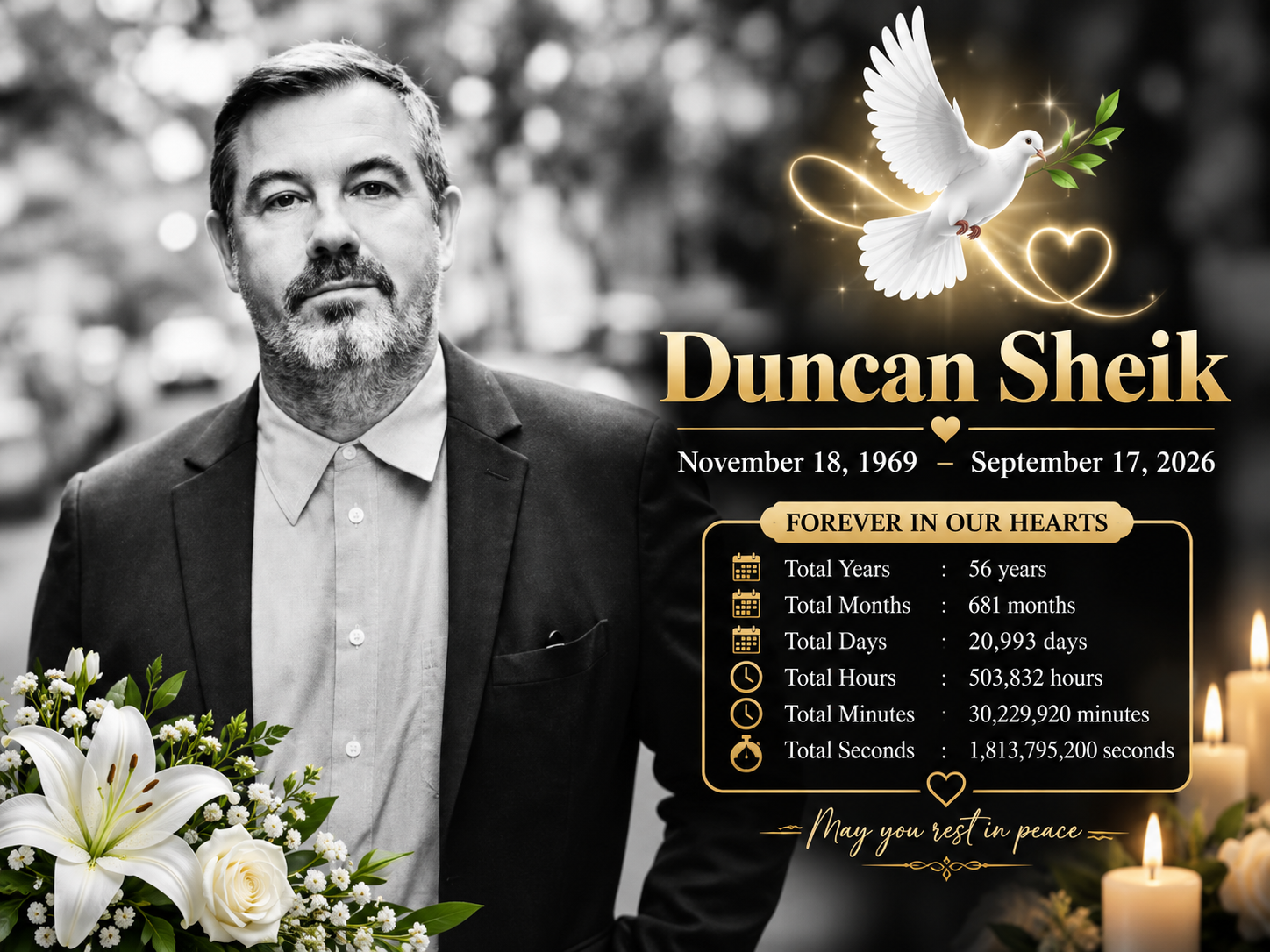
The uncertainty surrounding those final medical details stands in contrast to the clarity of his professional chronology. His birth date is established as November 18, 1969. His death date is established as September 17, 2026. He was 56. He attended Brown University. He released his self-titled debut in 1996. He co-created Spring Awakening with Steven Sater. Those points are documented independently of the unanswered questions surrounding his final illness.
The chronology also makes his age at each major stage easy to understand. He was in his mid-20s when “Barely Breathing” made him famous. He was in his 30s when Spring Awakening began transforming his career. He was in his 40s when many of his later theater projects were developing. He was 56 when his life ended while new work remained scheduled.
That progression matters because it challenges the idea that his career was simply divided into a pop period and a Broadway period. The transition was gradual. He was writing songs while exploring theater. He was recording albums while developing musicals. He was drawing from earlier music while experimenting with electronic sound. The categories overlapped.
His relationship with Buddhism also appeared in the way he spoke about art. His comments about impermanence and the independence of released work were not merely abstract ideas. They described the reality of his profession. Once another actor sings a song, the performance belongs partly to that actor. Once an audience hears it, the meaning can shift.
That is particularly true of Spring Awakening. The show has continued through revivals and new productions, each one altering the circumstances without changing the fundamental score. Sheik’s music becomes a kind of framework. The people inside it create the immediate experience.
His earlier pop career worked differently. “Barely Breathing” is strongly attached to his own recorded voice. When listeners hear the original recording, they hear the exact performance that established his public identity. Theater gave him a different kind of permanence: not one definitive performance, but many possible ones.
That difference helps explain why his death will not end his visibility in either field. Radio listeners can still return to the 1996 recording. Theater companies can still stage Spring Awakening. New productions can present Alice by Heart, American Psycho or other works. Memoirs of Amorous Gentlemen can reach audiences who will never have seen Sheik in person.
The work will also continue to create new questions. Future audiences may hear Spring Awakening differently from audiences in 2006. They may focus on different characters or themes. A new production can expose details that were less visible before. That process is not a defect in the original work. It is one of the normal ways theater survives.
For Sheik’s family and collaborators, however, the change is irreversible. There will be no new rehearsal conversation with him, no revised song arriving from his studio, no future interview in which he explains what a new project meant to him. The living source of those decisions is gone.
That is the point where biography and legacy separate. Biography concerns what happened while the person was alive. Legacy concerns what happens afterward, and much of it cannot be controlled. Sheik could choose what to write, but he could not decide how every future listener would hear it.
His own earlier comments about authorship now carry an unexpected weight. He had already considered the possibility that an artwork becomes independent once it enters the world. His death made that independence permanent. The songs no longer have a living author available to revise their context.
Yet that does not mean the work becomes meaningless without him. It means the responsibility for interpretation moves outward. Performers, directors, musicians, critics and audiences become the people through whom the work continues.
The next chapter therefore cannot belong entirely to Duncan Sheik. It belongs to everyone who will hear, stage, study or remember what he created. That is not a replacement for him. It is simply the condition every finished artwork eventually enters.
By the time the first performances of his final musical arrived, the audience would already know the composer was gone. But they would also hear evidence that he had been working toward something new. The music would be present even though the person was not.
And that was the final reversal in a career that had repeatedly changed direction: the singer who once struggled with being defined by one famous song had ultimately created work capable of surviving without his own voice at all.
Click Here to continue read next: PART8: Duncan Sheik’s story closes without another song from him, but the stages and recordings he left behind continue the career he could no longer extend
Days before new work was supposed to reach New York audiences, Duncan Sheik’s story suddenly ended, leaving behind a career that had begun far from Broadway
Part 7 of 16

