
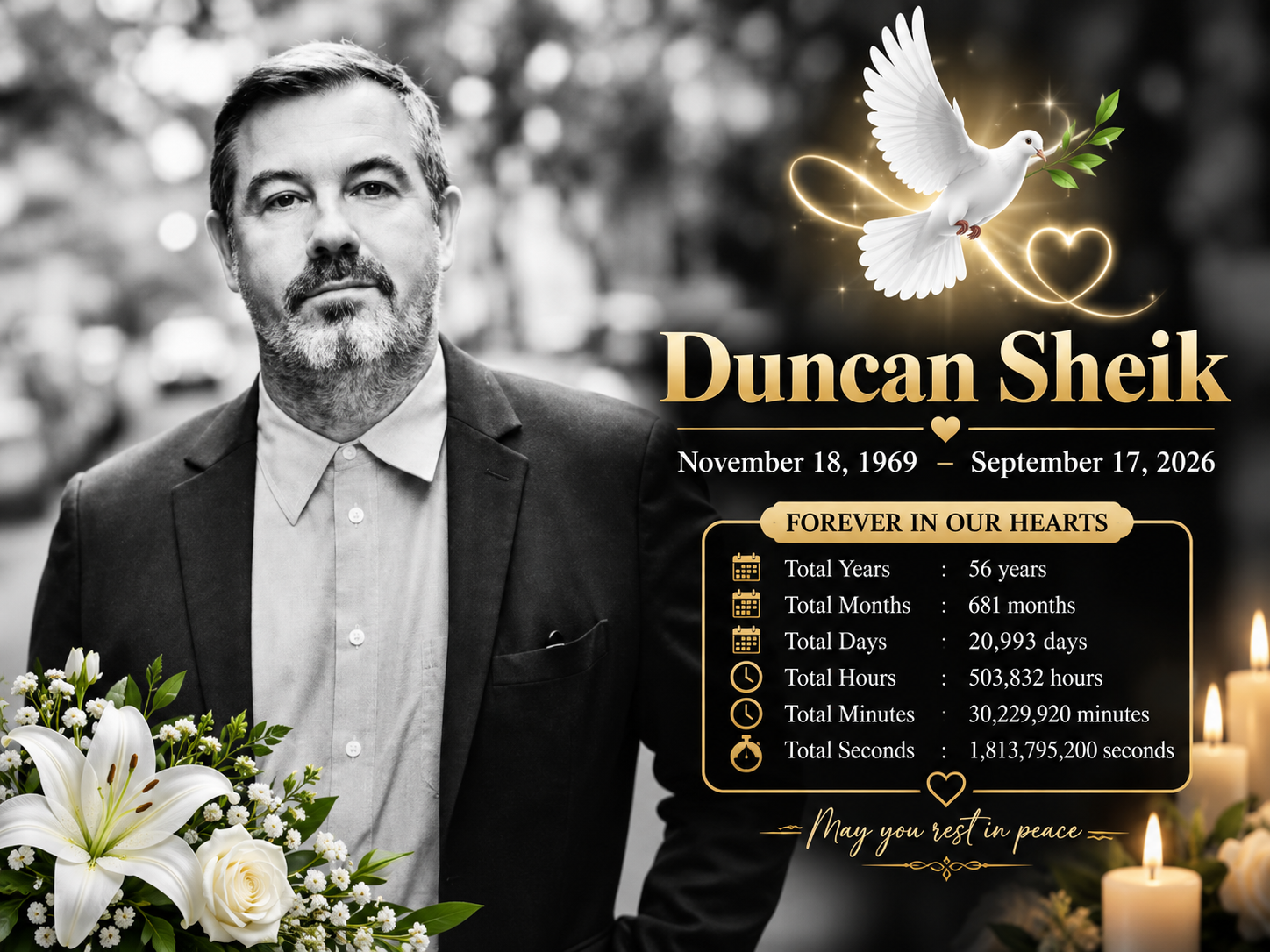
The days following Duncan Sheik’s death did not bring a clean ending to the projects already in motion. His name had disappeared from future rehearsal rooms as a living participant, but his music remained embedded in productions that had schedules, performers and audiences waiting for them. That created a peculiar kind of continuity. His career had ended biologically, yet several of its newest chapters were only beginning to reach the public. ([Broadway.com][1])
The most immediate example was Memoirs of Amorous Gentlemen. The musical was scheduled to begin performances on September 25, 2026, only eight days after Sheik died in Manhattan. The production had already been organized around a creative team that included book writer Leah Nanako Winkler, director and choreographer Rob Ashford, and musical supervisor Or Matias. Sheik had written the music and lyrics. The work therefore had a structure capable of continuing without him, even though his absence was now impossible to ignore. ([Memoirs of Amorous Gentlemen][2])
The venue itself added to the unusual circumstances. The musical was scheduled for the Night Egg, an immersive theatrical environment inside the Culture Club on West 27th Street in Manhattan. Rather than a conventional proscenium arrangement, the production placed audiences close to the action. The official production description presented the setting as a Paris maison close and centered the character Colette, whose relationship to writing and observation formed part of the story. ([Memoirs of Amorous Gentlemen][2])
That meant Sheik’s final theatrical music would not arrive in an abstract concert setting. It would enter a physical environment designed to make the audience feel close to the characters. Actors would carry his melodies while moving through a world built by other artists. The composer could no longer watch those choices develop, but the choices themselves had already been prepared during his lifetime.
The announced cast included Sophia Anne Caruso as Colette, Cory Jeacoma as Léon, Nkeki Obi-Melekwe as Nana, Andy Bakun as Sakae and Jenny Powers as Madame, along with an ensemble. Their work belonged to the production rather than to the biography of its composer alone. They had to perform the material as theater, not simply preserve it as an artifact of someone who had died. ([Broadway.com][1])
That distinction is important because Sheik had spent decades moving toward precisely this kind of collaborative art. His early career had placed him at the center of his own recordings. The microphone, guitar and voice made his presence unavoidable. Theater reversed that arrangement. Once a musical entered rehearsal, the composer became one member of a much larger machine.
Spring Awakening had taught him that lesson most dramatically. The songs were his music, but audiences experienced them through actors. Jonathan Groff, Lea Michele, John Gallagher Jr. and the rest of the original company gave the score voices and physical identities. Their performances became part of the public memory of the musical, even though Sheik himself remained outside the action onstage.
That process repeated itself through later projects. American Psycho, Alice by Heart and The Secret Life of Bees each required Sheik to work within a team. The final form depended on writers, directors, actors, designers and musicians. His career therefore became increasingly collaborative as it moved away from the solitary image created by his first pop success. ([Broadway.com][1])
The difference between his first album and his later theater work can be heard in the question of ownership. “Barely Breathing” is inseparable from the recording made by Sheik himself. His voice, phrasing and production choices define the version most listeners know. A musical score is different. Its songs can be performed hundreds of times by different people, each performance producing another interpretation.
Sheik himself had spoken about the idea that an artwork can become independent from its creator once it is released. That philosophy now has an especially literal meaning. His new musical could continue without his presence. His old musical could return with a new cast. His recordings could be replayed. His compositions could be interpreted by musicians who had never met him.
The situation was also complicated by the fact that his death came after a period of medical uncertainty rather than after a publicly announced retirement. In August, Sheik had referred to wanting to be home making music while dealing with hospital visits. On September 17, his family confirmed his death. His mother, Suzanne Sheik, was reported to have given differingly worded accounts of the medical cause in subsequent coverage, with organ failure and cardiac arrest both reported. ([The Guardian][3])
That uncertainty should not be stretched into speculation. What is established is that he had been hospitalized, that his condition had become critical, and that he died in Manhattan at 56. The public record does not provide enough medical detail to reconstruct an underlying disease process beyond the causes reported by his family and major news organizations. The biography is stronger when it leaves that boundary intact.
What is much clearer is the professional timeline. Sheik was born November 18, 1969. He released his first album in 1996. “Barely Breathing” became a major hit. Ten years later, Spring Awakening reached Broadway. In 2007, the musical won eight Tony Awards, including Best Musical, while Sheik received awards for original score and orchestrations. The cast recording later won the Grammy for Best Musical Show Album. ([Broadway.com][1])
Those achievements might have provided a natural endpoint for another musician. For Sheik, they became a platform for further experimentation. He continued recording, including the later album Claptrap in 2022, while developing theater projects that differed significantly from Spring Awakening. His career after Broadway was not simply an attempt to reproduce his biggest theatrical success.
The 2026 productions reveal how far that pattern had continued. Memoirs of Amorous Gentlemen was entirely new material. Spring Awakening was a return to an established work. One looked forward while the other looked backward. Sheik was therefore represented in New York theaters simultaneously by the newest and one of the oldest major theatrical chapters of his career.
The coincidence became even more striking because the new Spring Awakening production was directed by Danya Taymor and scheduled for Studio Seaview beginning in November. The production was described as the third New York staging since the original 2006 premiere, and its young cast was largely under 26. Some performers were younger than the musical itself. ([Vanity Fair][4])
That generational difference gave the revival another layer of meaning without requiring a memorial interpretation. The original show had been written by artists addressing adolescence from one moment in time. Twenty years later, another group of young performers was approaching the same material under different social conditions. The score remained, but the people singing it had changed.
Sheik’s death made that change more visible. The composer could no longer offer a new interpretation of the material. The new performers would have to encounter it through the score, the production history and their own experiences. Their work would become another stage in the life of the musical.
The same was true of Memoirs of Amorous Gentlemen. The cast would not be performing as representatives of a dead composer. They would be performing characters. Yet audiences would inevitably hear the songs with knowledge of the circumstances surrounding their creator’s death.
That knowledge could not be controlled by Sheik. It could not even be controlled by the production. Some audience members would focus on the story. Others would listen for the composer’s voice in the score. Still others would approach it simply as a new musical. All of those responses could coexist.
This was one of the strange consequences of Sheik’s own artistic path. He had spent years resisting the idea that a single public identity should define him. Now, after his death, the public had several identities available: the singer of “Barely Breathing,” the composer of Spring Awakening, the collaborator behind later musicals, and the musician who continued making records long after his first success.
None of those identities cancels the others. They are different windows into the same career. The challenge is not to choose one as the definitive version but to understand how one led into the next.
His relationship with Steven Sater remains central to that history. Spring Awakening did not emerge from Sheik working alone. The lyrics and book belonged to Sater, while Sheik supplied the music. Their partnership created a work larger than either contributor’s individual résumé.
The same principle can be seen in Sheik’s final project. Leah Nanako Winkler supplied the book for Memoirs of Amorous Gentlemen, while Rob Ashford shaped the staging and choreography. Or Matias oversaw the musical side of the production. Sheik’s contribution was essential, but it existed within a network.
That network became the practical mechanism through which his work survived his death. No one person could replace him. They did not need to. The music had already been written, the productions had already been developed, and the collaborators had already learned how to work with the material.
The first performance after his death therefore represented something more complicated than a farewell. It was evidence of continuity. A composer had disappeared, but the creative process he had begun remained active.
The audience entering the theater would know that. The stage lights would still come on. Musicians would still begin. Actors would still speak the words written by someone else. And somewhere beneath the immediate performance would remain the fact that Duncan Sheik had created music for a story he would never personally hear performed for its first public audience.
Click Here to continue read next: PART10: Twenty years after Spring Awakening first changed his career, a new generation of performers prepared to inherit the score without the composer who created it
Days before new work was supposed to reach New York audiences, Duncan Sheik’s story suddenly ended, leaving behind a career that had begun far from Broadway
Part 9 of 16

