
By the time Spring Awakening had established itself as a major Broadway success, Duncan Sheik no longer needed to prove that he could write a theatrical score. The harder question was what kind of composer he wanted to become afterward. The safest path would have been to remain close to the sound and reputation that had already brought him awards. Instead, he continued into projects with different settings, subjects and musical demands.
His work after Spring Awakening included several theatrical collaborations. Alice by Heart, developed with Steven Sater, reimagined Alice’s Adventures in Wonderland against the backdrop of wartime London. American Psycho took a far darker route, adapting Bret Easton Ellis’s novel for the stage. The Secret Life of Bees, based on Sue Monk Kidd’s novel, became another major theatrical project. Each required Sheik to build a musical world around characters rather than simply produce songs for himself. ([Atlantic Theater][7])
That difference shaped the way he worked. A theater composer has to think about movement, dialogue, pacing and silence. A melody may need to return after an hour with a different emotional meaning. A chord can signal a memory, a threat or a relationship before an actor says anything. Sheik’s experience as a songwriter gave him the raw materials, but theater demanded that he think in larger structures.
The work also meant accepting that not every production would become a success. American Psycho reached Broadway in 2016 but closed after a relatively short run. Its history was not comparable to Spring Awakening’s long Broadway life, yet it belonged to the same creative pattern: Sheik repeatedly chose material that could take him somewhere unfamiliar.
That willingness to change direction had existed since his first album. “Barely Breathing” could have become a permanent template. Instead, he moved through increasingly different forms of music. The later theater work was not an abandonment of songwriting; it was an expansion of what songwriting could do.
His recordings continued alongside theater. The album Claptrap, released in 2022, became his final studio album. It moved toward an ambient electronic soundscape, combining delicate melodies with textures far removed from the straightforward singer-songwriter presentation associated with his debut. ([Inquirer.com][5])
The contrast between the two albums tells something about the distance his career had traveled. The 1996 debut had introduced a young singer to a mass audience. Claptrap arrived decades later from an artist who had already worked across pop, rock, theater and film-related projects. The scale of the audience was no longer the only measure of what the music was doing.
Sheik also continued developing theater projects that did not immediately reach a final stage. That process could take years. A musical might begin as a conversation, develop through workshops, change its structure, lose a production opportunity and later return in another form. The work could remain alive even when it was invisible to the public.
That was the environment surrounding Memoirs of Amorous Gentlemen, a later musical featuring music and lyrics by Sheik and based on a manga by Moyoco Anno. By 2026, the project was scheduled for an Off-Broadway engagement. The timing became painfully significant because Sheik died just before performances were expected to begin. ([Reuters][1])
At the same time, a new production of Spring Awakening was scheduled for New York later in 2026. One project represented the future of his work; the other represented a work from two decades earlier that had continued to find new audiences.
The two productions created an accidental frame around his career. One looked back toward the musical that transformed his professional identity. The other pointed toward material he was still developing near the end of his life.
The image of a career ending while new work is waiting to be performed can be misleading if it turns the story into a neat dramatic symbol. Sheik was not finished creating. There was no carefully planned final chapter. His work simply continued until his health intervened.
In the weeks before his death, his family and representatives confirmed that he had been receiving medical care. On September 16, his Instagram account announced that he was in critical but stable condition and asked the public to respect the family’s privacy. Earlier reports had described an undisclosed medical issue, and no detailed diagnosis was publicly announced during those final updates. ([EW.com][8])
That request for privacy was consistent with a life in which Sheik often kept the center of his attention on the work rather than on personal spectacle. He had experienced intense public visibility in the 1990s, but the later decades of his career were increasingly defined by composition, collaboration and projects that required him to disappear behind the performers.
His personal life remained relatively private as well. He had a long-term relationship with Nora Ariffin, and they had a daughter, Ines, born in 2018. Public accounts following his death reported that he was survived by Nora, Ines, his parents and his half-siblings, including Broadway actress Kacie Sheik. ([IBTimes Singapore][9])
For someone who had spent years writing about characters, Sheik understood the difference between public narrative and private life. A biography can list relationships and family connections, but it cannot recreate what happened inside a household without evidence. The available record therefore leaves much of that part of his life quiet.
What is documented is his continued professional activity. Even after decades of awards, he kept writing. His music moved into different environments, and his theater projects kept evolving. He did not treat the Tony Awards as the end point of his creative life.
Spring Awakening itself remained a particularly complicated legacy. The musical had won eight Tony Awards, including Best Musical, and Sheik had received two for his work. Its score had also won the Grammy for Best Musical Show Album. Yet the work's continued relevance depended on new performers, directors and audiences finding their own way into its material. ([Broadcast Music, Inc.][6])
The original production had also helped launch the careers of several performers who later became widely known. For them, Sheik was not simply a composer whose name appeared on an award. He was part of the artistic environment in which they were developing their own identities.
After news of his death, members of the Spring Awakening family publicly remembered him. Tributes described the effect he had on collaborators and performers, while emphasizing the importance of the music itself. Such memories cannot be independently converted into a single verdict about his character or influence, but they show how deeply the collaboration had remained with people involved in the production. ([People.com][10])
His career also demonstrates why “Barely Breathing” should not be treated as the whole story. The song remains his most recognizable recording, and its commercial achievement is substantial. But it was only the first major public chapter. The later composer spent years working in theater, where the audience did not necessarily see his face or hear his voice.
There is a particular irony in that transition. The young man who had been uncomfortable with the machinery of pop fame eventually found a form where his contribution could be enormous while his physical presence became secondary. Actors carried the songs. Directors shaped the scenes. Audiences completed the experience.
That may be one reason the final stage of his career looked different from the beginning. He was no longer waiting to discover whether he could become famous. He was deciding what kinds of stories were worth spending time on.
Then the medical crisis changed the timetable. The work scheduled for later September and November remained, but the composer who had written it would not be present to watch those performances develop. The unfinished projects suddenly became part of his legacy rather than simply part of his future.
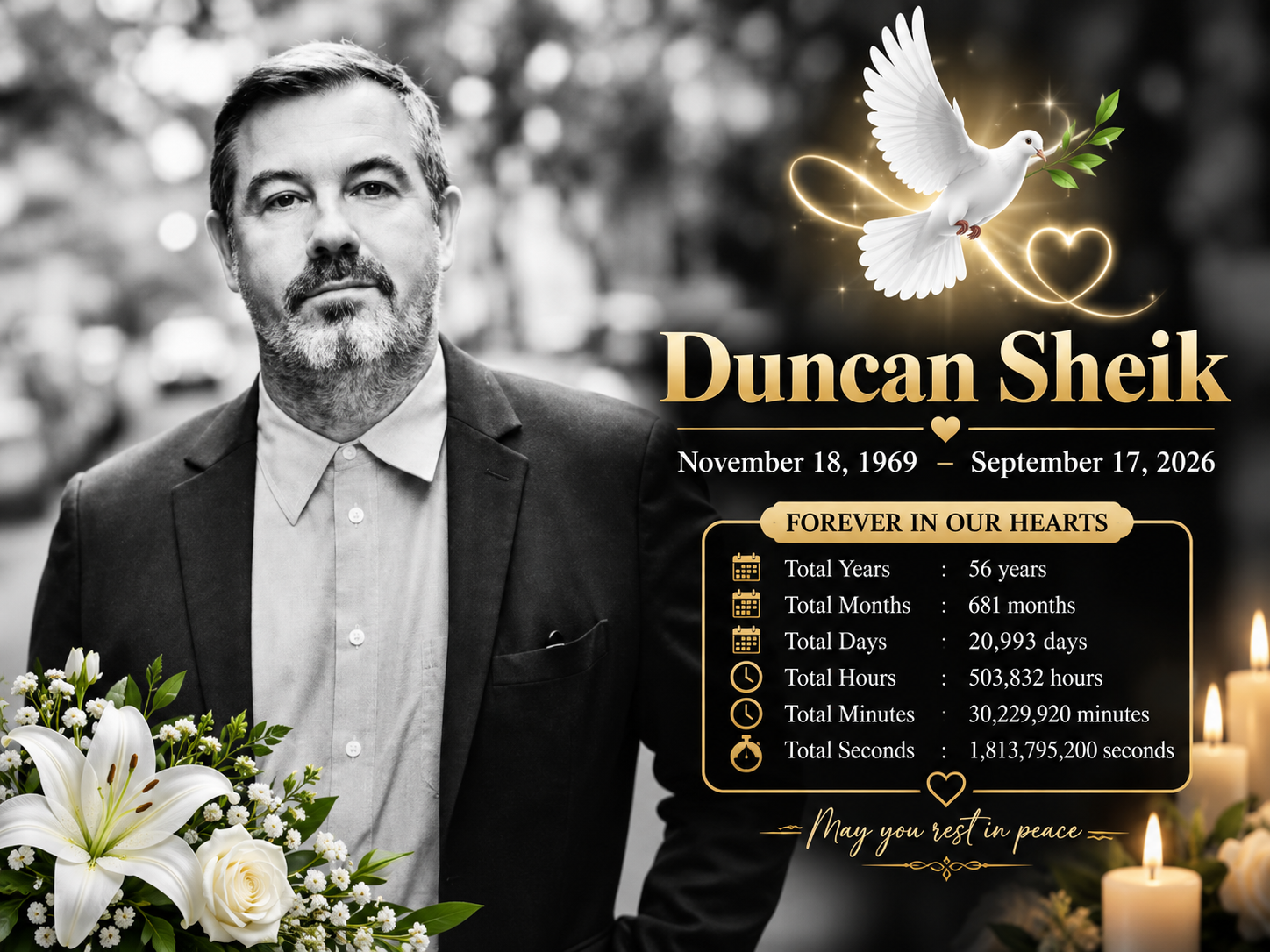
On September 17, 2026, that future closed. Duncan Sheik died in Manhattan at 56. His family had asked for privacy only a day earlier, when he was still described as critically ill but stable. The speed of the final turn left no opportunity for the kind of public farewell that often accompanies a long illness.
And the central question was no longer what he would create next. It was what would remain when the person who had spent three decades creating was no longer there to revise, explain or begin again.
Click Here to continue read next: PART4: His final days arrived while new music was waiting in the wings, forcing the unfinished future of Duncan Sheik’s work into the story of his sudden death
Days before new work was supposed to reach New York audiences, Duncan Sheik’s story suddenly ended, leaving behind a career that had begun far from Broadway
Part 3 of 16

