The anniversary came quietly.
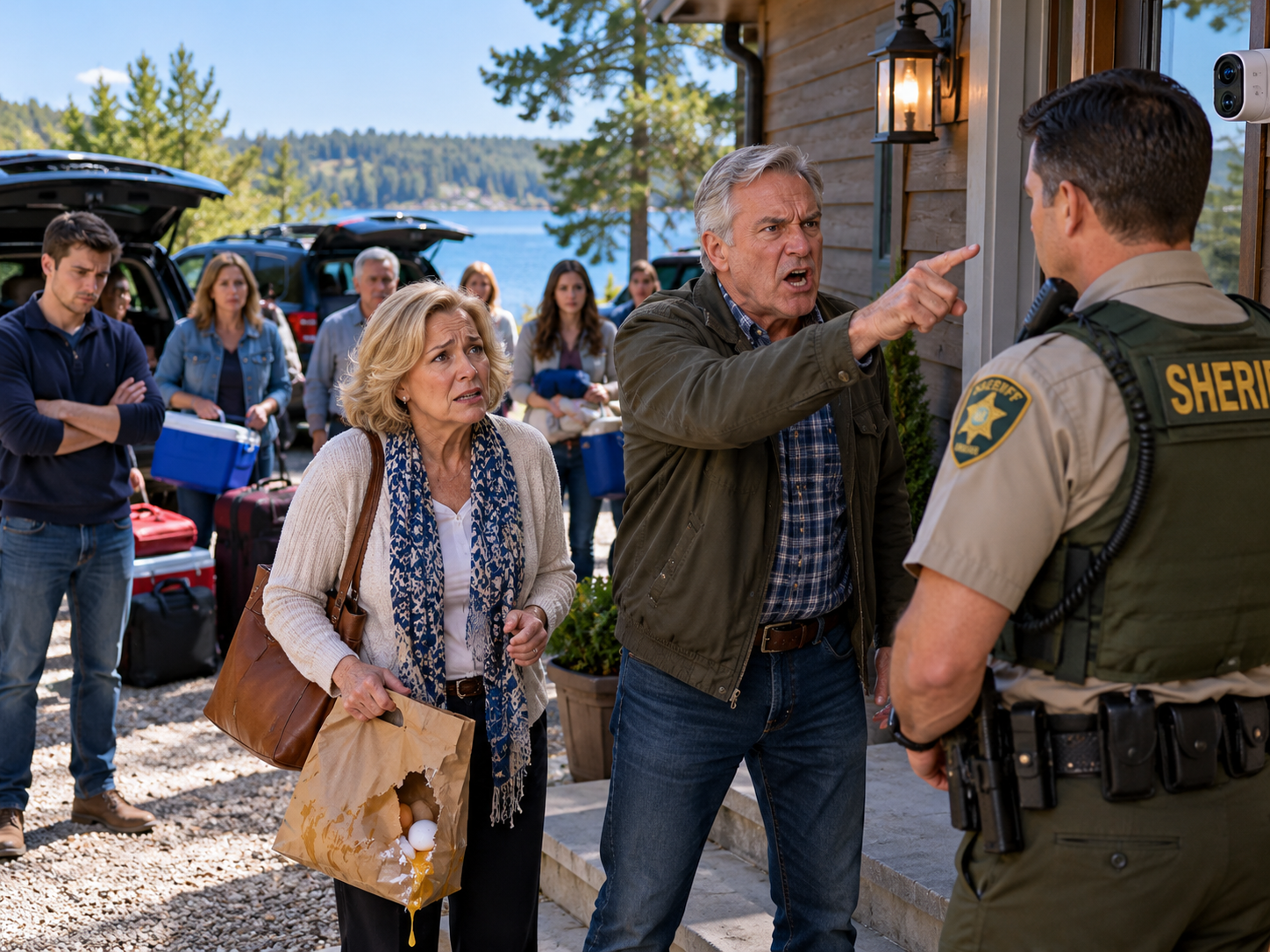
Five years had passed since the morning my father had stood outside the lake house shouting through the phone.
Five years since twenty people had arrived expecting a weekend they had never been invited to have.
Five years since a sheriff's cruiser had turned into the driveway.
I remembered the date.
I always would.
But the memory no longer carried the same sharpness.
That year, my family was already planning to be at the lake.
Mom suggested dinner.
Dad suggested grilling.
Kyle suggested bringing music.
I agreed.
Nobody mentioned the anniversary.
I wondered whether they remembered.
They did.
When everyone arrived, Mom brought flowers.
Dad carried groceries.
Kyle brought a cake.
The grandchildren ran toward the water.
I stood on the porch watching them.
Dad came beside me.
“You know what today is.”
“Yes.”
“I thought so.”
We watched the children.
“I don't want to make it sad,” he said.
“Then don't.”
He smiled.
“Good.”
Dinner was simple.
We ate outside.
Someone spilled lemonade.
The children argued over dessert.
Mom laughed.
Dad pretended to be annoyed.
Afterward, when the younger ones were playing inside, Mom sat beside me.
“I've been thinking about something.”
“What?”
“That weekend.”
I nodded.
“I know.”
“I used to think it was the worst thing that happened to our family.”
“What do you think now?”
She looked at me.
“I think it was the moment we couldn't keep pretending everything was fine.”
I nodded.
“That sounds right.”
Dad joined us.
“What are you two talking about?”
Mom answered.
“The weekend.”
Dad sat down.
Nobody spoke for a while.
Then he said, “I remember being furious.”
“I remember.”
“I thought you were disrespecting us.”
“I know.”
“I thought the house mattered more to you than family.”
I looked at him.
“And now?”
“Now I think I finally understand that the house mattered because it was the first place where you were allowed to belong entirely to yourself.”
My throat tightened.
He continued.
“We should have understood that before you had to defend it.”
I looked down.
Mom reached for my hand.
“We're sorry.”
I squeezed her fingers.
“I know.”
Dad looked at me.
“Do you regret what you did?”
I thought about the locks.
The sheriff.
The attorney.
The notices.
The years afterward.
“No.”
He nodded.
“Good.”
“Do you regret what you did?”
He smiled sadly.
“Yes.”
“Would you change it?”
“If I could.”
“But you can't.”
“No.”
“So what matters now?”
He looked toward the children.
“What we do differently.”
I smiled.
“That is what matters.”
Later, everyone gathered around the fire pit.
Someone asked me to tell the story.
The children had heard pieces.
They wanted to know why the house had so many cameras.
I laughed.
“Because your grandparents used to be terrible at asking permission.”
Dad groaned.
“That's unfair.”
Everyone laughed.
I told them the truth.
Not every detail.
Not every argument.
Just enough.
I explained that the house belonged to me.
That people had planned to use it without asking.
That I had said no.
That they had come anyway.
That I had called for help.
That afterward, our family had to learn how to respect one another differently.
One grandchild asked, “Were you scared?”
“Yes.”
“Were Grandpa and Grandma mad?”
“Yes.”
“Are you mad now?”
I looked at my parents.
“No.”
The child thought about it.
“Why?”
“Because people can do something wrong and still learn from it.”
Dad added, “And because saying sorry only matters if your behavior changes.”
I smiled at him.
“Good answer.”
He grinned.
The children returned to their game.
The adults stayed by the fire.
Kyle looked at me.
“You know what I remember most?”
“What?”
“The sheriff.”
Everyone laughed.
Dad shook his head.
“I remember that cruiser too.”
Mom laughed.
“I remember the groceries.”
“You were worried about the groceries?”
“They were melting.”
We laughed harder.
The memory had become something we could discuss without reopening the wound.
That was the final transformation.
The past was still true.
But it no longer controlled the room.
Later, after everyone went inside, Dad stayed on the porch with me.
“I want to thank you.”
“For what?”
“For not giving up on us.”
I shook my head.
“I almost did.”
“I know.”
“But you gave me reasons not to.”
He looked toward the house.
“So did your mother.”
“Yes.”
“And Kyle.”
“Yes.”
He nodded.
“I'm glad.”
I looked at him.
“I don't think forgiveness means forgetting what happened.”
“No.”
“I think it means remembering without needing the other person to suffer for it forever.”
He was quiet.
Then he said, “That's exactly what I learned.”
We sat together.
The lake was dark.
The porch light attracted insects.
Inside, I could hear my mother laughing with the grandchildren.
The sound traveled through the open window.
Dad smiled.
“That's a good sound.”
“It is.”
He stood slowly.
“Come inside.”
“In a minute.”
He nodded.
Then he paused.
“Claire?”
“Yes?”
“Thank you for letting us come.”
I smiled.
“Thank you for asking.”
He smiled back.
Then he went inside.
I stayed on the porch a little longer.
The lake was still.
The house behind me was warm.
My family was inside.
And I realized that the thing I had fought for all those years ago had never really been the right to lock a door.
It had been the right to decide who I was.
The lake house had simply been where I learned to defend that right.
Five years later, the locks were still there.
The cameras still worked.
The deed was still in my name.
The formal notice was still filed away.
But none of those things felt like weapons anymore.
They were simply safeguards.
The real change was inside me.
I no longer needed everyone to approve of my choices.
I no longer mistook guilt for responsibility.
I no longer believed saying no made me unlovable.
And I no longer believed saying yes made me weak.
I could open the door because I wanted to.
I could close it because I needed to.
I could invite my family in.
I could ask them to leave.
I could love them without surrendering myself.
That was the life I had been trying to build when I bought the house.
I just hadn't known what it would take to get there.
The next morning, everyone left after breakfast.
Dad checked the refrigerator.
Mom folded the towels.
Kyle carried the trash outside.
The grandchildren hugged me.
Mom hugged me last.
“Same time next year?”
I smiled.
“Ask me next year.”
She laughed.
“I will.”
Dad opened the car door.
Before getting in, he looked back at me.
“Thank you.”
“You're welcome.”
They drove away.
I stood on the porch until the car disappeared.
Then I turned toward the lake.
The water was bright beneath the morning sun.
Juniper lay beside the steps.
I sat down.
My phone remained silent.
For once, I didn't need it to prove anything.
The house was quiet.
The lake was quiet.
My life was quiet.
And I understood that peace had never meant keeping everyone out.
It meant knowing that whoever came through the door was there because I had chosen to open it.
That choice was still mine.
And finally, nobody in my family needed to be afraid of it.
Click here to continue reading: PART 17: Years After the Family Learned to Ask, My Father Faced a Question About the Lake House That None of Us Could Answer for Him
Twenty People Arrived Expecting a Welcome, but My Locked Door and One Quiet Phone Call Forced My Parents to Face a Problem They Had Never Expected
Part 16 of 20