The emergency happened in October.
It began with a phone call from Kyle.
“Claire, don't panic.”
That sentence guaranteed I would panic.
“What happened?”
“Mom fell.”
My stomach dropped.
“Where?”
“At home.”
“Is she conscious?”
“Yes.”
“Did she hit her head?”
“I don't know.”
“I'll meet you there.”
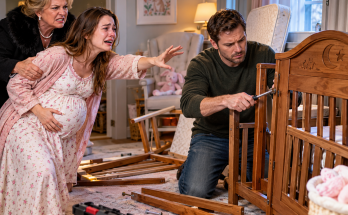
When I arrived, an ambulance was already outside.
Mom was sitting on the floor near the hallway, awake and embarrassed.
“I slipped.”
Dad knelt beside her.
“Don't move.”
“I can move.”
“No.”
She looked at me.
“Your father has become very bossy.”
I almost laughed.
The paramedics checked her.
Fortunately, she had no serious injury.
A badly bruised hip.
Nothing broken.
Still, the doctor recommended rest and observation.
Dad looked exhausted.
Kyle looked frightened.
I recognized the expression.
The family was vulnerable again.
Old habits could easily return when people were scared.
They didn't.
Dad asked me, “What do you think we should do?”
I answered carefully.
“She should stay with someone for a few days.”
“I can take care of her,” Dad said.
“I know.”
He looked at me.
“But?”
“But you also need help.”
He nodded.
Kyle offered to stay.
Dad said he had work.
Kyle said he could rearrange it.
Mom interrupted.
“I am sitting right here.”
Everyone laughed.
The tension eased.
We arranged a schedule.
Kyle stayed the first night.
I came the next day.
Dad handled medications.
A visiting nurse was arranged.
Nobody assumed I would manage everything.
That night, Dad called me.
“Thank you.”
“You don't have to thank me.”
“I want to.”
“Okay.”
He hesitated.
“I almost called you and told you to come immediately.”
“Why didn't you?”
“Because I remembered that you have a life.”
I closed my eyes.
“Dad.”
“I mean it.”
“I know.”
He was quiet.
“That's what being a family should be, isn't it?”
“What?”
“Helping without taking over.”
I smiled.
“Yes.”
Mom recovered slowly.
Within several weeks, she was walking normally again.
But the incident changed something in all of us.
We began discussing practical things we had avoided before.
Medical contacts.
Emergency plans.
Documents.
Who should be called if someone was hospitalized.
My parents had previously treated these conversations as signs that something terrible was coming.
Now they understood them as preparation.
One evening, Dad brought a folder to the lake house.
“What is that?”
“Our emergency information.”
He placed it on the table.
“Copies of insurance cards. Medication lists. Doctor contacts.”
I looked at him.
“You made this?”
“Yes.”
“Good.”
He smiled.
“I even labeled it.”
“You're becoming organized.”
“Don't insult me.”
I laughed.
We stored the folder in the desk.
Then Dad looked around the room.
“This place has become our second home.”
I smiled.
“Only because I let you.”
He nodded.
“Exactly.”
The fact that he said it without irritation mattered.
Later that night, Mom and I sat on the porch.
“Your father has changed,” she said.
“Yes.”
“So have you.”
I smiled.
“Maybe.”
She looked at me.
“You know, I used to think boundaries meant people didn't love each other.”
“And now?”
“Now I think boundaries tell people how to love you.”
I looked at her.
“That is a very good way to put it.”
She smiled.
“I've learned from you.”
The following winter, my father turned seventy.
We planned a small celebration at the lake.
He asked me to invite only the people I wanted there.
“You choose,” he said.
I looked at him.
“Really?”
“Yes.”
“You're the birthday person.”
“I know.”
“And you're not choosing?”
“No.”
He smiled.
“You're better at planning.”
I laughed.
“That is absolutely not true.”
The party was small.
Family.
A few friends.
Good food.
Old photographs.
Dad gave a speech.
He thanked everyone.
Then he looked at me.
“I owe my daughter something.”
My stomach tightened.
He continued.
“Years ago, I thought loving your child meant being entitled to their time, property, decisions, and forgiveness.”
The room became quiet.
“I was wrong.”
I looked down.
Dad's voice remained steady.
“She taught me that respect is part of love. I didn't learn it quickly. I should have. But I learned it.”
He raised his glass.
“To Claire.”
Everyone applauded.
I looked at him.
He smiled.
No one clapped because I had won.
They clapped because something had changed.
After the party, I found him alone on the dock.
“Dad.”
He turned.
“Hey.”
“That speech.”
“I meant it.”
“I know.”
He nodded.
“I wanted to say it where everyone could hear.”
“Why?”
“Because I embarrassed you publicly.”
I understood.
He was not trying to erase the original scene.
He was acknowledging it publicly because the harm had been public too.
I sat beside him.
“You don't have to keep apologizing.”
“I know.”
“But?”
“But I want to remember what I learned.”
I smiled.
“That is different.”
“Yes.”
The lake was dark.
We sat in silence.
Then he said, “Do you still think about that Friday morning?”
“Sometimes.”
“Me too.”
“What do you think about?”
“The look on your face when you said no.”
I frowned.
“You couldn't see me.”
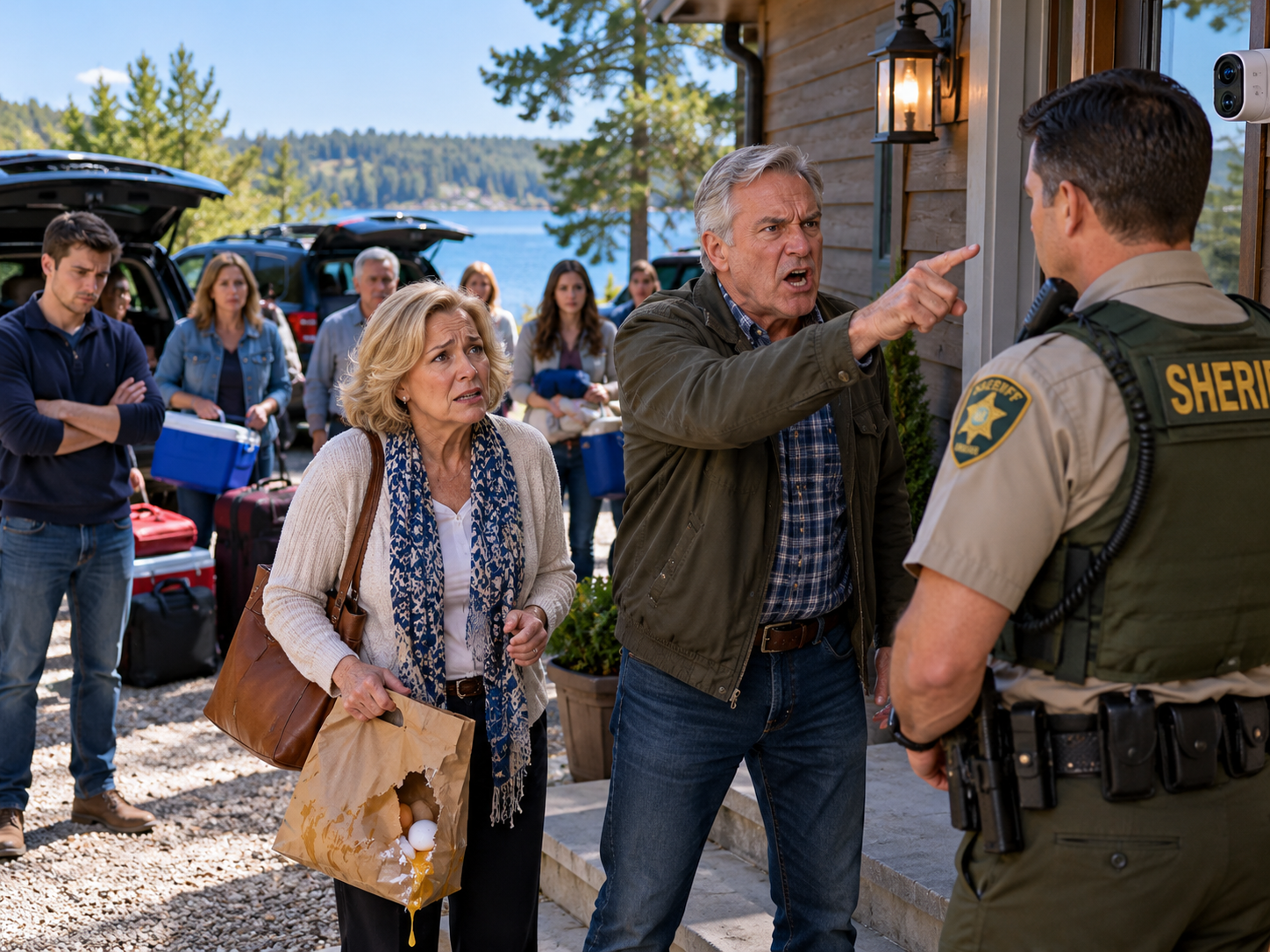
“I saw you through the camera.”
I laughed.
“You remember that?”
“I remember everything.”
I looked toward the house.
“I was terrified.”
“You didn't look terrified.”
“I was.”
“I thought you were being cruel.”
“I know.”
He sighed.
“I wish I had understood that fear can look like firmness.”
I looked at him.
“And sometimes firmness is necessary.”
“Yes.”
He nodded.
That night, I slept in the guest room.
My parents stayed in the master bedroom.
The house was full again.
But this time, every person inside had been invited.
That distinction had become invisible to everyone except me.
I still noticed it.
I suspected I always would.
Not because I was trapped in the past.
Because remembering where a boundary came from helped me appreciate the peace it protected.
In the morning, Dad made coffee.
He handed me a cup.
“Thank you.”
“You're welcome.”
Mom came downstairs.
“Who made this?”
“Your husband.”
She took a sip.
“Needs sugar.”
Dad rolled his eyes.
“You always say that.”
“Because you always forget.”
I laughed.
The three of us stood in the kitchen.
No one was angry.
No one was demanding.
No one was keeping score.
It was just breakfast.
And somehow, that ordinary scene felt like the strongest proof that our family had actually changed.
Click here to continue reading: PART 12: The Last Time My Parents Asked About the Lake House, I Realized the Door They Had Once Tried to Force Open Was Now One I Could Freely Offer
Twenty People Arrived Expecting a Welcome, but My Locked Door and One Quiet Phone Call Forced My Parents to Face a Problem They Had Never Expected
Part 11 of 20