Two years passed.
The lake house became part of our family again.
Not because everyone claimed it.
Because everyone understood it was mine.
My mother still asked before visiting.
My father still called instead of appearing.
Kyle still occasionally forgot to ask about small things, but he corrected himself when reminded.
The change was gradual enough that I sometimes wondered whether the old conflict had really happened.
Then I would see the sheriff's report in my files.
Or the old messages.
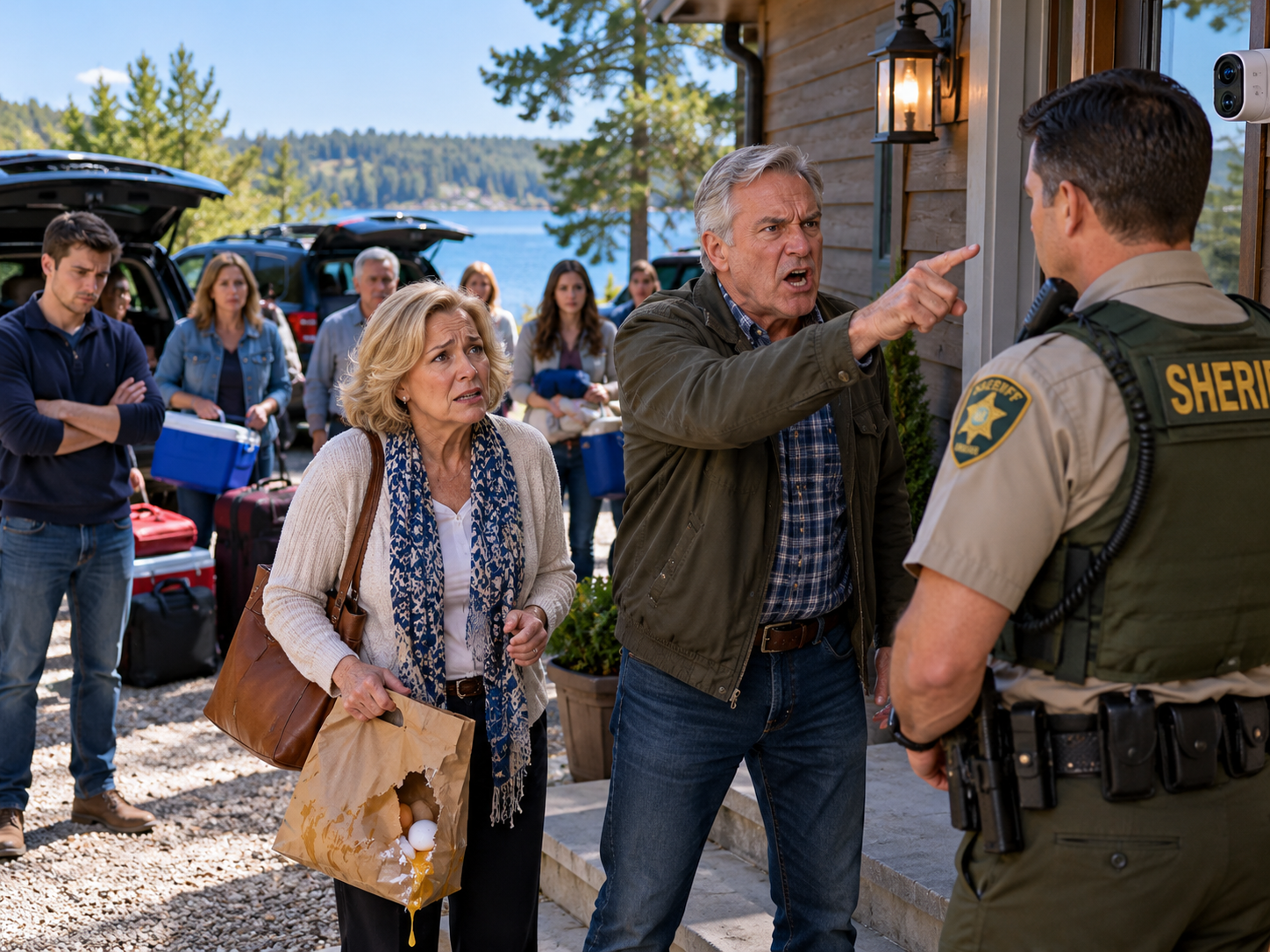
Or the photograph I had taken of twenty people standing outside my front door.
The evidence remained.
So did the lesson.
One spring morning, Mom called.
“I have a favor.”
I laughed.
“That sounds dangerous.”
“Very funny.”
“What is it?”
“I want to host your grandmother's birthday at the lake.”
I was silent.
“Only family,” she added quickly.
“How many?”
She hesitated.
“Twelve.”
“Mom.”
“Okay, ten.”
“You just changed the number.”
“Because I knew twelve sounded worse.”
I laughed.
“Tell me exactly who.”
She listed the names.
I knew all of them.
No surprise guests.
No strangers.
No one who had caused trouble.
“When?”
“Saturday afternoon.”
“I can host.”
Her voice brightened.
“Really?”
“Yes.”
“But I want one thing.”
“Anything.”
“I choose the menu.”
“Of course.”
“And everyone leaves by seven.”
“Absolutely.”
“And nobody enters the bedroom.”
“Claire.”
“I have to say it.”
“I understand.”
“And if anyone brings someone uninvited, they leave with them.”
Mom laughed.
“You have become terrifying.”
“I prefer organized.”
She laughed again.
“Fine.”
The birthday went well.
My grandmother sat near the window overlooking the lake.
The family ate outside.
Children ran down to the dock.
Adults talked.
Someone brought too much dessert.
At seven, everyone packed up.
No argument.
No pressure.
No guilt.
Mom helped me wash dishes.
“You know,” she said, “I think this is the first family gathering we've had here where nobody was nervous.”
I looked at her.
“I was nervous.”
She smiled.
“Still?”
“A little.”
She nodded.
“I was too.”
“Why?”
“Because I didn't want to ruin the progress.”
I dried a plate.
“You didn't.”
She smiled.
“Neither did you.”
That evening, after everyone left, I sat alone on the porch.
The lake reflected the last orange light.
Juniper was older now.
She slept beside my chair.
My phone buzzed.
A message from Dad.
Home safe. Thank you.
I replied:
Glad you had a good time.
Then another message appeared.
I'm proud of you.
I stared at it.
Those words had once meant something complicated.
My father's pride had always been attached to obedience.
Good grades.
Good job.
Good behavior.
Being agreeable.
Now I wondered whether he meant something different.
I called him.
“What did you mean?”
He was quiet.
“I mean I'm proud of the woman you became.”
I smiled.
“Even though I stopped listening to you?”
“Especially because you learned to listen to yourself.”
I looked out at the lake.
“Thank you.”
He cleared his throat.
“Your mother told me what you said about the bedrooms.”
I laughed.
“She told you?”
“She thought it was funny.”
“Was it?”
“Yes.”
“Good.”
We talked for another ten minutes.
When the call ended, I sat back.
The lake house was quiet again.
But it no longer felt like a fortress.
That distinction mattered.
A fortress exists to keep people out.
A home can have an open door and still belong to the person who lives there.
Over the next year, my parents visited several times.
Sometimes together.
Sometimes separately.
Sometimes they stayed overnight.
Sometimes they came for lunch.
Every visit began with a question.
Every visit ended with a thank-you.
It became routine.
And routine, I learned, was how trust was rebuilt.
Not through one grand apology.
Through repetition.
Ask.
Respect the answer.
Return what you borrowed.
Clean what you used.
Leave when the visit is over.
Do it again.
And again.
One evening, Kyle called.
“Claire?”
“What's up?”
“I need advice.”
“That's new.”
“Seriously.”
He laughed.
Then he explained that his girlfriend had been offered a job in another state.
He didn't know whether to move.
I listened.
When he finished, I said, “What do you want?”
“I don't know.”
“Then don't ask me to decide.”
He laughed.
“You sound like Dad.”
“No. Dad would tell you what to do.”
“Fair.”
I heard the smile in his voice.
“What would you do?”
“I'd ask what choice lets you build the life you actually want.”
He was quiet.
“That's good advice.”
“Use it carefully.”
“I will.”
After we hung up, I realized something.
My family had begun coming to me for advice without assuming I would solve their lives.
That was another form of respect.
I could be their daughter.
Their sister.
Their family.
Without being their resource.
That distinction had taken years to establish.
But once established, it felt natural.
One autumn evening, Mom called from the lake house.
She and Dad were staying there for two nights.
“Your father is trying to fix the dock.”
I laughed.
“Why?”
“He says it needs tightening.”
“Tell him not to fall in.”
“He says he won't.”
“Tell him I said he's not twenty.”
She laughed.
Then she became quiet.
“Claire?”
“Yes?”
“I want to tell you something.”
“What?”
“I was wrong.”
I waited.
“About what?”
“About thinking that because you were my daughter, your life belonged partly to me.”
I closed my eyes.
She continued.
“I loved you badly sometimes.”
The sentence hit me harder than any apology she had given before.
“You don't have to say that.”
“I do.”
I listened.
“I thought control was care.”
She paused.
“I know better now.”
I wiped my eyes.
“Mom.”
“Yes?”
“I know you love me.”
“I do.”
“And I know you're trying.”
“I am.”
“That matters.”
She began crying quietly.
So did I.
Neither of us tried to make the moment bigger than it was.
We simply stayed on the phone.
After a while, she said, “Your father is calling me.”
I laughed.
“Go before he breaks the dock.”
She laughed through her tears.
“Goodnight.”
“Goodnight.”
The call ended.
I walked outside.
The sky was dark.
The lake reflected the moon.
I thought about the first night when my mother had laughed at the idea that I could stop them.
Now she was the person calling to ask whether they could stay.
The difference was not the house.
It was the meaning of the word no.
It had finally become a real word in my family.
And because no had become real, yes had become meaningful too.
Click here to continue reading: PART 8: Years After Twenty Guests Were Turned Away, My Family Gathered at the Lake House Again, and I Finally Understood What That Weekend Had Given Me
Twenty People Arrived Expecting a Welcome, but My Locked Door and One Quiet Phone Call Forced My Parents to Face a Problem They Had Never Expected
Part 7 of 20