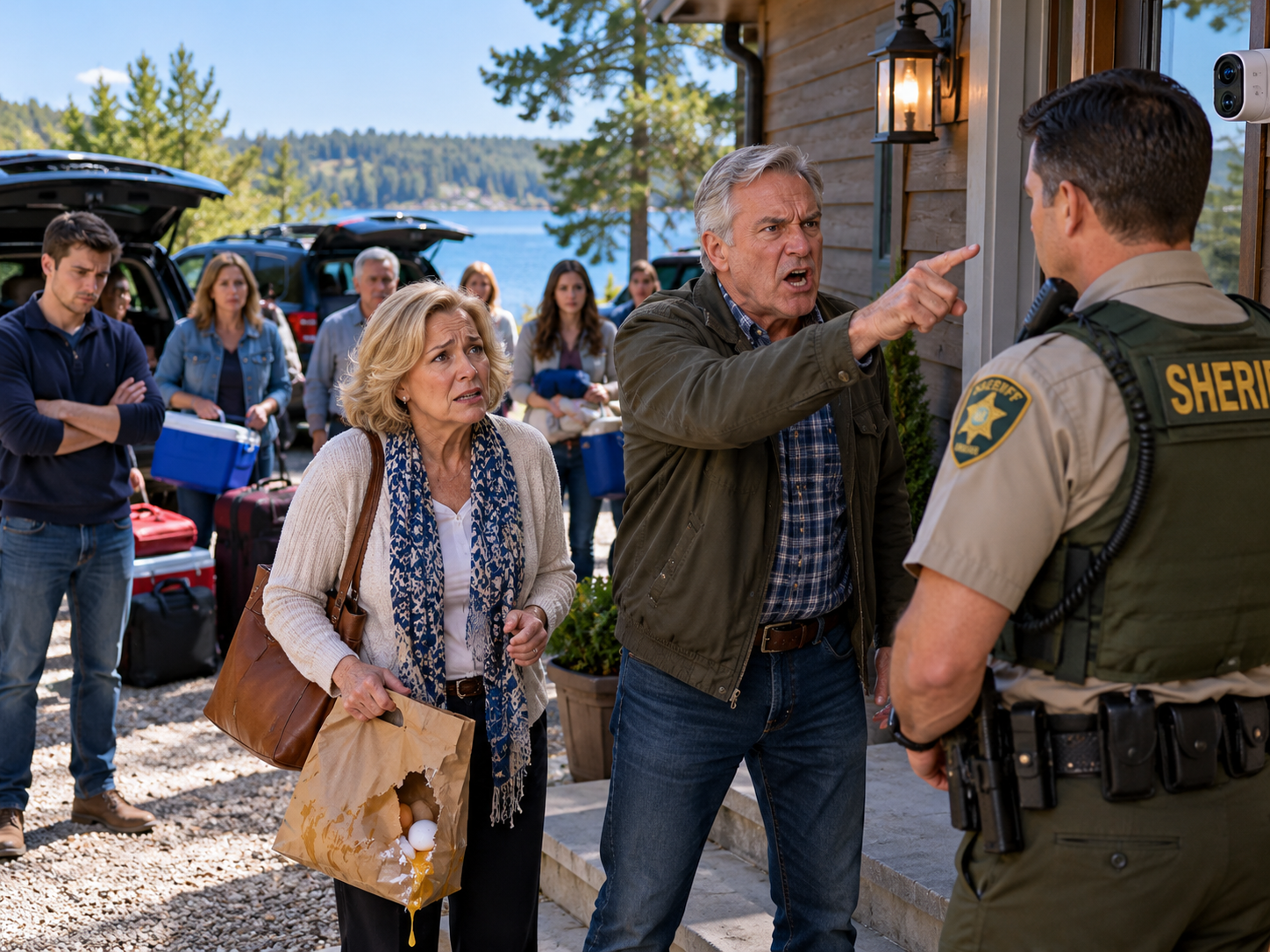
By Saturday morning, the incident had acquired several different versions.
In Mom's version, I had become irrational.
In Dad's, I had been manipulated by strangers.
In Kyle's, everyone had simply misunderstood the arrangement.
In the family group chat, the word “invitation” appeared so often that I began to wonder whether they believed repeating it could manufacture one.
I stayed out of the conversation.
Instead, I went to work.
The hospital was busy, and that was a relief.
Patients did not care about my family drama.
A monitor alarmed, a nurse needed another set of hands, someone asked for an update on a patient's medication, and the familiar rhythm of the floor pulled me back into the part of my life where problems had names and procedures.
During my break, I checked my phone.
Twenty-six messages.
I ignored them.
At the end of my shift, I found a voicemail from Kyle.
“Claire, come on. You know Mom and Dad didn't mean anything by it. Everybody's upset. Just apologize and let this go.”
I sat in my car listening to him.
Apologize.
For what?
For locking my own door?
For refusing to buy groceries for people I hadn't invited?
For calling the sheriff after telling them not to come?
I deleted the voicemail.
When I reached my apartment, there was an envelope beneath my door.
No stamp.
No address.
My father's handwriting.
I stood in the hallway for nearly a minute before opening it.
Inside was a single sheet of paper.
We need to talk about the house.
That was all.
No apology.
No explanation.
Just an assumption that there was something to discuss.
I put it on the kitchen counter.
Then my phone rang.
Mom.
I answered.
“Hello.”
“You humiliated me.”
Her voice was quiet.
That was more effective than shouting.
“I didn't ask twenty people to come to my house.”
“You could have handled it privately.”
“I did. I told you no privately.”
“You knew we had already made plans.”
“Then you should have changed them.”
She inhaled sharply.
“You've become so cold.”
“I've become clear.”
“Your father and I sacrificed everything for you.”
“I know.”
“Do you?”
“Yes.”
“Then why are you treating us like strangers?”
I leaned against the counter.
“Because strangers usually ask before using someone else's property.”
Silence.
Then she said, “After everything we've done for you.”
There it was.
The old accounting system.
Every kindness turned into debt.
Every sacrifice converted into leverage.
I looked at the letter on the counter.
“What do you think I owe you?”
“You know what you owe us.”
“No. I want you to say it.”
She did not answer.
“Money?” I asked. “Access? Weekends? The house? Obedience?”
“That is not what I said.”
“You didn't have to.”
Her breathing changed.
“Your brother needs help.”
“Kyle?”
“He's trying to get his business back on its feet.”
“He can call me himself.”
“He shouldn't have to beg his sister.”
“He has.”
Mom went quiet.
I remembered the ten thousand dollars.
Kyle had promised to repay it within six months.
Three years later, he had not.
When I mentioned it, Dad told me I was being petty.
Then came the second request.
Then the third.
Eventually, I stopped answering.
Mom said, “Family shouldn't keep score.”
I replied, “Then stop handing me invoices.”
She hung up.
I stood in the kitchen listening to the dead line.
The next morning, I called an attorney.
Her name was Margaret Harper.
Not my neighbor.
A different Margaret Harper, a property attorney in Portland who handled real-estate disputes and family ownership conflicts.
Her office smelled like paper and coffee.
She listened while I explained everything.
She asked practical questions.
Who was on the deed?
Me.
Who paid the mortgage?
Me.
Who paid taxes and insurance?
Me.
Had my parents ever contributed toward the purchase?
No.
Had I given them written permission to use the house?
Not for this weekend.
Had they used it before?
Yes.
How?
I had given them access codes for short visits.
Had they ever damaged anything?
They had left trash, broken a hot-tub cover, and once allowed Kyle's friends to stay without telling me.
She wrote notes.
“Do you want to prevent future access?”
“Yes.”
“Do you want to preserve your relationship with them?”
I hesitated.
“I don't know.”
“That matters.”
“Why?”
“Because legal boundaries can be clean. Family boundaries usually aren't.”
I looked at her.
“What would you do?”
She shook her head.
“I don't decide that for clients. I tell them what their options are.”
I appreciated that.
She explained that I should keep copies of the deed, tax records, insurance documents, prior messages, and the sheriff's report.
She also advised me to send a formal written notice stating that future access required my explicit permission.
“No threats,” she said. “No insults. Just facts.”
I nodded.
Before I left, she added, “And don't let anyone persuade you that asserting ownership is an act of aggression.”
That sentence stayed with me.
I drove home.
Then I wrote the letter.
I stated that the lake house was privately owned.
I stated that my parents and other relatives did not have standing permission to enter or stay there.
I stated that any future visit needed to be approved by me in advance.
I sent copies by email.
Mom responded within five minutes.
Dad responded within seven.
Kyle responded with one word.
Seriously?
I did not answer.
The next afternoon, Mom sent another message.
You are breaking this family apart.
I stared at it.
Then I wrote:
I am not breaking the family apart. I am refusing to let the family override my decisions.
I pressed send.
For several hours, nothing happened.
Then Dad called.
I answered.
“I've read your little letter.”
“It isn't little.”
“You've hired a lawyer now?”
“I got advice.”
“You're threatening us.”
“No.”
“You're making this legal.”
“You came to my house after I told you not to.”
“We weren't trying to break in.”
“I know.”
“Then stop calling it that.”
“I will call it what the facts support.”
He exhaled.
“You've changed.”
“Yes.”
“That isn't always a good thing.”
“It isn't always a bad thing either.”
He went quiet.
Then his voice softened.
“You really won't let us use it anymore?”
“No.”
“Not even for one weekend?”
“No.”
“Not for Christmas?”
“No.”
“Not for Kyle's wedding?”
I closed my eyes.
“No.”
His silence lasted longer this time.
Finally, he said, “Then don't expect us to forget this.”
I answered quietly.
“I don't expect you to forget.”
“What do you expect?”
“I expect you to respect it.”
He hung up.
I put the phone down.
That night, I received an email from Kyle.
It was longer than his previous messages.
He said he had been embarrassed in front of everyone.
He said he had assumed Mom and Dad had arranged the weekend with me.
He said he had not understood that I had refused.
I read the email twice.
Then I saw one sentence that made me stop.
Mom told us you had agreed.
I leaned back in my chair.
So that was it.
She had not merely ignored my refusal.
She had told twenty people that I had said yes.
And they had driven to the lake house believing they were entitled to walk through my front door.
I forwarded the email to my attorney.
Then I saved it with the others.
The situation was no longer about a misunderstanding.
Someone had deliberately replaced my no with a yes.
And I finally had proof.
Click here to continue reading: PART 3: The More I Documented What Had Happened, the More I Realized My Parents Were Not Fighting Over a Weekend but Over the Right to Define My Choices
Twenty People Arrived Expecting a Welcome, but My Locked Door and One Quiet Phone Call Forced My Parents to Face a Problem They Had Never Expected
Part 2 of 20