
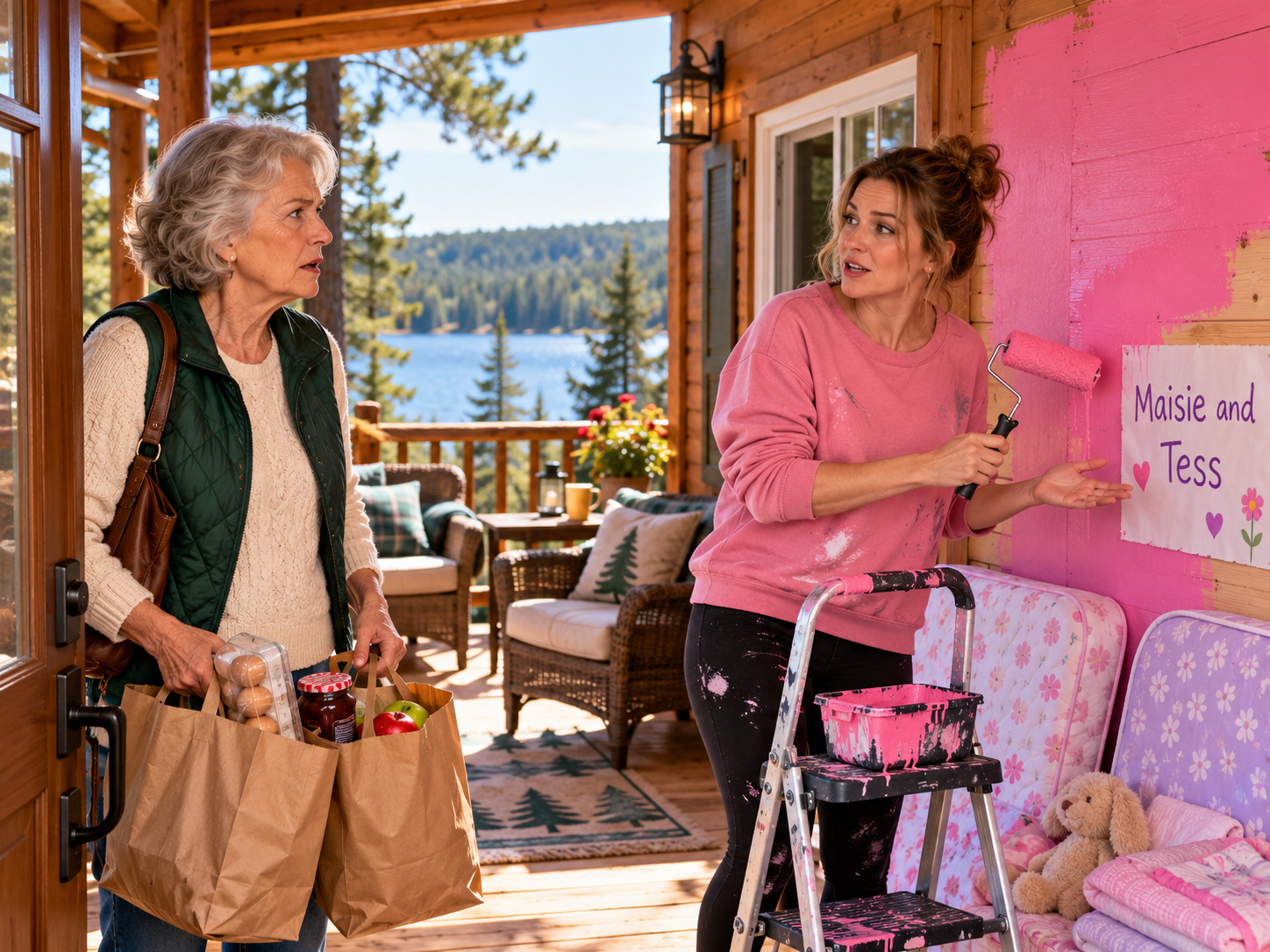
The first snow of the season arrived earlier than I expected, dusting the trees around Birch Lake and turning the gravel road into a narrow ribbon of white. I had planned to spend the weekend at the cabin, but the forecast called for colder temperatures, so I brought in the porch cushions, checked the pipes, and made sure the heating system was working properly before settling down with a book.
Walt would have loved that morning. He had always said the best part of winter was the way it made ordinary things feel precious: a warm kitchen, dry socks, a pot of soup, and a window through which you could watch the world without having to go anywhere. I made coffee in our old white mug, wrapped my hands around it, and watched snow gather along the restored cedar railing.
The cabin had become peaceful again, but peace did not mean that every memory had disappeared. Sometimes I still glanced at the front door when I heard a vehicle on the road. Sometimes I opened the camera app without realizing I had reached for my phone. The recordings had become less frightening, but they reminded me how quickly an ordinary day could turn into something I never expected.
I kept the cameras, checked the locks, and carried on with my life. I no longer wanted to spend my retirement anticipating trouble, yet I refused to pretend that protecting myself had been a mistake.
Brian called that afternoon. He asked whether I had arrived safely and whether the snow was making the road difficult. We talked about the weather, the girls' school activities, and the possibility of visiting during the holiday break.
Then he said, “Mom, can I ask you something without you feeling like I'm trying to get something from you?”
I put my book facedown on the table.
“You can ask me anything. I may not give you the answer you want.”
“I know.”
He sounded nervous, which was unusual. Brian generally approached difficult conversations as though he could prepare the ground carefully enough to control the outcome. This time, he seemed unsure where to begin.
He explained that he and Tanya had been reviewing their finances with a counselor who helped families manage debt and household expenses. They had started by listing their monthly bills and comparing them with their income. The exercise had been uncomfortable, he said, because it showed how much of their financial pressure came from decisions they had made without thinking far ahead.
“I kept telling myself we just needed one big break,” he said. “A little more room, lower expenses, something to get us past the next month. I thought your cabin would solve everything.”
“It would have changed my life instead,” I replied.
“I understand that now.”
I listened while he described their plans. They were considering whether to move to a smaller home when their lease or financing arrangements allowed it, and they had begun setting aside a modest amount each month for emergencies. The progress was slow. He did not pretend otherwise.
“What do you need from me?” I asked.
He paused.
“I wanted to tell you what we're doing before you heard about it from someone else. I also wanted to ask whether you'd be willing to look over the budget with me sometime. Not pay anything. Just tell me if you notice something we've missed.”
The request was so different from the ones I had grown accustomed to that I did not answer immediately.
“You want me to review it with you?”
“Yes. I know you've managed your money carefully for years. But if you'd rather not get involved, I understand.”
I looked at the old wooden box on the shelf, where Walt's letter rested beside the mug. I remembered the sentence about helping people without living their lives for them. It did not mean I had to refuse every request. It meant I needed to know what I was agreeing to and whether I could help without taking over.
“I'll look at it with you,” I said. “But I won't decide what you should do, and I won't be responsible for making the numbers work.”
“That seems fair.”
“And if I see something concerning, I'll tell you honestly.”
“I'd rather you did.”
We arranged to meet the following Sunday at my home in Rockford. When the call ended, I felt cautious but hopeful. Brian had not asked for a shortcut. He had asked for my perspective and left the choice in my hands.
On Sunday, he arrived with a folder of printed statements and a notebook. He had written down the major expenses and marked several items he and Tanya were trying to reduce. I made coffee, spread the papers across the table, and asked him to explain each category rather than immediately pointing out what I thought was wrong.
Some expenses were fixed. Others were flexible. A few were the result of small purchases that had seemed harmless individually but had added up over several months. We discussed the difference between spending that was necessary and spending that was simply familiar.
I did not criticize him for the choices he had made. I asked questions.
“What happens if the car needs another repair?”
“We'd have to use the emergency fund or find a way to cover it.”
“How much would you want to keep available before committing to a new monthly payment?”
He thought about it, then wrote something down.
We worked for nearly two hours. By the end, Brian had a clearer picture of where their money was going and which changes would make the greatest difference. He looked tired, but the tension in his face had eased.
“I wish I'd done this sooner,” he said.
“You can only work with what you know now.”
He gathered the papers into the folder, then stopped with one hand on the edge of the table.
“Mom, I need to tell you something else.”
I waited.
“When I first found out you'd bought the cabin, I told myself that you were making a decision that affected the whole family. I thought because I was your son, I should have had a say.”
“You wanted to be consulted about a purchase I made with my own money.”
“Yes. I think I felt left out. Then when you said no to us moving in, I treated that feeling as if you'd done something wrong.”
I let him finish.
“I was angry that you had a place we needed and wouldn't share it,” he continued. “I didn't want to admit that the need was ours to solve. It was easier to say you were selfish than to face how scared I was about our finances.”
The honesty in his voice made me sad, but it also helped me understand the depth of what had happened. He had not simply wanted a larger home. He had wanted the security of believing I would always step in when his own plans became difficult.
“Being afraid doesn't make you a bad person,” I said. “But it doesn't make your choices harmless, either.”
“I know.”
“You can tell me you're struggling. You can ask for advice. You can even ask for financial help, and I'll consider it. What you cannot do is decide that my refusal is proof that I don't love you.”
He nodded slowly.
“I don't want to do that again.”
“Then the next time I say no, let it be an answer. Don't build another plan around the idea that I'll change my mind.”
“I will try.”
I believed that he meant it. I also knew that trying would matter only when circumstances became difficult again.
Before he left, Brian helped me carry the empty cups to the kitchen. He asked whether I needed anything repaired at the cabin before winter became severe, then caught himself and smiled.
“Sorry. I know that's a separate question.”
I laughed. “It is. And if I need help, I'll ask.”
He hugged me goodbye and drove away with the folder on the passenger seat. I watched his car disappear down the street, then returned to the table and stacked the papers he had forgotten to take.
There were no grand declarations, no sudden solution to every financial problem, and no guarantee that we would never disagree again. But something had changed. Brian had brought his difficulties to me without bringing an expectation that I would remove them.
That evening, I drove to Birch Lake. Snow lined the road, and the trees stood dark against the fading sky. Inside the cabin, the heating system hummed steadily. I set my bag down, checked the locks, and made myself a simple dinner.
Afterward, I went to the porch door and looked through the glass at the cedar wall. The paint had left faint marks that only I knew how to find. I no longer felt the need to inspect them every time I entered the room.
The porch was mine again—not because the family had agreed that I deserved it, but because I had stopped waiting for their agreement before allowing myself to enjoy it.
I carried Walt's letter to the table and read it once more. Then I folded it carefully and put it away.
Outside, snow continued to fall over Birch Lake. I sat by the window with my coffee and let the quiet settle around me. For once, I did not wonder who might need me in the morning or what problem I would have to solve before I could enjoy the day.
I simply looked forward to waking up in my own home.
Click here to continue reading: PART 10: A Winter Visit Exposed the Difference Between the Family Brian Wanted and the Family We Could Finally Become
I Bought the Cabin for Peace, but My Daughter-in-Law Had Already Decided Which Parts of My Life She Could Take
Part 9 of 20

