The final weeks of the school year passed quickly. Dustin finished his assignments, returned library books, and began talking excitedly about the summer activities he wanted to try. He wanted to visit the nature reserve again, learn more about photography, and perhaps build another model with Nigel. He also wanted a few quiet days at home with Vivian, reading and playing games without any schedule. The adults coordinated the plans without treating them as competing claims on his time. Nigel arranged the reserve visit, Vivian helped him organize his photography materials, and both parents left room for Dustin to decide what he wanted to do when he was not at school.
One afternoon, while cleaning his desk, Dustin found a small piece of paper with notes from the fall fair. It was folded beneath an old worksheet, and he could not remember why he had kept it. The paper listed a few things he had wanted to say before going onstage, including a reminder not to forget the flash drive. He stared at the words for a while. Vivian noticed that he had stopped sorting his papers and asked whether he needed help. Dustin showed her the note. She did not reach for it or ask him to explain every feeling it brought back. She simply sat beside him and waited until he was ready to speak.
“I forgot how scared I was,” Dustin admitted. “I knew I wanted everyone to hear it, but I didn't know what would happen after.” Vivian nodded. She told him that speaking up in a difficult moment could feel frightening, especially when the people involved were adults he loved. Dustin said he had been afraid that his father would stop wanting to spend time with him. Vivian felt the old ache return, but she kept her voice steady. “You should never have had to carry that fear by yourself,” she said. “And you never had to earn your dad's love by staying quiet.” Dustin looked down at the note and folded it again.
He asked whether Nigel had understood how scared he had been. Vivian answered honestly that she believed Nigel understood more now than he had at the time, though no one could know another person's feelings completely. She reminded Dustin that he could ask his father about anything he still wanted to understand. Dustin thought about it and decided he would rather keep the note for now. He placed it in a small box with old school certificates and drawings. He did not destroy it, but he did not leave it on his desk either. It was part of his history, and he could choose when to look at it.
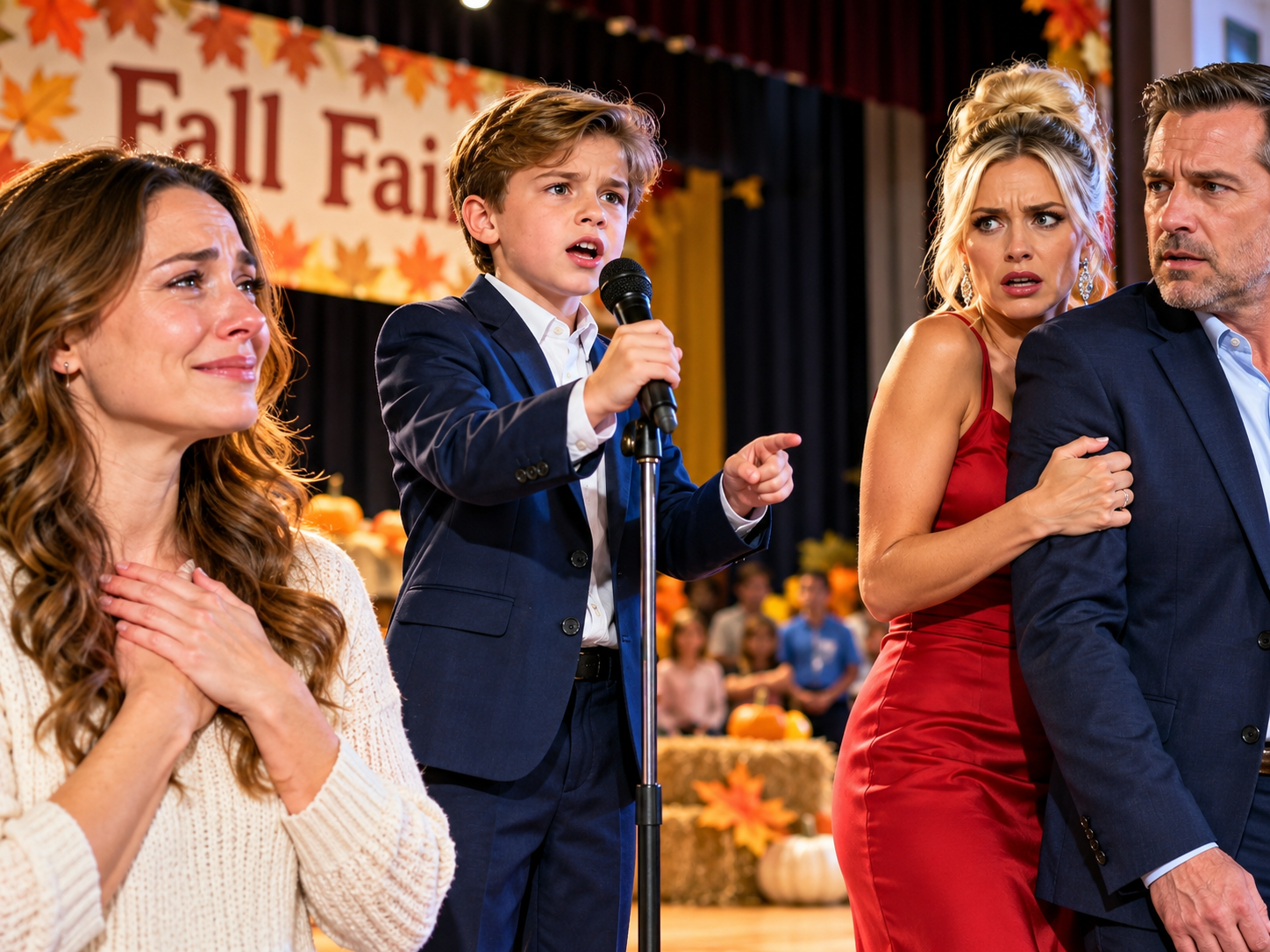
During his next visit with Nigel, Dustin asked whether they could talk about the fall fair. Nigel looked surprised, then set aside the book he had been reading. He told Dustin they could talk for as long as he wanted. Dustin asked why his father had laughed when Annabelle made the joke about Vivian's appearance. Nigel did not blame the atmosphere, the other people present, or the fact that he had wanted to impress his girlfriend. He admitted that he had chosen the easy response because he did not want to challenge Annabelle in front of everyone. He had failed to think about how that choice would affect his son.
Dustin asked whether Nigel had thought the joke was funny. Nigel paused. “In that moment, I laughed as if I thought it was funny,” he said. “But I was also trying to avoid making things uncomfortable. That doesn't excuse it. I should have stopped the comment instead of joining in.” Dustin listened carefully. Then he asked whether Nigel had been angry when Dustin took the microphone. Nigel told him that he had been shocked and embarrassed, and that part of him had worried about what everyone would think. He admitted that his first reaction had not been as focused on Dustin's feelings as it should have been. “I was wrong to make you feel you had to handle something the adults should have handled,” he said.
Dustin looked toward the window. He did not cry, and he did not rush to reassure his father. “I thought you might not want me anymore,” he said quietly. Nigel felt the words more deeply than any public criticism could have reached him. He moved closer but did not assume Dustin wanted to be hugged. “I am sorry you ever thought that,” he said. “I love you. That never depended on you agreeing with me or keeping other people happy. I should have shown you that more clearly.” Dustin leaned against his father's shoulder after a moment. Nigel put an arm around him, allowing the silence to last without trying to fill it with explanations.
They stayed that way for a while before Dustin asked whether they could get ice cream. Nigel smiled through the sadness in his face and agreed. They walked to a nearby shop and chose their usual flavors. Their conversation shifted to the photographs Dustin wanted to take during the summer, and Nigel asked whether he could join him on one of the outings. Dustin said yes, provided they remembered the notebook and brought enough water. The ordinary details helped both of them return to the present. The conversation had not erased the hurt, but it had allowed Dustin to ask questions without being told that the subject was finished.
When Nigel brought Dustin home, he told Vivian that they had talked about the fair. He did not repeat every private detail of their conversation. He simply said Dustin had asked difficult questions and that he had tried to answer honestly. Vivian thanked him for listening. Nigel admitted that he had sometimes believed apologizing once should be enough, because continuing to discuss the past made him uncomfortable. He now understood that Dustin might need to revisit an experience as he grew older and understood it differently. Vivian agreed that children often returned to old questions when they were ready to ask new ones. Neither parent tried to make the conversation a final chapter.
Over the following days, Dustin seemed thoughtful but not withdrawn. He spent time on his photography project, helped Vivian prepare a meal, and called Nigel to ask whether they could plan their next trip. He did not suddenly become cheerful about everything, nor did he need to. Vivian allowed his mood to move naturally without treating each quiet moment as a warning. She knew that healing did not mean never feeling sad about what had happened. It meant having room to feel that sadness without being left alone with it.
At the beginning of the summer holidays, the three adults attended a short meeting at school to discuss Dustin's next year's activities and support needs. The meeting was practical and respectful. His teacher described his strengths in science and writing, and suggested that he might enjoy a small photography club. Dustin was present for part of the discussion and was invited to share his own interests. He spoke about the nature reserve, his bird notebook, and the photographs he had taken. When the adults discussed transportation and schedules, they made arrangements directly rather than looking to Dustin to decide which parent should accommodate the other.
Afterward, Nigel thanked Vivian for helping keep the communication constructive. She replied that they both had a responsibility to make school arrangements manageable. Annabelle had not attended because the meeting concerned Dustin's parents and school planning, and no one treated her absence as a rejection. Nigel understood that there were different roles in Dustin's life, and that respecting those roles made the family structure clearer rather than less loving. He could value Annabelle's presence in his life without expecting her to become a replacement parent or asking Dustin to give her a place he was not ready to offer.
Later that week, Annabelle sent Vivian a brief message asking whether she could borrow the title of Dustin's photography project for a small display at Nigel's apartment. She explained that she liked the idea of noticing small things that continued growing despite difficult surroundings. Vivian asked Dustin whether he was comfortable with Annabelle using the phrase. He said yes, as long as she did not use his photographs without permission. Vivian relayed his answer, and Annabelle thanked them both. The exchange was unremarkable, but it showed how far the adults had come from assuming that Dustin's comfort could be ignored in favor of convenience.
On a sunny afternoon near the end of the holidays, Dustin and Nigel returned to the nature reserve with the bird notebook and camera. They took photographs along the trail, paused to identify a bird they had not seen before, and argued good-naturedly about which path would lead them back to the entrance. This time, they checked the map before choosing. When they reached the observation area, Dustin noticed a small plant growing between two stones. He crouched to photograph it, adjusting the camera until the sunlight fell across its leaves. Nigel waited without rushing him. When Dustin finally stood, he showed his father the picture and asked whether it looked clear. Nigel studied it carefully and said it did.
On the way home, Dustin said he wanted to add the new photograph to his collection. He thought he might write a short paragraph about how the plant had grown in a place where there was not much room. Nigel asked whether he planned to write about the difficulty or the way the plant had adapted. Dustin considered the question. “Both,” he said. “If I only write that it grew, people won't know how hard it was. But if I only write that it was hard, they'll think that's all there is.” Nigel glanced at him, impressed by the thoughtfulness of the answer. “That sounds like a good way to tell the story,” he said.
Dustin looked out the window as the road passed beneath the car. He was old enough now to understand that stories could hold more than one truth. The fall fair had hurt him, and he would not pretend it had been harmless. His father had failed him in that moment, and Nigel's later efforts did not make the failure disappear. But there had also been apologies, difficult conversations, changed behavior, and ordinary days in which Dustin felt free to be himself. The story was not only about the day he spoke onstage. It was also about what the adults chose to do after they heard him.
When they reached home, Dustin carried his notebook and camera inside. Vivian asked whether they had seen any interesting birds, and he immediately began describing the one they had struggled to identify. Nigel joined the conversation, offering his own version of the disagreement. Dustin corrected him twice, and all three laughed. It was not a perfect family scene, and no one needed it to be. Vivian and Nigel were not married, and their lives did not fit neatly into a single household. Annabelle remained part of Nigel's life, with boundaries that still required attention. Yet Dustin could move among these relationships without feeling that he had to choose a side.
That evening, Vivian found the small box containing Dustin's old school papers on the shelf. She did not open it or move the folded note from the fall fair. She understood that it belonged to Dustin, and that he could decide what to do with it when he was ready. She thought about how different his life might have felt if the adults had listened before he reached the point of standing on a stage. But she also knew that dwelling on what should have happened would not help him build what came next. Her responsibility was to keep making room for his voice, even when it brought up feelings she would rather avoid.
Nigel, meanwhile, had learned that the most important change was not how often he said he was sorry, but how he responded when a situation became uncomfortable. He had learned to challenge disrespect without turning every disagreement into a public confrontation, to hear Dustin's requests without treating them as accusations, and to let his son love both parents without demanding proof of loyalty. Annabelle had learned that an apology did not entitle her to immediate closeness and that respect for Dustin included respect for the relationships that mattered to him. Vivian had learned that protecting her son did not mean controlling every conversation or preventing every disappointment. It meant helping him trust his own feelings and reminding him that adults were responsible for their choices.
Dustin continued to grow, with new interests, new worries, and new experiences waiting ahead. He would make mistakes, feel disappointed, change his mind, and ask questions the adults could not always answer immediately. He would need his parents in different ways as he became older, and he would continue learning how to speak honestly without being cruel. The fall fair would remain one part of his childhood, but it would not be the only part, and it would not decide the kind of person he became. He had learned that his voice could make a difference, but he had also learned that he did not need to use it to repair every broken thing around him.
The last photograph in his summer collection showed a small plant growing between two stones. Its leaves were uneven, and its stem leaned slightly toward the light. Dustin placed it at the end of the album, beneath a short caption he had written himself: It didn't grow straight, but it kept growing. He closed the cover and carried the album to his room. The words were simple enough for anyone to understand, and they belonged to him without needing to explain every detail of his family.
For Vivian, that was the ending she had hoped for—not a world in which no one ever made a mistake, but one in which Dustin no longer believed that his happiness depended on keeping adults silent or comfortable. He could remember the fall fair without being trapped inside it. He could ask his father difficult questions, set boundaries with Annabelle, and speak to his mother without worrying that his honesty would hurt her. His parents could disagree and still work together. Their relationships could remain imperfect without requiring him to become the person who held them together.
The recording had forced the adults to face what they had allowed, but it was not the recording that healed their family. Healing came afterward, in the choices no audience witnessed: Nigel arriving when he said he would, Annabelle accepting that trust took time, Vivian refusing to use Dustin's pain against anyone, and Dustin discovering that he could tell the truth without losing the people he loved. Those choices did not erase the past. They gave the future a different shape.
And somewhere beneath Dustin's bed, the old pumpkin costume remained folded in its box, its loose leaf repaired and its crooked smile still intact. It was no longer a reminder of the day a joke had gone too far. It was a reminder of the afternoon he and his mother had laughed while making something imperfect together—and of how, eventually, the laughter returned.
The End
Read more original stories on Feel Every Story.
My Ten-Year-Old Son Had Been Keeping a Secret About His Father’s Girlfriend, and I Finally Understood His Silence
Part 20 of 20