The first cool morning of autumn arrived with a sky so clear that Dustin insisted he could see farther than usual from his bedroom window. He was getting ready for school when he noticed the bird notebook lying beside his backpack. He had nearly filled the pages with observations from his trips with Nigel, rough drawings of wings and beaks, and questions he wanted to research later. He picked it up, flipped through several pages, and carried it downstairs. Vivian was preparing breakfast when he announced that his science teacher had asked the class to give short presentations about something they had learned outside school. He wanted to talk about the birds he had seen at the nature reserve, but he was worried that the presentation might be boring.
Vivian encouraged him to choose the parts that interested him most rather than trying to impress everyone. Dustin said he wanted to explain how he and his father had missed their first guided walk and ended up watching birds along a different trail. He laughed as he described how they had spent ten minutes arguing over whether a bird was a sparrow or something else entirely. Then his expression changed. “Should I say I went with Dad?” he asked. Vivian looked at him, surprised by the question. “Of course, if that’s what you want to say.” Dustin explained that some children in his class knew his parents were divorced, and he did not want them to think his family was strange. Vivian put the breakfast plates on the table and told him that families could look different without their experiences being strange.
At school, Dustin worked on his presentation during the final part of the morning. He wrote a few notes, crossed out two sentences, and drew a small bird beside the heading. His teacher encouraged the class to speak naturally rather than reading every word from the page. Dustin was relieved by that instruction, because he knew he would forget his place if he became nervous. He decided to tell the story as he remembered it, including the closed trail and the sandwiches they had eaten on a bench. He would not need to explain his parents’ relationship unless he chose to. For once, that decision felt like his own rather than a secret he had to protect.
When Nigel picked him up that evening, Dustin told him about the presentation. Nigel was delighted that his son wanted to talk about their trip, but he did not immediately suggest what Dustin should say. Instead, he asked which bird he planned to feature. Dustin showed him a drawing in the notebook and described the bird’s movements. Nigel admitted that he had forgotten the name, and the two of them searched through the notes until they found it. Their conversation wandered into a discussion of how much they still had to learn. Dustin seemed to enjoy discovering that an adult could admit not knowing something without losing authority.
Later, Nigel mentioned that he had been invited to a work gathering on the same evening as the school presentation. He had not yet confirmed whether he would attend. Dustin looked at him, suddenly uncertain. “You don't have to come if you're busy,” he said quickly. Nigel recognized the old habit in those words: his son was making his own wishes smaller before anyone had the chance to disappoint him. “I would like to come,” Nigel replied. “Let me check the exact time and arrange my work plans. You don't need to tell me not to come just because you think I might be busy.” Dustin lowered his eyes, but he did not take back the invitation.
The following afternoon, Nigel confirmed that he would attend. He arranged his schedule so that he could arrive before the presentations began. When he told Dustin, he did not make a grand promise or demand an enthusiastic reaction. Dustin smiled and returned to his notes. That was enough. Nigel had learned that the best response to his son's growing confidence was not to celebrate every small request as a victory. It was to make ordinary reliability so familiar that Dustin no longer needed to wonder whether asking for his father’s attention would create a problem.
On the evening of the presentation, Vivian arrived first and found a seat near the back of the classroom. She watched Dustin stand with the other students, holding his notebook in both hands. Nigel entered a few minutes later and sat several chairs away from her. They exchanged a brief greeting before turning their attention to the children. Annabelle had not come, having made plans of her own, and no one treated her absence as a statement. The classroom was filled with parents, siblings, and grandparents, all listening to young people explain their interests. For Vivian, the ordinary atmosphere felt like a relief. Dustin was there to share something he loved, not to resolve an adult conflict.
When his turn came, Dustin stepped forward and began speaking about the reserve. His first sentence came out too quickly, but he paused, looked at his notes, and started again. He described the trail they had planned to follow, the closed sign they had discovered, and the alternative route that had led them to a quiet stretch of trees. He explained how he and his father had watched a bird moving between branches and how they had disagreed over its identity before checking the notebook. The class laughed at the part where Nigel had confidently guessed the wrong species. Dustin laughed too, and his nervousness began to fade.
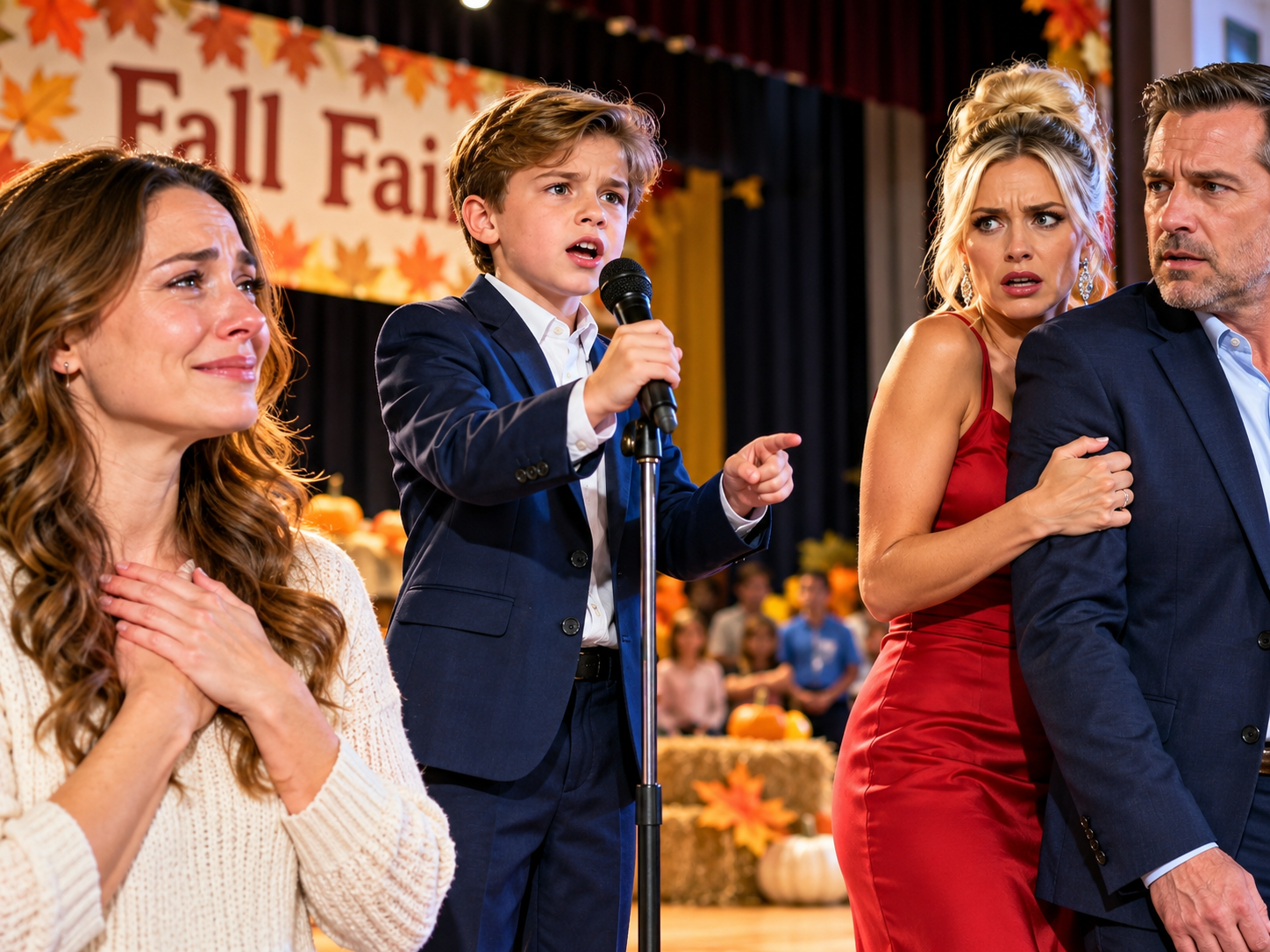
Then he reached a point in his presentation that he had not fully rehearsed. He explained that sometimes a plan did not work, and that the best part of an experience could come from what happened afterward. He said that he had learned to pay closer attention, ask questions, and admit when he did not know an answer. The words were simple, but they were true. Vivian watched him speak with a steadiness that had not been there during the fall fair. He was not trying to force the adults around him to understand something painful. He was sharing a lesson he had chosen to take from an ordinary day.
Afterward, his teacher complimented his clear explanation and asked whether he planned to return to the reserve. Dustin said he hoped to go again when the weather changed. Nigel waited until the other children had finished before congratulating him. He mentioned the detail about the wrong bird identification, and Dustin grinned. Vivian told him she had liked the way he explained how the experience changed their plans. Dustin thanked them both and began gathering his papers. He did not ask either parent whether the presentation had been good enough. He seemed satisfied with what he had done.
As they walked toward the school entrance, Nigel and Vivian discussed the upcoming parent-teacher meeting. Their conversation was practical, with neither one trying to dominate the arrangements. Nigel asked whether Vivian could send him the teacher's notes afterward if he had to leave work early. Vivian said she would, and they agreed to check in before making any decisions about Dustin's extracurricular activities. Dustin walked a few steps ahead, swinging his notebook at his side. He glanced back once to make sure both parents were coming, then continued toward the gate.
That night, Dustin placed the notebook beside his bed. He had added a new line beneath the presentation notes: Sometimes the best part is what happens after the plan changes. He did not write anything about the fall fair, Annabelle, or the recording. Those events had influenced him, but they did not need to appear in every story he told about himself. He was learning that a difficult experience could teach him something without becoming the only thing people knew about him.
Vivian found him reading the next morning before school. She asked whether he had enjoyed presenting. Dustin said he had, though he had been nervous at first. Then he told her that he might want to give another presentation later in the year. Vivian smiled and said she would help him practice if he wanted. Dustin shook his head playfully. “Maybe I can practice with Dad next time.” Vivian nodded, showing no disappointment. She was glad he felt free to choose who helped him, just as she wanted him to feel free to love both parents without managing their reactions.
The moment was small, but Vivian understood its meaning. Dustin's confidence was no longer measured only by whether he could speak up when someone hurt him. It was also visible in his willingness to share an interest, ask for support, and imagine doing something again. He was beginning to see that his voice could be used for more than defending himself. It could tell stories, ask questions, make people laugh, and express excitement. The child who had once stepped onto a stage carrying a painful truth was discovering all the other things he wanted to say.
Click here to continue reading: PART 18: What Annabelle Had to Learn Without Being Asked
My Ten-Year-Old Son Had Been Keeping a Secret About His Father’s Girlfriend, and I Finally Understood His Silence
Part 17 of 20