The next challenge came two weeks later, during a Sunday afternoon call that Vivian was not meant to hear. Dustin was in his bedroom speaking to Nigel about a science assignment when the conversation shifted toward the following weekend. Vivian was folding laundry in the hallway, close enough to hear fragments but not the full exchange. She heard Dustin ask whether Annabelle would be joining them, followed by a pause long enough to make Vivian stop folding a shirt. Nigel answered something she could not quite catch. Then Dustin said, “I don’t want it to be awkward again.” Vivian’s hands went still. She did not move closer. A moment later, Dustin said goodbye, and his bedroom door opened.
He came out holding the phone, his face thoughtful rather than frightened. Vivian set the laundry aside. “Everything all right?” she asked. Dustin considered the question before answering. “Dad wants to take me to the science museum next weekend. Annabelle might come, too.” He rubbed his thumb along the edge of the phone case. “I asked if we could go just us this time.” Vivian did not immediately praise him for asking or tell him what she thought Nigel should do. “And what did your dad say?” Dustin looked down. “He said he would talk to her and let me know.” The answer had left him uncertain, but he had asked for what he needed. That mattered more than whether the adults responded perfectly.
Vivian sat beside him on the sofa. “You’re allowed to want time alone with your dad,” she said. “That doesn’t mean you’re being unkind to Annabelle.” Dustin leaned against the cushion. “What if she thinks I don’t like her?” Vivian chose her words carefully. “You can be respectful to someone without needing to spend every moment with them. And your dad can have a relationship with her while still making time for you. Those things don’t have to compete.” Dustin was quiet for a while. Then he asked whether she thought Nigel would be angry. Vivian did not promise that he would never feel disappointed. She told Dustin that his father was responsible for handling his feelings, just as she was responsible for handling hers.
Nigel called the next evening. He spoke to Vivian first, explaining that Dustin had asked for a father-son outing and that he wanted to honor it. He sounded uncomfortable admitting that the request had forced him to confront an assumption he had been making. He had treated bringing Annabelle along as a natural part of his weekend plans, without always considering whether Dustin wanted that arrangement. “I thought he was getting used to everything,” Nigel said. Vivian leaned back in her chair. “He may be getting used to it. That doesn’t mean he never needs time with you on his own.” Nigel exhaled. “I know. I should have asked him more often instead of deciding what would be easiest for everyone.”
The conversation might once have turned into a list of old grievances, but Vivian kept it focused on Dustin. She told Nigel that their son had seemed more relaxed recently, though he still worried about making adults uncomfortable. She did not mention every anxious question Dustin had asked or share his private thoughts in detail. Those were his to tell. Instead, she encouraged Nigel to make the museum visit about reconnecting with his son rather than proving that the family arrangement could function without difficulty. Nigel listened. Before they ended the call, he said he would speak to Annabelle directly and confirm the plan with Dustin himself.
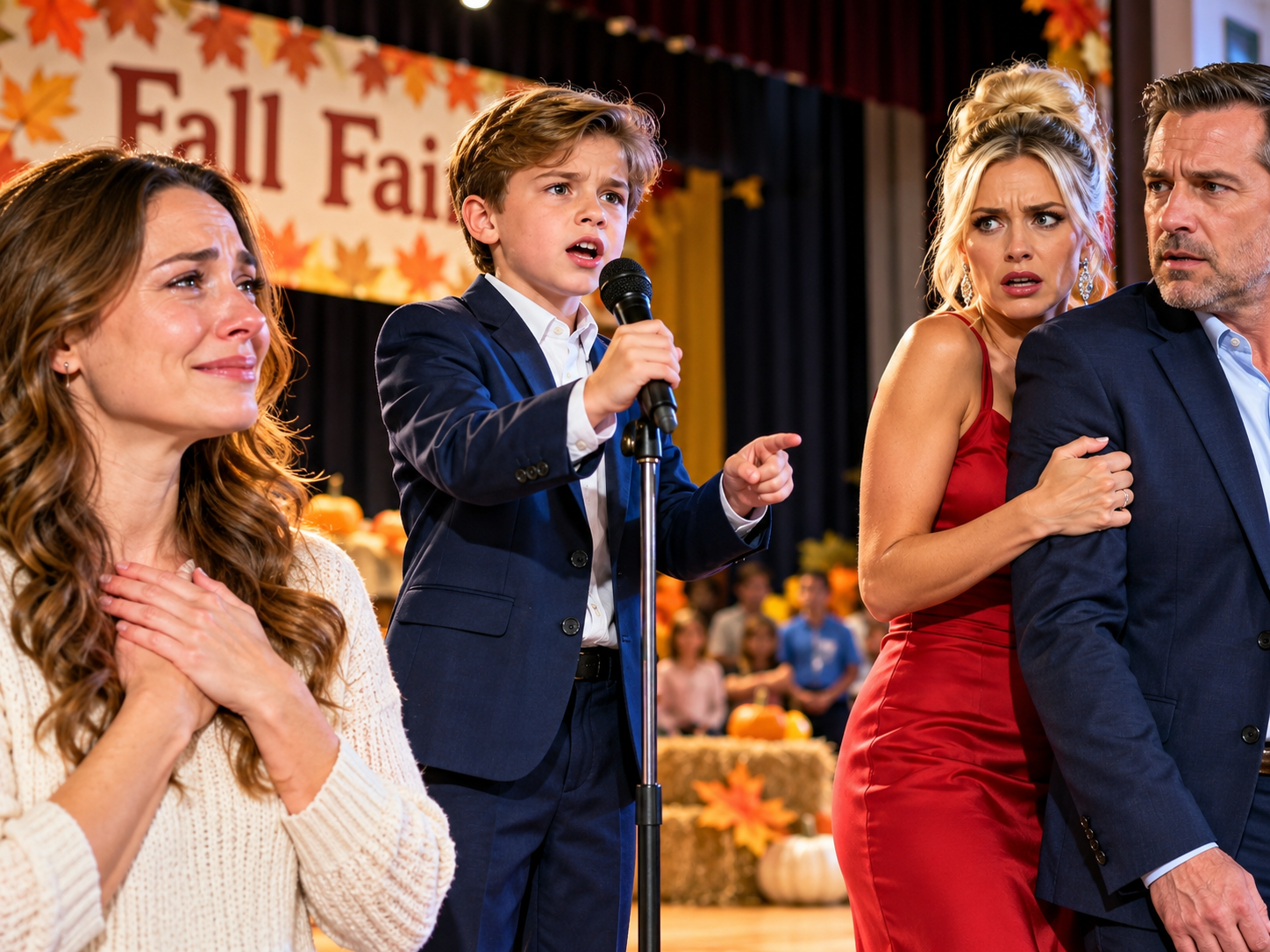
Annabelle did not take the request well. Nigel later told Vivian that she had asked whether Dustin disliked her and whether she was being excluded because of what happened at the fall fair. He admitted that his first instinct had been to reassure her quickly, partly because he did not want another argument. But the old approach—smoothing over discomfort by asking Dustin to accommodate it—was precisely what had contributed to the problem. He told Annabelle that the museum visit was an opportunity for him to spend time with his son, not a judgment on her. He also explained that Dustin had a right to ask for that time without being made responsible for her reaction.
Annabelle challenged him. “So now I’m the problem every time he wants something?” she asked. Nigel told her that was not what he had said. He acknowledged that the recording at the fair had been painful and embarrassing for her, but he refused to make Dustin’s request another argument about the recording. The issue was not whether Annabelle deserved to attend every outing. It was whether Nigel could recognize that his son sometimes needed his father’s undivided attention. “I can care about you,” he said, “and still put my son first when he needs me.” The words did not settle the disagreement. Annabelle remained upset, and Nigel had to resist the urge to withdraw his boundary simply to restore peace.
The next morning, Nigel called Dustin. “The museum will be just us this time,” he said. “I talked to Annabelle, and I explained why I think that’s important.” Dustin did not sound triumphant. “Is she mad?” he asked. Nigel paused. “She’s disappointed, but that’s something I need to handle. You don’t have to fix it.” Dustin was silent, and Nigel could almost hear him deciding whether to believe the answer. “You’re sure?” the boy asked. “Yes,” Nigel said. “You told me what you needed, and I’m listening.” He did not tell Dustin that he should be grateful or remind him of all the times he had already tried to improve.
At the science museum, the two of them spent most of the morning exploring a room filled with machines that demonstrated motion and force. Dustin was fascinated by a device that sent metal balls rolling along tracks, and Nigel stood beside him while he tested different arrangements. When Dustin explained why one ball traveled farther than another, his father asked questions instead of pretending to know the answer. They ate lunch in the museum café, where Dustin told a long story about a classmate who had mistaken a model of a meteorite for a potato. Nigel laughed so hard that he had to put down his drink. Dustin laughed too, delighted by the unplanned silliness of the moment.
On the drive home, Dustin asked whether they could do something together again the following month. Nigel said yes, then asked what kind of activity Dustin would enjoy. The boy suggested a bicycle ride if the weather was good, followed by hot chocolate. Nigel agreed, but he did not treat the plan as a guaranteed promise until they checked their calendars. Before dropping Dustin off, he told him that he had enjoyed the day. “Me too,” Dustin replied. He climbed out of the car and waved before heading inside. Vivian watched from the doorway as Nigel waited until Dustin was safely indoors before driving away. She could see that something had shifted, but she also knew that the next test would be whether Nigel could maintain that progress when someone he loved was unhappy with him.
Click here to continue reading: PART 11: The Difference Between Peace and Silence
My Ten-Year-Old Son Had Been Keeping a Secret About His Father’s Girlfriend, and I Finally Understood His Silence
Part 10 of 20