The anniversary of the lottery win came quietly.
I didn't celebrate it.
I didn't open champagne.
I didn't check the original ticket.
I didn't buy anything expensive.
I simply woke up early.
The house was silent.
Morning light spread across the kitchen floor.
I made coffee.
Then I walked outside.
The trees were wet from overnight rain.
I followed the path toward the back of the property and stood there listening to the wind.
Years earlier, I had imagined this date as the moment my old life ended.
Now I understood that no single moment could do that.
The lottery had changed my circumstances.
Leaving my parents had changed my direction.
But healing had happened slowly.
It had happened through hundreds of ordinary decisions.
I had chosen not to retaliate.
My parents had chosen to apologize.
Trent had chosen honesty.
None of those choices erased the past.
They changed what came after it.
My phone rang.
It was Ms. Vance.
“Happy anniversary.”
I laughed.
“You remembered?”
“I remember important dates.”
“I didn't think this one was important to you.”
“It isn't my money.”
“Exactly.”
She laughed.
“How are things?”
“Good.”
“Really good?”
I considered it.
“Yes.”
“That sounds convincing.”
“I mean it.”
She asked about my parents.
I told her they were doing well.
I told her about Trent's business.
I told her about my mother's work.
I told her about my father.
She listened.
Then she said, “You know what I remember most about our first meeting?”
“What?”
“You didn't ask how much you could buy.”
“What did I ask?”
“You asked how to keep the money from changing who you were.”
I smiled.
“Did I?”
“You did.”
“I don't remember.”
“I do.”
She paused.
“You've done a reasonable job.”
“Reasonable?”
“Don't become arrogant.”
“I'll try.”
We ended the call.
I went back inside.
On the kitchen counter sat a small envelope.
It was from my mother.
I opened it.
Inside was a handwritten note.
She had written only a few lines.
I hope you know that I see you now.
Not because of the money.
Not because of the house.
Not because of the car.
Just you.
I read it twice.
Then I folded it carefully and put it in a drawer.
I didn't need to display it.
I simply wanted to keep it.
That afternoon, I drove to my parents' house.
My father was outside repairing something near the garage.
“What are you doing?”
“Trying to fix this.”
“Is it working?”
“No.”
I laughed.
“Need help?”
He looked surprised.
“Are you offering?”
“I am.”
He handed me a wrench.
We worked together for nearly an hour.
It was not important what we fixed.
I barely remember.
What I remember is my father asking me questions.
Not about money.
Not about work.
About my life.
“What do you want to do next?”
“I don't know.”
“That's okay.”
I looked at him.
He smiled.
“I used to hate that answer.”
“I know.”
“I don't anymore.”
We finished.
My mother called us inside.
Trent was already there.
Dinner was waiting.
The table had become familiar again.
Not because the past had disappeared.
Because the present had become stronger.
Halfway through dinner, Trent said, “I have news.”
My mother smiled.
“What?”
“I hired someone.”
My father raised an eyebrow.
“For what?”
“Management.”
“Why?”
“Because I don't need to do everything myself.”
My father nodded.
“That is smart.”
Trent looked at me.
“I'm learning.”
I raised my glass.
“To learning.”
Everyone laughed.
After dinner, we sat in the living room.
My mother brought out old photographs again.
She seemed determined to make us look at every embarrassing picture from childhood.
“This one,” she said.
“No,” Trent said.
“Yes.”
She held up a photograph of us at a school event.
I was wearing a jacket that was too large.
Trent had his arm around my shoulder.
“You two were so close,” she said.
“We were.”
“What happened?”
Nobody answered immediately.
Then Trent said, “We grew up.”
I looked at him.
He continued.
“And we forgot we were brothers.”
My father looked down.
My mother took a slow breath.
“Maybe we remembered.”
I smiled.
“Maybe.”
The conversation shifted.
We talked about childhood.
Not the painful parts first.
The funny ones.
The time Trent fell into a pond.
The time I broke a window playing baseball.
The camping trip where our tent collapsed.
The terrible Christmas sweater my mother had forced my father to wear.
We laughed.
It felt good.
Later, when everyone had gone quiet, my father said, “I have one more thing to say.”
Trent groaned.
“Dad, don't give a speech.”
My father laughed.
“No speech.”
He looked at me.
“I am proud of you.”
The room became still.
He continued.
“I should have said that when you were thirty-three.”
I looked at him.
“You should have.”
“I know.”
“I believe you now.”
His eyes became wet.
He nodded.
“That's enough.”
I understood what he meant.
He didn't need me to say everything was forgiven.
He needed to know his words had finally reached me.
They had.
On the drive home, I thought about that sentence.
I am proud of you.
It was only four words.
Yet there had been years when I would have traded almost anything to hear them.
Now that I had them, they did not have the power I once imagined.
Not because they were meaningless.
Because I no longer needed them to define me.
That was freedom too.
The next morning, Trent sent me a message.
Dad's proud of you.
I smiled.
I replied:
He told me.
Trent answered:
He told me too.
Then:
He's getting sentimental.
I wrote:
Let him.
Trent sent a laughing emoji.
I put the phone away.
There were moments when I wondered whether my family would have changed without the lottery.
I would never know.
Maybe the shock of losing me had forced them to look at themselves.
Maybe time would have done it.
Maybe nothing would have changed.
It didn't matter anymore.
I wasn't living in the alternate version of my life.
I was living this one.
And this one was enough.
One year later, my mother called me on a Tuesday afternoon.
“Are you sitting down?”
“Yes.”
“I found the recipe.”
I laughed.
“You found it again?”
“No. I found the original note you wrote.”
“You still have it?”
“Yes.”
“What does it say?”
She read it aloud.
“More lemon zest than you think.”
I laughed.
“That sounds like me.”
“You were very specific.”
“I was.”
She paused.
“Would you make it with me?”
I looked toward the kitchen.
“Today?”
“If you're free.”
“I am.”
She was waiting when I arrived.
We made the cake together.
She measured flour.
I prepared the lemons.
She complained that I was using too much zest.
I told her that was impossible.
She told me I was difficult.
I told her I learned from her.
She threw a dish towel at me.
We laughed.
When the cake went into the oven, we sat at the kitchen table.
My mother looked at me.
“Do you remember the first one?”
“Yes.”
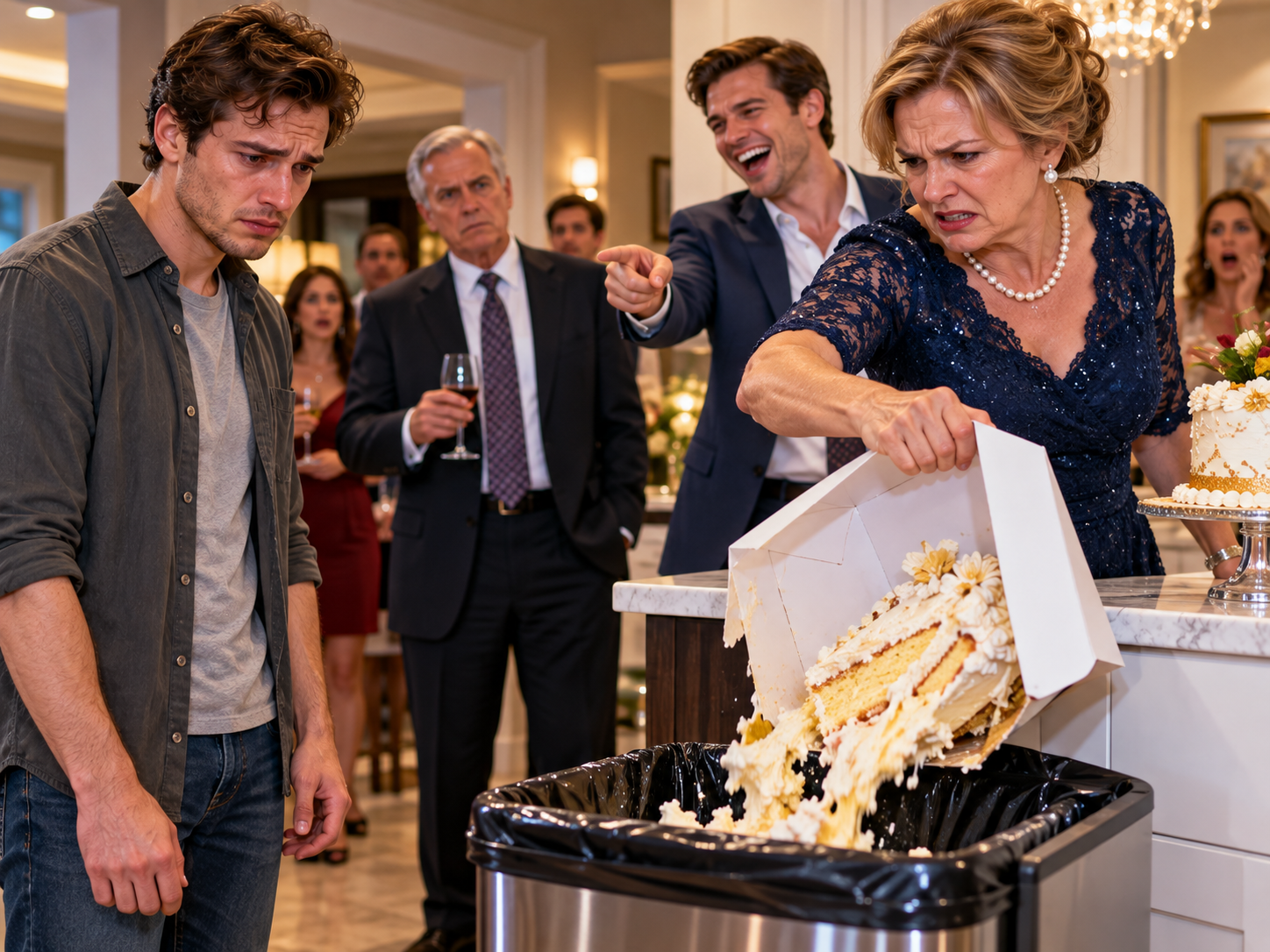
“I wish I could change that night.”
“I know.”
“I can't.”
“No.”
“But I can make this one better.”
I smiled.
“You can.”
The cake came out golden.
We let it cool.
Then she tasted it.
She closed her eyes.
“This is better.”
“Because I made it?”
“Because I didn't throw it away.”
We laughed until tears came.
That was the moment I realized something.
The past could remain painful without remaining powerful.
I would never forget the first cake.
I didn't need to.
It had taught me something.
So had the basement.
So had the lottery.
So had leaving.
So had returning.
Every part of my life had left something behind.
But none of those things owned me anymore.
That evening, I drove home.
I passed the gas station where I had bought the lottery ticket years earlier.
I slowed down.
For a moment, I considered stopping.
Instead, I kept driving.
The ticket had changed my life.
But I no longer needed to revisit the place where everything had begun.
My life was happening somewhere else now.
Ahead of me.
Not behind me.
Click here to continue reading: PART 12: On an ordinary Sunday, I brought two lemon cakes to my parents’ house and realized the life I once wanted had quietly become something better
The night I realized my family would never see me differently was also the night I quietly decided that leaving them behind would require more than simply walking away
Part 11 of 20