
The message arrived before eight on Sunday morning.
Two?
I smiled at the screen.
Always two.
I set my phone down and looked across the kitchen at the two lemon cakes cooling beside the window. One had cream frosting. The other had thin white-chocolate curls.
I had started making two without thinking.
It had become our tradition.
Not a replacement for the first cake.
Nothing could replace that.
It was simply something new we had built after the old version of our family had finally broken apart.
I poured coffee and stood outside on the back porch.
The morning was cool, and mist hung low between the trees. Birds moved through the branches, hidden from view.
There was a time when silence like this would have made me think about what I had lost.
Now it made me think about what I had gained.
Not the money.
That had become almost boring.
The money was managed.
The investments were diversified.
The trusts were structured.
Ms. Vance still sent me reports that contained numbers large enough to make my younger self stare at them for hours.
But I no longer measured my life through the balance sheets.
I had once believed that if I ever became wealthy, every day would feel extraordinary.
Instead, the extraordinary part had lasted only a short time.
After that came ordinary mornings.
Ordinary groceries.
Ordinary walks.
Ordinary phone calls.
Ordinary dinners.
That was what I had wanted without knowing it.
A life that didn't require me to perform.
At nine, Ms. Vance called.
“Am I interrupting breakfast?”
“No.”
“Good. I have something for you to review.”
“Is it urgent?”
“No.”
“Then tomorrow.”
She laughed.
“You've become very good at protecting your Sundays.”
“I learned.”
“I remember.”
There was a pause.
“How is your family?”
“Good.”
“Everyone?”
“Everyone.”
“That's different from when we started.”
“It is.”
She smiled through the phone.
“You sound happy.”
“I am.”
“Good.”
We discussed the documents briefly.
Before hanging up, she said, “Daniel?”
“Yes?”
“Don't let anyone convince you that privacy means isolation.”
I smiled.
“I won't.”
She had known me long enough to understand why the distinction mattered.
After winning the lottery, I had wanted privacy because I feared what people would do with the truth.
Later, I had almost confused privacy with distance.
There was a difference.
Privacy protected my life.
Isolation prevented people from sharing it.
I had no desire to return to isolation.
That was why I kept answering my mother's messages.
Why I visited my father.
Why I had lunch with Trent.
Why I let people into the house.
Not everyone.
But the people I trusted.
At eleven, I left for my parents' house.
The Bugatti rolled quietly through the neighborhood.
I had stopped noticing people looking at it.
That had been another strange change.
At first, I noticed every glance.
Then I stopped.
The car was still expensive.
People still noticed it.
But their reactions no longer mattered to me.
When I arrived, Trent was already there.
He was standing in the driveway holding a paper bag.
“What did you bring?”
“Bread.”
“You bought bread?”
“Yes.”
“That's suspiciously responsible.”
“I've changed.”
“You have.”
He smiled.
“I thought you'd never admit it.”
We walked toward the house together.
“Business going okay?” I asked.
“Good.”
“Really?”
“Really.”
“How good?”
“Boringly good.”
I laughed.
“That's your favorite phrase now.”
“It should be everyone's.”
He held the door open.
“After what happened, I'll take boring.”
Inside, my mother was setting the table.
She looked up.
“Two cakes?”
“Of course.”
She shook her head.
“You're going to spoil us.”
“You're allowed to be spoiled occasionally.”
My father appeared from the living room.
“I heard that.”
“You weren't included.”
He smiled.
“I've learned to accept disappointment.”
We laughed.
The meal was simple.
Chicken.
Rice.
Vegetables.
Fresh bread.
Nobody had planned anything elaborate.
That was exactly why I liked it.
Halfway through lunch, my mother asked Trent about his company.
He explained that one of his employees had taken on more responsibility.
My father asked about the numbers.
Trent answered honestly.
No exaggeration.
No performance.
No inflated language.
I watched my brother explain that growth was slower than he wanted but healthier than before.
My father nodded.
“That sounds sustainable.”
Trent smiled.
“That's what I'm hoping.”
My mother looked at me.
“You're quiet.”
“I'm listening.”
“To what?”
“My brother talking about his business without pretending it's bigger than it is.”
Trent pointed his fork at me.
“Don't ruin the moment.”
I laughed.
The conversation moved on.
After lunch, my father and I went outside.
He had been working on the garden.
“You've got tomatoes coming in.”
“I know.”
“You need help?”
“I wouldn't mind.”
We worked for nearly an hour.
He showed me how he had changed the soil.
I told him he was overcomplicating it.
He told me I didn't understand gardening.
I reminded him that I owned more plants than he did.
He said that wasn't evidence of competence.
It felt like being a son again.
Not a disappointed son.
Not a wealthy son.
Just a son.
That distinction was difficult to explain.
For years, I had thought my father needed to see me as successful before he could respect me.
Now I understood that respect had to exist before success.
Otherwise, it wasn't respect.
It was admiration.
And admiration was conditional.
When we finished, he sat on the porch.
“You know,” he said, “I used to think the basement was a temporary inconvenience.”
“I know.”
“I didn't realize how long three years feels when you're the person living downstairs.”
I sat beside him.
“It felt longer than that.”
He nodded.
“I believe you.”
That sentence mattered.
He didn't say he hadn't meant it.
He didn't explain.
He simply believed me.
We sat quietly.
Then he asked, “Do you still have bad memories of this place?”
“Yes.”
“Does that bother you?”
“No.”
“Why not?”
“Because bad memories don't mean I have to hate the place.”
He nodded.
“That makes sense.”
My mother came outside.
“Dessert.”
My father looked at me.
“Which one?”
“Both.”
“Excellent.”
We went inside.
The cakes were placed on the table.
My mother cut the first slice.
She took a bite.
Then she smiled.
“Still good.”
“Of course.”
“Don't become arrogant.”
“Too late.”
She laughed.
After dessert, we sat around talking until the afternoon light changed.
Eventually, Trent stood.
“I should go.”
My mother hugged him.
“Drive carefully.”
“I will.”
He looked at me.
“See you Wednesday?”
“Sure.”
“Good.”
He left.
I watched him walk to his car.
There was something deeply satisfying about seeing my brother leave without needing anything from me.
Not money.
Not approval.
Not rescue.
Just a goodbye.
My mother sat beside me.
“He's doing better.”
“Yes.”
“You're proud of him.”
“Yes.”
She smiled.
“You don't sound surprised.”
“I'm not.”
“I am.”
“Why?”
She thought about it.
“Because I used to think people only changed after something terrible happened.”
“And now?”
“Sometimes they change because they finally have room to.”
I looked at her.
“That sounds like something you've learned.”
“I have.”
She rested her hand on mine.
“I think I finally understand something about you.”
“What?”
“You didn't need money to become someone.”
“No.”
“You needed freedom to stop living like you were nothing.”
I looked down.
“Yes.”
She squeezed my hand.
“I wish I'd understood that sooner.”
“So do I.”
She nodded.
Then she didn't say anything else.
She didn't need to.
On the drive home, I thought about the first three years.
I remembered how often I had sat alone downstairs after work.
How I had listened to footsteps above me.
How I had heard my parents discussing Trent's latest project as though it were the most important thing in the world.
How often my name had been followed by the word “potential.”
Potential.
As if I were an unfinished person.
As if the man I already was didn't count.
I had hated that word.
Now I understood something.
Potential was not the same as worth.
A person could fail and still be valuable.
A person could succeed and still be cruel.
A person could lose everything and still remain themselves.
I had learned that the hard way.
The sun was setting when I reached home.
I parked and carried the empty cake boxes into the kitchen.
There was something almost funny about the fact that lemon cake had become the most reliable symbol of my family's transformation.
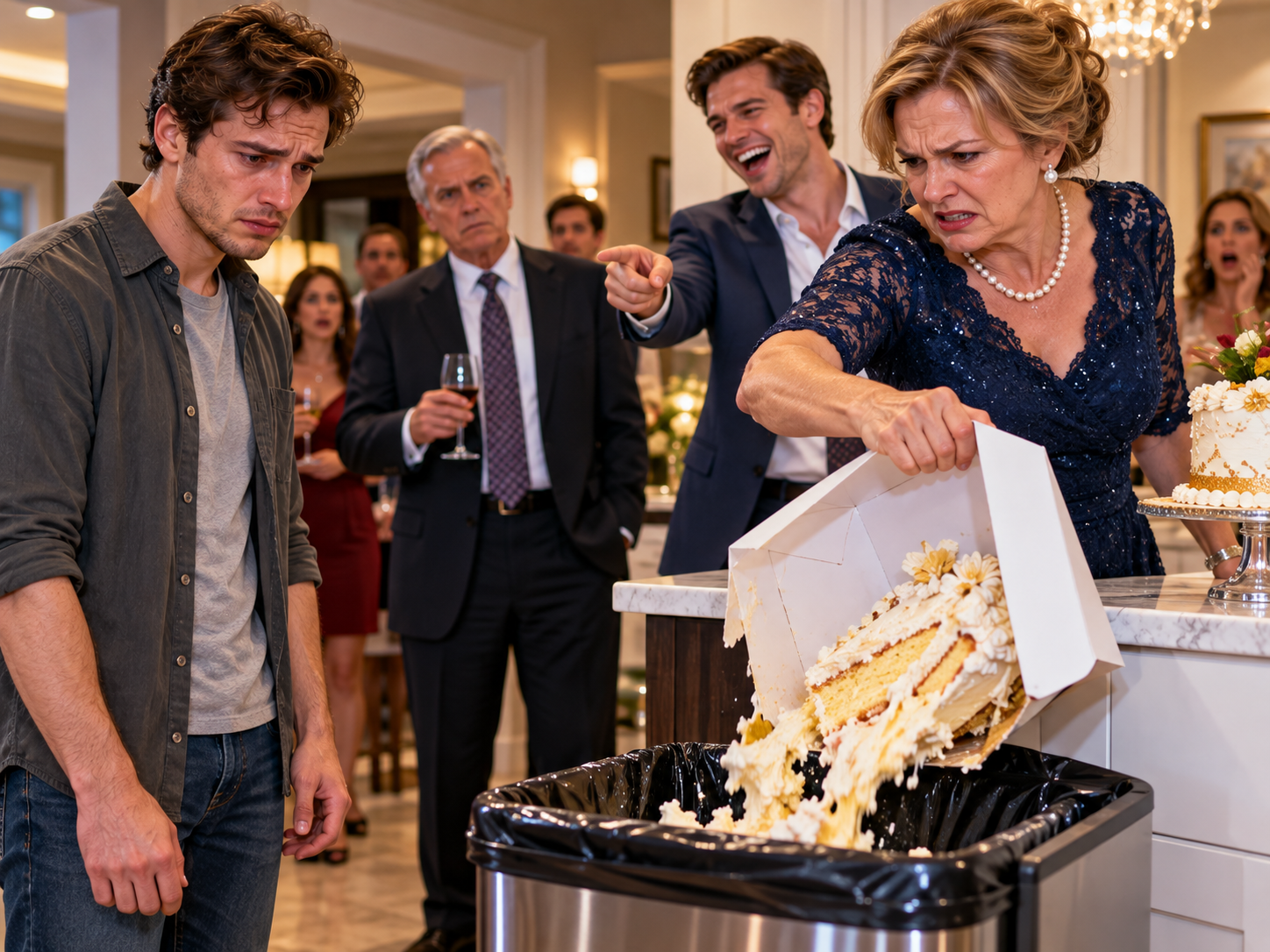
The first one had been thrown away.
The later ones had been shared.
The difference was not the recipe.
It was the people.
That night, my mother called.
“Did you get home?”
“Yes.”
“Good.”
She paused.
“Thank you for coming.”
“I enjoyed it.”
“I know.”
Another pause.
“Daniel?”
“Yeah?”
“Don't disappear.”
I smiled.
“I won't.”
“I mean it.”
“I know.”
She laughed softly.
“I knew you would say that.”
We ended the call.
I stood in the kitchen for a long time.
Don't disappear.
Once, that sentence would have sounded like a demand.
Now it sounded like love.
There was a difference.
I didn't owe my family constant access to me.
But I no longer wanted distance simply because distance felt safer.
I could choose when to be present.
I could leave when I needed space.
I could return because I wanted to.
That was the freedom I had been looking for all along.
Not the freedom to escape everyone.
The freedom to choose.
Click here to continue reading: PART 14: Trent called me after midnight with news about his company, and the conversation showed me how completely different our relationship had become
The night I realized my family would never see me differently was also the night I quietly decided that leaving them behind would require more than simply walking away
Part 13 of 20

