
The call came just after midnight.
I was already in bed when my phone vibrated on the nightstand.
Trent.
I answered immediately.
“Everything okay?”
“Yes.”
His voice sounded strange.
“Then why are you calling at midnight?”
“I couldn't sleep.”
“That isn't an answer.”
He laughed quietly.
“I got the contract.”
“What contract?”
“The one I told you about.”
I sat up.
“The regional property management contract?”
“Yeah.”
“That's great.”
“It is.”
He was silent.
Then he said, “I almost didn't take it.”
“Why?”
“Because it's bigger than anything I've done since starting over.”
“That doesn't mean you shouldn't take it.”
“I know.”
“So why hesitate?”
“Because the old me would've taken it for the wrong reason.”
I understood.
He had spent years accepting opportunities because they made him look successful.
Now he had to decide whether an opportunity actually fit his life.
“What did you decide?”
“I took it.”
“Why?”
“Because the numbers work.”
I smiled.
“Good reason.”
“And because I actually like the work.”
“Even better.”
He laughed.
“I wanted you to be the first person I told.”
“Why?”
“I don't know.”
He paused.
“Maybe because you were the first person who ever told me I didn't need to prove anything.”
I leaned back against the pillows.
“I didn't tell you that.”
“You did.”
“When?”
“After everything collapsed.”
I thought about it.
Maybe I had.
Maybe I had said it without remembering.
Some words mattered more to the person receiving them than the person speaking them.
“I'm proud of you,” I said.
He went quiet.
Then he laughed.
“Don't say that.”
“Why?”
“I'm going to get emotional.”
“That's allowed.”
“No.”
“Why?”
“Because it's midnight.”
I laughed.
“Fine.”
We talked for another twenty minutes.
When we hung up, I didn't immediately go back to sleep.
I stared at the ceiling.
There had been a time when I would have heard good news about Trent and wondered what it meant for me.
Was he ahead?
Was I behind?
Would my parents compare us?
Would they praise him more?
That competition had disappeared.
Not because Trent had become less successful.
Because I had stopped using him as a measuring stick.
The next morning, my father called.
“You heard about Trent?”
“Yes.”
“He got the contract.”
“I know.”
“I'm proud of him.”
“You should be.”
My father paused.
“And I'm proud of you too.”
I smiled.
“Thanks, Dad.”
He didn't add anything.
Neither did I.
Sometimes four words were enough.
Later that week, I met Trent for lunch.
He arrived carrying a folder.
“You're going to hate this.”
“What?”
“Numbers.”
“I've survived numbers before.”
He put the folder on the table.
“This is the contract.”
I looked at it.
“I don't need to read it.”
“I want you to.”
“Why?”
“Because I trust your judgment.”
I pushed the folder back.
“You need a professional.”
“I have one.”
“Then trust the professional.”
He smiled.
“Look at you.”
“What?”
“You've finally learned not to solve everyone's problems.”
“I've always known that.”
“No.”
He shook his head.
“You used to solve them anyway.”
I considered that.
He was right.
When we were younger, I had often tried to protect people from consequences.
Not because I was noble.
Because I hated watching people struggle.
The lottery had taught me that helping someone and preventing them from learning were different things.
Trent had needed to face his financial reality.
My parents had needed to face their behavior.
I had needed to face my own dependence on their approval.
If I had rescued everyone, none of us would have changed.
“How's the contract?” I asked.
“Good.”
“You confident?”
“Yes.”
“Then go.”
He smiled.
“Thanks.”
We ate lunch.
He told me about the people he would hire.
The hours.
The clients.
The responsibilities.
It was the most ordinary conversation.
And yet I realized how extraordinary it would have seemed years earlier.
My brother was building something without trying to impress me.
I was listening without comparing myself.
That was progress.
Not dramatic.
Real.
A few months later, my mother invited everyone to a family gathering.
There were cousins.
Aunts.
People I hadn't seen in years.
The old version of me would have dreaded it.
I knew what would happen.
Questions.
Judgment.
Comparisons.
Instead, I went.
My mother introduced me to someone who hadn't seen me since I was younger.
“This is Daniel.”
The woman smiled.
“I remember you.”
I smiled back.
“It's been a while.”
She looked at my car outside.
“Oh, is that yours?”
“Yes.”
“Nice.”
“Thank you.”
Then she asked, “What do you do?”
I hesitated.
Not because I was ashamed.
Because there were too many possible answers.
“I manage investments and support a few businesses.”
“That sounds interesting.”
“It can be.”
She moved on.
No interrogation.
No assumptions.
No need to explain.
I realized how much of my old discomfort had come from anticipating judgment that might not even arrive.
I had spent years defending myself against imaginary conversations.
That afternoon, I sat beside my father.
He leaned toward me.
“You okay?”
“Yes.”
“You seem relaxed.”
“I am.”
He smiled.
“Good.”
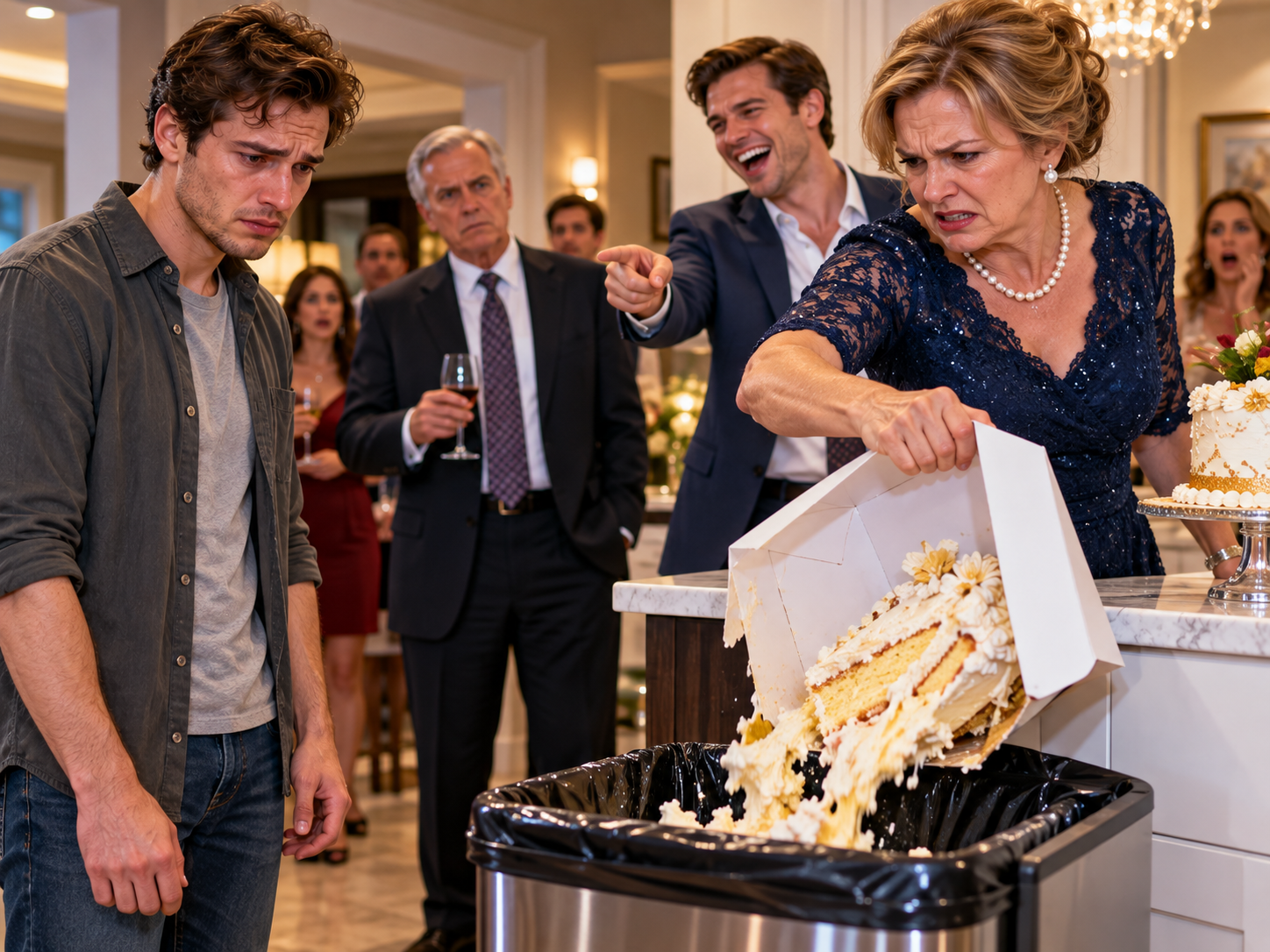
My mother brought out dessert.
Lemon cake.
Everyone laughed when they saw it.
“Family tradition,” she announced.
I looked at her.
She smiled.
The cake was served.
Nobody knew the history.
Or perhaps some did.
It didn't matter.
The cake was simply dessert.
That was another kind of healing.
Something painful had become ordinary.
Not because the pain had been erased.
Because it no longer controlled the meaning.
Later, I stepped outside.
The evening air was cool.
Trent joined me.
“Too much family?”
“A little.”
“Same.”
We stood together.
Then he said, “Do you remember when we were kids and Dad made us race to the mailbox?”
“Yes.”
“You always won.”
“No, I didn't.”
“You did.”
“I remember you cheating.”
“I was strategic.”
“You pushed me.”
“I barely touched you.”
“You knocked me into a bush.”
He laughed.
“Okay.”
We stood there laughing about childhood.
Then he became quiet.
“I'm glad we're brothers again.”
I looked at him.
“Me too.”
“I don't want to lose that.”
“You won't.”
“How do you know?”
“Because neither of us is trying to win anymore.”
He nodded.
“That helps.”
We went back inside.
The evening continued.
When I finally drove home, I realized that the most important changes in my family were no longer things anyone announced.
They had become habits.
My mother asked instead of assumed.
My father listened instead of instructed.
Trent admitted instead of performed.
I stayed when I wanted to stay.
I left when I wanted to leave.
Nobody punished anyone for having boundaries.
That was what a healthy family looked like.
Not perfect.
Not free from mistakes.
Just capable of correction.
One winter evening, my father called.
“I have a favor.”
“What is it?”
“Can you come over tomorrow?”
“Of course.”
“Your mother wants to show you something.”
“What?”
“I don't know.”
“You're her husband.”
“She doesn't tell me everything.”
I laughed.
“Fine.”
The next afternoon, I arrived.
My mother led me to the kitchen.
On the counter was a recipe card.
The original.
The handwriting was mine.
She had laminated it.
I stared at it.
“You kept this?”
“Yes.”
“Why?”
“Because I don't want to forget.”
I touched the card.
“You don't need this to remember.”
“I know.”
She smiled.
“But sometimes reminders help.”
I nodded.
She opened a drawer.
Inside were several recipe cards.
“This one is mine,” she said.
She held up another.
“This one was Grandma's.”
She pointed to a third.
“And this one is yours.”
I looked at her.
“You made mine part of the collection?”
“Yes.”
I smiled.
“That means I'm officially family.”
She laughed.
“You always were.”
The words landed softly.
I believed them.
Not because the past had changed.
Because the present had.
My mother made tea.
We sat together.
She asked about my plans.
I told her I was considering expanding some charitable work.
She asked why.
I explained.
She listened.
Then she said, “Whatever you decide, don't do it because you think you should.”
I looked at her.
“Who are you?”
She laughed.
“I learned.”
We sat in silence.
I realized I had once wanted my parents to become different people.
That wasn't what had happened.
They were still themselves.
They still made mistakes.
They still had old habits.
But they had learned to question those habits.
Maybe that was enough.
Maybe people didn't need to become completely different to become better.
Maybe they only needed to become more honest versions of themselves.
That evening, I drove home.
The road was dark.
The trees stood like shadows along the pavement.
I thought about the years ahead.
There would probably be disagreements.
There would be misunderstandings.
Someone would say something careless.
Someone would apologize.
Life would continue.
That was okay.
I no longer needed perfection.
I needed choice.
And I had it.
Click here to continue reading: PART 15: The money remained enormous, but the life I built around it became deliberately small, and that was the part of my story nobody in my family expected
The night I realized my family would never see me differently was also the night I quietly decided that leaving them behind would require more than simply walking away
Part 14 of 20

