
Sunday arrived with clear skies.
I woke early.
There was no special reason.
I simply couldn't sleep.
I walked through the house while the morning was still cool.
Everything was quiet.
The kitchen.
The hallway.
The office.
The living room.
I stopped at the window overlooking the trees.
Years ago, I had believed a different life would require a dramatic escape.
I had imagined a mansion.
A fleet of cars.
A life so impressive that nobody could ever call me a failure again.
I had been wrong.
The life I wanted was much smaller.
Peace.
Privacy.
People who asked questions because they cared about the answers.
A family dinner where nobody measured success.
A brother who could admit when he was afraid.
A father who could apologize.
A mother who could taste lemon cake before deciding it wasn't worth having.
That was enough.
I went into the kitchen.
Two lemon cakes sat cooling on the counter.
I had made them the night before.
One was traditional.
The other had white chocolate curls.
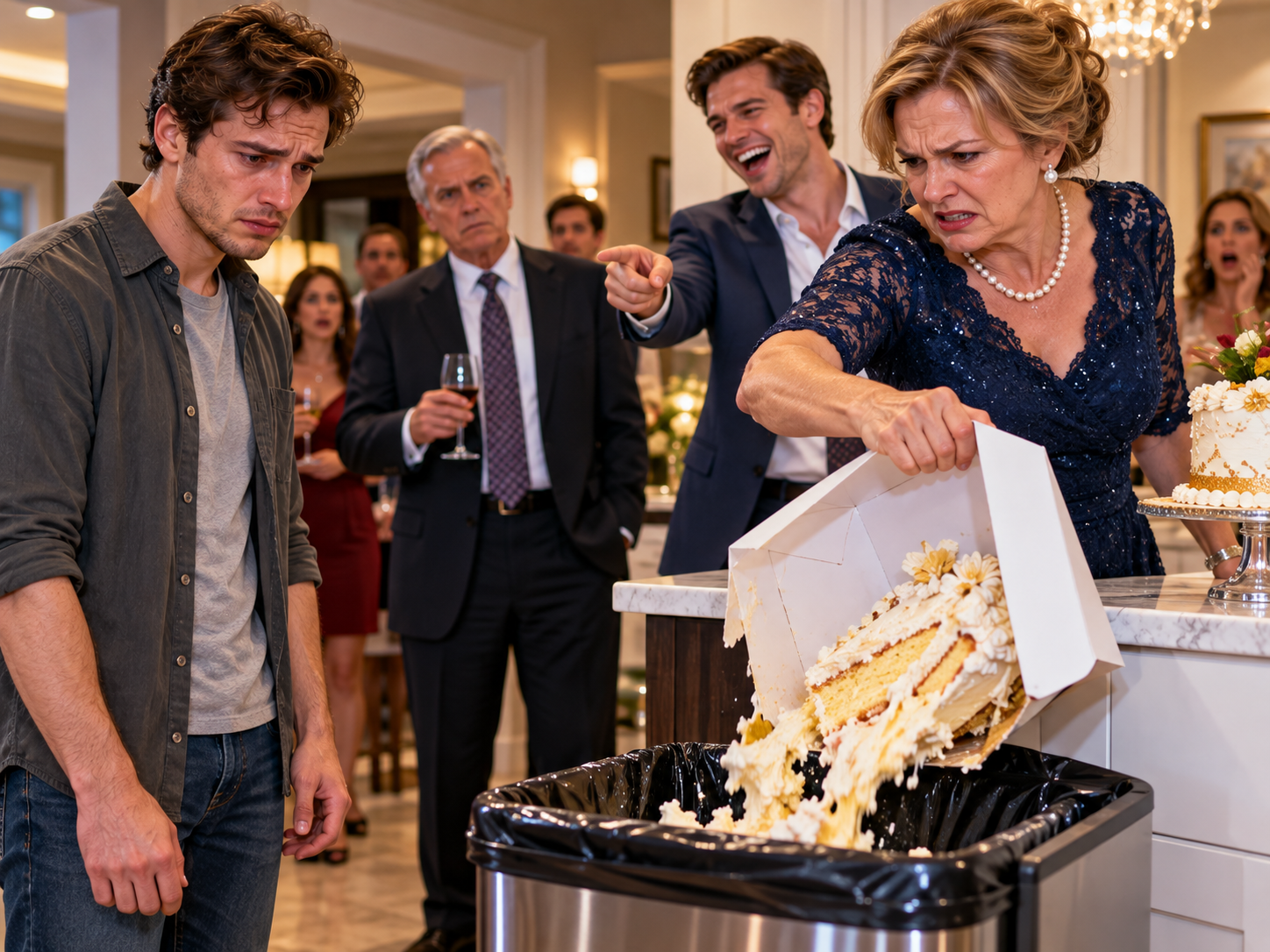
I remembered the first cake.
I remembered the trash.
I remembered my mother's voice.
I remembered Trent laughing.
I remembered telling them I would be gone by morning.
I remembered their silence.
For a long time, I had thought that was the night my family lost me.
Now I saw it differently.
It was the night I stopped losing myself.
I packed the cakes into boxes.
Then I grabbed my keys.
The Bugatti waited outside.
I looked at it for a second.
There had been a time when that car had represented everything I wanted my family to see.
Now it was simply what I drove.
I got in.
The engine started.
I smiled.
Then I drove toward my parents' house.
When I arrived, my mother was waiting on the porch.
“You brought both.”
“I promised.”
“You're becoming predictable.”
“Careful.”
She laughed.
My father came outside.
“Did you make these?”
“Yes.”
“Your mother helped.”
“That explains why they might be edible.”
My mother gave him a look.
He raised both hands.
“I said might.”
We laughed.
Trent arrived ten minutes later.
He had brought flowers.
“For Mom.”
She kissed his cheek.
“You didn't have to.”
“I wanted to.”
I watched them.
That phrase again.
I wanted to.
It had become one of the most important sentences in our family.
Not because people owed one another things.
Because they were choosing them.
We sat down for lunch.
The conversation moved easily.
Trent talked about a new employee.
My father complained about a neighbor's fence.
My mother described a book she had been reading.
Nobody asked about money.
Nobody asked how much the house cost.
Nobody asked what the Bugatti was worth.
The lottery had finally become what it always should have been.
Irrelevant.
Halfway through lunch, my father looked at me.
“Do you remember when you first came back here after winning?”
“Yes.”
“You drove that car.”
“Yes.”
“I thought you were trying to make a point.”
“I know.”
He smiled.
“You weren't.”
“No.”
“What were you trying to do?”
I thought for a moment.
“Make sure you understood I didn't need your approval anymore.”
He nodded.
“Did it work?”
“Yes.”
He smiled.
“Good.”
I looked at him.
“But I don't think I needed the car.”
“No.”
“I needed the decision.”
“Yes.”
That was the truth.
The car had been visible.
The decision had been invisible.
Leaving had been the real statement.
Not because I wanted to punish them.
Because I had finally decided that staying somewhere I was constantly diminished was not loyalty.
It was abandonment of myself.
After lunch, we moved into the living room.
My mother brought out the cakes.
She placed them carefully on the table.
Then she looked at me.
“Which one?”
“You choose.”
She thought seriously.
“The original.”
I smiled.
She cut four slices.
We tasted them.
My father nodded.
“This is good.”
“Thank you,” I said.
Trent tasted his.
“Very good.”
My mother looked at me.
“I think I've finally earned the right to say that.”
“You have.”
She smiled.
For a while, nobody spoke.
Then she said, “I used to think pressure made people stronger.”
My father looked at her.
“So did I.”
She continued.
“I thought if Daniel felt uncomfortable enough, he would become ambitious enough.”
I nodded.
“That was what you told me.”
“I was wrong.”
“Yes.”
She looked at me.
“Pressure can make someone stronger.”
She paused.
“But cruelty doesn't.”
I felt my throat tighten.
“No.”
She nodded.
“I know the difference now.”
I believed her.
Not because she said it.
Because I had watched her live differently for years.
That was how I knew.
Words mattered.
Actions mattered more.
Trent leaned forward.
“I owe Daniel something too.”
I looked at him.
He smiled.
“I used to laugh when people called you the family failure.”
“I remember.”
“I laughed because I was terrified they'd call me one.”
He took a breath.
“I don't feel that way anymore.”
“Good.”
“I don't need to be the successful brother.”
“You never did.”
“I know.”
He looked around the room.
“I wish I'd known that sooner.”
“Me too.”
My father leaned back.
“Maybe that's what all of us are learning.”
“What?”
“That being enough isn't something another person gives you.”
I looked at him.
He smiled.
“Your mother is going to say I stole that from her.”
“She probably will,” I said.
My mother laughed.
“I was thinking it.”
We all laughed.
The afternoon passed slowly.
Eventually, Trent left.
My father went outside.
My mother and I remained in the kitchen.
She wrapped the remaining cake.
“Take this.”
“I brought it.”
“You're taking it.”
“Okay.”
She handed me the box.
Then she looked at me.
“Daniel?”
“Yeah?”
“I know I've apologized.”
“You have.”
“But I may apologize again someday.”
I smiled.
“You probably will.”
She laughed.
“Is that okay?”
“Yes.”
“Why?”
“Because sometimes people need to say something more than once before they believe it themselves.”
She stared at me.
“That sounds wise.”
“I had a good teacher.”
“Who?”
“Life.”
She rolled her eyes.
“Don't become philosophical.”
“I'll try.”
She hugged me.
When I walked outside, my father was standing beside the Bugatti.
He looked at the car.
“You really do love that thing.”
“I do.”
“Why?”
I thought about it.
“Because it's fun.”
He nodded.
“Good answer.”
He looked toward the road.
Then back at me.
“Drive safely.”
“I will.”
He opened his arms.
I hugged him.
Before I got into the car, he said, “Come next Sunday.”
“I will.”
“No reason.”
“Okay.”
“Just dinner.”
“I'll come.”
He smiled.
I got into the car.
As I drove away, I watched their house disappear in the rearview mirror.
For years, that house had represented judgment.
Then it represented pain.
Then confrontation.
Then consequences.
Now it represented something else.
History.
Not perfect history.
Not harmless history.
Just history.
And I could live with that.
I drove through the familiar streets toward the wooded road leading home.
The trees opened ahead of me.
Sunlight moved across the windshield.
I thought about the lottery ticket.
The $450 million.
The attorney.
The blind trust.
The investments.
The more-than-$270-million fortune that had once seemed impossible.
I thought about how carefully I had guarded the number.
My family still didn't know the exact amount.
And they didn't need to.
That secret no longer felt like a weapon.
It was simply private information.
There was a difference.
I had once kept the number secret because I wanted to know whether they valued me.
Now I kept it private because it belonged to me.
That was another boundary.
A healthy one.
When I reached home, I carried the lemon cake inside.
I put it on the kitchen counter.
Then I stood there for a moment.
I realized I had spent years thinking the greatest consequence of the lottery would be that my family finally understood I wasn't a failure.
But that wasn't what happened.
The lottery exposed their assumptions.
Leaving forced them to confront them.
Time gave them the opportunity to change.
And I finally stopped needing their approval.
That was the real ending.
Not the Bugatti.
Not the money.
Not the house.
Not even the apologies.
It was the quiet certainty that I no longer had to earn my place anywhere.
I could leave.
I could return.
I could say yes.
I could say no.
I could help someone without rescuing them.
I could love people without allowing them to define me.
I could remember what happened without living inside it.
That was worth more than the lottery.
The next morning, my mother sent another message.
Sunday?
I smiled.
I typed:
Of course.
Then another message appeared.
Bring lemon.
I laughed.
I wrote:
Two?
Her answer came immediately.
Always two.
I put the phone down.
Outside, the morning light was spreading across the trees.
My life was quiet.
It was private.
It was imperfect.
It was mine.
And after everything, that was enough.
Click here to continue reading: PART 13: The invitation to Sunday dinner became something I never expected, because the family I once wanted to escape had slowly become a family I could finally choose
The night I realized my family would never see me differently was also the night I quietly decided that leaving them behind would require more than simply walking away
Part 12 of 20

One Comment on “PART 12 – On an ordinary Sunday, I brought two lemon cakes to my parents’ house and realized the life I once wanted had quietly become something better”