As the school year moved toward its final term, Vivian became increasingly aware that Dustin's world was growing beyond the family conflict that had once filled so much of his emotional space. He was spending more time with friends, becoming interested in photography, and asking questions about the world that had nothing to do with his parents' relationship. One afternoon, he asked whether he could borrow her old camera for a school project. He wanted to photograph small details in the neighborhood—cracks in walls, leaves growing through pavement, and reflections in shop windows. Vivian showed him how to hold the camera steady and adjust the focus, then warned him to ask permission before photographing anyone closely.
Dustin took the camera outside and returned an hour later with dozens of pictures. Some were blurry, and several showed little more than patches of sunlight. But one image caught Vivian's attention: a narrow plant pushing through a crack beside the front steps. The plant looked fragile, yet its leaves were bright and upright. Dustin explained that he liked how something small could keep growing even when the space around it was difficult. Vivian smiled at the observation, though she did not tell him that she saw a connection to their family. She asked whether he wanted to take another photograph from a different angle. He did, and they spent the next twenty minutes experimenting with light.
Nigel became interested in the project when Dustin showed him the pictures during a weekend visit. He offered to take his son to a nearby park where they might find more interesting subjects. Dustin agreed, but he asked whether they could go early, before the crowds arrived. Nigel checked his schedule and arranged the outing. They photographed insects on tree trunks, water moving around stones, and the shadows cast by branches on the path. Dustin became so absorbed that he barely noticed the time. Nigel enjoyed watching him work, especially when his son began giving instructions about where to stand and how to frame a shot.
At the park, Nigel made a suggestion about photographing a family sitting on a bench. Dustin immediately shook his head. “We shouldn't take their picture without asking,” he said. Nigel paused, then agreed that he was right. They approached the family politely and asked whether they would mind being included in a photograph. The parents declined, and Nigel thanked them before walking away. Dustin seemed relieved that his father had accepted the answer without making a joke about it. They continued photographing the park, and Nigel found himself thinking about how often his son had once needed to watch adults closely to see whether a boundary would be respected. Now Dustin was beginning to expect that respect as something ordinary.
A week later, Dustin asked whether he could display his photographs at the end-of-year school exhibition. His teacher liked the idea and suggested that he choose a small collection with a common theme. Dustin decided to call it Small Things That Keep Growing. He selected the plant beside the steps, a branch pushing through an old fence, and a patch of grass emerging between paving stones. He included a photograph of a tree that had grown at an angle around an obstacle, its trunk bending before rising toward the light. He did not explain the personal meaning behind the collection, and his teacher did not demand one. The images could speak for themselves.
When Vivian helped him prepare the display, she asked whether he wanted to include the photograph of the plant outside their home. Dustin said yes because it was the first picture he had taken that he truly liked. He carefully printed the image and placed it beside a short caption about how plants adapted to limited space. He wanted to add another sentence, but he struggled to make it sound natural. Vivian suggested he write what he had actually observed rather than searching for a profound message. Dustin thought for a moment and wrote, Growing does not always mean growing straight. Sometimes it means finding a way forward around what is in the way.
The sentence stayed with Vivian after Dustin went to bed. She thought of the years following the divorce, when she had tried to make every transition as smooth as possible. She had believed that if she remained calm, avoided criticism, and never asked Dustin to choose sides, she could shield him from the pain of adult conflict. Those choices had helped, but they could not prevent every hurt. She could not control Nigel's behavior or Annabelle's remarks, and she could not guarantee that Dustin would never feel caught between people he loved. What she could do was keep listening, refuse to turn his feelings into weapons, and remind him that he was allowed to move through difficulty without carrying responsibility for the adults around him.
On the day of the exhibition, the school hall filled with parents and students. Dustin's photographs attracted attention because they were simple and easy to overlook at first glance. People slowed down when they read the captions and began examining the details in each image. His teacher told Vivian that he had shown a thoughtful understanding of how small changes could alter the way something was seen. Vivian thanked her and turned toward the display, where Nigel had arrived and was reading the caption beneath the photograph of the bent tree.
Nigel looked at the sentence for a long time. Then he turned to Dustin and asked what had inspired it. Dustin shrugged slightly. “I just thought the tree couldn't grow where it wanted, so it went around the fence.” Nigel nodded. He did not ask whether the words were about their family, though he wondered if his son had been thinking about more than trees. He told Dustin that the photograph was beautiful and that the caption helped him notice something he might otherwise have missed. Dustin smiled, pleased that his father had understood the work on its own terms.
Annabelle arrived later, after finishing an appointment. She stood in front of the display and examined the photographs carefully. When she reached the picture of the plant beside the steps, she recognized the place from a visit to Nigel's apartment. She asked Dustin whether he had taken it himself. He explained how he had adjusted the camera and waited for the sunlight to reach the leaves. Annabelle told him she liked the way he had captured the small details. Dustin thanked her and began explaining the other photographs. There was no need for him to pretend they had become close. He could simply share his interest with someone who was listening respectfully.
A teacher announced that the exhibition would soon close and invited students to collect their work. Dustin carefully removed each photograph and placed it in a folder. He wanted to keep the display together at home, perhaps adding more pictures over the summer. Vivian offered to help him arrange them in a small album. Nigel suggested that they print a few extra copies for relatives who might enjoy seeing the project. Dustin liked the idea, though he insisted on choosing which photographs would be shared. The adults agreed without turning the decision into a debate.
On the way out, Nigel asked Vivian whether she had a moment to talk. Dustin was already walking toward the entrance with Annabelle, discussing whether they might visit the park again. Nigel waited until they were far enough away that they could speak privately. He told Vivian that he had been thinking about how easily he once treated her dignity as something separate from his responsibilities as a father. He had assumed that because their marriage had ended, the way he spoke about her no longer mattered to Dustin. He understood now that their son had been listening to the way his father treated someone who was still central to his life.
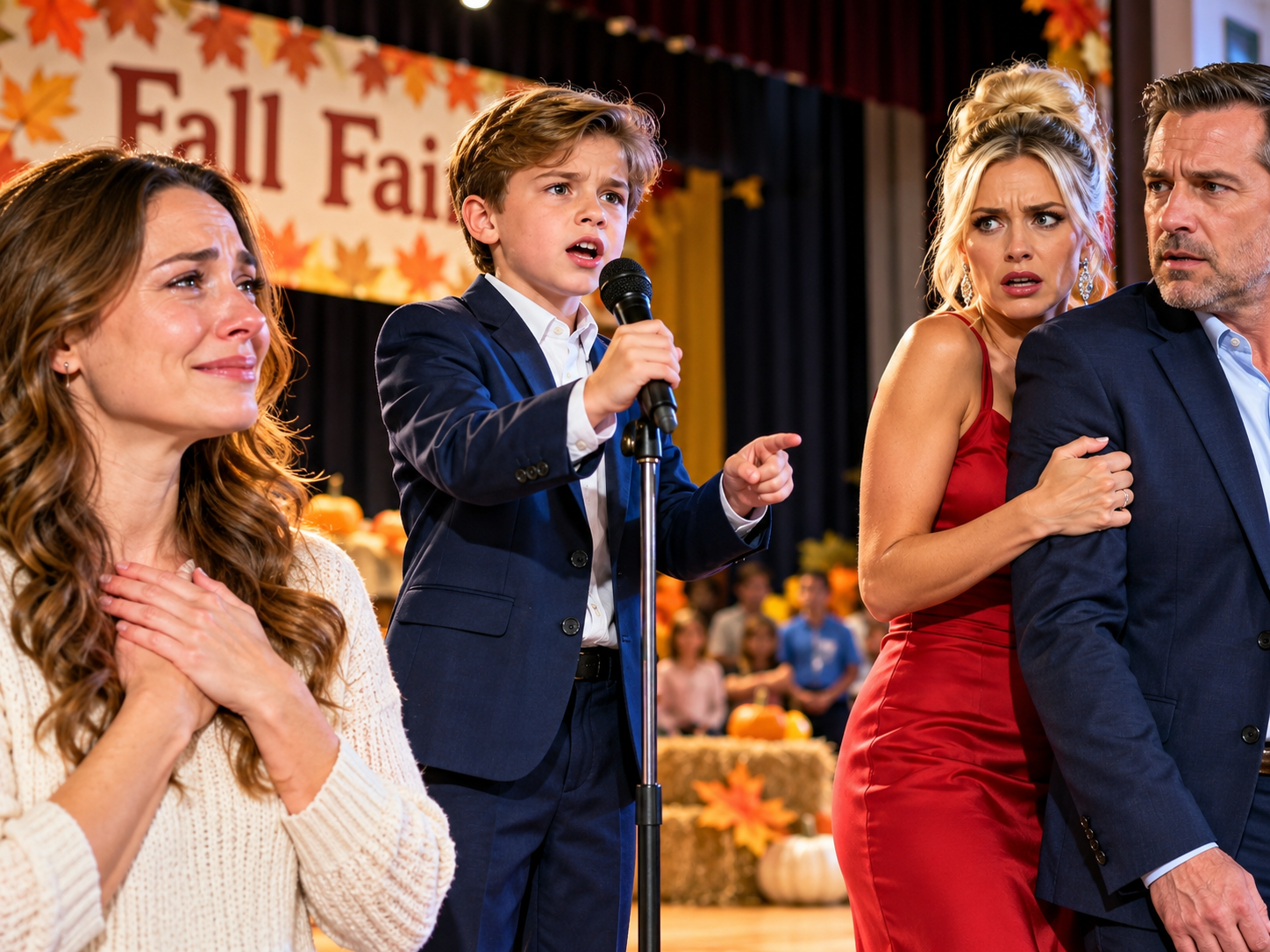
Vivian listened without interrupting. Nigel admitted that he had laughed at the fall fair because he wanted to fit comfortably into his new relationship and avoid challenging Annabelle. He had been more concerned with the immediate ease of the moment than with the message he was sending his son. He said he regretted that choice and that he was trying to notice the same impulse when it appeared in smaller situations. Vivian told him that she appreciated his honesty, but she did not want the conversation to become a request for her to declare the past settled. Nigel said he understood. He had not called her over to receive forgiveness. He wanted to acknowledge what he had done without making her responsible for relieving his guilt.
For a moment, Vivian felt a sadness that was different from the anger she had felt at the fall fair. It was sadness for the time that had been lost, for the child who had needed to become brave before the adults became willing to listen, and for the ease that might have existed if Nigel had acted differently from the beginning. But she also recognized that their current relationship was more honest than it had been for a long time. She told Nigel that she hoped they could continue making decisions around Dustin's needs rather than their discomfort. He agreed, and they returned to the entrance without pretending that the conversation had changed everything.
That evening, Dustin placed his photographs in an album. He left a blank page at the back for pictures he had not yet taken. Vivian asked what he planned to photograph next. He said he wanted to find more plants growing in unexpected places, and perhaps photograph the same spots at different times of the year to see what changed. Vivian told him that sounded like a good project. Dustin closed the album and placed it beside his bird notebook. His interests were becoming a collection of their own, each one adding another piece to his understanding of the world.
Vivian looked at the album before switching off the light. The photographs were not a declaration that everything difficult could be overcome with enough determination. They were observations of life as it was: uneven, constrained, sometimes damaged, and still capable of movement. That was the lesson she wanted Dustin to carry, not that he should endure every difficulty quietly, but that he could recognize obstacles without believing they defined him. The adults around him were responsible for their own choices. His responsibility was to grow, explore, learn, and speak when something mattered.
Click here to continue reading: PART 20: The Story That Belonged to Dustin
My Ten-Year-Old Son Had Been Keeping a Secret About His Father’s Girlfriend, and I Finally Understood His Silence
Part 19 of 20