The question came on a rainy Wednesday evening while Dustin and I were sorting the papers he needed for a school project. He was making a poster about local wildlife, and the kitchen table was covered with sketches of birds, leaves, and small mammals. A pencil rolled off the table and landed near my foot. Dustin retrieved it, returned to his chair, and stared at the picture he had drawn of a fox.
“Mom, do you think Dad has really changed?”
I set down the scissors. Outside, rain tapped steadily against the windows, and the kitchen smelled of the soup simmering on the stove. I could have given him the reassurance he wanted. I could have said that his father had apologized, that he was trying, and that everything would be fine. But I knew Dustin had already spent too long trying to believe what adults told him rather than trusting what he experienced.
“I think Dad is trying to do things differently,” I said. “Whether the change lasts depends on what he does next.”
Dustin pressed the eraser against the paper. “So I don't have to decide yet?”
“No. You can take your time.”
He nodded and returned to the fox. I watched him draw the ears more carefully, adjusting one line until it looked right. His question stayed with me through dinner. He was not asking whether Nigel deserved forgiveness in some abstract sense. He was asking whether it was safe to stop protecting himself.
Over the following weeks, Nigel made several efforts that seemed small from the outside but mattered to Dustin. He called when he said he would. He arrived on time for their outings. He asked about school and listened when Dustin described problems with classmates. When Dustin mentioned that he disliked being teased about his height, Nigel did not tell him to toughen up. He asked who had been making the comments and whether Dustin wanted help dealing with it.
I noticed the difference in our son's behavior. He began returning from visits with stories again. He talked about a football match, a visit to a bookshop, and a disastrous attempt by Nigel to make pancakes. He did not always sound happy, and he occasionally mentioned that a conversation had been awkward. But he no longer seemed to believe that every difficult feeling had to be hidden.
Annabelle remained part of the uncertainty. Nigel had not ended their relationship, and I had no intention of demanding that he do so simply because she had behaved badly. What mattered was whether he could maintain a boundary when she disagreed with it. I did not want Dustin to believe that the only way to be safe was for his father to abandon everyone who made a mistake. I wanted him to see adults take responsibility and make better choices.
One Saturday, Nigel took Dustin to a small science museum. They spent nearly three hours exploring exhibits, and Dustin returned home excited about a demonstration involving magnets. While he was putting his shoes away, he mentioned that Annabelle had joined them for lunch.
“How was that?” I asked.
“Okay.”
He paused, then added, “She didn't say anything about you.”
I nodded. “I'm glad.”
“She was quiet at first. Dad told her he wanted us to have a good day.”
I did not ask for every detail. I was pleased that Nigel had taken responsibility for setting expectations, but I did not want Dustin to feel that I was evaluating Annabelle's performance through his reports. He deserved to enjoy his time without becoming the monitor of an adult relationship.
Later that evening, I received a message from Nigel. He said that Annabelle had been uncomfortable at lunch and had asked whether he planned to let the fall fair determine their entire future. He had told her that the issue was not the fair itself but the way they had treated Dustin's mother and how their behavior had affected him.
I replied that it was his responsibility to decide what kind of relationship he wanted. I would not tell him whom to date, but I expected him to protect Dustin from repeated disparagement and to take his concerns seriously.
Nigel thanked me for being clear. His response was brief, but it did not contain the old accusation that I was trying to control his life. That alone made the conversation easier.
At school, Dustin's teacher noticed that he had become more willing to speak during group discussions. He was still quiet when he first entered a conversation, but he no longer withdrew whenever another child disagreed with him. Mrs. Carter told me that he had recently challenged a classmate who insisted that their science project was wrong. Instead of arguing, Dustin had suggested they test both ideas.
I smiled at that. It sounded like the same boy who had experimented with the paper bridge at home, but there was a difference. He was beginning to trust that disagreement did not automatically mean rejection.
The school did not make the fall fair a recurring subject. The staff followed up with Dustin when necessary, but they allowed him to return to ordinary school life. That was important. He did not need to become known as the child who had exposed an uncomfortable family situation. He needed room to be a ten-year-old who liked science, baked badly decorated cupcakes, and sometimes forgot his lunchbox.
One afternoon, while we were walking home from the supermarket, Dustin asked whether I hated Annabelle.
The question caught me off guard. I shifted the grocery bag in my hand and considered my answer.
“I don't like the way she treated me, and I don't like that it hurt you,” I said. “But I don't spend my time trying to hate her. That wouldn't help either of us.”
“Do you think she's a bad person?”
“I don't know everything about her. I know some things she did were unkind, and I hope she understands that. People are more complicated than one mistake, but being complicated doesn't mean they don't have to take responsibility.”
Dustin walked quietly for a while. Then he said he thought Annabelle might be embarrassed about what happened.
“Maybe,” I replied. “But you don't have to fix that for her.”
He smiled faintly. “You say that a lot.”
“Because it's important.”
He laughed, and the conversation moved on to whether we could make pumpkin cupcakes again for his class. The ordinary question reminded me that he was gradually releasing the responsibility he had taken on. He could think about baking without wondering whether the adults in his life were going to make him choose sides.
A few days later, Nigel invited Dustin to spend an afternoon helping him repair an old bicycle. Dustin had been talking about learning basic repairs, so he was excited. Before leaving, he asked whether I thought it would be all right if Annabelle was there too.
I told him he could decide whether he felt comfortable going. If he wanted to spend time alone with his father, he could say so. If he was willing to see Annabelle, he could do that too. There was no correct answer he had to give me.
He thought for a moment, then said he wanted to go but would tell his father if anything made him uncomfortable.
“That sounds sensible,” I said.
When he returned, he had a smear of grease on his sleeve and a story about a stubborn bolt that refused to turn. Annabelle had been there, but the afternoon had remained focused on the bicycle. She had asked him about school and helped hold a tool while Nigel tightened the chain. There had been no comments about me.
Dustin seemed satisfied. He did not describe the afternoon as a reconciliation, and neither did I. It was simply an afternoon that had gone well. Sometimes that was enough to make the next visit easier.
Nigel's progress did not mean he had suddenly become free of defensiveness. During a later phone call, he complained that I had not reminded him about a school form that needed his signature. I pointed out that the notice had been sent to both parents and that he had received the same message I had. His tone sharpened, and for a moment I expected the old argument about me making everything difficult.
Instead, he paused and said he would check his email. A few minutes later, he sent a message acknowledging that he had overlooked the notice. The apology was brief, but it prevented a minor mistake from becoming another accusation.
I appreciated the change, though I did not mistake it for proof that everything was repaired. It was one more instance in which he had chosen to examine his own part in a problem rather than immediately assigning responsibility elsewhere.
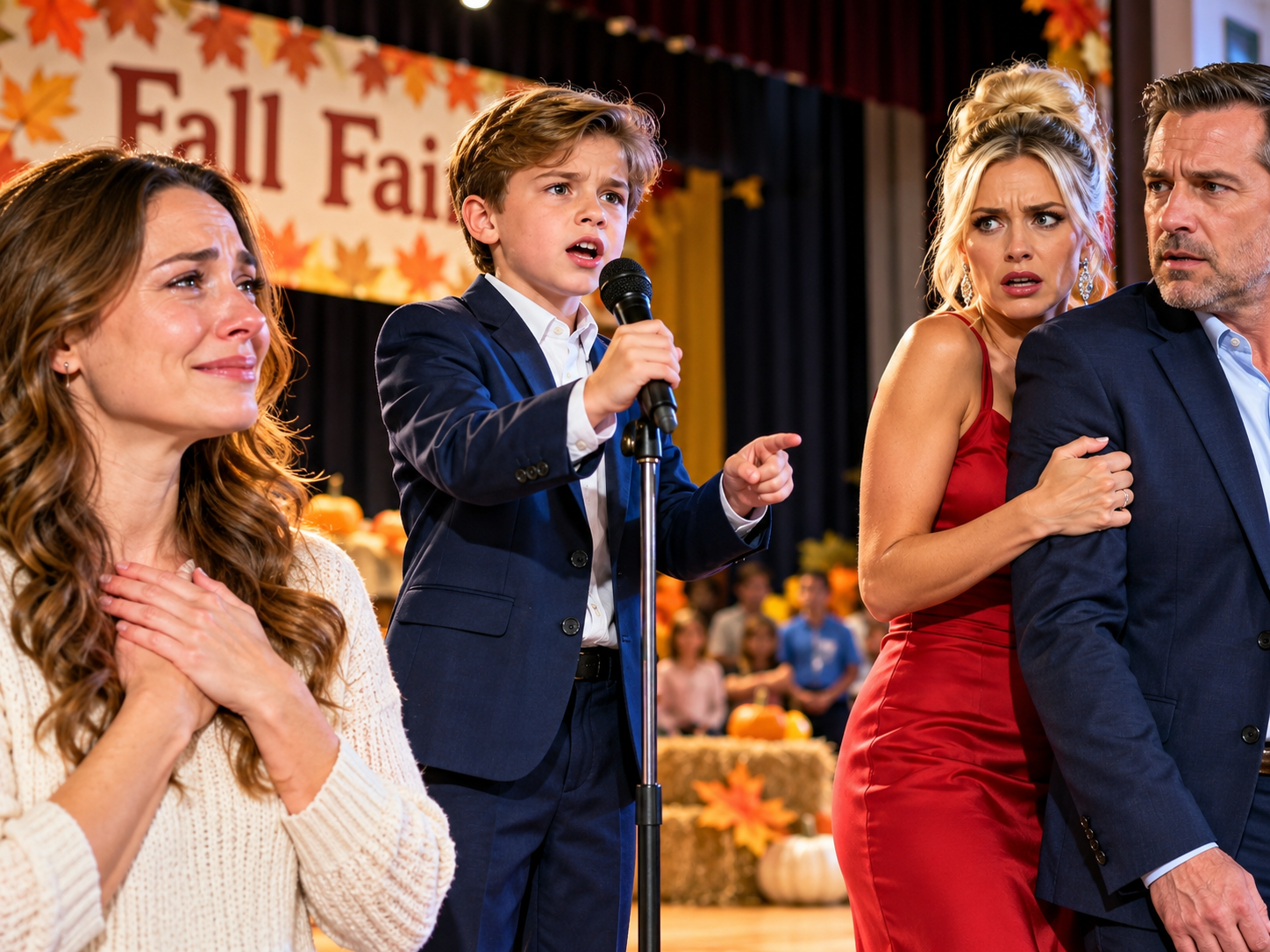
The more I watched Dustin regain his confidence, the more I understood why the fall fair had affected him so deeply. The recording had not merely exposed a few rude remarks. It had forced him to confront the difference between what adults claimed to value and what they did when they thought nobody important was watching. He had believed that his father would protect him from cruelty, especially when the cruelty involved someone he loved. When Nigel laughed instead, Dustin's sense of security had been shaken.
Repairing that trust required more than saying sorry. It required Nigel to demonstrate that Dustin could disagree with him, express discomfort, and speak honestly without risking the relationship. It also required me to avoid turning every improvement into evidence that Nigel had finally become the father I wished he had been all along. Dustin needed to discover the truth through his own experiences.
One evening, after a particularly good visit, he came into the kitchen while I was washing dishes.
“I think Dad is trying,” he said.
I turned off the tap. “I think so too.”
“But I still remember the fair.”
“You're allowed to remember it.”
He looked relieved. Perhaps he had feared that noticing his father's improvement meant he was supposed to forget what had happened. I told him that memories could remain even when people changed. He did not have to erase the hurt to enjoy the good moments that came afterward.
He leaned against the counter and watched me dry a plate. “I want things to be normal again.”
“I know.”
“Do you think they will?”
I considered the question. Our family would never return to the exact life we had before the divorce, and perhaps it did not need to. We were learning to build something different, one that allowed more honesty and fewer unspoken expectations.
“I think we can make things better,” I told him. “Normal doesn't have to mean pretending nothing happened.”
Dustin nodded, then reached for the dish towel and helped me dry the remaining plates. We worked together without speaking for a few minutes, and the quiet between us felt comfortable.
Later, I found the fall-fair flyer tucked into a drawer with school notices. Its edges were bent, and a small smear of orange icing marked one corner. I almost threw it away, but decided to keep it. The day had been painful, yet it had also revealed something important: Dustin had been paying attention, and he had wanted the adults he loved to act according to the values they taught him.
I placed the flyer in a folder with his school photographs and project certificates. It was not a trophy or a reminder of a victory over Nigel or Annabelle. It was a record of a difficult moment in which a child had asked to be heard.
When I closed the drawer, I felt a quiet sense of relief. I could not decide how quickly Nigel would change, and I could not guarantee that Annabelle would always behave respectfully. But Dustin was learning that he could speak, that he could ask for help, and that his feelings were not an inconvenience to be hidden.
For now, that was enough.
Click here to continue reading: PART 8: The Next School Event Brought Nigel and Annabelle Back Into Our Lives, Giving Them a Chance to Prove Whether Anything Had Truly Changed
My Ten-Year-Old Son Had Been Keeping a Secret About His Father’s Girlfriend, and I Finally Understood His Silence
Part 7 of 20