The conversation about the future became more serious the following year.
My parents had begun organizing their affairs.
They did not want surprises.
Neither did I.
We sat around my kitchen table one Sunday afternoon with folders spread between us.
Mom had brought documents.
Dad had brought a notebook.
I had brought coffee.
“This feels very official,” I said.
Dad nodded.
“That's because it is.”
Mom smiled.
“We're getting old.”
Dad frowned.
“Speak for yourself.”
“You're older than me.”
“By three years.”
“Exactly.”
I laughed.
Then Mom became serious.
“We want to talk about the lake house.”
I knew it was coming.
“What about it?”
“We want to make sure nobody assumes it belongs to them after you're gone.”
I looked at her.
“That's thoughtful.”
“We learned our lesson.”
Dad nodded.
“I don't want Kyle fighting with anyone.”
“Kyle wouldn't.”
“Maybe not.”
Dad looked at the documents.
“But families get strange around property.”
I couldn't argue with that.
The lake house had already taught us how quickly assumptions could become conflict.
I explained the arrangement I had created.
The house would remain mine during my lifetime.
Afterward, it could pass to the next generation under written rules.
No one person could claim permanent access.
No one could bring guests without agreement.
Major repairs would require shared approval.
If the family could not manage it respectfully, the property would be sold.
Dad listened carefully.
“That seems fair.”
Mom nodded.
“Very fair.”
Kyle arrived later.
I explained the plan.
He read everything.
Then he said, “What if I don't want responsibility?”
“Then you don't have to take it.”
“What happens?”
“Your share can pass to someone else or the property can be sold.”
He nodded.
“I like that.”
“You do?”
“Yes.”
“Why?”
“Because nobody gets trapped.”
I smiled.
That was exactly what I wanted.
Not just for the property.
For everyone.
My brother had once been part of the family system that assumed resources would always be available.
Now he understood the value of choice too.
That evening, we ate dinner.
The conversation became lighter.
Kyle talked about work.
Mom complained about her neighbor.
Dad argued about baseball.
I listened.
The paperwork remained on the counter.
It felt less frightening than I expected.
Planning for the future did not mean expecting disaster.
It meant refusing to leave important decisions to whoever happened to be loudest when the time came.
A few months later, my mother asked me to drive her to the lake alone.
We went on a Tuesday.
The house was empty.
She walked through the rooms slowly.
“You changed the curtains.”
“Last year.”
“I like them.”
She sat on the couch.
“Do you remember the first time I saw this room?”
“Yes.”
“I was furious.”
“You were.”
“I thought you were punishing us.”
“I wasn't.”
“I know that now.”
She looked toward the window.
“I think I was punishing myself too.”
I sat beside her.
“For what?”
“For being the kind of mother who could walk into her daughter's house without asking.”
I took her hand.
“You learned.”
“Yes.”
She looked at me.
“That matters.”
“It does.”
We sat quietly.
Then she said, “I want to tell you something.”
“What?”
“When you first said no, I thought you were rejecting me.”
I listened.
“Now I understand you were asking me to see you.”
I felt my throat tighten.
“What do you mean?”
“You wanted me to see that you were an adult.”
I nodded.
“And I refused.”
“Yes.”
“I wish I could go back.”
“So do I.”
She squeezed my hand.
“But we can't.”
“No.”
“So we have to be grateful we got another chance.”
I smiled.
“We did.”
We walked to the dock.
She sat at the edge.
The lake was calm.
“It's beautiful.”
“It is.”
“I understand why you fought for it.”
I looked at her.
“I wasn't fighting for the house.”
“I know.”
“You understand now?”
“Yes.”
She smiled.
“You were fighting to be allowed to choose.”
I nodded.
That was the clearest anyone in my family had ever said it.
We stayed until sunset.
On the drive home, Mom said, “I think I'm finally proud of the woman you became.”
I smiled.
“You were always proud.”
“I was proud of what you did.”
She paused.
“Now I'm proud of who you are.”
I glanced at her.
That distinction mattered.
At home, I placed the estate documents in the desk.
Beside them were the deed, insurance papers, the sheriff's report, my attorney's notice, and my mother's handwritten apology.
The folder had become a history of boundaries.
Not just legal boundaries.
Emotional ones.
Each document represented a different stage.
Ownership.
Conflict.
Protection.
Understanding.
Repair.
I closed the drawer.
I did not feel burdened.
I felt prepared.
The following winter, Dad's health became more complicated.
Nothing catastrophic happened.
He simply tired more easily.
His doctor recommended additional monitoring.
Mom became anxious.
Dad became stubborn.
I became the person they called when both were frustrated.
One evening, Dad said, “Your mother thinks I'm made of glass.”
Mom shouted from the kitchen, “Because you act like you're made of steel!”
I laughed.
Dad looked at me.
“See?”
“You both need each other.”
“We know.”
He smiled.
That night, I drove home late.
I thought about how quickly life could change.
Five years earlier, the family had been arguing over a weekend.
Now we were discussing medications and long-term plans.
The lesson remained the same.
People mattered more than property.
But respecting property had helped us learn how to respect people.
A month later, Dad had a good medical appointment.
He came home cheerful.
“Doctor says I'm doing fine.”
Mom looked relieved.
I smiled.
“Good.”
Dad sat down.
“See?”
Mom rolled her eyes.
“You are impossible.”
“I am alive.”
“That too.”
We laughed.
The lake house remained unchanged.
But I started thinking about how many generations could someday sit on that porch.
Children I hadn't met.
Grandchildren who would know the family stories.
Maybe someone would eventually ask why the house had so many rules.
Perhaps they would hear the story.
Perhaps they wouldn't need every detail.
Maybe they would simply understand that the rules existed because someone had once learned the hard way that love without respect could become entitlement.
That was enough.
I did not need the future to remember the entire argument.
I only needed it to remember the lesson.
Click here to continue reading: PART 19: The Day My Father Asked Me to Remove the Old Sheriff Report From the Family Records, I Finally Understood Why Some Memories Need to Remain Even After Forgiveness
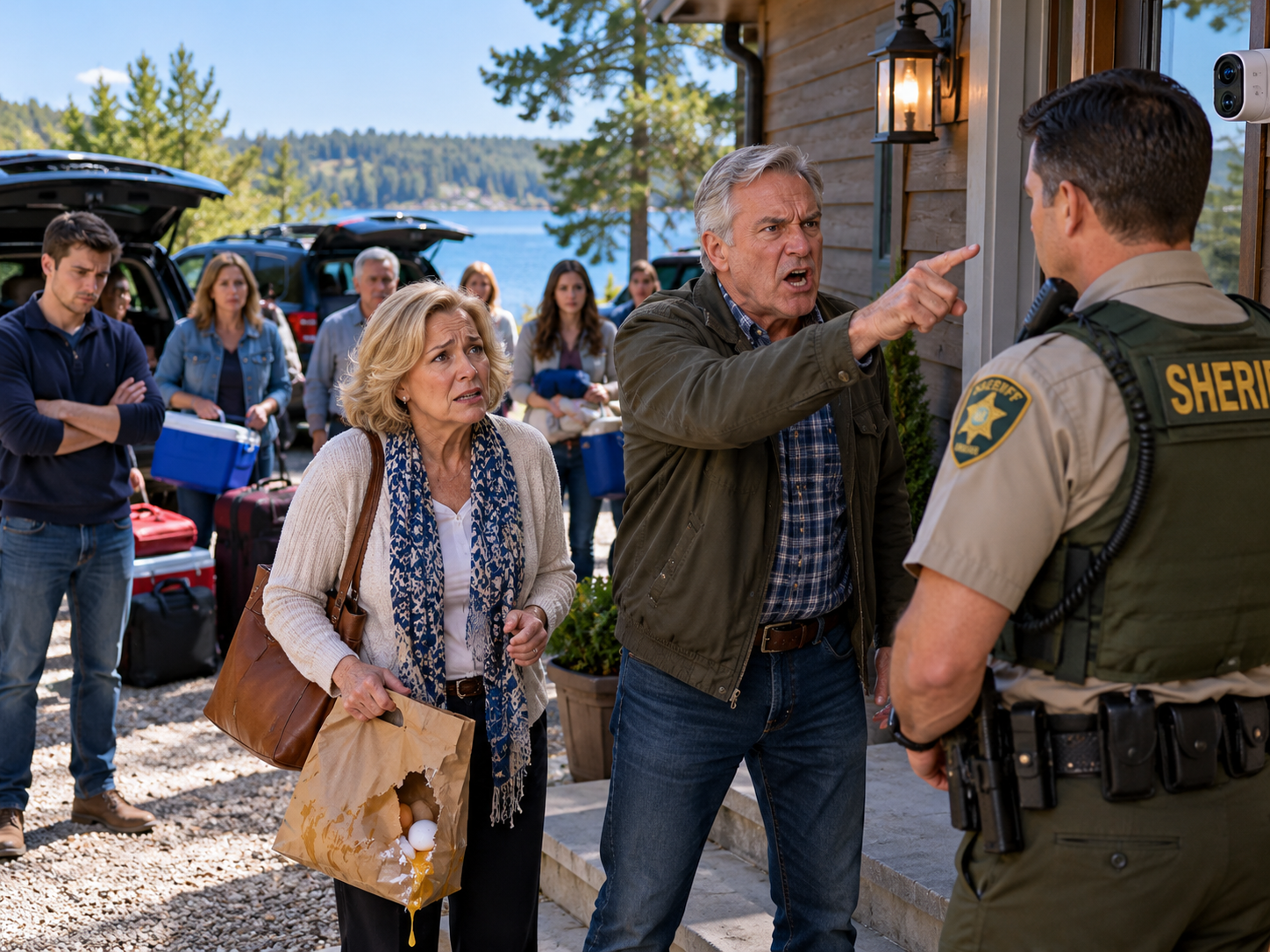
Twenty People Arrived Expecting a Welcome, but My Locked Door and One Quiet Phone Call Forced My Parents to Face a Problem They Had Never Expected
Part 18 of 20