The summer after that anniversary was the first one in years when I stopped checking the driveway whenever a car approached.
It was such a small change that I almost missed it.
For a long time, the sound of tires on gravel had been enough to make me glance toward the security monitor. Even when I knew my parents were expected, some part of me remained alert for the possibility that someone else might be following them.
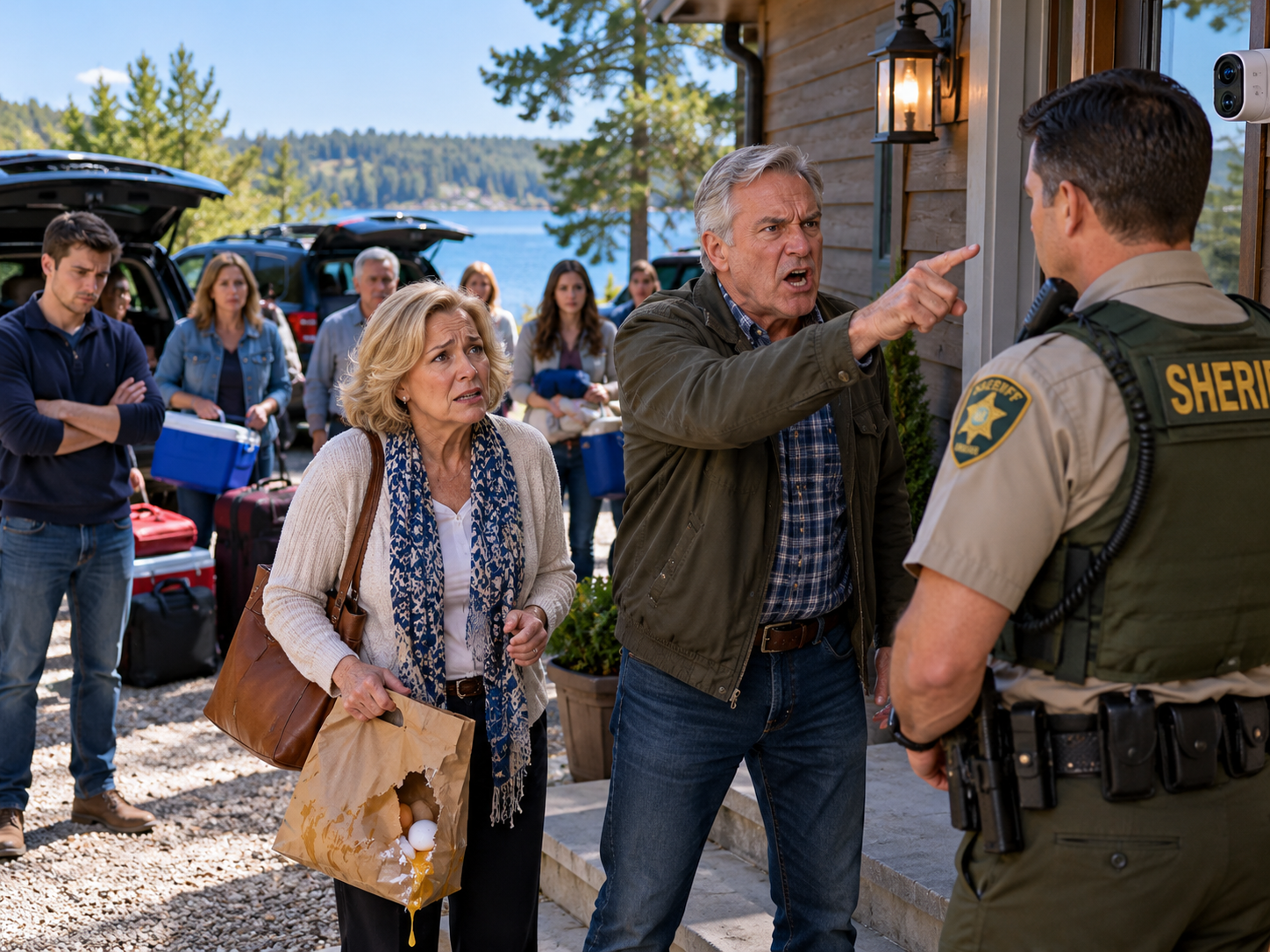
That reflex had begun after the weekend with twenty guests.
It had taken years to fade.
Now, when a vehicle came down the road, I usually kept reading.
The lake house had become peaceful in a way I had once thought impossible.
My parents still visited.
Kyle still came occasionally.
Friends came.
Sometimes the house was full.
Sometimes it was only me and Juniper.
The difference was no longer who was there.
The difference was that I chose.
One Saturday morning, Mom called.
“Are you busy?”
“I just made coffee.”
“That's not an answer.”
“It means I'm available.”
She laughed.
“Your father wants to ask you something.”
I heard Dad in the background.
“I can ask her myself.”
Mom covered the phone, but not well enough.
“You're nervous.”
“I am not nervous.”
“You are.”
I laughed.
“Put him on.”
Dad took the phone.
“Claire.”
“Yes?”
“Your mother and I were thinking about taking the grandchildren to the lake next month.”
“Okay.”
“We wanted to know whether that would be all right.”
I smiled.
“Of course.”
“Really?”
“Yes.”
“What if we stay three nights?”
“That's fine.”
“We'll bring our own food.”
“You don't have to.”
“We'll clean everything.”
“I know.”
There was a pause.
“Thank you.”
“You're welcome.”
He cleared his throat.
“That's it.”
“That's it?”
“Yes.”
I laughed.
“You called to ask permission and now you're leaving?”
“I didn't want to make it complicated.”
“It doesn't have to be.”
“I know that now.”
After the call ended, I stood at the kitchen window.
The lake was bright beneath the morning sun.
I thought about how strange it was that something as simple as asking had become a sign of trust.
My parents had once assumed.
Now they asked.
And I had once expected betrayal.
Now I believed them.
Neither change had happened in a single conversation.
It had been built through repetition.
That mattered.
Trust was not a speech.
It was behavior repeated long enough that the nervous system finally believed it.
The following month, my parents arrived with the grandchildren.
The children ran out of the car before their grandparents had even opened the trunk.
“Grandma!”
“Grandpa!”
Dad laughed as one of them nearly knocked him over.
Mom turned toward me.
“Sorry.”
“For what?”
“They're loud.”
“They're children.”
She smiled.
Inside, the kids immediately wanted to see the bedrooms.
I pointed toward the hallway.
“Choose your rooms.”
One of them asked, “Can we sleep anywhere?”
I smiled.
“Anywhere I say yes.”
They laughed.
The sentence sounded almost absurdly formal.
But it was part of the house now.
Permission was not a punishment.
It was simply how shared space worked.
That evening, everyone ate outside.
The children chased fireflies.
Dad tried to explain fishing to a nine-year-old who had no patience for waiting.
Mom sat beside me.
“You look happy.”
“I am.”
She watched the children.
“I think I am too.”
“Good.”
She leaned closer.
“Do you ever think about how different this is?”
“All the time.”
She nodded.
“I still feel ashamed sometimes.”
I looked at her.
“About what happened?”
“Yes.”
“You don't need to carry all of it forever.”
“I know.”
“But?”
“But I wish I had understood you sooner.”
I smiled.
“You understand me now.”
“That helps.”
It did.
Later that night, after the children were asleep, Dad and I sat on the dock.
He held a cup of tea.
I held mine.
The water moved beneath us.
“You know,” he said, “I used to think you were the stubborn one.”
“I am.”
He laughed.
“I know.”
“Then what changed?”
“I realized I was calling you stubborn whenever you disagreed with me.”
I smiled.
“That sounds accurate.”
He looked toward the dark water.
“I don't like admitting when I'm wrong.”
“I know.”
“But I'm getting better.”
“You are.”
He nodded.
Then he asked, “Do you think we could have avoided all of this?”
“The lake-house fight?”
“Yes.”
I considered it.
“If you'd listened when I first said no.”
He laughed softly.
“Fair.”
“But maybe there were other things we could have learned earlier too.”
“Like what?”
“That you can love someone without managing them.”
He nodded.
“I wish I had known that when you were little.”
“You were learning.”
“I was supposed to be the adult.”
“So?”
“So I should have known.”
I looked at him.
“Parents are people too.”
He smiled.
“Don't tell your mother. She'll use that against me.”
I laughed.
The next morning, Mom asked if she could rearrange a few things in the kitchen.
I told her where everything could go.
She followed my instructions.
She did not complain.
When they left three days later, the house was clean.
The children hugged me.
Dad handed me the keys.
Mom checked the refrigerator.
“We replaced everything we used.”
“You didn't have to.”
“I wanted to.”
I nodded.
“Thank you.”
As their car disappeared, I stood on the porch.
Juniper sat beside me.
The house was quiet again.
But it no longer felt empty.
It felt rested.
That distinction had become important.
A few weeks later, my attorney called.
“Claire?”
“Yes?”
“I wanted to check whether you still wanted the old formal notice on file.”
I knew what she meant.
The document stating that no one had permission to enter without my approval.
“Yes.”
“Even though things have improved?”
“Yes.”
She paused.
“Good.”
“Why?”
“Because a boundary can remain in place even when relationships improve.”
I smiled.
“I understand.”
“You don't need to use it.”
“I know.”
“That doesn't make it useless.”
I looked around the room.
The photographs.
The furniture.
The windows overlooking the lake.
“No,” I said. “It doesn't.”
I kept the notice.
Not because I expected another invasion.
Because I no longer thought boundaries were evidence of mistrust.
They were part of the structure that allowed trust to exist.
That autumn, my father asked me to help him choose a birthday gift for Mom.
We walked through a shopping district in Portland.
He picked up a scarf.
“What do you think?”
“She'll like it.”
“You think?”
“Yes.”
He put it back.
“Too expensive.”
“You can afford it.”
“That isn't the point.”
“What is?”
“She'd prefer something meaningful.”
I smiled.
“Then write her a letter.”
He looked horrified.
“I can't write a letter.”
“You can.”
“No.”
“You raised me.”
“That doesn't mean I can write.”
I laughed.
He eventually bought the scarf.
Mom loved it.
Later that evening, Dad admitted that he had written a letter anyway.
“What did it say?”
“None of your business.”
I laughed.
He smiled.
The family had become easier.
Not perfect.
Easier.
That was enough.
One rainy night, I sat in the living room with the lights off.
The lake was invisible through the windows.
I could hear rain against the roof.
I remembered the first night I had bought the house.
I had sat in almost the same chair.
I had been exhausted.
I had felt victorious.
I had believed ownership would solve everything.
It hadn't.
The house had not protected me from guilt.
It had not protected me from family pressure.
It had not prevented people from crossing boundaries.
What protected me was learning to speak clearly.
And learning to tolerate other people's disappointment.
That had been the real work.
My phone buzzed.
Dad.
I answered.
“Everything okay?”
“Yes.”
“Then why are you calling?”
“I wanted to say goodnight.”
I smiled.
“Goodnight.”
He hesitated.
“You know, I never used to call just to say goodnight.”
“No.”
“I like it.”
“So do I.”
We ended the call.
I looked around the dark room.
There was no fear in the silence.
No expectation that someone would appear.
No anger waiting behind the next message.
Just rain.
Just the lake.
Just home.
Click here to continue reading: PART 14: A Simple Family Tradition Began at the Lake House, and Watching Everyone Follow the Rules Without Being Reminded Showed Me How Completely the Past Had Changed
Twenty People Arrived Expecting a Welcome, but My Locked Door and One Quiet Phone Call Forced My Parents to Face a Problem They Had Never Expected
Part 13 of 20