
The care review was scheduled for a Tuesday morning, a week after Arthur had asked whether he had done something wrong. I carried the folder of medical notes, care schedules, receipts, and the latest pension ledger in a canvas bag that had begun to feel like an extension of my arm. Hugh met us at the house, and together we helped Arthur into the car. He believed we were going to visit a friend from the railway, so we told him we were going somewhere comfortable and would explain the rest when we arrived.
The coordinator greeted us in a quiet room with a window overlooking a courtyard. Arthur sat near the window, watching a man water a row of potted plants. The coordinator spoke to us about the changes we had observed: the increasing confusion in familiar rooms, the restless evenings, the need for more consistent supervision, and the occasions when Arthur became frightened because he could not understand where he was. We reviewed what had helped and what had not.
I described how the extra support had allowed me to rest and keep working, while Hugh explained the tasks he had taken over. He did not exaggerate his contribution. He acknowledged that he could not cover every evening and that his work schedule sometimes limited his availability. I appreciated the honesty, even though hearing the limits stated aloud made me uneasy. We needed a plan built around what we could actually provide, not what we wished we could manage.
The coordinator asked what mattered most to Arthur if his care needs increased. I looked toward the window. He was still watching the plants, occasionally moving his lips as though counting them. I said that familiar routines mattered, that he liked the garden and old railway photographs, and that he became distressed when people corrected him too sharply. I wanted him to feel safe without being treated as if he had stopped being a person.
Hugh added that Dad liked to be useful. Even on confused days, he often calmed down when given a small task: folding a towel, sorting postcards, or helping prepare a meal. The coordinator wrote that down. It was a simple observation, but I felt a flicker of gratitude that Hugh had noticed the same things I had. He was no longer merely arriving to complete a duty. He was beginning to learn who our father was now, not only who he had been.
We discussed the possibility that Arthur might eventually need more supervision than could safely be provided at home. The coordinator explained the options without pushing us toward one decision. We could increase home support, consider scheduled respite, or explore a supported setting where assistance would be available throughout the day and night. The right choice would depend on Arthur’s changing needs, the resources available, and what could be sustained safely.
I asked about the practical signs that would tell us our current arrangement was no longer enough. The coordinator encouraged us to track episodes of disorientation, changes in sleep, difficulties with meals or medication, and situations in which Arthur’s safety was at risk. We would review the information regularly rather than waiting until exhaustion or an emergency forced a decision. I wrote everything down, although I knew the hardest part would be accepting what the notes eventually showed.
Hugh asked whether we could visit potential supported-care settings before deciding anything. The coordinator said we could gather information, ask about staffing and routines, and consider how familiar belongings could be included if a move became necessary. Arthur might not understand every explanation, but we could still involve him in ways appropriate to his comfort and abilities. We would not need to make a sudden choice simply because we had started exploring options.
On the drive home, Arthur asked if the railway had changed its schedule. I told him we had been talking with people who helped families care for older relatives. He listened for a moment, then said that everyone needed help sometimes. I glanced at Hugh. He was looking out the window, his jaw set, and I wondered whether he was thinking of the years when he had treated asking for help as a weakness.
At home, we prepared lunch. Arthur ate slowly, then asked to see the old photograph albums. Hugh brought them from the cupboard, and we sat around the living room table. Dad pointed to a picture of himself standing beside a railway engine and told us that the work had been hard but honest. He described the cold mornings, the heavy tools, and the satisfaction of returning home knowing he had provided for his family.
The story was not new to us, but that day I listened differently. Arthur had spent his life making sure his children had what they needed. He had worked when he was tired, saved when he wanted to spend, and carried responsibilities that we had understood only in pieces. His pension had been the remaining evidence of that labor, money meant to help him live with care and dignity after years of work. Hugh’s withdrawals had not merely reduced a balance. They had taken resources from a man who could no longer easily defend his own interests.
When Arthur finished the story, Hugh asked him what he had liked most about the railway. Dad thought for a long time. “The people,” he finally said. “You knew who would show up.”
Hugh’s eyes dropped to the photograph. I wondered whether Arthur had meant the workers who stood beside him through long shifts, or whether the words had arrived from a deeper place he could not explain. I did not ask. Hugh sat quietly until Dad began talking about the engine again.
Later, Hugh and I reviewed the household schedule. The new support hours were confirmed, his visits were listed, and the additional contribution was recorded. We also set aside time to visit two care settings and learn what they offered, without treating either visit as a decision. The pension account remained protected under the court order. I checked the statements, filed the receipts, and updated the ledger before putting everything away.
“I know this isn’t what you wanted,” Hugh said as we finished.
“No,” I answered. “It isn’t.”
He waited, perhaps expecting me to soften the words. I did not. We were not planning for a future we wanted. We were planning for the future Arthur might need. That distinction was painful, but it helped us keep the conversation grounded in his safety rather than our fear.
Hugh asked whether I thought we could keep him at home for a long time. I told him I did not know. The answer depended on changes none of us could predict and on whether we could continue to provide safe care without exhausting ourselves. I would not promise to manage everything alone simply because the house was familiar. I had learned how quickly a good intention could become an unsafe arrangement when nobody acknowledged its limits.
He nodded slowly. “Then we keep reviewing it.”
“Yes,” I said. “And we make decisions before we’re desperate.”
For the next several weeks, we followed that plan. We visited one supported-care setting, where the staff explained how they helped residents maintain routines and keep familiar possessions nearby. Arthur was not asked to make a decision during the visit. He looked at the garden, commented on a bench that reminded him of the railway station, and asked whether there was a place to put his old photographs. The staff showed us a small shelf in a sample room.
The second place offered a different arrangement, and we asked more questions about supervision, visiting hours, activities, medical support, and costs. I kept notes on both. Neither visit produced an immediate answer, and I was relieved that we did not have to force one. Gathering information made the future less mysterious, even if it did not make it less painful.
At home, we continued the routines that worked. Arthur watered the garden with help, listened to familiar music, and looked through photographs when the afternoon became confusing. The care aide provided additional support, and Hugh covered the agreed evenings. There were still difficult moments. Some nights Arthur woke convinced he had missed work; some mornings he did not recognize the kitchen immediately. But we had more people to call and a clearer understanding of what to do.
One Saturday, Hugh arrived with a small pot of tomato seedlings. He placed them on the garden table and told Arthur that they could plant them together when the weather was right. Dad examined the leaves and asked whether Hugh had chosen the strongest ones. Hugh said he had tried. Arthur smiled and began explaining how to prepare the soil.
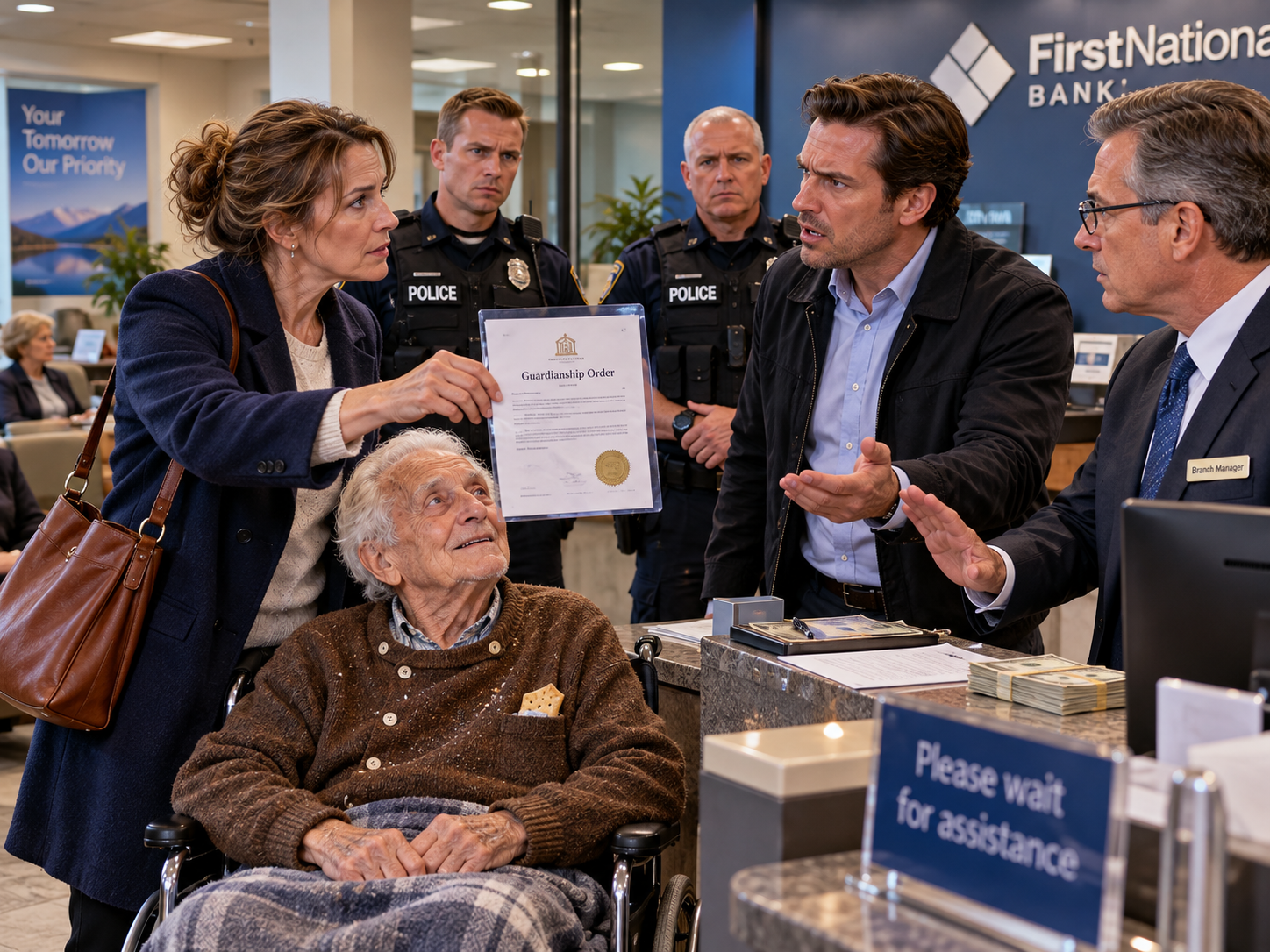
I watched them from the doorway, remembering the way Hugh had once pushed Arthur’s wheelchair through the bank as though our father were an inconvenience. That memory had not changed. Neither had the records of the money taken or the safeguards we had put in place. But the man standing in the garden now was doing something useful for the person he had harmed. I could acknowledge that without declaring the past forgiven.
After they finished, Hugh washed the gardening tools and placed them back in the shed. He asked whether I needed him to pick up anything from the pharmacy. I gave him the list, and he confirmed the amount he would pay directly. When he returned, he brought the receipt and put it beside the care folder. There was no speech about how much he had changed. The work had become ordinary, which was perhaps the only way it could become reliable.
That evening, Arthur asked me whether his children were getting along. I sat beside him and took his hand. “We’re working together to take care of you,” I said. It was true, although it did not describe every feeling between us. He seemed satisfied and leaned back against the cushion. I stayed with him until his eyes began to close.
After he fell asleep, I went to the kitchen and opened the ledger one more time. The pension was protected. The expenses were documented. The new care schedule was written clearly, and the next review date was marked on the calendar. Those details would not prevent dementia from progressing, and they could not guarantee that Hugh would never disappoint me again. They did mean that Arthur’s money and care no longer depended on anyone’s private assurances.
I put the folder away and turned off the kitchen light. For a long time, I had believed that protecting my father meant holding every responsibility myself, refusing to rest because something might go wrong if I stepped away. I understood now that protection also meant asking for help, setting limits, keeping records, and preparing for changes before they became emergencies. It meant allowing other people to contribute without handing them unchecked power. It meant seeing Arthur as a person whose dignity remained, even as his memory slipped further away.
In the living room, the old photograph of Arthur with both children rested on the shelf. I looked at it for a moment, then checked the front door and went upstairs. My father was breathing evenly, his face peaceful in the dim light. Tomorrow he might remember the garden, or the railway, or only that someone had sat beside him when he was afraid. I could not choose what stayed in his mind. I could choose what kind of care surrounded him while he was here.
I adjusted his blanket and whispered good night. There was no final victory, no single conversation that repaired everything, and no promise that the hardest decisions were behind us. There was only the next day to prepare for, the next appointment to attend, the next bill to document, and the next moment when my father would need someone to answer gently. I would keep doing those things, not because I could stop time, but because he deserved safety and tenderness for as long as we could give them.
Click here to continue reading: PART 13: The First Time I Considered Leaving Arthur in Someone Else’s Care, I Discovered How Much Fear Had Been Disguised as Responsibility
My Brother Thought Our Father’s Memory Loss Had Made Him Easy to Rob, Until the Bank Manager Read the Papers I Had Brought
Part 12 of 20

