
Arthur had always known the garden was behind the house, even after he began forgetting which room held his clothes or why he had entered the kitchen. The garden remained one of the last places where he seemed comfortable without needing directions. He could sit beside the tomato plants, touch the leaves, and talk about the railway years as if the passage of time had never disturbed the connection between his hands and the earth.
That was why I did not worry when Hugh took him outside on a mild Saturday morning. I was inside preparing breakfast, and the back door remained open so I could hear their voices. Hugh had promised to stay beside Dad while they checked the plants. I heard them discussing the weather, followed by the familiar scrape of the garden bench moving across the paving stones. Then the voices stopped.
At first, I assumed Arthur had become distracted by something near the fence. I wiped my hands on a towel and looked through the window. Hugh was standing beside the tomato pots, scanning the yard. Arthur was nowhere in sight. The gate near the side path was open several inches, and the sight of that narrow gap sent a cold sensation through my chest.
“Hugh?” I called.
He turned immediately. His face told me he had already understood what was wrong.
“Dad was beside me,” he said. “I turned to get the watering can, and when I looked back, he was gone.”
We searched the yard first, then the shed and the side passage. I called Arthur’s name, trying to keep my voice calm even as my thoughts began racing. The street beyond the gate was quiet, but a quiet street was not the same as a safe one. Hugh went toward the sidewalk while I called the care coordinator for guidance and then contacted the appropriate local emergency service when our initial search failed to locate him.
I gave the dispatcher Arthur’s description, explained that he had dementia, and told them the direction he might have taken. I described his old work jacket and the way he sometimes spoke about needing to reach the railway station. Hugh walked the nearby streets while remaining reachable by phone. I stayed close to the house long enough to coordinate the search, then joined him when another relative arrived to help.
Every passing minute seemed to expand. I looked toward the bus stop, the corner shop, and the small park where Hugh had once taken Arthur for an afternoon outing. I tried to imagine where Dad might go if he believed he was late for work. He might follow a familiar route that no longer led anywhere he recognized. He might stop to ask someone for directions, or he might become frightened and continue walking without understanding why.
Hugh called out to people who were outside their homes, showing them a photograph of Arthur on his phone. His voice was strained, but he remained focused. I watched him cross the street and ask a shopkeeper whether an elderly man in a dark jacket had passed by. There was no time to think about the past or to decide whether he had done enough. We needed to find our father.
The call came from a community officer who had located Arthur several streets away, near a small public garden. He was safe, though confused and tired. A person who recognized the description had seen him standing near a bench, asking when the next train would arrive, and had stayed with him while contacting the authorities. I felt my knees weaken with relief so sudden that I had to sit on the curb.
Hugh reached the location before I did. When I arrived, Arthur was sitting on the bench with a paper cup of water. He looked irritated by the attention surrounding him. He recognized me after a moment and asked why everyone had stopped him from going to work.
“You wandered away, Dad,” I said, kneeling beside him. “We were worried about you.”
“I know where I’m going,” he replied, sounding offended. “I’ve done this route for years.”
Hugh stood nearby with his hands clasped tightly together. He looked as though he wanted to apologize to everyone present, including Arthur, but the officer was asking practical questions about the circumstances. We answered as clearly as we could. Arthur was checked for any immediate concerns, and we followed the advice given about his safe return and further assessment.
On the drive home, Arthur fell quiet. He looked through the window at the familiar shops, occasionally asking whether we were close to the station. Hugh drove carefully while I sat beside Dad in the back, keeping a hand near his arm without restraining him. The fear did not disappear simply because he was back in the car. I kept seeing the open gate and imagining all the ways the morning could have ended differently.
Once Arthur was settled inside, Hugh went into the garden and sat on the bench. I found him there several minutes later, staring at the gate.
“I was standing right beside him,” he said. “I only turned away for a moment.”
“I know.”
“I should have closed the gate.”
“Yes,” I said. “You should have.”
He looked up, expecting perhaps a harsher judgment. I was angry, frightened, and exhausted, but I did not need to turn those feelings into a speech. The facts were enough. Our current arrangement had not prevented Arthur from leaving the garden, and we had to respond to that reality rather than reassure ourselves that it was an isolated accident.
“I thought I could manage him outside,” Hugh said. “I thought I understood what to watch for.”
“You understand more than you used to. That doesn’t mean you can predict every movement.”
He lowered his head. “I’m sorry.”
“I’m glad he’s safe. But we need to change the plan.”
We contacted the care coordinator and arranged an urgent review. I recorded the incident, including the time, the route Arthur might have taken, and the circumstances in which he had left the yard. The coordinator advised us to seek appropriate clinical guidance and assess the home environment again. We discussed supervision near exits, ways to reduce the risk of wandering, and whether Arthur’s increasing needs meant the current level of home support was no longer sufficient.
Hugh did not argue when we talked about the possibility of more continuous care. He asked what steps we should take first and offered to attend any appointment that could be arranged. His willingness mattered, but it did not change the central problem: even if he and I worked perfectly together, we could not guarantee that one of us would always be within arm’s reach of Arthur.
That evening, I sat beside Dad while he watched television. He had already forgotten the search and was asking whether Hugh would come tomorrow to help with the garden. I told him Hugh would visit, and Dad seemed pleased. He did not remember the danger he had been in, but I could not use that absence of memory to convince myself that the danger had not existed.
I went to the kitchen and opened the care folder. The supported-care information we had collected lay beside the latest schedule. Until that morning, I had treated the papers as preparation for a distant possibility. Now they represented a question that could not be postponed indefinitely. We would need to consider whether Arthur could remain safely at home with increased supervision or whether he needed a setting that could provide more consistent support.
Hugh stood beside me while I reviewed the notes. “I’ll help with whatever we decide,” he said.
“I need you to understand that this isn’t about whether you’re trying hard enough.”
“I know.”
“It’s about what Dad needs now.”
He nodded, and we began listing the questions for the coordinator. Neither of us wanted the morning to have happened. Neither of us could make it unhappen. Our responsibility was to learn from it before another morning gave us a worse outcome.
Before bed, I checked the back gate twice. I made sure the doors were secure according to the safety guidance we had received and left the coordinator’s contact information where we could find it quickly. The house was quiet, but I did not feel the comfort of routine. I felt the weight of a decision approaching, one that would ask us to distinguish between the home Arthur loved and the level of care he now required.
I stood in the doorway of his room. He was asleep, his face relaxed, one hand resting on top of the blanket. I wanted to believe that familiar surroundings would always be enough to protect him. But love could not watch every door, anticipate every confused thought, or replace the supervision he might soon need. I closed his door gently, knowing that the next care meeting would have to be more than another review of our existing plan.
Click here to continue reading: PART 18: When the Care Coordinator Asked Whether We Could Keep Arthur Safe at Home, I Realized That Love Could Not Be Our Only Measure
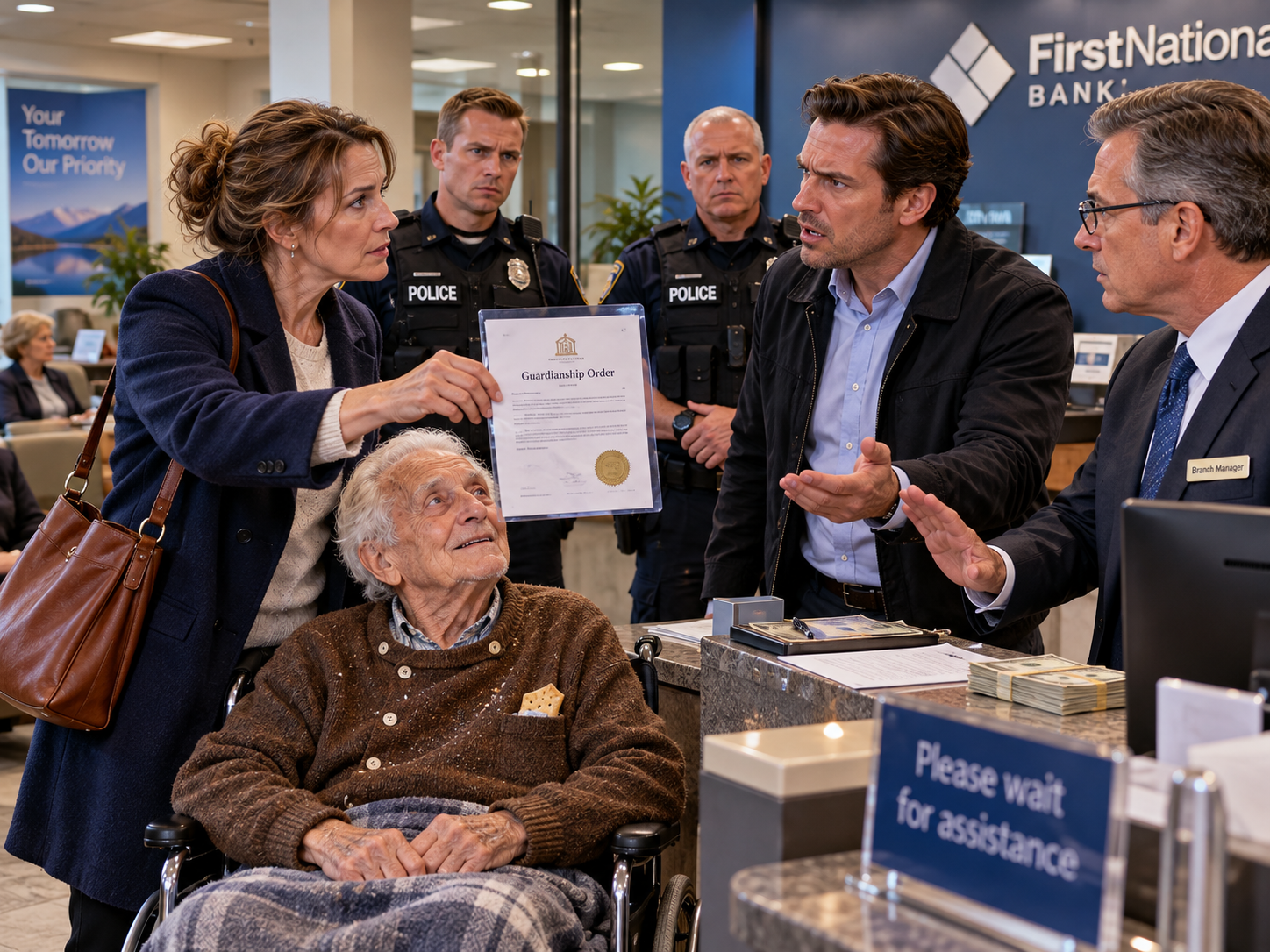
My Brother Thought Our Father’s Memory Loss Had Made Him Easy to Rob, Until the Bank Manager Read the Papers I Had Brought
Part 17 of 20

