
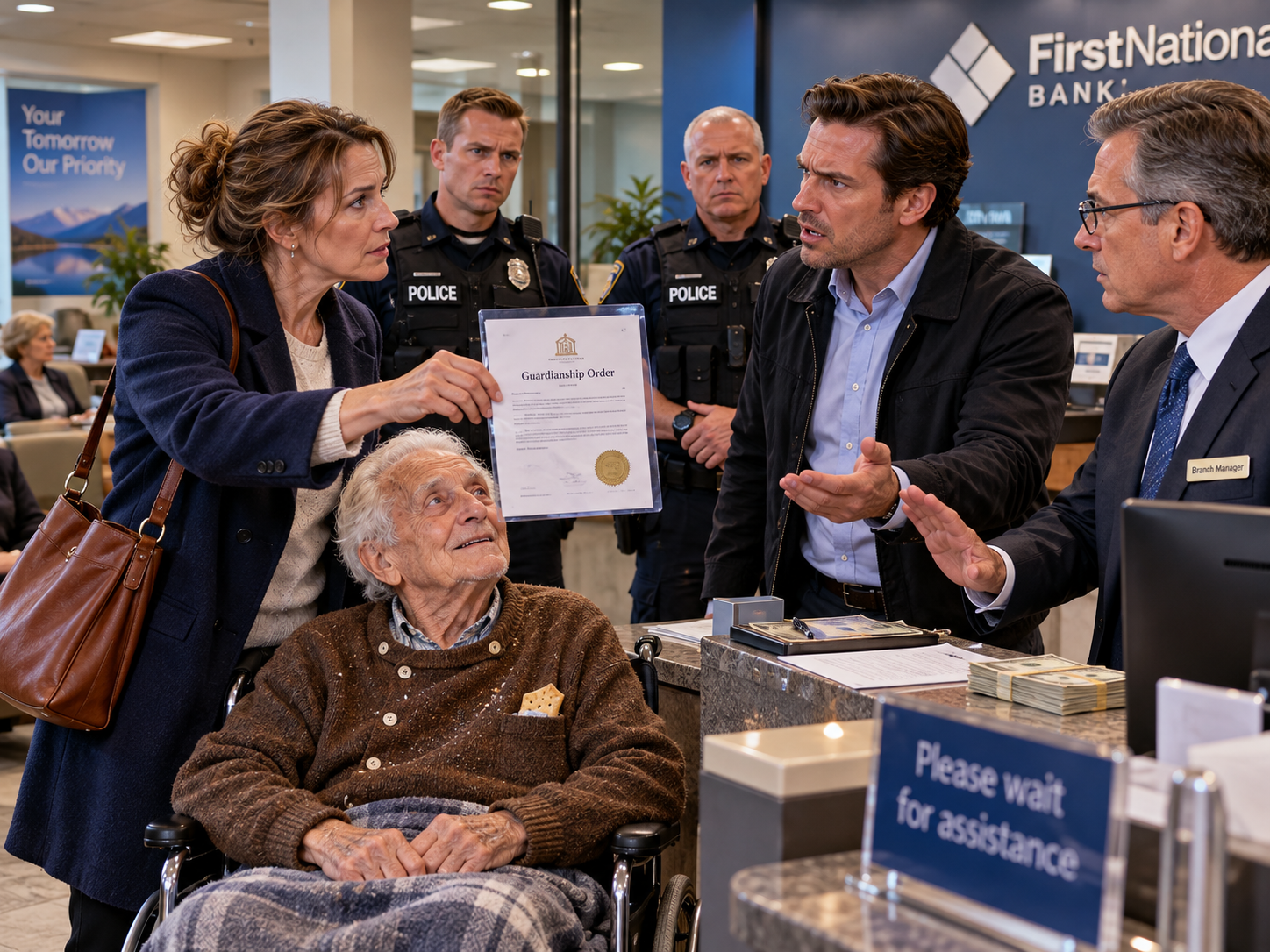
The doctor called me on a Thursday morning after Dad's latest assessment. I was standing in the bakery's storage room, checking a delivery sheet while trays clattered in the kitchen beyond the door. When I saw the clinic's number, I stepped into the hallway and answered.
The doctor explained that Dad's dementia had progressed. His confusion was becoming more frequent, and he was having greater difficulty with daily tasks. We would need to review his care plan, consider additional support, and make the house safer as his mobility and judgment changed.
I had expected the news, but hearing it aloud still left me feeling unsteady.
“How much more help will he need?” I asked.
“It will depend on how he progresses,” the doctor said. “But you should plan for more supervision and more assistance with daily activities. It's important that you don't try to manage everything alone.”
I thanked him, wrote down the recommendations, and stood in the hallway for a moment after the call ended. The bakery smelled of warm sugar and yeast. Someone laughed near the ovens. A delivery driver rolled a cart past the open door, unaware that my world had just narrowed around a list of new responsibilities.
I finished my shift, then drove home with the doctor's instructions on the passenger seat. Lupita had already noticed the changes. Dad was becoming restless in the late afternoon, sometimes trying to leave the house because he believed he needed to report for work. He needed more help dressing and was less able to follow the routines that had once made the day manageable.
I arranged a meeting with the care team and began researching additional services. The cost estimates were daunting. I could not keep working full shifts and provide constant supervision, and I could not assume that Dad's needs would remain at the same level for another year.
That evening, I called Hugh.
“I need to talk to you about Dad's care.”
He was quiet for a moment. “What's happened?”
“The doctor says his dementia has progressed. We need to increase the support he receives.”
“Is he sick?”
“Not with something sudden. His memory and daily functioning are getting worse. He needs more supervision.”
Hugh exhaled. “What do we have to do?”
The question surprised me. It was practical, direct, and free of the usual complaint about how I handled things.
“I've arranged a care meeting. I'd like you to attend if you can.”
“When?”
I gave him the date and time. He said he would check his schedule, then called back later to confirm he could be there.
For the first time in months, I felt that I might not have to explain the entire situation before asking him to participate.
The care meeting took place in a small consultation room at the clinic. The doctor reviewed Dad's condition, and a care coordinator discussed options for additional home support, respite assistance, and possible changes to the living environment. I had brought my notebook, a list of expenses, and the current care schedule.
Hugh arrived a few minutes early. He wore a plain shirt and no watch, and he seemed uncomfortable sitting beneath the fluorescent lights. When the coordinator asked about Dad's daily routine, I described the meals, medication, bathing assistance, and the times when he became confused or restless. Hugh listened without interrupting.
The doctor explained that Dad would likely need increasing assistance. There was no way to predict exactly how quickly the disease would progress, but planning ahead would help prevent emergencies and reduce the strain on everyone involved.
“What happens if Claudia can't be there?” Hugh asked.
The question was so unexpected that I turned toward him.
The coordinator explained that we needed a reliable backup plan. It might involve additional home care hours, respite support, or other arrangements depending on Dad's needs and the resources available. We would need to assess the options carefully rather than wait until a crisis forced a decision.
Hugh looked at the notes in front of him.
“I can take some of the visits,” he said.
I felt a cautious flicker of hope.
The coordinator asked what he could commit to consistently. Hugh hesitated, then said he could visit two evenings a week and take Dad to some appointments if the schedule was arranged in advance. He could also contribute toward additional care costs, although he could not promise a large amount immediately.
I wrote down his offer. We would need to see whether he followed through, but for the first time, he had proposed specific responsibilities rather than simply insisting that he was Dad's son.
After the meeting, we walked toward the parking lot together. The sky was pale and cold, and the wind carried the smell of rain.
“I didn't know it was getting this bad,” Hugh said.
“I've been telling you he needs more help.”
“I thought you were managing.”
“I was managing because I didn't have another option. That doesn't mean it was easy.”
He nodded, looking down at the pavement.
“I should have helped more.”
The words were quiet. They did not erase the pension withdrawals or the arguments that followed, but they were closer to an acknowledgment than anything he had said before.
“Yes,” I replied. “You should have.”
He accepted the answer without arguing.
Over the next month, Hugh began following the schedule he had agreed to. He visited twice a week and helped with small tasks. He brought groceries, sat with Dad while I handled errands, and once stayed through an entire evening when I had to attend a caregiver consultation. He was not always patient. Sometimes he became frustrated when Dad repeated a question, and he occasionally tried to hurry him through tasks that required time.
I corrected him when necessary.
“Let him finish,” I would say.
Hugh sometimes rolled his eyes, but he usually slowed down.
One evening, I returned from the bakery and found Hugh sitting beside Dad at the kitchen table. A plate of soft fruit was between them. Dad was telling a story about a man from the railroad whose name changed each time he repeated it. Hugh listened with his elbows resting on the table, occasionally asking a gentle question to keep the story moving.
When Dad paused, Hugh said, “I remember that man. He used to bring you coffee.”
Dad smiled. “Good worker.”
Hugh glanced at me as I entered the room. He looked almost surprised that he had managed to keep the conversation going without losing patience.
“Everything all right?” he asked.
“Yes,” I said. “Thank you for staying with him.”
He nodded and returned his attention to Dad.
I was careful not to praise Hugh as though he were a child performing a basic duty. But I also did not withhold appreciation simply because he had failed in the past. If he was beginning to change his behavior, I wanted the change to have room to grow.
The financial safeguards remained in place. Hugh had no access to Dad's pension account, and every expense was still recorded. His contributions toward care were documented separately. I did not combine his willingness to help with any assumption that the past had been settled emotionally.
One afternoon, Hugh asked whether he could handle a pharmacy pickup.
I gave him the prescription details and the payment arrangement, making sure the purchase would be recorded correctly. He returned with the medicine and the receipt, placing both on the table.
“Here,” he said. “Everything's on there.”
I checked the receipt, thanked him, and filed it.
He watched me put the paper away.
“You still think I'm going to take something.”
“I think we need to keep Dad's finances transparent. That protects him and everyone involved.”
“Even now?”
“Especially now. Trust doesn't mean we stop being careful.”
He looked hurt, but he did not argue. I knew the safeguards embarrassed him. They reminded him that the family could no longer rely on his assurances alone. Yet I could not remove them simply because he disliked what they represented.
As Dad's needs increased, we began considering whether the house could continue to meet them. The bathroom needed adjustments, and the narrow hallway made it difficult to maneuver the wheelchair when Dad was especially tired. A care professional recommended a few modifications and explained that we should also consider what would happen if home care became insufficient.
The possibility of moving Dad into a more supported setting frightened me. He had lived in the house for years, and familiar surroundings helped him feel safe. I wanted to keep him there as long as it remained appropriate. But I also knew that love did not make an unsafe arrangement safe.
Hugh initially resisted the idea of discussing alternatives.
“He belongs at home,” he said.
“I agree, if we can keep him safe here.”
“Then we should do whatever it takes.”
“That's what I'm trying to work out. We need to look at the care hours, the costs, and what happens when neither of us can be here.”
He looked at me. “I'll help.”
“Then help us make a realistic plan.”
We reviewed the available services and the household expenses. Hugh agreed to cover a portion of certain additional costs directly, while I continued managing the pension and the other care payments. We wrote down who would handle each responsibility so there would be no confusion about what had been agreed.
It was not a perfect arrangement. Hugh occasionally changed a visit time at the last minute, and I had to remind him that Dad could not be left waiting for someone who did not arrive. But he began notifying me when something changed and arranging a replacement when he could not come.
One evening, after Dad had gone to bed, Hugh stayed in the kitchen while I finished updating the care ledger.
“Do you think Dad knows what happened with the money?” he asked.
I looked up.
“I don't think he understands the details now.”
“Does he know I took it?”
“I don't know what he remembers.”
Hugh rubbed his palms against his trousers. “I keep thinking about how he used to work extra shifts so I could study. He never complained. If I wanted something, he'd find a way to pay for it.”
I waited.
“I told myself I needed the money more than he did,” Hugh continued. “I told myself I'd replace it before anyone noticed. I don't know when I stopped thinking about what he actually needed.”
It was the first time Hugh had spoken about the withdrawals without blaming me, the bank, or the circumstances surrounding them.
“You knew he needed that money,” I said.
He nodded. “I did.”
I did not tell him that his honesty made everything better. It didn't. But I allowed the silence to remain between us without rushing to soften it.
After a while, he stood and collected his jacket.
“I'll be here Thursday,” he said.
“Dad's appointment is at four.”
“I'll take him.”
“Please arrive early enough to get him ready.”
“I will.”
He left, and I returned to the ledger.
I was beginning to understand that accountability did not always arrive as one dramatic confession. Sometimes it appeared in the small, repeated decisions a person made after the excuses had run out. Hugh was starting to show up, though I did not yet know whether he would continue when the work became harder.
The next Thursday, he arrived early. He helped Dad into his coat and checked that the wheelchair was secured before they left for the appointment. When they returned, Dad was tired but calm. Hugh told me what the doctor had recommended and handed me the paperwork.
For a moment, I felt the relief of not having to carry every detail alone.
Then Dad looked at Hugh and asked, “Are you my son?”
Hugh went still.
“Yes, Dad,” he said after a moment. “I'm your son.”
Dad studied him, then reached out and patted his arm.
“Good boy.”
Hugh lowered his head. He did not try to hide his tears, and I did not comment on them. I simply took the appointment papers and began organizing the next steps.
We could not recover Dad's memories. We could not undo the financial harm. But we could choose what kind of care he received now, and whether the remaining time would be spent protecting his dignity or arguing over the past.
I had no intention of forgetting what Hugh had done.
I was willing to see what he chose to do next.
Click here to continue reading: PART 8: The Day Dad Asked Whether He Had Failed His Children, Hugh Finally Heard the Cost of His Choices Without Being Able to Blame Me
My Brother Thought Our Father’s Memory Loss Had Made Him Easy to Rob, Until the Bank Manager Read the Papers I Had Brought
Part 7 of 20

