
The tomato seedlings survived their first week in the garden, although Arthur forgot that he had helped plant them. Each morning, he asked whether anyone had thought to put tomatoes in the ground, and Hugh reminded him that they had already started. Sometimes Dad smiled and followed him outside. Other mornings, he insisted the plants belonged to a neighbor and refused to touch them. We stopped trying to make him remember. The garden had become something he could enjoy without having to understand its history.
The care coordinator’s next review was approaching, and the folder on my kitchen counter had grown thick with schedules, observations, medical notes, and information about supported-care options. I had arranged the papers carefully, but I had not arranged my feelings nearly as well. Every time I looked at the brochures from the two places we had visited, I felt as though I were considering abandoning the man who had spent his life making sure his children never felt abandoned.
I knew the comparison was unfair. I also knew that knowledge did not always quiet guilt. When I was at the bakery, I worried about whether Arthur was comfortable. When I was home, I watched him so closely that I sometimes missed the conversation happening around me. Even on evenings when Hugh was responsible for Dad, I checked my phone more often than necessary. The extra support had given me time to breathe, but I had not yet learned how to trust that time.
One morning, I dropped a tray of rolls because my hands were shaking from exhaustion. The tray struck the floor with a metallic crash, scattering warm bread across the tiles. My supervisor hurried over, asking whether I had hurt myself. I said I was fine, though I could not stop trembling. I had slept poorly after Arthur woke three times, and I had spent the final hour before work worrying about whether he might try to leave the house in search of the railway station.
My supervisor sent me to sit in the break room. I stared at the paper cup of water she gave me and felt embarrassed by the ordinary kindness. I was used to being the person who kept moving, who found another solution, who could always cover the next task if nobody else did. It frightened me to realize that my body might reach its limit before I had found a plan that made me feel ready.
When I returned home that afternoon, Hugh was sitting at the kitchen table with Arthur’s medication schedule open in front of him. Dad was in the living room listening to a familiar song. Hugh looked up and immediately noticed something was wrong.
“What happened?” he asked.
“I’m tired.”
“You look more than tired.”
I wanted to dismiss him. Instead, I told him about the tray of rolls and the shaking hands. I expected him to offer an easy solution or remind me that he had his own responsibilities. He did neither. He closed the folder and asked whether I had spoken with the care coordinator about increasing the support hours.
“I don’t know if I can afford more,” I said.
“We can review the costs.”
“That isn’t the only problem.”
He waited. The silence gave me room to say what I had been avoiding. “I’m afraid that if I let someone else take care of him, I’ll be admitting that I can’t do it anymore.”
Hugh looked toward the living room. “Maybe it means the care has changed.”
I almost laughed at how simple he made it sound. Then I remembered that he had been the one who once treated Dad’s dependence as a burden that could be ignored. He was not the person I would have chosen to reassure me about caregiving. Still, he had been attending the meetings, following the schedule, and contributing to the costs. I could hear the truth in his words without pretending that his understanding had come easily.
At the next review, I told the coordinator about my exhaustion. Saying it aloud felt like confessing a failure. She listened without interrupting, then explained that care plans had to protect caregivers as well as the person receiving care. If the arrangement depended on one exhausted person never becoming ill, sleeping poorly, or needing a break, then the arrangement was not stable enough.
We discussed additional respite hours and the possibility of a regular overnight service if one became available and affordable. We also reviewed the signs that would indicate Arthur needed more continuous supervision. The coordinator reminded us that we did not have to decide on a permanent move that day. We needed to be honest about what was becoming difficult and make adjustments before exhaustion created a dangerous situation.
Hugh took notes. I watched him write down the proposed changes and felt a mixture of gratitude and resentment. It was good to have another person paying attention. It was painful that he had once been absent from the very responsibilities he now seemed willing to share. Both feelings existed, and neither canceled the other.
After the meeting, we stopped at a small park because Arthur wanted to sit outside. He watched children chase one another across the grass and asked whether they were waiting for a train. Hugh answered that they were playing. Dad seemed satisfied, then began describing the station where he had worked when he was young. I sat beside them, listening, until I realized I had gone several minutes without checking the time.
That evening, Hugh offered to cover an extra visit so I could sleep before my early shift. I hesitated before accepting. The old fear surfaced immediately: What if he forgot? What if he became impatient? What if I returned to find that a promise had dissolved into an argument? I reminded myself that the schedule, the care notes, and the account safeguards existed precisely because trust should not depend on wishful thinking.
I wrote down the time he would arrive and the time I planned to return. I left Arthur’s routine, the coordinator’s number, and the emergency contacts on the kitchen counter. Hugh read the instructions and repeated the important points back to me. He did not complain about the detail.
“Call me if you need anything,” I said.
“I will.”
I went to a small room at Aunt Margaret’s house, where she had offered to let me rest. I kept my phone beside the bed and woke twice from dreams in which Arthur was calling from the hallway. Each time, I checked the screen and found no missed calls. The absence of trouble felt unfamiliar enough to make sleep difficult.
When I returned the next morning, Arthur was eating breakfast, and Hugh was washing the dishes. Dad told me that Hugh had made his tea too weak, then laughed as if he had discovered a private joke. Hugh reported that the evening had been calm except for one brief period when Arthur thought he needed to catch a train. He had followed the care guidance, offered him a snack, and helped him settle.
I thanked him. He nodded and continued washing the dishes.
“You don’t have to act like it was nothing,” I said.
He turned off the tap. “It was one evening.”
“It mattered to me.”
For a moment, he seemed uncertain what to do with that admission. Then he dried his hands and said, “I can cover another one next week if you need it.”
I wrote the offer on the calendar after we agreed on a time. I did not mistake it for a permanent solution. But I allowed myself to accept help without immediately searching for the hidden cost.
Over the next month, we added more support where we could. The care aide’s hours were adjusted, Hugh kept his scheduled visits, and I began taking one regular evening away from the house. The financial arrangement was reviewed openly, and every contribution remained documented. If the costs rose beyond what we could manage, we would revisit the plan rather than quietly letting bills go unpaid.
Arthur continued to have clearer days and more difficult ones. Sometimes he recognized Hugh immediately; sometimes he asked whether the man sitting beside him was a coworker. Hugh learned not to take either response personally. When Dad forgot a conversation, Hugh stopped asking whether he remembered what they had discussed the day before. Instead, he returned to the present and found something they could do together.
One afternoon, I found Hugh sitting on the floor beside Arthur’s chair, helping him sort a box of old postcards. Dad was delighted by the task. He had forgotten what most of the postcards meant, but he enjoyed the colors and the handwriting. Hugh did not rush him. I stood in the doorway, watching them work through the box one card at a time.
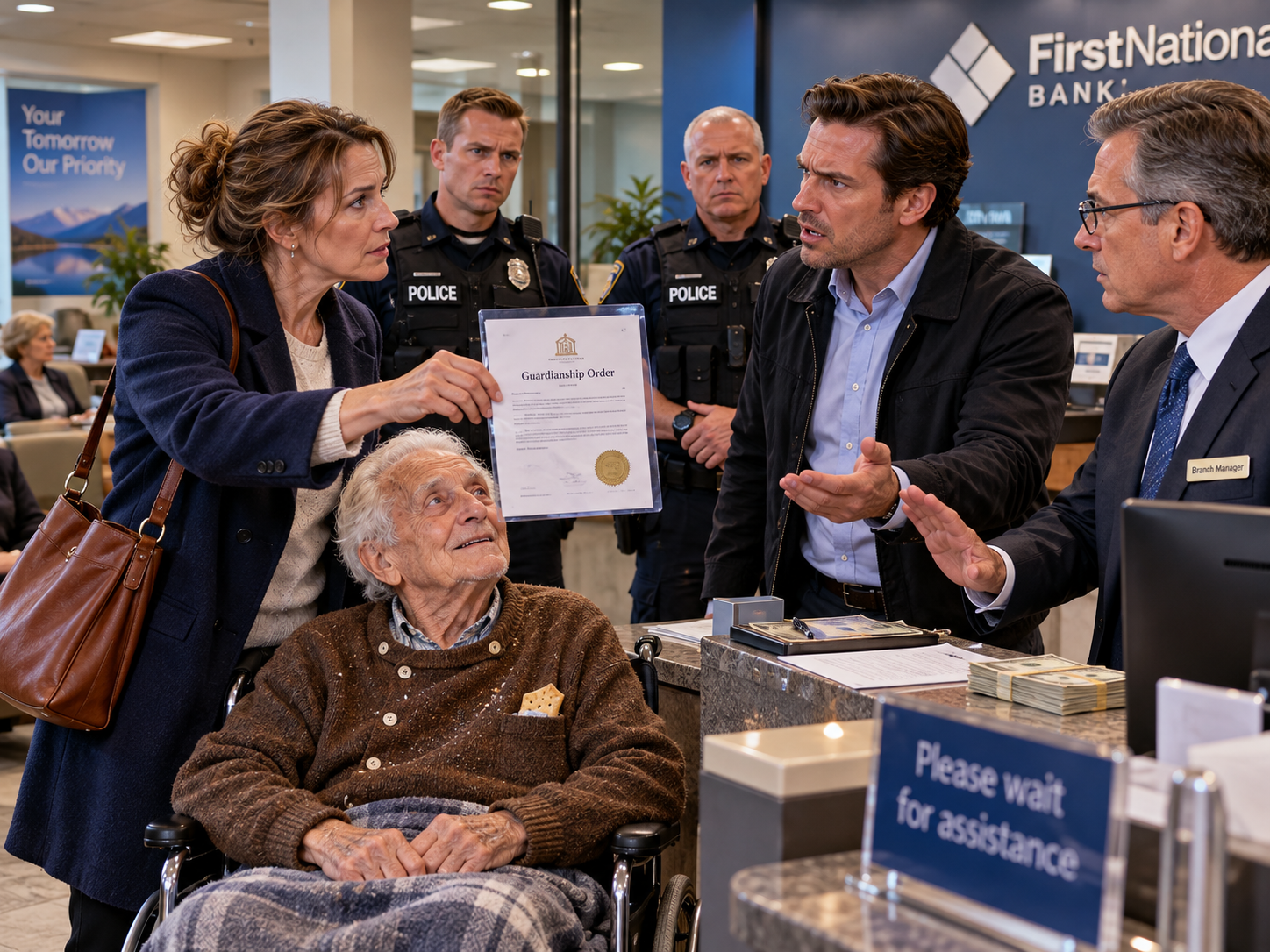
I remembered the bank, the manager’s office, and the document pressed beneath my hand. I remembered how Hugh had looked at Dad as though the confusion in his mind made the money easier to take. I could not erase that memory, and I no longer tried to replace it with a more comforting story. What I could do was recognize the difference between the brother who had caused harm and the brother who was now learning to help, without allowing the second version to erase the first.
That night, I updated the care folder and marked the date for the next review. The documents were not signs that I had failed to protect Arthur. They were the means by which I could protect him without destroying myself in the process. For the first time, I considered that asking for help might be another form of loyalty.
Before bed, I sat with Dad while he listened to the radio. He rested his hand over mine and asked whether I was going to work in the morning. I told him I was. He nodded, then said I should get some sleep because I always worked too hard.
I smiled, though my throat tightened. He had forgotten where the bathroom was that morning and had called Hugh by another name that afternoon. Yet a part of him still carried the instinct to worry about his daughter. I kissed his forehead and told him I would be all right.
For once, I was beginning to believe that answer might become true.
Click here to continue reading: PART 14: Hugh’s Attempt to Make Amends Was Tested When an Unexpected Expense Arrived, and I Refused to Let Old Habits Return Through a Different Door
My Brother Thought Our Father’s Memory Loss Had Made Him Easy to Rob, Until the Bank Manager Read the Papers I Had Brought
Part 13 of 20

