The last photograph stayed on my desk for years.
It was not the most important photograph.
It was not even a particularly good one.
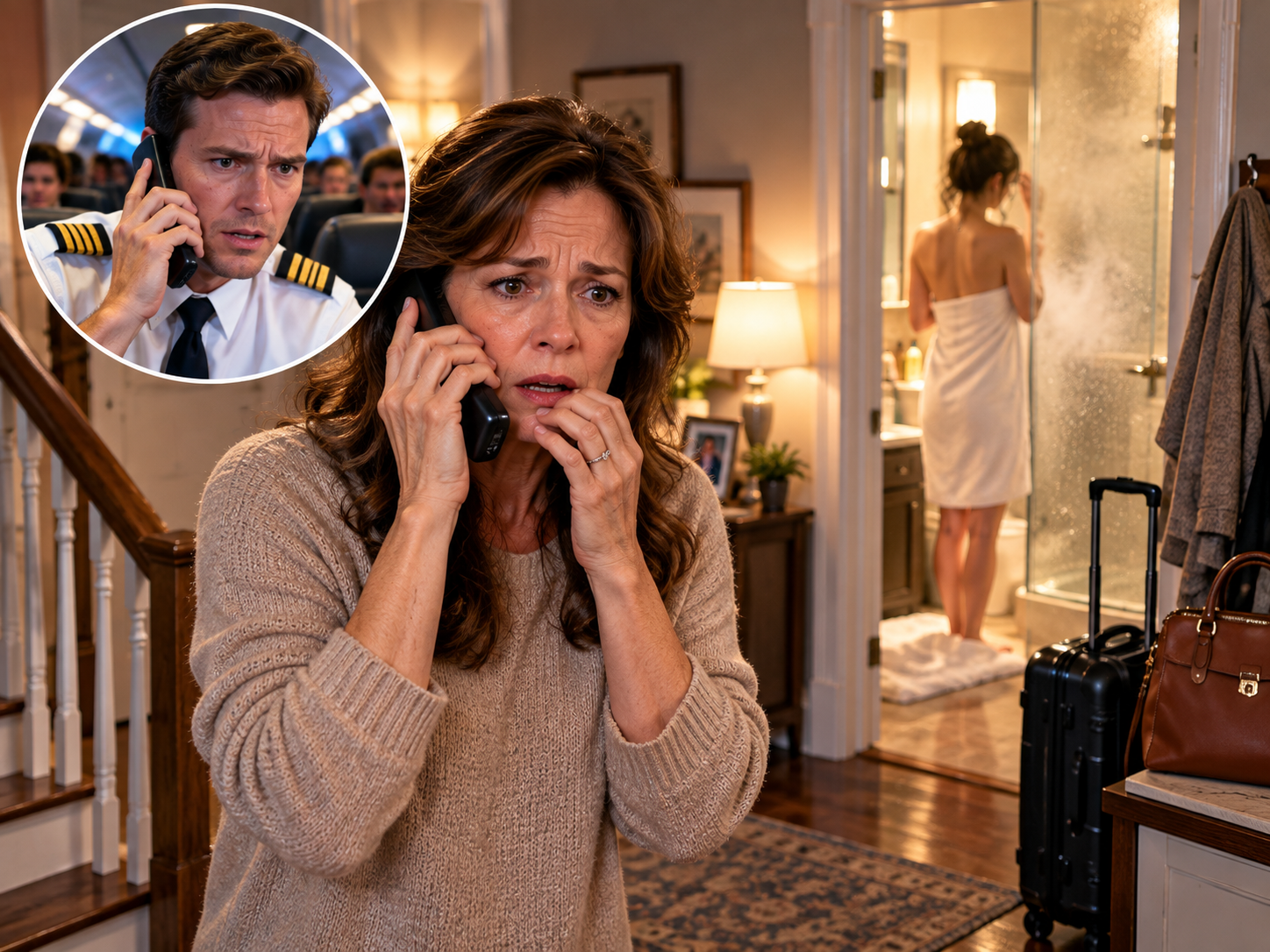
The image was slightly dark.
The suitcase stood near the hallway.
The room looked ordinary.
Nothing in the photograph revealed what had been happening outside the frame.
That was what made it powerful.
The picture showed how ordinary the beginning had looked.
I kept it because I wanted to remember that.
Not the fear.
The lesson.
One morning, years after the original incident, I decided to put it away.
There was no special reason.
No anniversary.
No family gathering.
No difficult conversation.
I simply looked at it and thought, It is time.
I opened the drawer where I kept the family record.
The old documents were still there.
The investigation notes.
The photographs.
The letters.
The copies of financial records.
The airplane pin Lucas had given me years earlier.
I placed the suitcase photograph inside.
Then I stopped.
For a moment, my hand remained on the edge of the drawer.
I thought about whether I was doing something important.
Or whether I was simply tired of looking at it.
Perhaps both.
I closed the drawer.
Then I opened it again.
I laughed at myself.
“You're ridiculous,” I said aloud.
The house, thankfully, did not answer.
I closed it a second time.
That afternoon, Chloe came by.
She noticed the drawer.
“What did you do?”
“Put the photograph away.”
She understood immediately.
“The suitcase?”
“Yes.”
“How do you feel?”
I thought about it.
“Fine.”
“Just fine?”
“Peaceful.”
She smiled.
“That sounds better.”
We sat in the kitchen.
She brought coffee.
I asked about David.
“He's working.”
“Toby?”
“Busy.”
“Lucas?”
“Flying.”
We laughed.
Everyone was doing what people do.
Working.
Traveling.
Raising children.
Making mistakes.
Paying bills.
Growing older.
Living.
Chloe looked toward the drawer.
“Do you think about it often?”
“The incident?”
“Yes.”
“Less than before.”
“Me too.”
She looked relieved.
“Sometimes I worry that forgetting details means I'm disrespecting what happened.”
“You aren't forgetting.”
“How do you know?”
“Because you remember what matters.”
She looked at me.
“What matters?”
“That you were frightened.”
She nodded.
“That people helped.”
Another nod.
“That some people were responsible.”
“Yes.”
“That some people were coerced.”
“Yes.”
“That we made mistakes.”
“Yes.”
“That we survived.”
Her eyes softened.
“And that we changed.”
She smiled.
“That's the part I don't want to lose.”
“You won't.”
She reached across the table.
I held her hand.
There was no need to say anything else.
That evening, David called.
“Mom?”
“Yes?”
“Are you okay?”
“I'm fine.”
“Chloe said you put away the photograph.”
I laughed.
“She tells you everything.”
“She tells me important things.”
“That was not an important thing.”
“It was to me.”
I paused.
“Why?”
“Because I think it means something.”
“What?”
“That you're not afraid of it anymore.”
I looked toward the drawer.
“I was never afraid of the photograph.”
He laughed.
“Okay.”
“I was afraid of what it represented.”
“And now?”
“Now it represents something else.”
“What?”
I thought for a moment.
“Distance.”
He was quiet.
“That's good.”
“Yes.”
We talked about ordinary things afterward.
He told me about work.
I told him about groceries.
He complained about the weather.
I complained about my neighbor's dog.
Neither of us mentioned the passport again.
And I realized that this was another kind of healing.
Not having to speak about something to prove that it no longer controlled you.
The following weekend, Toby brought his children.
His daughter went straight to the bookshelf.
“Grandma, where's the family story?”
“In the drawer.”
“Can I see it?”
“Not today.”
She looked disappointed.
“Why?”
“Because today we're going outside.”
She smiled.
“Okay.”
That was it.
No argument.
No insistence.
She ran outside.
I followed.
The children played in the yard.
Toby sat beneath a tree.
I sat beside him.
“Your daughter asked about the record.”
“I heard.”
“She wanted to see it.”
“Did you show her?”
“No.”
“Good.”
He looked at me.
“Why?”
“Because not every day needs a lesson.”
He laughed.
“You really have changed.”
“I have.”
We watched the children.
After a while, Toby said, “Do you think they'll remember the story?”
“Yes.”
“Do you think they'll be afraid of it?”
“Not if you give them enough reasons to know they are safe now.”
He nodded.
Then he said something that surprised me.
“I think I finally understand what you meant years ago.”
“What?”
“That memory isn't measured by how painful it is.”
I looked at him.
He continued.
“It can be important without being painful.”
“Yes.”
“And something can be painful without being the most important thing about you.”
“Yes.”
He smiled.
“I think that's what growing up means.”
I reached over and squeezed his shoulder.
“Maybe.”
His daughter came running toward us.
“Dad!”
“What?”
“Come play.”
“I'm talking to Grandma.”
“You can talk later.”
Toby laughed.
“She has a point.”
He stood.
“You coming?”
I shook my head.
“I'll watch.”
He ran after her.
I watched them.
A father.
A daughter.
A family.
A future.
The thought made me smile.
Later that evening, Lucas called from another city.
He was between flights.
“Mom.”
“Yes?”
“You know what I was thinking?”
“You and thinking make me nervous.”
He laughed.
“I was thinking about that old passport.”
“Of course you were.”
“No, listen.”
“All right.”
“I realized something.”
“What?”
“If that had been the only thing that ever happened in my career, it would have been a strange story.”
“Yes.”
“But it wasn't.”
“No.”
“There were thousands of flights afterward.”
I smiled.
“Exactly.”
“And I think that's what I wanted.”
“What?”
“For that flight to become one flight.”
I closed my eyes.
One flight.
One morning.
One chapter.
Not the entire book.
“Yes,” I said.
“I think it has.”
We talked for another few minutes.
When the call ended, I sat quietly.
One flight.
One morning.
One frightening story.
And thousands of ordinary moments afterward.
I thought about the family record in the drawer.
The old photograph.
The airplane pin.
The documents.
The evidence.
All of it was still there.
Nothing had been destroyed.
Nothing had been denied.
It had simply been placed where it belonged.
In the past.
That night, before bed, I opened the drawer one final time.
I looked at the photograph.
The suitcase.
The hallway.
The empty room.
I remembered the phone ringing.
Lucas's voice.
The water upstairs.
The bedroom door.
The fear.
Then I remembered what came afterward.
Chloe returning.
David holding Toby.
Lucas continuing to fly.
The investigation.
The apologies.
The counseling.
The lake house.
The renewed vows.
The graduations.
The children.
The dinners.
The photographs.
The laughter.
The ordinary mornings.
I put the photograph back.
Then I closed the drawer.
I did not lock it.
There was no reason to.
The story was not a secret.
It simply wasn't something I needed to carry in my hands anymore.
I walked toward the window.
A plane crossed the dark sky.
I watched it disappear.
Then I turned off the light.
The next morning, I woke to sunlight.
No phone call.
No footsteps.
No urgent message.
Just birds outside and the familiar sound of someone moving around in the kitchen.
I smiled.
For years, I had thought peace would arrive dramatically.
I imagined a final conversation.
A final piece of evidence.
A final moment when fear would disappear.
But peace had arrived differently.
It had arrived through repetition.
Another safe morning.
Another family dinner.
Another question answered honestly.
Another child growing up.
Another flight completed.
Another photograph taken.
Another day lived.
That was how the fear became smaller.
Not because we defeated it once.
Because we kept choosing life afterward.
I made coffee.
I opened the curtains.
The house filled with morning light.
My phone buzzed.
A message from Toby.
He had sent a photograph of his children outside.
Underneath it, he had written:
“Just another ordinary day.”
I smiled.
That was exactly what I wanted.
Ordinary.
Safe.
Full.
Real.
I saved the photograph.
Then I put my phone down.
There were dishes waiting.
Laundry waiting.
A grocery list waiting.
Life waiting.
I walked into the kitchen.
And as I began the ordinary work of the morning, I understood the final lesson the passport had left behind.
We cannot always control what enters our lives.
We cannot always recognize deception immediately.
We cannot prevent every frightening event.
But we can ask questions.
We can listen.
We can tell the truth.
We can admit when we are wrong.
We can protect children without teaching them to fear the world.
We can hold people accountable without pretending they are only one thing.
We can forgive where forgiveness is possible.
We can remember without remaining trapped.
And when the frightening chapter is finally over, we can close the book for a while.
Not because the story never mattered.
Because there are still pages left to live.
I looked out the window once more.
The morning sky was clear.
Somewhere above it, another airplane was carrying people toward another destination.
I smiled.
Then I returned to the table.
My family was still writing its story.
And this time, there was nothing left to prove.
Click here to continue reading: PART 25: When Toby brought his children to the old house and asked me to show them where everything had happened, I realized that places can change just as people do
My son said Chloe was sitting on his flight to Rome while I could hear the shower upstairs, and then the house suddenly became impossibly quiet
Part 24 of 28