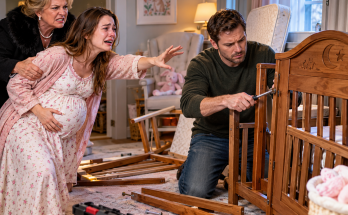
David asked me the question while we were repairing a cabinet.
The hinge had come loose.
He insisted he could fix it.
I told him he couldn't.
Twenty minutes later, he admitted I was right.
“I hate that you were right.”
“You should be used to it.”
He laughed.
We worked in silence for a while.
Then he said, “Mom?”
“Yes?”
“Do you think we're healed?”
I stopped tightening the screw.
“Healed from what?”
He gave me a look.
“You know.”
I did.
The morning.
The fear.
The deception.
The aftermath.
“Why are you asking?”
“Because I don't know.”
I put the screwdriver down.
“What makes you think we aren't?”
“Sometimes I still get angry.”
“That doesn't mean you aren't healed.”
“Sometimes Chloe gets anxious.”
“That doesn't mean she isn't healed.”
“Sometimes I check the doors twice.”
“That doesn't mean anything.”
He smiled.
“You always make everything sound simple.”
“It isn't simple.”
He nodded.
“That's what I'm trying to understand.”
I leaned against the counter.
“Healing doesn't mean the memory disappears.”
“Then what does it mean?”
“It means the memory stops deciding what you do next.”
He thought about that.
“So if I remember and still live normally?”
“Yes.”
“If Chloe remembers and still trusts me?”
“Yes.”
“If Toby remembers and doesn't fear every car?”
“Yes.”
He nodded.
“Then maybe we're healed.”
“Maybe.”
“Why did you say maybe?”
“Because healing isn't a certificate.”
He laughed.
“Of course it isn't.”
“It changes.”
“Like everything else.”
“Exactly.”
He looked toward the window.
“I think I used to want the past to be erased.”
“So did I.”
“Now I don't.”
“Why?”
“Because it taught me things.”
I smiled.
“What?”
“That I don't know everything.”
“Very important.”
“That silence isn't always peace.”
“Also important.”
“That people can love each other and still make terrible decisions.”
I nodded.
“And that trust isn't blind.”
He looked at me.
“That's the biggest one.”
We finished the cabinet.
It stood straight again.
Not perfect.
But stable.
David laughed when he noticed.
“That's almost symbolic.”
“Don't ruin my cabinet with symbolism.”
He smiled.
Later, Chloe arrived.
David told her about our conversation.
She looked thoughtful.
“I've wondered about that too.”
“About healing?”
“Yes.”
She sat at the kitchen table.
“I don't think I want to forget anymore.”
David looked at her.
“I don't either.”
She took his hand.
“I used to think forgetting would prove I had moved on.”
“And now?”
“Now I think remembering and choosing differently is better.”
I smiled.
They were learning to speak about the past without becoming trapped inside it.
That was something I had hoped for from the beginning.
Not perfection.
Awareness.
A few months later, Toby brought his children to visit.
His daughter was fascinated by airplanes.
She asked Lucas to explain how pilots knew where to go.
He drew a diagram.
She asked another question.
Then another.
Then another.
Lucas looked at me.
“She definitely belongs to this family.”
We laughed.
Afterward, she asked me whether I had ever flown to Rome.
“No.”
“Why not?”
“I never had a reason.”
“You should go.”
“Maybe.”
Lucas overheard.
“I'll take you.”
I looked at him.
“You'll be flying?”
“Hopefully.”
“Then I'll think about it.”
He laughed.
“You're afraid?”
“No.”
“You hesitated.”
“I am allowed to think.”
He shook his head.
“Family.”
That word had changed meaning over the years.
Once, I thought family meant people who lived under one roof.
Then I thought it meant people connected by blood.
Later, I understood it meant people who accepted responsibility for one another.
Now I thought it meant something even broader.
Family was the people whose lives remained connected even after circumstances changed.
That included people who stayed.
People who left.
People who returned.
People who apologized.
People who forgave.
People who learned.
That evening, Chloe asked me to walk with her.
We went down the block.
The neighborhood had changed.
Several houses had new owners.
The grocery store had become a pharmacy.
A tree near the corner had grown large enough to cover the sidewalk.
“Everything changes,” Chloe said.
“Yes.”
“Sometimes I hate that.”
“Sometimes I do too.”
She looked at me.
“Do you ever wish you could go back?”
“To what?”
“Before everything.”
I considered it.
“No.”
She looked surprised.
“Really?”
“I miss certain things.”
“Like?”
“Being younger.”
She laughed.
“That's fair.”
“I miss the feeling that the future was simple.”
“And now?”
“Now I know better.”
She nodded.
“I think I do too.”
We walked in silence.
Then she said, “I'm grateful you never made me into a monster in the family's eyes.”
I stopped.
“Why would I?”
“Because you could have.”
“Yes.”
“And you didn't.”
“I was angry.”
“I know.”
“But I didn't want my anger to become everyone else's inheritance.”
She looked down.
“That may be the greatest gift you gave me.”
“It wasn't a gift.”
“What was it?”
“A decision.”
She smiled.
“I'll take that.”
We continued walking.
The streetlights came on.
The evening air was cool.
Nothing dramatic happened.
And that was precisely why I remembered it.
For years, I had associated important moments with emergencies.
Now I understood that healing often happened during walks.
During dinners.
During conversations that ended without anyone shouting.
During ordinary evenings when people simply stayed.
When we returned, David was waiting.
“You two took forever.”
“We were walking.”
“That's suspicious.”
Chloe laughed.
Later, I found a note on the kitchen counter.
It was from Toby's daughter.
“Grandma, I like your house because everyone talks here.”
I smiled.
That might have been the best description anyone had ever given it.
Everyone talked.
Maybe that was what had changed most.
Before the passport incident, we had assumed that the people we loved would simply tell us when something mattered.
Afterward, we learned that fear could make people silent.
So we made talking a habit.
Not forced conversations.
Not interrogations.
Just honesty.
“Something feels wrong.”
“I don't understand.”
“I'm scared.”
“I need help.”
“I made a mistake.”
Those sentences were small.
But they could change the direction of a family.
One evening, David called.
“Mom?”
“Yes?”
“I just wanted to tell you something.”
“What?”
“I had a bad day.”
I smiled.
“Okay.”
“I don't need you to fix it.”
“Good.”
“I just wanted someone to know.”
I leaned back in my chair.
“I'm glad you called.”
“Me too.”
We talked for fifteen minutes.
Nothing was solved.
Nothing needed to be.
When the call ended, I sat quietly.
That was healing too.
Not every conversation had to produce an answer.
Sometimes being heard was enough.
Years later, the old cabinet still stood in my kitchen.
The hinge occasionally squeaked.
I never replaced it.
It reminded me that things didn't have to be perfect to remain useful.
That was how I felt about our family.
There were memories that still hurt.
Questions that had no perfect answers.
Decisions we wished had been different.
But the structure held.
Not because nothing had broken.
Because we had learned how to repair what mattered.
And perhaps that was the truth I had been searching for all along.
Healing wasn't returning to who we had been.
It was becoming people who knew how to live after what had happened.
Click here to continue reading: PART 15: When Toby asked whether his children should someday know the frightening details of the passport incident, I realized that truth has to be carried carefully
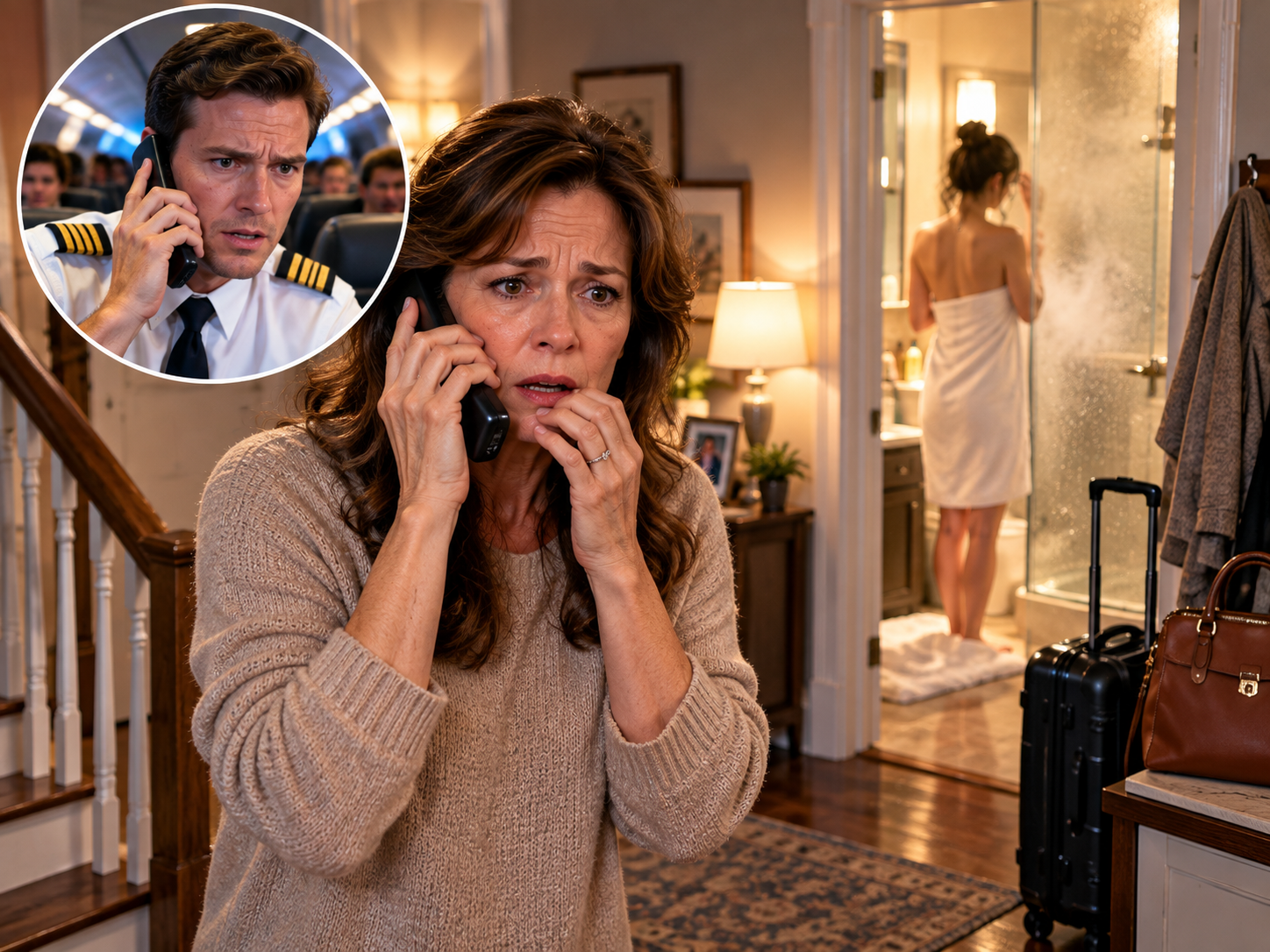
My son said Chloe was sitting on his flight to Rome while I could hear the shower upstairs, and then the house suddenly became impossibly quiet
Part 14 of 28