
The question came on an ordinary Tuesday afternoon.
Toby had stopped by after work, carrying a paper bag from a bakery he knew I liked.
He put it on the kitchen counter and looked around.
“You're alone?”
“For the moment.”
“Good.”
He pulled out a chair.
That made me smile.
Whenever Toby said “good” in that particular tone, I knew he had something serious to discuss.
“What happened?”
“Nothing happened.”
“That is not an answer.”
He laughed.
“You really haven't changed.”
“I've improved.”
“Debatable.”
I opened the bakery bag.
He watched me take out a pastry.
“That's for you.”
“You remembered.”
“Of course.”
We sat together for several minutes without speaking.
Then Toby said, “I've been thinking about the family story.”
I looked at him.
“The one we wrote?”
“Yes.”
“What about it?”
“I don't know if I want my children to grow up thinking that's our family story.”
I understood immediately.
“You mean you don't want them to think of the passport incident whenever they hear the word family.”
“Exactly.”
I put down my coffee.
“That is not the story I want them to inherit either.”
He nodded.
“But it's part of it.”
“Yes.”
“So how do we keep it from becoming everything?”
I thought about the question.
Years earlier, I would have answered quickly.
I would have said that children should be protected from frightening things.
Now I knew better.
“You give them more stories.”
Toby frowned.
“What do you mean?”
“Tell them about your mother's kindness.”
He smiled.
“That's easy.”
“Tell them about your father's stubbornness.”
“That might take longer.”
I laughed.
“Tell them about Lucas learning to fly. Tell them about the lake house. Tell them about birthdays and bad Christmas dinners and the time you broke the kitchen window.”
“I was eight.”
“You were reckless.”
“I was playing baseball.”
“You were playing baseball indoors.”
He grinned.
“Fair.”
“Give them enough ordinary memories that the frightening one has a proper place.”
He leaned back.
“So we don't erase it.”
“No.”
“But we don't build everything around it.”
“Exactly.”
He looked toward the window.
“I think that's what I've been trying to figure out.”
“What?”
“How much of the past belongs to my children.”
I understood.
The past did not belong to children simply because it belonged to their parents.
Some truths were inherited naturally.
Others needed to be carried carefully.
“You decide according to what they can understand,” I said.
“And if they ask?”
“You answer.”
“What if they ask something I don't know how to explain?”
“Tell them that.”
He smiled.
“You make everything sound simple.”
“It isn't simple.”
“Then why do you make it sound that way?”
“Because someone has to explain complicated things without making them frightening.”
He nodded.
We sat quietly again.
Then he asked, “Do you ever wish it had never happened?”
I looked at him.
“Yes.”
He seemed surprised.
“You do?”
“Of course.”
“I thought maybe after all these years…”
“Time doesn't turn a terrible thing into a good thing.”
He nodded slowly.
“But it can change what you build afterward.”
That seemed to reach him.
He looked at the table.
“I think that's what I needed to hear.”
Later that evening, Toby brought his children over.
The younger one immediately ran toward the living room.
The older girl came into the kitchen and climbed onto the chair beside me.
“Grandma.”
“Yes?”
“Dad said you have a story about a passport.”
I looked at Toby.
He raised both hands.
“I didn't tell her the details.”
The girl looked at me.
“Is it true?”
“Yes.”
“Was it scary?”
“Yes.”
“Did someone steal a passport?”
“Someone used one that wasn't theirs.”
“Why?”
I paused.
“Because they wanted people to believe something that wasn't true.”
She thought about that.
“Did it work?”
“For a little while.”
She frowned.
“But then you knew.”
“We asked questions.”
She nodded.
“Like when you told me not to believe everything on the internet.”
I smiled.
“Exactly.”
She considered the connection.
“So the story is about checking things?”
“Partly.”
“What else?”
I looked at Toby.
He smiled.
I looked back at her.
“It is also about telling people when you're afraid.”
She became quiet.
“Did Dad tell you?”
“Yes.”
“Was he little?”
“Very little.”
She laughed.
“I wasn't that little.”
Toby called from the living room.
“You were seven.”
“That is little.”
“It is not.”
“It is.”
I smiled.
The conversation moved on.
They wanted dessert.
They wanted to know whether Uncle Lucas had really flown a plane.
They wanted to know whether their grandmother had really answered the phone.
They wanted to know why their parents had renewed their vows.
The passport story became only one question among many.
That was exactly what I had hoped for.
A family is not one event.
It is thousands.
The next weekend, Chloe called me.
“I've been thinking about what Toby said.”
“About the children?”
“Yes.”
“What do you think?”
“I think we should stop calling it the passport story.”
I smiled.
“What should we call it?”
“I don't know.”
“Then maybe it doesn't need a name.”
She laughed.
“That sounds like something you would say.”
“I've become wise.”
“Dangerous.”
We both laughed.
Then she became serious.
“I used to think that if I could explain exactly what happened, I would finally feel finished with it.”
“And?”
“I don't.”
“What do you feel?”
“Grateful.”
That surprised me.
“For what?”
“For the people who asked questions.”
I nodded.
“Even when their questions made things harder.”
“Yes.”
She paused.
“I used to resent questions.”
“I know.”
“Now I think questions saved us.”
“Sometimes.”
“Sometimes?”
“Questions can save people. They can also hurt people if they're asked carelessly.”
She considered that.
“So the lesson isn't just ask.”
“No.”
“What is it?”
“Ask with the intention of understanding.”
She was quiet.
Then she said, “I wish I'd known that earlier.”
“Most wisdom arrives late.”
“That's inconvenient.”
“Very.”
We spoke for another hour.
When the call ended, I remained in the kitchen.
I thought about Chloe.
About David.
About Lucas.
About Toby.
About the children who now knew the family history only through stories.
The frightening morning had once seemed enormous.
Now it was still important, but it had become smaller in proportion to everything else.
That was not because it mattered less.
It was because life had become larger.
A week later, David came to see me.
He brought no documents.
No box.
No old photographs.
He simply came.
“Do you need anything?” I asked.
“No.”
“Then why are you here?”
He smiled.
“Can I not visit my mother without a reason?”
“You can.”
“Good.”
He sat at the table.
We drank coffee.
He told me about work.
I told him about Toby's children.
He complained about traffic.
I complained about the price of groceries.
For almost an hour, the passport incident never came up.
Then David said, “You know what I like?”
“What?”
“That we can have a conversation now without eventually talking about what happened.”
I smiled.
“That's because you're boring now.”
He laughed.
“Probably.”
“No.”
I looked at him.
“That is because the story finally found its place.”
He nodded.
Not forgotten.
Not erased.
Placed.
That was different.
And as I watched my eldest son leave that afternoon, I realized something.
A family outgrows a story not when the story disappears.
It outgrows it when the story stops being the first thing anyone sees.
The passport was still in the record.
The photograph still existed.
The airplane pin still rested beside the box.
But they no longer defined us.
They were pieces.
Nothing more.
Nothing less.
And when Toby's children ran through the house later that evening, shouting about a game they had invented, I realized that this noise was more important than any photograph we had preserved.
Because this was what came after.
And after, as it turned out, could last a very long time.
Click here to continue reading: PART 22: When Lucas invited me to the airport years after the first frightening flight, I discovered that the same place can hold completely different memories
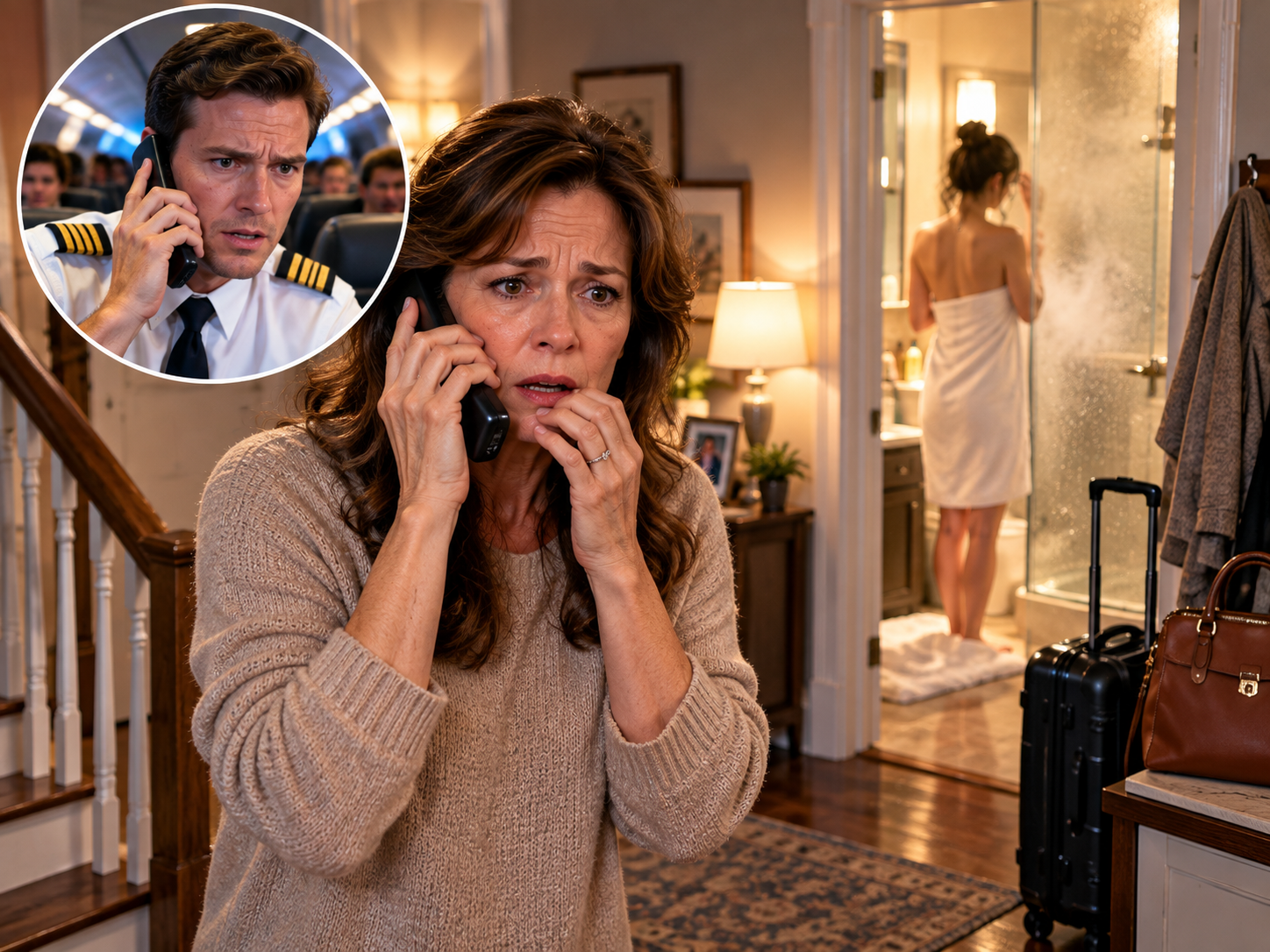
My son said Chloe was sitting on his flight to Rome while I could hear the shower upstairs, and then the house suddenly became impossibly quiet
Part 21 of 28

