We read the story on a Sunday afternoon.
Everyone was there.
David.
Chloe.
Lucas.
Toby.
His wife.
Their children.
And me.
The grandchildren sat on the floor with snacks.
The adults gathered around the table.
David placed the folder in the center.
“No dramatic speeches,” he said.
Lucas raised his hand.
“I object.”
“You always object.”
“I feel excluded.”
“You'll survive.”
We laughed.
Then David opened the folder.
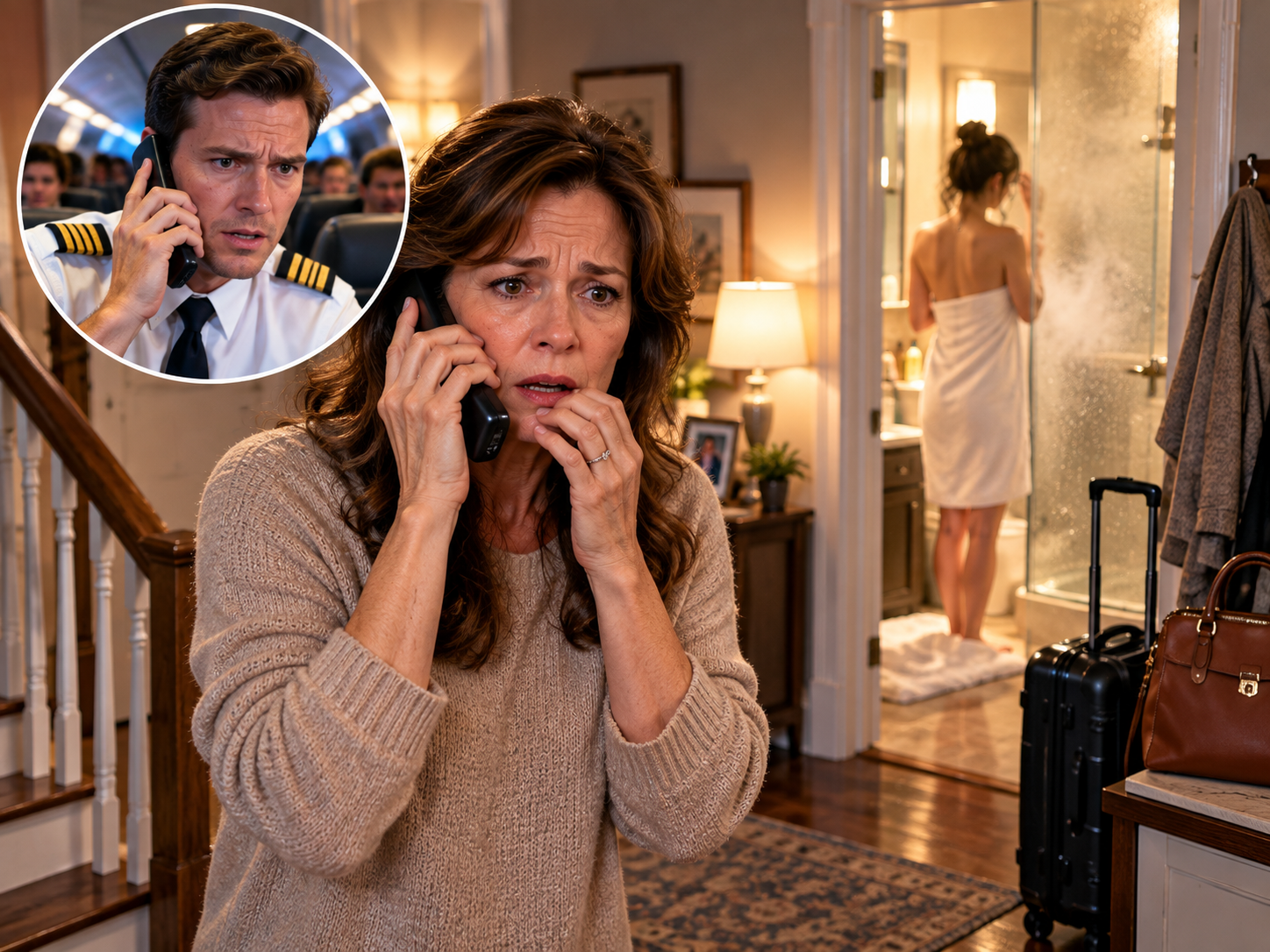
The first page described the phone call.
The passport.
The shower.
The impossible contradiction.
I watched everyone's faces.
Lucas smiled when he reached the part about the airport.
“I remember that exactly.”
“You remember everything,” I said.
“I was there.”
“So was I.”
“You were making toast.”
“I was washing dishes.”
“Same difference.”
Everyone laughed.
The laughter surprised me.
Years ago, those memories had made me feel sick.
Now they were simply part of the story.
David continued reading.
When he reached the section about the suitcase, Chloe closed her eyes.
I reached for her hand.
She squeezed mine.
The children listened.
Not understanding every detail.
But understanding enough.
When the story reached Toby's disappearance, the room became quiet.
Toby looked down.
His wife placed her hand on his shoulder.
He looked up.
“I'm okay.”
I believed him.
That was the most important thing.
David kept reading.
When he reached Evelyn's warning, Lucas interrupted.
“She deserved more space.”
Everyone laughed.
“You've always liked her,” Chloe said.
“She saved the situation.”
“She helped.”
Lucas nodded.
“Exactly.”
The story continued.
The arrests.
The financial fraud.
The recovery.
The counseling.
The rebuilding.
The family dinners.
The children growing up.
The grandchildren arriving.
When David reached the final page, he stopped.
“What?”
I asked.
He looked at me.
“I don't know whether we should end it here.”
“Why not?”
“Because it feels too neat.”
I smiled.
“Life rarely ends neatly.”
“So what should the ending say?”
I looked around the table.
At Chloe.
At Lucas.
At Toby.
At the children.
At the photograph on the wall.
“Tell the truth.”
David waited.
“The story didn't end when Martin was arrested.”
“I know.”
“It didn't end when Toby came home.”
“I know.”
“It didn't end when the marriage survived.”
“I know.”
“It didn't end when we stopped being afraid.”
He looked at me.
“So when did it end?”
“It didn't.”
Everyone became quiet.
“That may be the most honest ending.”
Toby smiled.
“That's good.”
David closed the folder.
The children immediately began arguing about dessert.
The adults laughed.
The story was finished.
But the family wasn't.
That was the point.
Later, Toby and I sat outside.
“You were right.”
“About what?”
“The story didn't end.”
“No.”
“It just became part of everything else.”
“Yes.”
He looked toward the house.
“I used to think surviving meant getting back to normal.”
“What do you think now?”
“Normal doesn't exist.”
I laughed.
“Good answer.”
“We just build something new.”
I looked at him.
“You've grown up.”
“I had to.”
“You didn't have to.”
He smiled.
“Maybe not.”
The evening light softened the yard.
Inside, someone shouted.
Then another voice answered.
The grandchildren were playing.
Lucas was arguing with David about music.
Chloe was laughing.
It sounded ordinary.
I loved that.
Ordinary had become sacred.
Not because nothing bad could happen.
Because we had learned how precious it was when nothing bad was happening.
Toby looked at me.
“Grandma?”
“Yes?”
“Do you still think about the passport?”
“Sometimes.”
“What do you think now?”
I looked toward the sky.
“I think it taught me to pay attention.”
“That's all?”
“No.”
“What else?”
“That people are more complicated than they look.”
He nodded.
“That some people are responsible for harm.”
“Yes.”
“That some people are frightened and still do the right thing.”
“Yes.”
“That love doesn't mean never being afraid.”
“Yes.”
“And that families survive because people keep talking.”
I smiled.
“You've learned a lot.”
He laughed.
“I had a good teacher.”
“You had several.”
He nodded.
Inside, the front door opened.
Chloe stepped outside.
“Are you two coming?”
“In a minute,” Toby said.
She looked at me.
“Dinner's ready.”
“I'll be there.”
She went inside.
Toby stayed beside me.
“Do you think Dad and Mom are happy?”
“Yes.”
“Do you think they're still scared?”
“Sometimes.”
“Is that okay?”
“Yes.”
He nodded.
“I think I like that better.”
“Why?”
“Because if they can be scared and still be happy, maybe everyone can.”
I smiled.
“That is exactly right.”
We went inside.
Dinner was loud.
Someone had burned the bread.
Lucas blamed David.
David blamed Lucas.
Chloe laughed.
Toby's daughter spilled juice.
Her brother stole a piece of chicken.
Nobody cared.
I looked around the table.
This was the ending.
Not a perfect photograph.
Not everyone standing still.
Not a world without fear.
A living family.
A noisy table.
People who had been hurt and had learned.
People who had made mistakes and taken responsibility.
People who had been afraid and kept going.
People who had grown older.
Children who had become parents.
Grandchildren who knew only part of the story because they were still writing their own.
I realized that was what I had wanted all along.
When my children were young, I thought protecting them meant keeping danger away.
I was wrong.
Sometimes protection meant teaching them what to do when danger arrived.
Sometimes it meant telling the truth.
Sometimes it meant admitting you were wrong.
Sometimes it meant trusting someone.
Sometimes it meant questioning them.
And sometimes it meant knowing when to stop asking questions and simply come home.
The passport story had begun with a contradiction.
A woman who was supposedly upstairs was sitting on an airplane.
A passport that should have been in one place was somewhere else.
A voice that sounded familiar belonged to a stranger.
A child who should have been at school was somewhere he shouldn't have been.
Everything had been designed to make us doubt what we knew.
But the truth had survived.
Not because it shouted.
Because the details refused to disappear.
I thought about that now.
Truth does not always arrive dramatically.
Sometimes it waits inside a small inconsistency.
A name.
A photograph.
A timestamp.
A sentence that doesn't sound quite right.
A person who hesitates.
A question that someone doesn't want answered.
Pay attention.
That was the lesson.
But there was another one.
Pay attention without becoming suspicious of everyone.
Question without assuming guilt.
Protect without controlling.
Forgive without forgetting.
Love without pretending.
That was harder.
It was also more useful.
After dinner, Lucas helped me clear the table.
“You know,” he said, “I never thought I'd still be talking about that passport twenty years later.”
“Neither did I.”
“Do you wish I hadn't called you?”
“No.”
“Even knowing what followed?”
“No.”
He smiled.
“Me neither.”
He carried the plates toward the sink.
Outside, Toby's children were chasing one another across the yard.
David and Chloe stood near the fence.
Toby was laughing.
I looked at them all.
For a moment, I saw the old photographs.
The young family.
The frightened morning.
The lake.
The graduation.
The wedding.
The grandchildren.
Every version belonged.
None erased the others.
The family had changed.
The story had changed.
We had changed.
But we were still here.
I walked toward the window.
An airplane moved slowly across the evening sky.
Lucas noticed.
“That's probably one of mine.”
“Show-off.”
He laughed.
The plane disappeared beyond the clouds.
I watched until I couldn't see it anymore.
Then I turned back toward the table.
That was where the story really belonged.
Not in an airport.
Not in a police report.
Not in a passport.
At the table.
Among the people who had lived through it.
Among the people who had learned from it.
Among the children who would inherit the lesson without having to inherit the fear.
And I understood something I had not been able to understand on that first morning.
We had never needed to become the family we were before.
We needed to become the family we were capable of being afterward.
That family was imperfect.
It asked questions.
It admitted mistakes.
It remembered.
It forgave carefully.
It protected its children.
It spoke.
And when something frightened us, we did not automatically believe the first story that appeared.
We looked closer.
We listened.
We told the truth.
Then we came back to the table.
Click here to continue reading: PART 17: When my granddaughter found the old photograph of Chloe standing beside the empty suitcase, I realized that even ordinary objects can carry stories we never intended to keep
My son said Chloe was sitting on his flight to Rome while I could hear the shower upstairs, and then the house suddenly became impossibly quiet
Part 16 of 28