The photograph had been taken on a completely ordinary afternoon, years after the passport incident, when nobody had been thinking about fear.
My granddaughter found it in a box while looking through old family pictures with me. She was sitting cross-legged on the living-room floor, surrounded by envelopes, greeting cards, school photographs, vacation snapshots, and the faded photographs that seemed to multiply every time I opened a drawer.
She held one up between both hands.
“Who took this?”
I leaned forward and immediately recognized the room.
It was our old house.
The picture showed Chloe standing near the dining-room table, laughing at something outside the frame. Behind her was the hallway leading toward the stairs. The photograph had been taken during one of our family gatherings, long after everything had changed.
But in the corner of the picture, barely visible, was the old cabinet where I had once kept the documents connected to the investigation.
My granddaughter noticed me staring at it.
“What?”
“Nothing,” I said.
She narrowed her eyes.
“You always say ‘nothing’ when something is something.”
I laughed despite myself.
“You've been spending too much time with your father.”
She smiled and lowered the photograph.
Then she noticed another picture beneath it.
This one was older.
Much older.
It showed Chloe and David standing beside Toby when he was little. Lucas was behind them, making a ridiculous face. I was sitting in a chair, pretending not to notice.
My granddaughter studied the photograph.
“Dad looks so young.”
“He was.”
“And Uncle Lucas looks exactly the same.”
“That is because your uncle has always believed growing older is optional.”
She laughed.
For a few minutes, that was all it was—a grandmother and granddaughter laughing over old photographs.
Then she found the photograph I had hoped nobody would notice.
It was not dramatic.
There was no police tape, no airport, no frightened face.
It was simply a picture of the suitcase.
The old suitcase Chloe had left behind when everything began.
Someone had photographed it during the investigation because investigators wanted a record of what had been found in the house.
My granddaughter looked at it carefully.
“Why did someone take a picture of a suitcase?”
I felt the room become quieter.
I could have taken the easy path.
I could have reached for another photograph.
I could have said it was part of an old investigation and left it there.
Instead, I remembered the promise I had made to myself years earlier.
Protection could not become another form of secrecy.
“It was connected to something frightening that happened to our family,” I said.
Her expression changed immediately.
“Is this the story?”
I nodded.
“The passport story?”
“Yes.”
She looked at the photograph again.
“But Chloe is in this picture.”
“She was.”
“And she wasn't the person on the plane.”
“No.”
She thought about that for a moment.
Then she asked the question children often ask when adults have spent years trying to make complicated things sound simple.
“Why?”
I took a slow breath.
“Because someone was trying to make us believe something that wasn't true.”
She waited.
I didn't continue immediately.
I had learned that telling the truth did not mean emptying an entire history onto someone all at once.
It meant giving the truth enough room to be understood.
“Someone had used Chloe's identity,” I explained. “There were financial problems connected to the company, and people were trying to hide what they had done. Chloe had discovered some of it. She became frightened. Other people became involved. And for a short time, our family didn't know who we could trust.”
My granddaughter's fingers tightened around the edge of the photograph.
“Was Chloe scared?”
“Yes.”
“Was Dad scared?”
“Yes.”
“Were you?”
I smiled faintly.
“I was terrified.”
She looked surprised.
“You?”
“Especially me.”
“Why?”
“Because I thought I was protecting everyone by believing what I could see.”
She tilted her head.
“But you were right about Chloe being upstairs.”
“I was right that someone was upstairs.”
She stared at me.
Then her eyes widened.
“Oh.”
“That was one of the lessons.”
She put the photograph down.
“What lesson?”
“That seeing something doesn't always mean you understand what you're seeing.”
She considered that carefully.
“So what do you do?”
“You ask questions.”
“Like what?”
“Who? Why? How? What don't I know yet?”
She smiled.
“That sounds like Dad.”
“Your father learned some things the difficult way.”
She picked up another photograph.
This one showed David and Chloe years after the incident, standing together at the lake house.
They were older. Their faces were softer. There was no tension in their expressions.
My granddaughter studied it.
“They look happy.”
“They were.”
“After everything?”
“Especially after everything.”
She looked confused.
“Why especially?”
“Because happiness meant something different to them afterward.”
“How?”
“They stopped assuming it would simply happen.”
She waited.
“They learned to choose it.”
That answer seemed to satisfy her more than I expected.
She placed the photograph beside the others.
Then she asked, “Did they ever talk about the suitcase?”
“Oh, many times.”
“Were they embarrassed?”
“Sometimes.”
“Angry?”
“Yes.”
“Still scared?”
“Sometimes.”
She frowned.
“So healing didn't make the fear disappear?”
“No.”
“What did it do?”
I looked toward the window.
Outside, a car passed slowly along the street.
The world had continued all those years without asking permission from our family.
“Healing taught them that fear could visit without becoming the person in charge.”
She nodded as though she understood.
Then she looked toward the kitchen.
“Is that why Dad always checks the doors?”
I smiled.
“Probably.”
“Is that why Mom doesn't like keeping important papers in one place?”
“Probably.”
“Is that why Uncle Lucas always tells everyone to keep copies of passports?”
I laughed.
“Definitely.”
She grinned.
“So everyone kept something from the story.”
“Yes.”
“What did you keep?”
I looked at the photograph in my hands.
“The questions.”
She didn't laugh.
She understood.
That evening, David came by with Chloe.
My granddaughter immediately told them what she had found.
“I saw the suitcase picture.”
David stopped halfway through taking off his coat.
Chloe looked at me.
I shook my head slightly.
“I didn't tell her everything.”
Chloe nodded.
Then my granddaughter asked the question directly.
“Mom, were you scared?”
Chloe sat beside her.
“Yes.”
“Were you scared of Dad?”
“No.”
“Were you scared of Grandma?”
“No.”
“Then who?”
Chloe looked at David.
For a moment, neither of them spoke.
“People we didn't understand,” Chloe finally said.
My granddaughter considered that.
“Did you know who was bad?”
Chloe's expression became thoughtful.
“Sometimes.”
“And sometimes you didn't?”
“Sometimes we were wrong.”
That answer seemed important to her.
“Even adults?”
“Especially adults,” David said quietly.
My granddaughter laughed.
David smiled.
“But being wrong isn't the worst thing,” he added. “Refusing to learn after you're wrong is worse.”
Chloe reached for his hand.
They had been married long enough now that the gesture seemed effortless.
There was no performance in it.
No need to prove anything.
My granddaughter noticed.
“Is that why you renewed your vows?”
David looked at Chloe.
“Yes.”
“Because you were wrong?”
Chloe smiled.
“Because we had changed.”
My granddaughter nodded.
Then she looked at me.
“Did everyone change?”
I looked around the room.
“Yes.”
“Even you?”
I smiled.
“Most of all me.”
She gathered the photographs into a neat pile.
“I think I like this story better now.”
I laughed.
“You haven't even heard all of it.”
“I know.”
She stood.
“But I know how it ends.”
I looked at her.
“How?”
She pointed toward the kitchen, where David had already begun opening the refrigerator and complaining about the lack of leftovers.
“Everyone eats.”
I laughed so hard that Chloe joined me.
David looked offended.
“What?”
“Nothing,” I said.
He shook his head.
“I never understand this family.”
“Yes, you do,” Chloe said.
He smiled.
“I suppose I do.”
And as they moved toward the kitchen, I looked once more at the photographs scattered across the table.
The suitcase was there.
The airport was there.
The old house was there.
The frightened faces were there.
But so were the lake, the Christmas dinners, the birthdays, the graduations, the weddings, the children, and all the ordinary afternoons nobody had thought to photograph.
That was when I understood something I had missed for years.
A family does not preserve its history by keeping only the moments that changed everything.
It preserves its history by continuing to live after them.
And sometimes the strongest proof of survival is not the photograph of what happened.
It is the photograph taken years later, when nobody is afraid anymore.
Click here to continue reading: PART 18: When Chloe asked me to help her decide what belonged in the family record, I realized that remembering the truth also meant admitting where each of us had failed
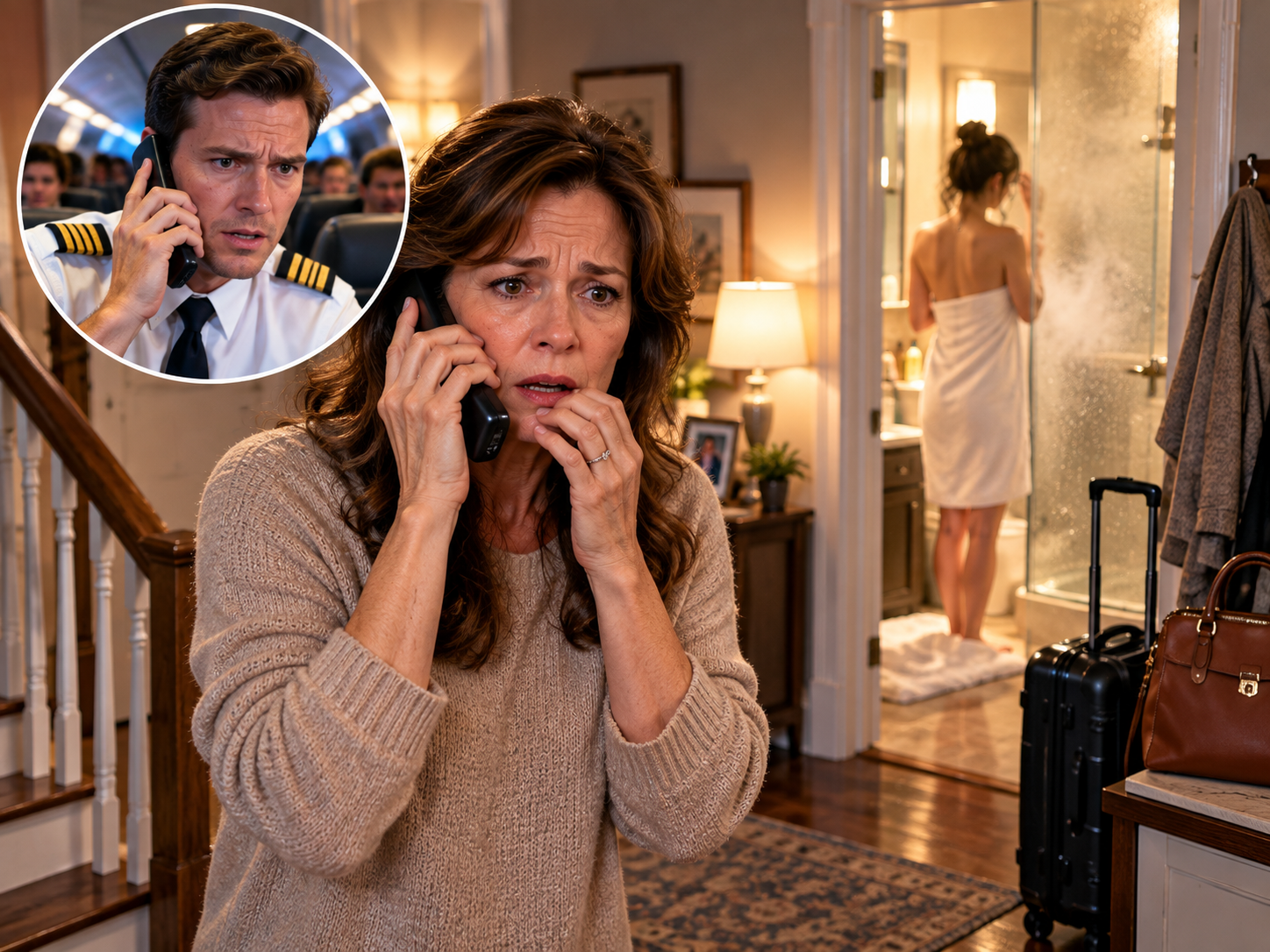
My son said Chloe was sitting on his flight to Rome while I could hear the shower upstairs, and then the house suddenly became impossibly quiet
Part 17 of 28