The question came during breakfast.
Toby was visiting with his children.
His daughter was eating cereal.
His son was trying to convince everyone that pancakes counted as vegetables.
I was making coffee.
Then Toby said, “Mom and Dad want to talk to you about something.”
I looked at him.
“That sounds ominous.”
He smiled.
“Not really.”
Chloe and David exchanged a glance.
“What is it?” I asked.
Toby took a breath.
“We're wondering how much the kids should know about what happened when I was little.”
The kitchen became quiet.
His daughter looked up.
“What happened?”
Toby smiled at her.
“Nothing you need to worry about.”
She returned to her cereal.
He waited until she was distracted.
Then he lowered his voice.
“She'll ask eventually.”
“She will.”
“Do we tell her now?”
“No.”
He nodded.
“That's what we thought.”
David looked at me.
“What would you do?”
I considered the question carefully.
“I wouldn't give her details she doesn't need.”
“Even if she asks?”
“If she asks a question, answer the question.”
“And if she asks more?”
“Answer more.”
Chloe nodded.
“That was how you handled it with Toby.”
“Yes.”
Toby looked at me.
“You never lied.”
“I tried not to.”
“That mattered.”
He took a sip of coffee.
“I want to do the same.”
His daughter suddenly looked up.
“Why are you whispering?”
Everyone laughed.
“We're talking about pancakes,” Toby said.
She narrowed her eyes.
“I don't believe you.”
“You inherited that from your grandmother.”
I smiled.
“Good.”
After breakfast, Toby and I walked outside.
“Do you think I'm protecting them or hiding things?”
“What's your intention?”
“To protect.”
“Then make sure protection doesn't become secrecy.”
He nodded.
“How?”
“Tell them what they can understand. Don't make them carry adult fear.”
He thought about it.
“So when they're old enough?”
“Then they can know.”
“Everything?”
“Everything they need to understand the truth.”
He smiled.
“That's a distinction.”
“It matters.”
He looked toward the house.
“I want them to know that their grandmother didn't panic.”
I laughed.
“I absolutely panicked.”
“But you kept asking questions.”
“Yes.”
“That's what I want them to remember.”
“Then tell them that.”
He nodded.
That afternoon, Toby's daughter asked me to help her with a drawing.
She drew a house.
Then another.
Then a third.
“Why three?”
“This is Grandma's.”
She pointed.
“This is ours.”
Then she added another.
“This is where Uncle Lucas stays when he's home.”
I smiled.
“Very good.”
She looked at me.
“Families can have more than one house.”
“Yes.”
“Can they have more than one home?”
I thought about it.
“Yes.”
She smiled.
“Good.”
I watched her draw.
She had no idea how much that answer mattered to me.
Years ago, I had thought a family required one home.
Now I knew better.
Home could be a place.
It could be a person.
It could be a table.
It could even be a memory.
That evening, David called.
“Mom, Toby told us what you said.”
“About the children?”
“Yes.”
“I stand by it.”
“So do we.”
He paused.
“There's something else.”
“What?”
“Chloe and I are considering writing down the story for the family.”
I smiled.
“Why?”
“So nobody gets the details wrong later.”
“That might be impossible.”
“We'll try.”
I liked the idea.
Not because the family needed a formal record.
Because stories change when people repeat them.
Details disappear.
Assumptions become facts.
Fear exaggerates.
Silence creates gaps.
A written account could preserve what we actually knew.
Not every frightening detail.
Not every police report.
Just the truth.
The passport was found.
The woman on the plane was not Chloe.
The person in the house was not Chloe.
Toby was taken.
Chloe had discovered the financial fraud.
Martin had orchestrated the deception.
Evelyn had been coerced and warned Lucas.
The family survived.
That was the story.
Not a legend.
Not a mystery.
A record.
A week later, David brought me the first draft.
I read it at the kitchen table.
He had included details I had forgotten.
Lucas's call.
The suitcase.
The second phone.
The message.
The school footage.
The warehouse.
Toby's recovery.
I looked up.
“This is accurate.”
“Good.”
“But you're missing something.”
“What?”
“The people who helped us.”
“Who?”
“Evelyn.”
He nodded.
“I'll add her.”
“And the police.”
“Yes.”
“And the school.”
“Yes.”
“And the teacher who kept Toby's records.”
“I'll add everyone.”
I smiled.
“Good.”
Because stories should not turn one person into the hero.
They should show the chain of choices.
A gate agent noticed a passport.
Lucas picked it up.
I listened.
David questioned the evidence.
The school checked the records.
The police followed the clues.
Chloe told the truth.
Evelyn warned us.
Many small actions.
One outcome.
That was more honest.
Toby read the story too.
He sat beside me.
“It's strange.”
“What?”
“Reading something that happened to me like it's history.”
“It is history.”
“But I remember some of it.”
“You're part of the history.”
He nodded.
“I'm glad you didn't make me the center of it.”
I looked at him.
“You were the child everyone was protecting.”
“That isn't the same.”
“No.”
He smiled.
“I like that.”
Later, Chloe came by.
She read the draft.
“I want one thing changed.”
“What?”
“I want it clear that I made mistakes too.”
David looked at her.
“You don't have to punish yourself.”
“I'm not.”
She looked at me.
“I just don't want future generations to think I handled everything perfectly.”
I smiled.
“Then write the truth.”
She nodded.
“I was frightened.”
“Yes.”
“I hid information.”
“Yes.”
“I thought I could solve it alone.”
“Yes.”
“And I was wrong.”
“Yes.”
She took a breath.
“But I also found the fraud.”
“Yes.”
“And I tried to protect them.”
“Yes.”
“Then both parts should be there.”
“Exactly.”
The story became stronger.
Not because anyone looked perfect.
Because nobody did.
One evening, Toby's daughter found the draft.
She couldn't read all of it yet.
She recognized names.
“Is this about Grandpa?”
“Yes.”
“Is it a secret?”
“No.”
“Can I read it?”
“Someday.”
“When?”
“When you're old enough to understand why some stories need to wait.”
She nodded.
“Okay.”
Then she ran outside.
I watched her go.
That was the balance.
Not hiding.
Not overwhelming.
Waiting.
Truth was not only about what you said.
It was also about knowing when someone was ready to hear it.
That lesson had taken me years.
I had once believed that knowing everything immediately was always best.
The passport incident had taught me otherwise.
Sometimes information without context becomes fear.
Sometimes truth without preparation becomes another wound.
But truth delivered with care can become strength.
I looked at the pages on the table.
The story was finally written.
Not as a warning.
Not as entertainment.
As family history.
I closed the folder.
And for the first time, I felt certain that when we were gone, the story would remain.
Not the fear.
Not the panic.
The truth.
Click here to continue reading: PART 16: When the family finally gathered to read the story together, the details no longer felt like evidence of what we had lost but proof of what we survived
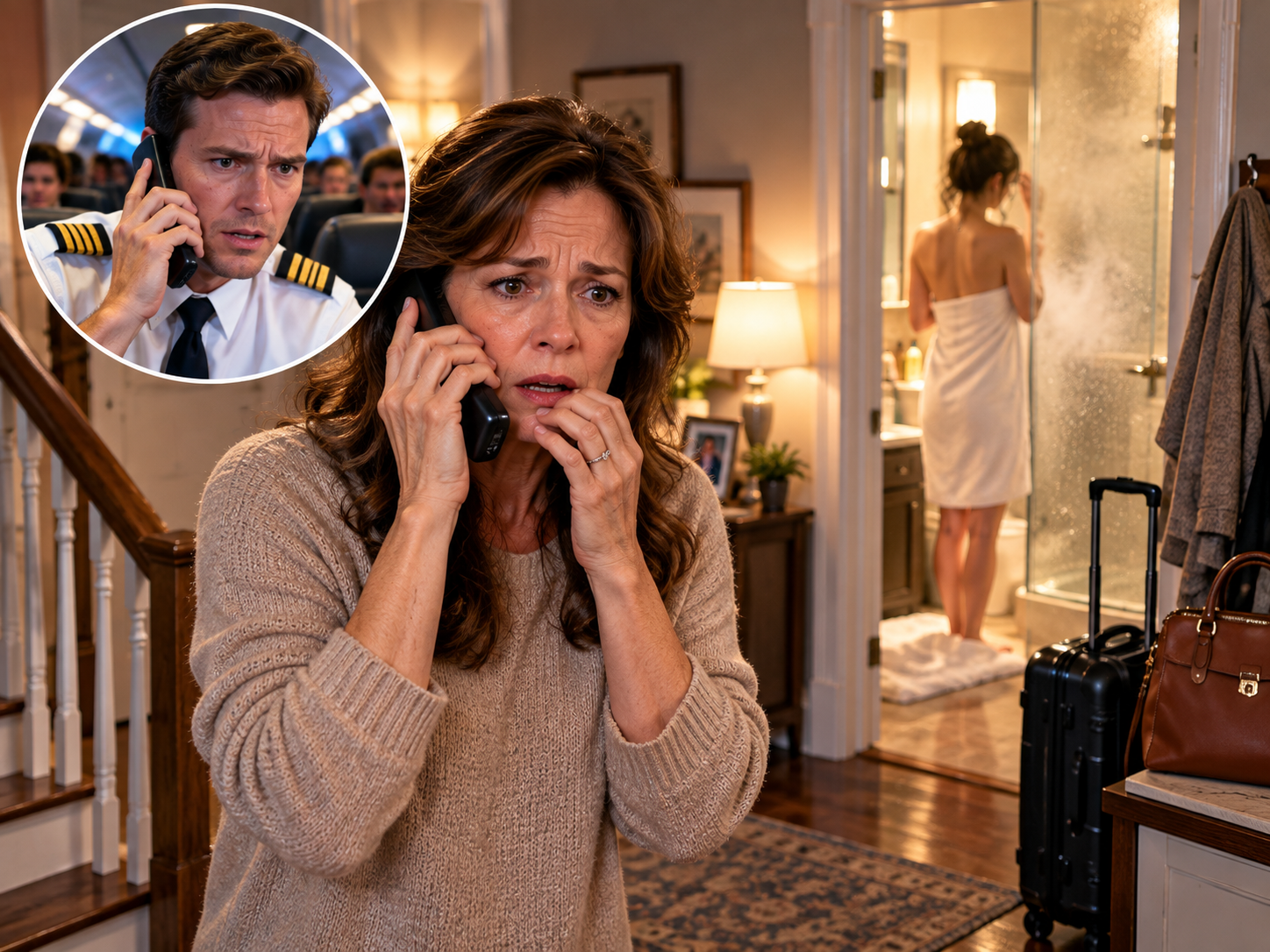
My son said Chloe was sitting on his flight to Rome while I could hear the shower upstairs, and then the house suddenly became impossibly quiet
Part 15 of 28