Toby arrived on a bright Saturday morning with his children arguing over who had won a game they had invented in the car.
I opened the front door before they knocked.
“You're early.”
“We're never early,” Toby said.
His daughter immediately corrected him.
“We are today.”
I laughed.
“That makes two of us.”
They came inside carrying snacks, jackets, books, and the endless collection of objects children somehow need for an afternoon.
Toby looked around the hallway.
His eyes rested briefly on the staircase.
I noticed.
He noticed me noticing.
“You still think about it?”
“Sometimes.”
He nodded.
“I do too.”
His daughter heard him.
“Think about what?”
Toby smiled.
“Nothing important.”
I raised an eyebrow.
He looked at me.
“Fine. Something important.”
She waited.
Toby glanced toward the stairs.
“This is where something strange happened when I was little.”
She looked interested immediately.
“What happened?”
Toby looked at me.
“Grandma can tell you.”
I smiled.
“Your father is very good at assigning difficult jobs.”
“He learned from you.”
I laughed.
We stood in the hallway.
The house looked different to the children.
They had never known it as the place where fear had once entered so suddenly.
To them, it was simply Grandma's house.
The place where cookies appeared.
The place where old photographs were kept.
The place where someone always had an extra blanket.
His daughter looked up the staircase.
“Was this where Mom was?”
“Yes.”
“Was she really taking a shower?”
“Yes.”
“And someone else was pretending to be her?”
“Not exactly pretending in the way you might think.”
I paused.
“Someone was using her identity.”
The girl frowned.
“Why?”
“Because people were trying to hide things they had done.”
She looked at Toby.
“Did you know?”
“No.”
“You were little.”
“Yes.”
“Were you scared?”
“I didn't understand everything.”
“That isn't the same.”
“No.”
He looked toward me.
“I was scared because everyone else seemed scared.”
His daughter nodded slowly.
That answer seemed to make sense to her.
Children often recognize fear before they understand its reason.
We walked into the kitchen.
I showed them the place where the phone had been.
“It rang here.”
The little boy looked around.
“Was it a cell phone?”
“No.”
“Why?”
“Because this was a long time ago.”
He looked at Toby.
“Dad, you're old.”
Everyone laughed.
Toby put a hand over his heart.
“That hurt.”
His sister laughed.
I showed them the table.
“This is where we found some of the papers.”
“Which papers?”
“The ones that helped explain what was happening.”
The girl looked at the kitchen.
“It doesn't look scary.”
“No,” I said.
“That is important.”
She looked at me.
“Why?”
“Because frightening things don't always happen in frightening places.”
She considered that.
Then she nodded.
Toby watched her.
I could tell he was listening carefully too.
We walked toward the room where the old suitcase had been found.
I stopped at the doorway.
I did not need to enter.
The memory was clear enough.
“This is where we found the suitcase.”
His daughter looked at the floor.
“Is it still here?”
“No.”
“Where is it?”
“Gone.”
“Good.”
I smiled.
“Yes.”
The little boy had already lost interest.
He found a toy on the floor and began playing with it.
His sister remained beside me.
“Did Grandma know right away that something was wrong?”
“No.”
“What did she think?”
“I thought I understood what was happening.”
“But you didn't.”
“No.”
“Did you feel bad?”
“Yes.”
“Why?”
“Because I trusted what I saw.”
She looked puzzled.
“Is trusting bad?”
“No.”
I crouched beside her.
“Trust is important. But sometimes trust should be accompanied by questions.”
She thought about that.
“Like Dad says?”
“Exactly.”
Toby smiled.
His daughter looked at him.
“You ask a lot of questions.”
“I learned from Grandma.”
I laughed.
“I taught you to ask questions?”
“You taught me to ask uncomfortable ones.”
“That sounds more accurate.”
He smiled.
We moved into the living room.
The children sat on the floor.
Toby remained standing for a moment.
Then he said, “I want to show them something.”
He went to his bag.
From it, he took a small folder.
“The family record?”
I asked.
“Yes.”
His daughter looked excited.
“Can we read it?”
“Not all of it,” Toby said.
“Why?”
“Some parts are for when you're older.”
She frowned.
“Why?”
“Because knowing the truth and understanding the truth are different things.”
I smiled.
“That is very well said.”
He opened the folder.
The first pages were photographs.
The lake house.
Lucas's graduation.
David and Chloe's renewed vows.
Toby as a child.
The family at Christmas.
The children looked through them.
“What happened here?”
“Nothing,” Toby said.
“Why did you take a picture?”
“Because we were happy.”
The girl looked confused.
“You don't take pictures when you're happy?”
“Sometimes you should.”
She turned another page.
There was a photograph of Chloe laughing at the lake.
“She looks different.”
“She was younger.”
“No.”
She pointed.
“She looks lighter.”
I looked at Chloe's photograph.
She was right.
There was a difference that age alone could not explain.
“She was less afraid,” I said.
The girl nodded.
Then she turned another page.
The suitcase photograph was not there.
Toby had left it out.
I noticed.
He noticed me noticing.
“I thought about including it,” he said quietly.
“And?”
“I decided they don't need it yet.”
I nodded.
That was not secrecy.
That was timing.
There was a difference.
The children continued looking through the photographs.
They saw birthdays.
School ceremonies.
Trips.
Christmas trees.
Birthday cakes.
Dogs we had once owned.
People they had never met.
The frightening morning was present only as a missing photograph.
And somehow, that felt right.
Later, when the children went outside, Toby and I stayed behind.
“You did the right thing,” I said.
“Leaving it out?”
“Yes.”
He looked relieved.
“I worried that meant I was hiding something.”
“No.”
“What is the difference?”
“Whether you're hiding it to protect yourself or waiting until someone can understand it.”
He nodded.
“That makes sense.”
We stood by the window.
His children were chasing each other across the yard.
Toby smiled.
“I want them to know the truth.”
“They will.”
“But I want them to know who we were before it too.”
I turned toward him.
“That is exactly right.”
He nodded.
“I don't want their first picture of their grandmother to be someone standing beside a suitcase.”
I laughed softly.
“Good.”
“I want them to remember you making pancakes.”
“That is a much better photograph.”
He smiled.
“Then that's what they'll remember first.”
We returned outside.
His daughter ran toward us.
“Grandma!”
“Yes?”
“Dad says you make terrible pancakes.”
I looked at Toby.
He froze.
“I did not say that.”
She laughed.
“He said they were ‘historically inconsistent.’”
Everyone burst out laughing.
I pointed at Toby.
“You are no longer welcome in my kitchen.”
He raised both hands.
“I accept the punishment.”
The children laughed harder.
That afternoon passed quickly.
There were snacks.
Games.
Stories.
A disagreement over a toy.
A spilled drink.
A nap.
And eventually, the children fell asleep on the couch.
Toby covered them with blankets.
I watched him.
He had become the kind of father who noticed small things.
A child getting cold.
A child becoming quiet.
A child needing reassurance.
Perhaps that was another part of what came afterward.
The frightening morning had not only changed what we feared.
It had changed what we noticed.
Before they left, Toby stood at the door.
“Mom wants to know if you're coming for dinner tomorrow.”
“I'll come.”
“Good.”
He hesitated.
“Thank you.”
“For what?”
“For helping me understand how to tell them.”
I smiled.
“You already knew.”
“I needed permission to trust my judgment.”
“You have it.”
He nodded.
The children waved.
I waved back.
When the car disappeared down the street, I stood in the doorway for a moment.
The old house was quiet again.
I looked toward the staircase.
Once, that staircase had represented uncertainty.
Now it was simply a staircase.
I walked upstairs.
The hallway was empty.
The bathroom door was open.
Sunlight fell across the floor.
I smiled.
Places change.
Not because the walls move.
Because the people inside them do.
And sometimes the greatest proof that a frightening place has become ordinary again is that children can run through it without knowing they are running through history.
Click here to continue reading: PART 26: When Chloe found an old letter from Evelyn and asked whether it belonged in our family record, I realized that truth sometimes requires room for uncomfortable compassion
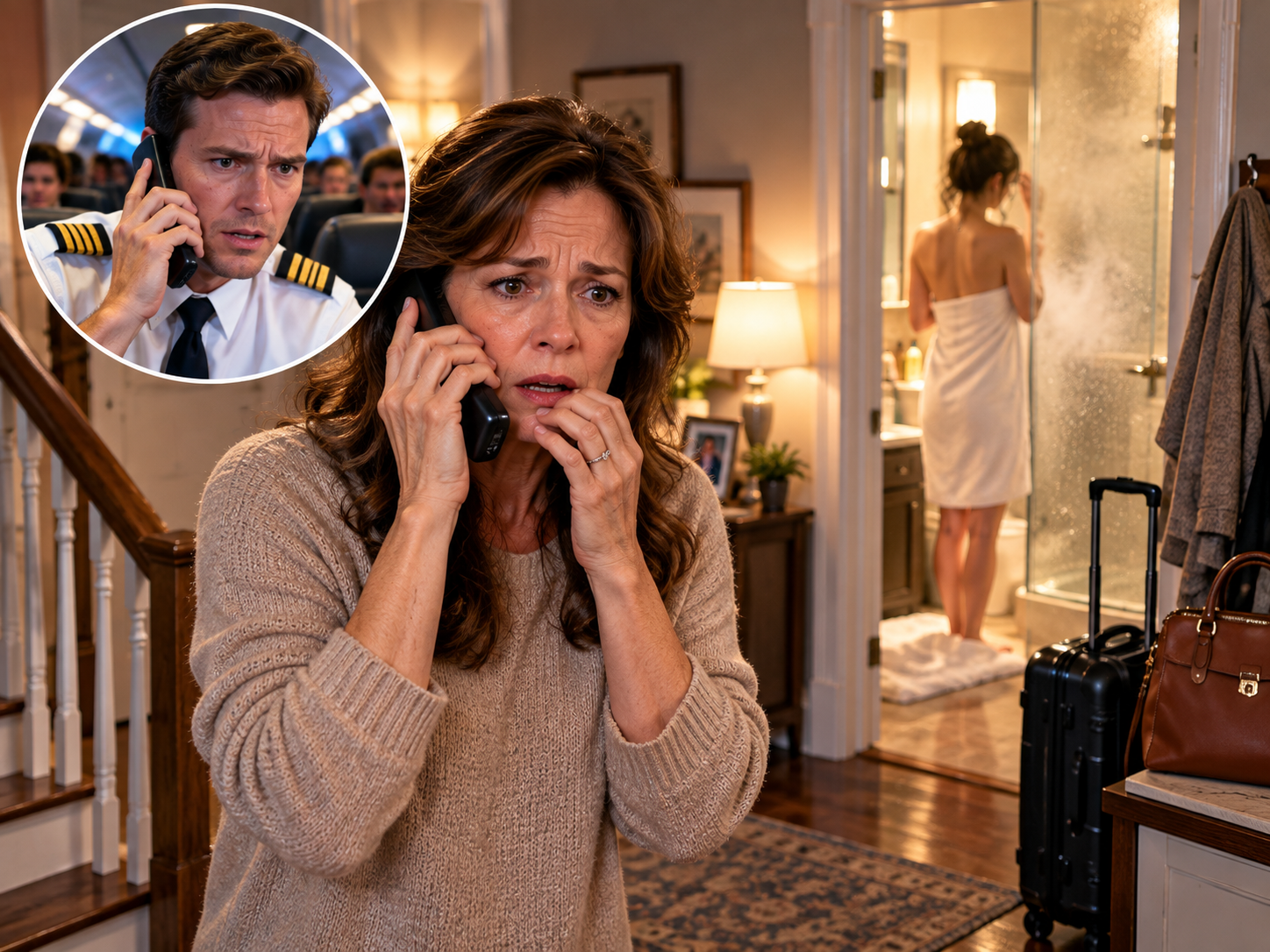
My son said Chloe was sitting on his flight to Rome while I could hear the shower upstairs, and then the house suddenly became impossibly quiet
Part 25 of 28