The question came from Daniel's son on an ordinary Sunday afternoon.
He had been sitting at the kitchen table with the old watch in his hands, turning it slowly beneath the light. He had become fascinated by its scratches, its worn strap, and the tiny marks along the metal casing.
“Grandpa?”
I looked up.
“Yes?”
“Did Dad really lose everything because of this watch?”
Daniel, standing beside the counter, went still.
I could have corrected the question immediately.
Instead, I looked at my son.
He knew what the boy was really asking.
“Not because of the watch,” Daniel said.
His son frowned.
“Then because of what?”
Daniel pulled out a chair and sat beside him.
“Because I forgot what the watch meant.”
The boy looked from his father to me.
“What did it mean?”
Daniel glanced at me.
I nodded.
“Responsibility,” he said.
The boy turned the watch over.
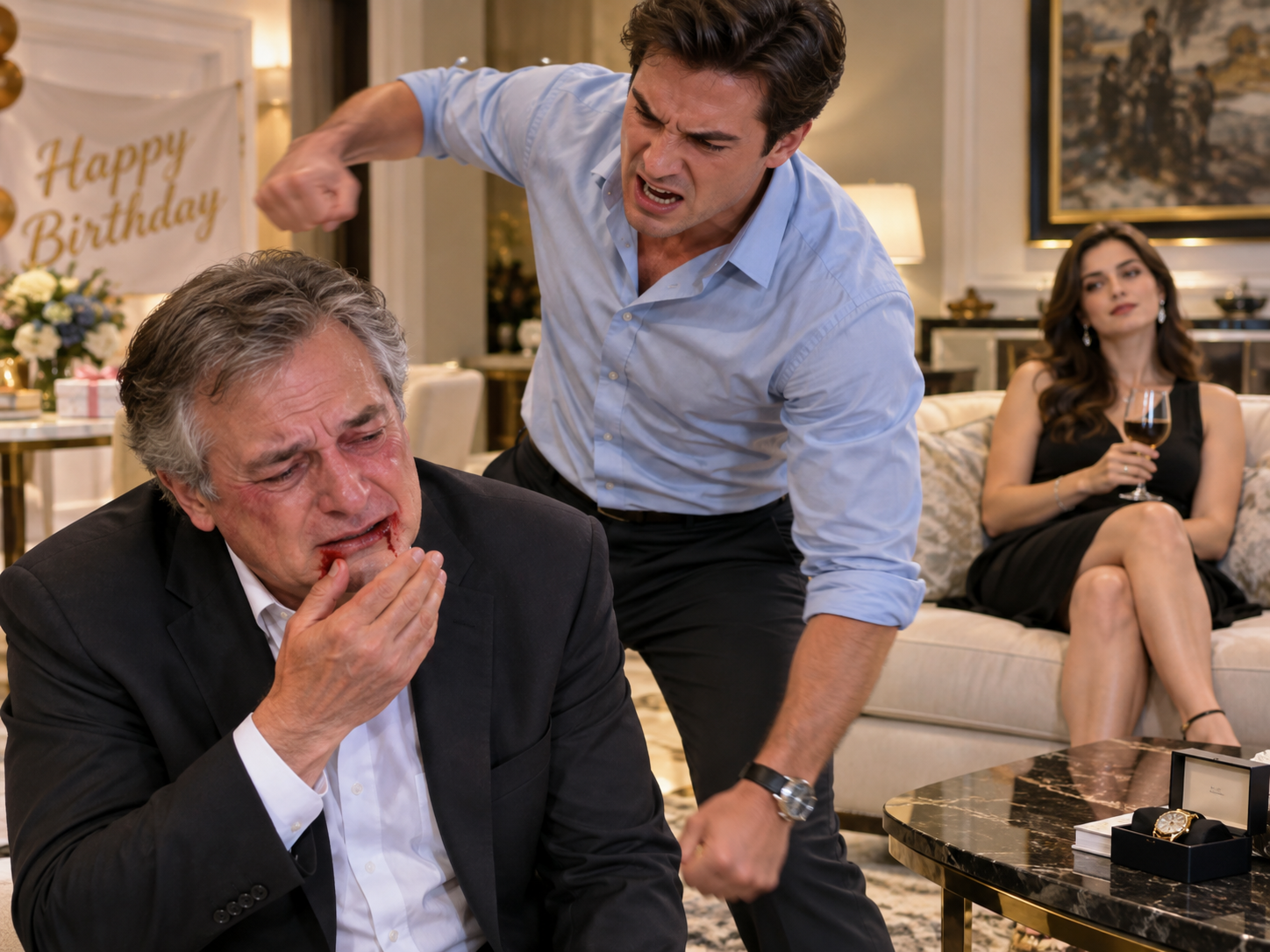
“Did you really hit Grandpa?”
The kitchen became silent.
Daniel did not look away.
“Yes.”
“How many times?”
“Thirty.”
The boy's fingers stopped moving.
“Why?”
Daniel breathed slowly.
“Because I was angry, and I let my anger control me.”
The boy looked at me.
“Were you scared?”
I thought about the question.
“Yes.”
“Did Dad say sorry?”
Daniel answered before I could.
“Not properly at first.”
The boy looked confused.
“What does that mean?”
“It means I apologized because I was afraid of losing things. Later, I learned that an apology has to be about what you did to someone, not what you are afraid of losing.”
The boy looked down at the watch again.
That answer seemed to stay with him.
Then he asked the question neither of us expected.
“Did Grandpa stop loving you?”
Daniel's face changed.
I answered.
“No.”
The boy looked at me.
“Even after thirty?”
“No.”
Daniel lowered his eyes.
“But Grandpa stopped protecting me from the consequences of what I did.”
The boy nodded slowly.
“Is that why you sold the house?”
“Yes.”
“Was it yours?”
Daniel shook his head.
“No.”
The boy looked surprised.
“But you lived there.”
“That doesn't mean I owned it.”
“Why did you think you owned it?”
Daniel smiled sadly.
“Because I had been given too much without understanding where it came from.”
The boy considered that.
Then he handed the watch back to Daniel.
“Can I have it someday?”
Daniel smiled.
“Someday.”
“Why not now?”
“Because you're not ready.”
The boy frowned.
“How do I get ready?”
Daniel looked at me.
I answered.
“By learning what it means to be responsible for something before you inherit it.”
The boy seemed to accept that.
He ran outside a few minutes later.
Daniel remained in the kitchen.
“You handled that well,” I said.
He smiled.
“I was terrified.”
“Why?”
“Because I don't want him to think I'm a bad person.”
I looked at him.
“He knows you made a terrible choice.”
Daniel nodded.
“But?”
“He also knows what you did afterward.”
Daniel sat quietly.
“That matters.”
“It does.”
He looked toward the window.
“I used to think children should only see the good parts of adults.”
“That is a common mistake.”
“I think they need to know adults make mistakes.”
“Yes.”
“And that mistakes have consequences.”
“Yes.”
He smiled.
“You really do make everything sound simple.”
“It isn't simple.”
“No.”
He looked at the watch.
“But maybe it can be honest.”
That word mattered.
Honest.
For years, our family had protected itself with half-truths.
The house belonged to Daniel.
The money would always be there.
His mistakes could be fixed.
His mother would have approved of everything.
None of those stories had been entirely true.
We had not lied because we wanted to hurt one another.
We had lied because truth was uncomfortable.
Eventually, discomfort became more expensive than honesty.
Daniel's son returned from outside carrying a small stone.
“Look.”
Daniel held out his hand.
The boy dropped it into his palm.
“What is it?”
“A rock.”
Daniel laughed.
“I can see that.”
“I found it near the garden.”
He placed it on the table.
“It's heavy.”
Daniel nodded.
“What are you going to do with it?”
“Keep it.”
“Why?”
“Because I found it.”
Daniel looked at me.
I smiled.
The boy was learning.
Perhaps not from speeches.
From small things.
The ability to decide what something was worth without asking whether it was expensive.
That was a lesson worth more than any inheritance.
Later that evening, after the boy went to bed, Daniel and I sat on the porch.
The city was quiet.
He asked, “Do you ever think about that night?”
“Yes.”
“How often?”
“Less than before.”
“I think about it more.”
“Why?”
“Because now I understand how close I came to losing everything that actually mattered.”
I nodded.
“You did.”
He looked at his hands.
“Sometimes I wish you had hit me back.”
I looked at him.
“Why?”
“Because then maybe I would have understood immediately.”
“No.”
“Why not?”
“Because violence would have taught you violence.”
He thought about that.
“You're right.”
“I didn't want you to learn how to hurt someone.”
“I learned anyway.”
“You learned how much damage it can do.”
Daniel was quiet.
Then he asked, “Did you ever hate me?”
I considered it.
“I hated what you did.”
“That isn't the same.”
“No.”
He nodded.
“Good.”
We sat together.
After several minutes, he said, “I want to tell you something I never told you.”
“What?”
“When I was younger, I used to be embarrassed by you.”
I smiled sadly.
“I know.”
“How?”
“Children notice things.”
“I thought your clothes were cheap.”
I laughed.
“They were.”
“I thought you worked too much.”
“I did.”
“I thought you weren't successful enough.”
I looked at him.
“And later?”
“Later, I thought I was more successful than you.”
“That was the dangerous part.”
“Yes.”
He looked toward the garden.
“I was wrong.”
“I know.”
“I wish I could apologize for being arrogant before the night I hit you.”
“You don't have to apologize for every mistake you've ever made.”
“But I want to.”
“Then live differently.”
He nodded.
That was enough.
A month later, Daniel's son began a small savings project at school.
He came to our house with a notebook.
“I want to buy something.”
“What?”
“A bicycle.”
Daniel smiled.
“How much?”
The boy showed him the number.
“That's a lot.”
“I know.”
“How will you get it?”
“I'll save.”
Daniel looked at me.
I could see the memory passing between us.
The old version of Daniel would have bought the bicycle immediately.
The new version did not.
“How much have you saved?”
The boy opened the notebook.
A few small amounts were written on different dates.
Daniel nodded.
“Good.”
“Can you give me the rest?”
“No.”
The boy frowned.
“Why?”
“Because then you won't learn how to save.”
“But you have money.”
“Yes.”
“Grandpa has money.”
“Yes.”
“So why can't you just buy it?”
Daniel crouched beside him.
“Because I love you.”
The boy looked confused.
“That doesn't make sense.”
“It will someday.”
I watched them.
My son was finally doing what I had failed to do.
He was teaching responsibility before entitlement could become habit.
That evening, after the boy left, I said, “You handled that exactly right.”
Daniel smiled.
“I almost bought it.”
“I know.”
“How did you know?”
“Because I used to do the same thing.”
He laughed.
“We're learning.”
“Yes.”
Years continued to pass.
The foundation expanded beyond what I had imagined.
Daniel's mother’s program became one of its most successful initiatives.
Young adults from wealthy families learned budgeting, ethics, work discipline, and philanthropy.
Some parents were uncomfortable with the program.
Some withdrew their children.
Others stayed.
One parent confronted Daniel after a session.
“My son doesn't need to learn how to live without money.”
Daniel listened.
Then he said, “I hope you're right.”
The parent frowned.
“What does that mean?”
“It means I hope your son never makes the mistakes I made.”
The man left.
Daniel did not argue.
He had learned that people cannot be forced into understanding.
They have to become ready.
One evening, I received a call from Daniel.
“Dad?”
“Yes?”
“The program received an award.”
“Congratulations.”
“I don't want to accept it.”
“Why?”
“It has my name on the nomination.”
“Then accept it on behalf of the team.”
He was quiet.
“Would you come?”
“Yes.”
The ceremony was small.
Daniel stood on the stage.
He thanked the foundation staff.
The volunteers.
The mentors.
Then he mentioned his mother.
Finally, he looked toward me.
“My father taught me something important,” he said.
I looked down.
“He taught me that sometimes giving someone everything is not love.”
The room was silent.
“Sometimes love is the courage to say no.”
He paused.
“And sometimes the person who says no is the person you will be angry with first.”
Several people laughed softly.
Daniel smiled.
“I was angry.”
Then his expression became serious.
“I am grateful now.”
The applause lasted longer than I expected.
Afterward, he came to me.
“You hated that.”
“I did.”
“Why?”
“You made me sound wiser than I was.”
He laughed.
“You were.”
“No.”
He shook his head.
“You learned.”
“So did you.”
We stood together.
Then he hugged me.
There was no need for more.
The old house had become a distant memory.
The thirty blows had become a scar.
The watch had become a family symbol.
And the lesson had moved beyond Daniel.
It had reached his son.
Perhaps that was how healing really worked.
Not by erasing the past.
By making sure the past did not have to repeat itself.
One evening, Daniel's son came to me alone.
“Grandpa?”
“Yes?”
“Can I ask you something?”
“Of course.”
“When Dad is old, will he give me the watch?”
I smiled.
“That is between you and your father.”
“But what if he doesn't?”
“Then you don't own it.”
He frowned.
“Even if I'm his son?”
“Especially then.”
He thought about it.
Then smiled.
“I think I understand.”
“Good.”
He ran outside.
I watched him go.
Daniel appeared in the doorway.
“What did he ask?”
“The watch.”
Daniel laughed.
“Of course.”
“He is already thinking about inheritance.”
“I'll have a talk with him.”
“Don't lecture.”
Daniel smiled.
“I learned from the best.”
I shook my head.
“No.”
He laughed.
“From experience.”
“That is better.”
He sat beside me.
The evening light fell across the porch.
For a long time, neither of us spoke.
Then Daniel said quietly, “Dad, I think the story is finally over.”
I looked at him.
“No.”
He smiled.
“What do you mean?”
“It isn't over.”
“Why not?”
“Because now it belongs to the next generation.”
He looked toward his son.
Then at the watch.
And he understood.
Click Here to continue read next: PART14: Daniel’s Son Faced His First Real Failure, and Daniel Discovered Whether the Lessons He Had Learned Could Survive When Love Became Difficult
The Thirty Blows That Finally Made a Father Stop Protecting the Son He Had Spent a Lifetime Building Up
Part 13 of 16