The new will was completed on a rainy Thursday.
I sat across from my attorney with the document between us.
He read the final page twice.
“You understand what this means?”
“Yes.”
“You're leaving Daniel almost nothing personally.”
“I am leaving him something.”
“One dollar.”
“And the watch.”
My attorney looked at me.
“The watch is worth considerably more than one dollar.”
“It isn't about the value.”
“I know.”
He turned another page.
“The remainder goes to the foundation.”
“Yes.”
“The scholarship fund?”
“Yes.”
“The senior abuse shelters?”
“Yes.”
“The construction apprenticeship program?”
“Yes.”
I nodded.
He placed the document flat on the desk.
“There is one unusual clause.”
“I wrote it for a reason.”
“If Daniel wants to receive anything beyond the personal bequest, he has to complete the apprenticeship program and maintain a clean record of employment for three years.”
“Yes.”
“And he cannot access the larger trust directly.”
“He doesn't need direct access.”
“The trustee decides the distributions.”
“Yes.”
My attorney studied me.
“Arthur, this is not a normal inheritance plan.”
“No.”
“It is a test.”
I looked at him.
“It is an opportunity.”
He nodded.
“Those can look similar on paper.”
I smiled faintly.
“Only to people who don't understand the difference.”
The documents were signed.
That evening, I put them away.
I did not tell Daniel.
Not yet.
He had been working steadily.
He had learned to arrive before the crew.
He had stopped complaining about the early mornings.
He had even started helping new workers who were less experienced than he was.
The change was slow.
No dramatic transformation.
No speech.
No miracle.
Just repetition.
That was what made it believable.
A person does not rebuild character in one afternoon.
He rebuilds it by doing the right thing on ordinary days when nobody is watching.
One Saturday, Daniel came over for lunch.
He brought a loaf of bread and a bag of oranges.
I looked at the groceries.
“You're getting predictable.”
He smiled.
“I asked the supervisor what you liked.”
I raised an eyebrow.
“You asked my supervisor?”
“He said you always eat the same thing.”
“He knows more about me than my son.”
Daniel laughed.
“I deserved that.”
We sat at the kitchen table.
For a while, we talked about ordinary things.
The weather.
Work.
A road project.
A broken piece of equipment.
Then Daniel became quiet.
“What?”
He shook his head.
“Nothing.”
“Tell me.”
“I've been thinking about that night.”
I waited.
“I remember every part now.”
“That is good.”
“No.”
He looked at his hands.
“It isn't good.”
“Why?”
“Because I keep wondering what would have happened if you had fought back.”
I looked at him.
“I didn't want to.”
“You could have.”
“Yes.”
“You were stronger than me.”
“Physically?”
“Yes.”
“Perhaps.”
He looked at me.
“Why didn't you?”
“Because I was your father.”
His eyes lowered.
“That makes me feel worse.”
“It should.”
He nodded.
“I thought being strong meant making people afraid of me.”
I said nothing.
“Now I think it means being able to stop yourself.”
“That is closer.”
He looked at me.
“Did you ever think I was beyond saving?”
The question surprised me.
I answered carefully.
“I thought I had failed you.”
He swallowed.
“What about me?”
“I thought you had forgotten who you were.”
He looked down.
“Maybe I had.”
I reached for the bread.
“You are remembering.”
That was all I could give him.
Not forgiveness.
Not yet.
But recognition.
A month later, Daniel completed another phase of his training.
His supervisor called me.
“He's good with measurements now.”
I smiled.
“That's progress.”
“He still gets frustrated.”
“He learned that from me.”
The supervisor laughed.
“He said you were the reason he came back.”
I looked at the wall.
“I didn't ask him to.”
“No.”
“But he did.”
“Yes.”
I thanked him and ended the call.
That night, Daniel arrived at my house carrying a small wooden box.
“What is that?”
He placed it on the table.
“I made it.”
I opened the lid.
Inside was a simple watch stand.
The workmanship was imperfect.
One corner was slightly uneven.
The wood had been sanded carefully.
I touched it.
“For the watch.”
I looked at him.
“You made this?”
“Yes.”
“Why?”
“I wanted to make something instead of buying something.”
I smiled.
“That is a good reason.”
He looked relieved.
Then he said, “I want to ask you something.”
“What?”
“When you die, what happens to everything?”
I looked at him.
“Why are you asking?”
“Because I don't want to be surprised.”
I nodded.
“That is fair.”
I stood and walked to my study.
I returned with a folder.
Daniel looked at it.
“What is that?”
“My will.”
His expression changed.
“You're giving it to me?”
“I'm letting you read it.”
He hesitated before taking it.
He opened the folder.
The first pages were straightforward.
Then he reached the inheritance section.
His eyes stopped.
He read it again.
Then again.
“One dollar?”
“Yes.”
“And the watch?”
“Yes.”
He looked at me.
“The rest goes to the foundation.”
“Yes.”
His face tightened.
I expected anger.
Instead, he nodded slowly.
“Okay.”
I was surprised.
“Okay?”
“Yes.”
“You're not angry?”
“I was.”
He looked at the document.
“But then I remembered why.”
I sat down.
“Why?”
“Because I used to think everything you had was supposed to become mine.”
He closed the folder.
“Now I think I need to earn whatever comes next.”
I studied him.
“There is more.”
He reopened the folder.
He read the condition.
Three years of employment.
Apprenticeship completion.
No violence.
No financial misconduct.
No misuse of company property.
He looked up.
“You built my entire inheritance around work.”
“I built your second chance around work.”
He stared at me.
“What if I fail?”
“Then you fail.”
“And you won't change it?”
“No.”
He nodded.
“I understand.”
He closed the folder.
Then he said something I never expected.
“You should have done this years ago.”
I laughed softly.
“Yes.”
He smiled.
We sat quietly.
Then Daniel asked, “Can I keep a copy?”
“Of course.”
He took one.
Before he left, he stopped at the door.
“Dad?”
“Yes?”
“Thank you.”
“For what?”
“For not giving me what I wanted.”
I looked at him.
“That is the strangest thank-you I've ever received.”
He smiled.
“I mean it.”
“I know.”
He left.
I stood at the doorway and watched him walk to his car.
The rain had stopped.
The pavement reflected the porch light.
For the first time in months, I felt something close to peace.
Not because everything had been repaired.
It had not.
Some wounds leave scars.
Some memories never become harmless.
But Daniel was no longer asking me to erase the consequences.
He was learning to live with them.
And that mattered.
Months passed.
The foundation received the proceeds from the property sale.
The first senior shelter opened quietly.
No grand ceremony.
No photograph of me holding a giant check.
I did not want my name on the building.
I wanted the building to be useful.
The scholarship fund began supporting trade students.
The apprenticeship program expanded.
Some of the people who benefited from it would never know why I had started it.
That was fine.
Money had spent years building Daniel's illusion.
Now it was building something useful.
One afternoon, Daniel visited the first shelter.
He had asked if he could volunteer.
I went with him.
We walked through the building.
An elderly man sat near a window reading.
A woman was speaking quietly with a counselor.
There were small rooms.
Clean beds.
A kitchen.
A garden.
Nothing luxurious.
Everything necessary.
Daniel stood in the hallway.
“Did the house money pay for this?”
“Part of it.”
He looked around.
“I used to think a house like mine meant I was successful.”
I said nothing.
He continued.
“Now this feels more valuable.”
I looked at him.
“That is because you can finally see who it is for.”
He nodded.
An elderly woman approached us.
She did not know who we were.
She simply thanked the staff for helping her.
Daniel looked at her.
Then at me.
His eyes were wet.
We walked outside.
He was quiet for several minutes.
Then he said, “I used to think you sold the house to punish me.”
“And now?”
“Now I think you sold it because keeping it would have helped me stay the same.”
I looked at him.
“That is closer.”
He smiled.
“I still hate what happened.”
“So do I.”
“I hate that I hit you.”
“So do I.”
“I wish I could undo it.”
“You can't.”
“I know.”
He took a breath.
“But I can make sure it never happens again.”
I nodded.
“That is the part that matters.”
We continued walking.
The old watch was on his wrist.
I noticed it.
“You're wearing it.”
He looked down.
“I asked if I could.”
I smiled.
“You don't need permission.”
He touched the watch gently.
“I thought I did.”
“You are learning.”
“Yes.”
That evening, we returned to my house.
Daniel stayed for dinner.
Afterward, he washed the dishes without being asked.
It was such a small thing that another person might have missed it.
I did not.
Years ago, I had tried to teach him responsibility through lectures.
Now he was learning it through ordinary actions.
When he finished, he dried his hands.
“Good night, Dad.”
“Good night.”
He walked toward the door.
Then he turned.
“I love you.”
The words surprised me.
I did not answer immediately.
Not because I did not love him.
Because love had never been the problem.
Love had been the reason I tolerated too much.
Love had been the excuse I used to keep rescuing him.
Now I understood that love without boundaries can become another form of harm.
“I love you too,” I said.
His eyes filled.
Then he left.
I closed the door.
The house was quiet.
On the kitchen table sat the old photograph of Daniel as a child.
Beside it was the empty brown gift box.
The watch was no longer inside.
It was on his wrist.
That felt right.
The house I had sold was gone.
The money had been transformed into something that would outlive both of us.
The inheritance had become a condition rather than a reward.
And the son I had once protected from every consequence was finally learning how to carry his own.
There was one final document in my desk.
A copy of the original property deed.
I kept it because it reminded me of something important.
Daniel had never owned that house.
But for years, I had allowed him to believe he did.
The paperwork proved ownership.
The years proved something more complicated.
A parent can give a child a roof.
A parent can give a child money.
A parent can give a child opportunities.
But none of those things can give a child character.
That has to be built.
And sometimes, when every easier lesson has failed, the only thing a parent can do is step aside and let reality teach it.
I closed the drawer.
The next morning, Daniel would report to the construction site before sunrise.
He would put on his boots.
He would listen.
He would work.
And eventually, if he kept choosing differently, the man he became might finally be someone the boy in those old photographs would recognize.
I could not give him back the house.
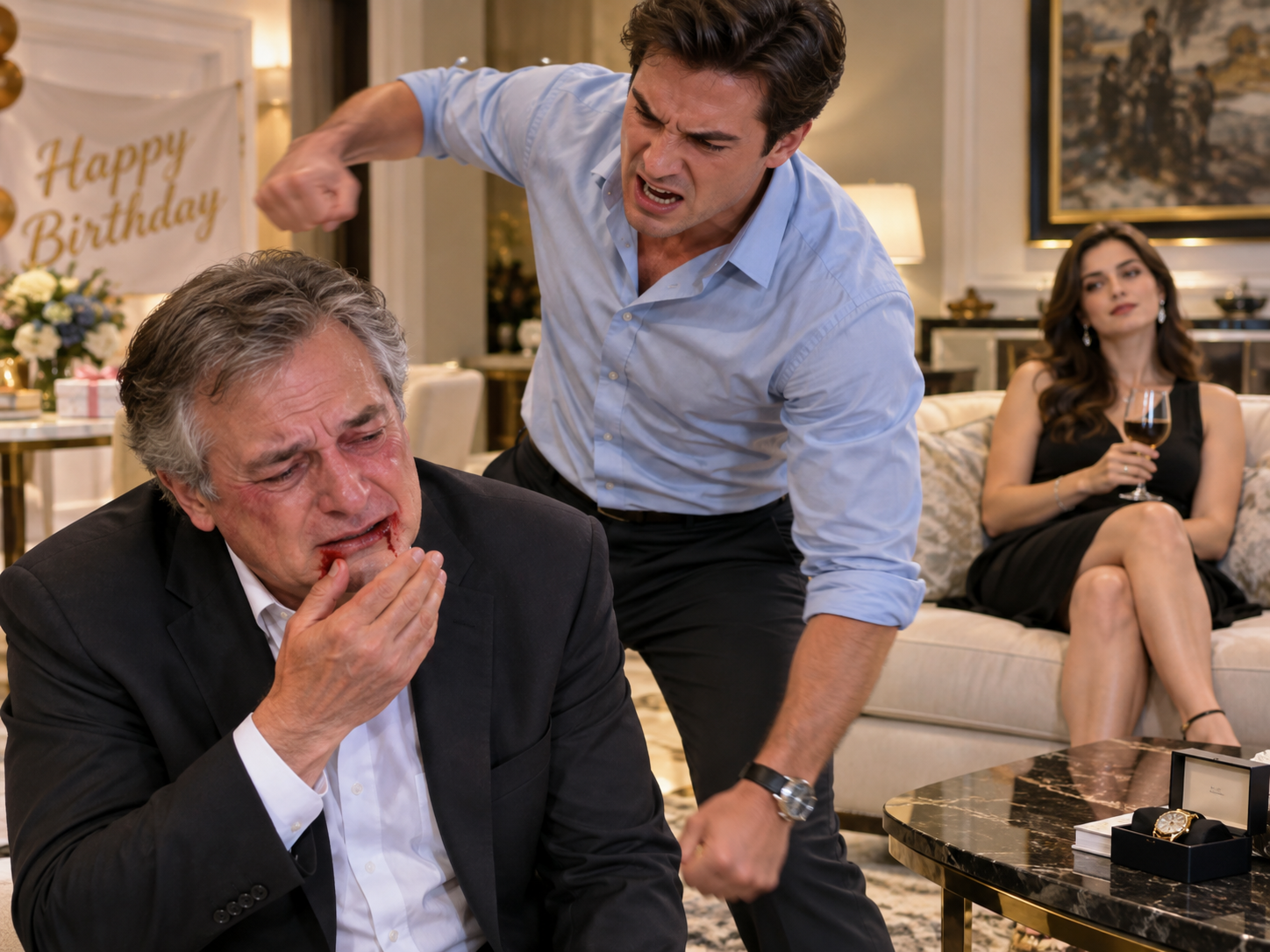
I could not erase the thirty blows.
I could not pretend the night had never happened.
But I could give him something more difficult than inheritance.
A chance to earn back his own name.
And for the first time, that was enough.
Click Here to continue read next: PART5: The Morning Daniel Learned That Earning Back Trust Would Be Harder Than Losing Everything He Once Thought Was Already His
The Thirty Blows That Finally Made a Father Stop Protecting the Son He Had Spent a Lifetime Building Up
Part 4 of 16