
Spring brought more than warmer afternoons. It brought the usual changes in the way the farm operated, and it reminded me how much of our work depended on decisions made by people we might never meet. Suppliers arranged shipments, employees checked orders, and managers made choices about limited stock. Our farm depended on those systems functioning reasonably well, just as the store depended on customers paying their bills and returning when they needed more supplies. Neither side could operate entirely alone.
The old agreement had been written because my parents and Walter Miller understood that relationship. During a difficult season thirty-two years earlier, they had helped the store when it needed support. In return, Walter had made a written commitment concerning essential supplies during future shortages. The arrangement had not been designed to make one family superior to every other customer. It was an effort to preserve a practical relationship in a business where shortages could have consequences beyond the store’s shelves.
By the time Travis inherited management, the people who had made that agreement were no longer the people making daily decisions. Walter had died several years earlier, and my father had been gone for eight years. Travis had inherited the store’s responsibilities, but he had not inherited every memory his father carried. That was not unusual. Every generation takes over work from people who know details that never made it into ordinary conversation. The challenge is deciding which details must be preserved and how to make them accessible to those who come next.
I thought about that while helping Mom organize the farm’s own records. We had receipts, equipment documents, supplier information, and accounts that went back years. Some papers were useful only for a short time. Others explained decisions that might matter long after the original transaction had ended. We had to know which records to keep, where to store them, and how to identify them. A document without a clear label could become nearly invisible even if it remained physically intact.
Mom had always been more disciplined about paperwork than I was. She could remember why a particular purchase had been made, what problem it solved, and whether it had changed a later decision. I often relied on her memory rather than writing everything down myself. After the store incident, I began to see the risk in that habit. Her memory was valuable, but it could not be the only place where important information existed. If I wanted to take on more responsibility for the farm, I had to learn how to preserve the information as carefully as she did.
One afternoon, I asked her to explain how she decided which farm records needed long-term storage. She said that anything connected to an ongoing obligation, a major purchase, a property matter, or an arrangement that might affect future decisions deserved careful treatment. Routine receipts still needed to be recorded, but some documents carried context that a simple account entry could not preserve. Those papers needed to remain connected to the records that explained them. Otherwise, someone might see a payment or a closed account and assume the entire relationship had ended.
Her explanation brought me back to the store’s reserve. The financial account had been closed and reconciled. The remaining balance had been returned to the store’s operating funds, and no debt remained owed to our family. A person looking only at that financial record might conclude that every related matter was finished. Walter’s letter and the original agreement showed why that conclusion would have been incomplete. The temporary reserve and the continuing supply commitment had served different purposes. Closing one did not automatically cancel the other.
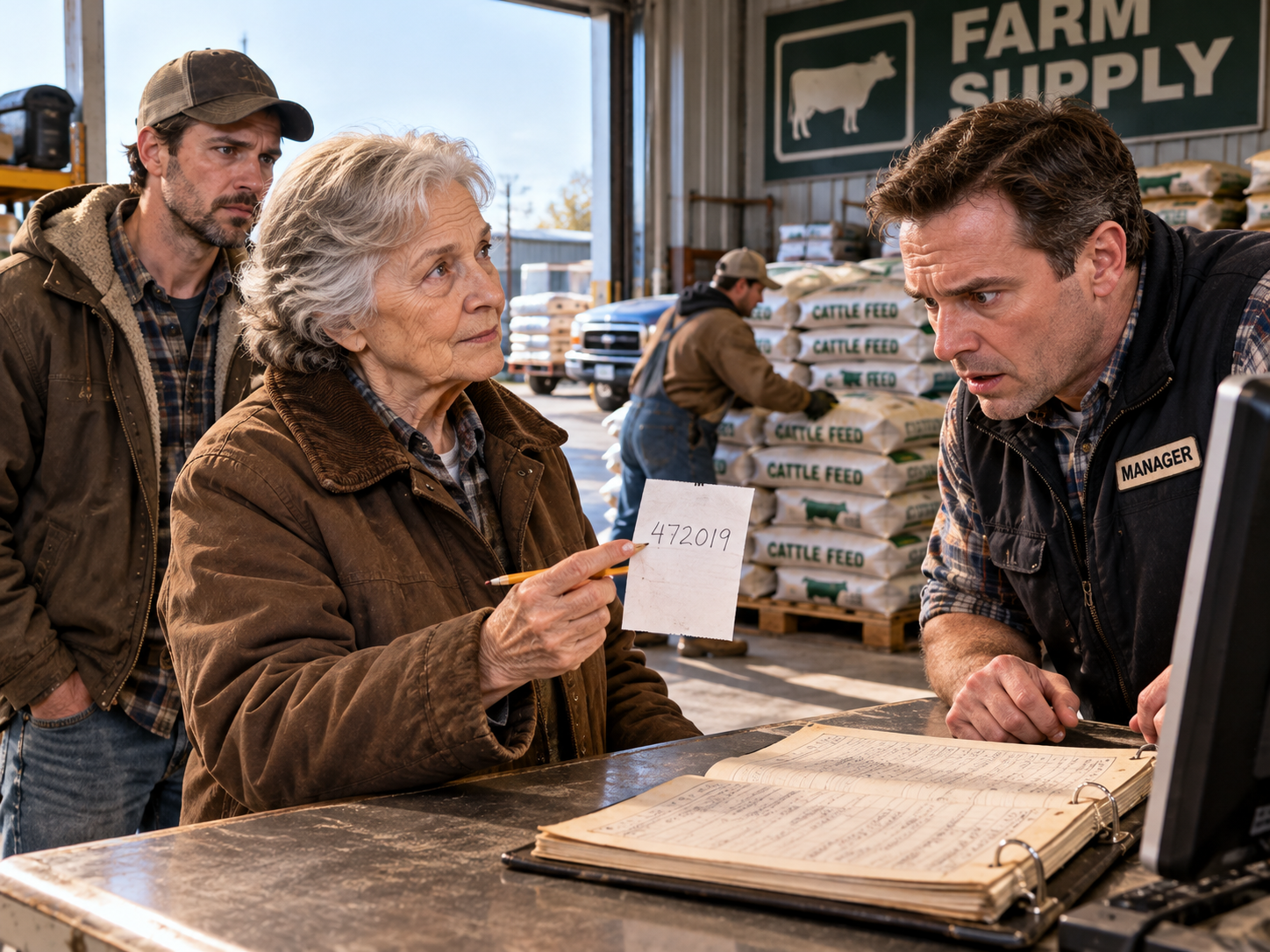
That was the detail Travis had initially lacked. He had seen the situation as a straightforward choice between two customers, one of whom offered more money. The six-number reference had prompted him to search the older records, and those records revealed another obligation that had to be considered. The higher offer had not been the only relevant fact. The store had a prior commitment within a defined scope, and the decision needed to account for it.
I asked Mom whether she thought Walter had anticipated that a future manager might confuse the reserve with the agreement. She said she could not know exactly what he had imagined, but his letter had deliberately distinguished the temporary financial arrangement from the continuing supply commitment. That separation suggested he wanted future readers to understand that the two matters were not identical. The letter did not guarantee that nobody would ever misunderstand it. It gave them a way to avoid that misunderstanding if they took the time to read it.
Travis’s new index was an attempt to make that time more likely to be spent. By connecting the six-number reference to the relevant file and explaining when the agreement should be consulted, the store had made the record more useful. It had not changed the original terms or created a new entitlement. It had improved the route from a question about inventory to the documents needed to answer it. That was a modest change, but it addressed the exact weakness that had nearly caused the problem.
A few weeks later, I saw Travis training a newer employee near the counter. He explained where older customer arrangements were recorded and told the employee not to assume that an unfamiliar file was irrelevant just because it was old. If a document appeared to affect a current transaction, the employee should bring it to management rather than interpret it alone. I could not hear every word, and I did not linger. I was there to buy supplies, not supervise the store. But the exchange reassured me that the procedure was being passed to another person.
The new employee might never meet Mom. She might never hear Walter’s name or know that my father had helped the store decades earlier. She might not remember the story of the twenty bags of feed. None of that needed to matter. If she understood how to locate the agreement and knew when to ask for help, the record could do its job without the original participants being present. That was the point of preserving information: to make the right decision possible even when memory was incomplete.
I told Mom what I had seen. She was pleased, though she did not treat it as proof that the store would never make another mistake. “A procedure is only useful if people follow it,” she said. “But teaching it to the next person is a good start.” She had always been practical about the limits of preparation. No system could guarantee that everyone would be attentive, but a clear procedure made care easier and neglect more visible.
I began to apply the same thinking at home. When we agreed to a repair, I made sure the price and expected completion date were recorded. When a supplier changed an order, I updated the notes. When my brother and I discussed how to handle a purchase, I tried to make sure we both understood what had been decided. These were not complicated changes. They reduced the chance that one of us would remember a conversation differently from the other, especially after several busy days had passed.
My brother teased me about keeping so many notes. He said I was beginning to sound like Mom. I told him that was probably not a bad thing. He laughed, but he also started writing down delivery details himself. We had learned that a good record did not need to be formal or lengthy. It needed to preserve the information that might matter later. The goal was not to create paperwork for its own sake. It was to avoid relying entirely on memory when the consequences of forgetting could be costly.
The store incident had also changed the way I thought about responsibility across generations. Travis had not made the original agreement, but he was responsible for the business that carried it. That responsibility did not mean he had to accept every claim made in the name of the past. He had to review the evidence, determine whether the agreement applied, and honor it within its terms. If a valid amendment or cancellation had existed, that would have needed consideration too. His responsibility was to understand the actual record, not to obey rumors or assume that every old document remained unchanged forever.
The same principle applied to our family. We could not use our parents’ past assistance as a reason to demand unrelated favors. We could not claim money that the records showed had been settled. We could not turn a specific supply commitment into a general right to the store’s inventory. Our responsibility was to describe the agreement accurately and to respect its limits. That was part of honoring what my parents had done, rather than using their actions to claim more than they intended.
I found that distinction surprisingly reassuring. Sometimes people preserve family history by telling stories that grow larger with each retelling. A practical agreement can become a tale about hidden ownership, a secret fortune, or a promise that supposedly guarantees every future advantage. But Mom had never allowed the story to grow in that direction. She corrected people when they misunderstood the reserve or exaggerated the agreement. She wanted the real commitment honored, not turned into a legend that would eventually be impossible to distinguish from the facts.
One evening, I asked her why she cared so much about getting the details right when the central result was already secure. She said that the details were what made the result fair. If we claimed more than the agreement supported, we would be asking the store to accept something it had never promised. If we claimed less, we would be allowing a real commitment to disappear. Accuracy protected both sides. It allowed the store to understand what it owed and allowed our family to ask for what had actually been agreed.
That answer stayed with me because it explained Mom’s calmness during the dispute. She had not needed to threaten Travis or predict what would happen if he refused. She knew the records could establish the facts, and she was prepared to let those facts be reviewed. The outcome depended on what the agreement said, not on how loudly anyone argued. Once the records were found and examined, the decision became clearer.
The original agreement had not made the future easy for every person who inherited it. It had made the responsibility understandable to those willing to look. Walter had written it down. My parents had kept their reference. Martin had reviewed the supporting documents. Travis had updated the store’s procedure. Each person had contributed something different, and the promise had survived because their efforts connected across time.
As spring advanced, the story became less about the people who remembered the past and more about the people who would inherit its responsibilities. A future manager might not know the families involved, but the index could point to the agreement. A future employee might not understand the original shortage, but the procedure could tell them when to ask for guidance. A future customer might never hear the story, but the store could still make a decision that honored its obligations.
That was the quiet legacy of the dispute. It did not give our family special standing, and it did not make the store immune to future problems. It gave the people who came after us a better chance to make decisions with the relevant facts in front of them. The promise no longer depended solely on the memory of the people who had made it. It had been returned to the records, where it could be understood by those who came next.
Click here to continue reading: PART 19: WHEN THE STORY BECAME HISTORY
The Store Manager Took Back My Mother’s Last Twenty Bags of Cattle Feed, Until Six Numbers on a Receipt Changed His Expression
Part 18 of 20

