
The first sign that our new arrangement was becoming real came on a Thursday evening when Hugh arrived twenty minutes late and found me standing beside the kitchen counter with my coat already on. Arthur had been restless since lunch, convinced that he had missed a train and needed to report to the station before his supervisor noticed. I had spent the afternoon redirecting him, preparing his soft dinner, and checking the medication schedule. My bakery shift began before sunrise the next morning, and for once I had planned to leave the house long enough to sit somewhere without listening for my father’s footsteps.
Hugh came through the door carrying a paper bag of groceries. His shirt collar was open, and he looked at the clock before looking at me. “Traffic was terrible,” he said. I wanted to tell him that traffic had not suddenly appeared in the world, that people who loved someone learned to leave earlier, and that twenty minutes could feel like an hour when an elderly man was frightened by a memory he could not place. Instead, I took the bag from him and showed him the list of things Arthur had already eaten, the medication times, and the telephone numbers he might need.
“You’re leaving now?” Hugh asked.
“I’m leaving because we agreed you would be here at six.”
He glanced toward the living room, where Arthur was examining an old railway timetable with the serious concentration of a man preparing for work. “I said I would come. I’m here.”
“You are here now,” I answered. “That is not the same as being here when you said you would.”
The words came out sharper than I intended, but I did not take them back. Hugh put his keys on the counter and looked at the list again. For a moment, I saw the old defensiveness rise in his face, the familiar expression that had once accompanied every conversation about the pension. Then he swallowed whatever argument he had prepared.
“Go,” he said. “I’ll manage.”
I hesitated at the doorway. Arthur had already begun asking Hugh whether the train was delayed, and Hugh was answering him patiently, though he had to repeat himself twice. I reminded him not to leave Arthur alone near the front door and to call me if his confusion became difficult to settle. Hugh nodded without looking up. I walked outside before I could find another reason to stay.
I spent forty minutes in a small café with a cup of tea cooling between my hands. Nothing extraordinary happened. Nobody called to say Arthur had fallen, wandered into the street, or refused his medication. I watched people enter and leave, heard a spoon strike a glass, and realized how unfamiliar it had become to occupy a chair without being responsible for someone else’s next movement. When my phone finally vibrated, I grabbed it so quickly that the tea nearly tipped over.
The message was from Hugh. Arthur had eaten half his dinner, taken his medicine, and fallen asleep in his chair. Hugh had stayed until I returned. There was no apology in the message, but there was information I could use, and for that evening it was enough. I finished my tea and went home.
Arthur was asleep beneath the knitted blanket Aunt Margaret had brought weeks earlier. Hugh sat at the kitchen table, his sleeves rolled up, studying the medication list. He had written the next evening’s visit in his phone and copied the pharmacy number onto a small piece of paper. These were ordinary actions, the kind nobody would praise if a family were functioning as it should. In ours, they felt like fragile evidence.
“Everything was fine,” Hugh said.
“I’m glad.”
“I could do this more often.”
I set my bag down. “Then tell me which evenings, and we’ll put them on the calendar.”
He looked at me as if he had expected gratitude to be the next thing I offered. When it did not come, he nodded and named two evenings. I wrote them down, along with the times and the tasks he had agreed to cover. I did not do it to humiliate him. I did it because a promise that lived only in conversation could disappear as easily as the pension money had.
The next week, he arrived on time for both visits. On one evening, he collected Arthur’s prescription and brought back the receipt, folded carefully inside the pharmacy bag. On the other, he helped our father wash his hands after dinner and listened while Arthur described a train journey that had taken place decades earlier. Hugh did not correct every wrong detail. He let Arthur finish, then asked what the countryside had looked like from the carriage window.
I watched from the kitchen doorway, uncertain whether I was witnessing genuine change or a period of good behavior sustained by guilt. I had learned that relief could make a person careless. When Hugh offered to take Arthur to the park the following Saturday, I thanked him and asked for the destination and return time. I also arranged for him to take the phone number of the care service and keep his mobile charged. He agreed without arguing.
The outing went well until Arthur insisted that they had to return to the station because the railway company was waiting for him. Hugh called me from a bench beneath a tree. I could hear leaves moving in the wind and Arthur speaking anxiously in the background. Hugh sounded strained, but he did not hang up or blame our father for being difficult. I talked him through the familiar reminders the doctor had recommended: speak calmly, avoid arguing about the mistaken belief, and redirect Arthur toward something comforting and concrete.
When they came home, Arthur was tired but cheerful. Hugh told me the park had been beautiful, then admitted that he had not realized how quickly a pleasant afternoon could turn confusing. I showed him the notes from the care team and explained that the same person could be calm one moment and frightened the next without deliberately making things difficult. He read the page all the way through.
“I used to think you exaggerated how much help he needed,” he said.
“You thought I was making excuses to control everything.”
He lowered the paper. “Yes.”
It was the first time he had said that plainly without attaching a defense to it. I could have used the opening to list every evening I had gone without sleep, every time I had paid for something myself because the account was short, every conversation in which he had treated our father’s confusion as permission to do what he wanted. The list was long enough to occupy the whole table. I said none of it. Hugh already knew what he had done, and repeating it would not make him more useful tomorrow.
The following month, the care coordinator visited the house to review Arthur’s needs. We discussed a safer arrangement for his evening routine, better lighting in the hallway, a secure place for his medication, and additional respite support. The coordinator explained that his needs would likely change over time and that our current plan would have to be reviewed rather than treated as permanent. Hugh listened, taking notes in a small notebook.
When the discussion turned to cost, he offered to contribute a set amount each month toward the additional support. I told him that the payment would go directly toward the documented care expense and would not give him access to Arthur’s pension account. He said he understood. We recorded the arrangement, including the date it would begin, and I made sure both of us had a copy.
After the coordinator left, Hugh lingered by the front window. Arthur was asleep upstairs, and the house had settled into the low, familiar hum of the refrigerator and the distant traffic. Hugh rubbed his thumb along the edge of his notebook.
“I know you still expect me to fail,” he said.
“I expect us to plan for what happens if something goes wrong.”
“That sounds like the same thing.”
“It isn’t.” I turned toward him. “Trust is what I feel. Safeguards are what I do. You can earn more of one without removing the other.”
He seemed to consider that distinction. Then he placed the notebook in his bag and asked when the next care meeting would be. I gave him the date. He entered it into his phone while I watched, not because I wanted to supervise every movement he made, but because I was no longer willing to mistake intention for responsibility.
That night, I reviewed the pension ledger before going to bed. Every deposit was recorded. Every withdrawal had a documented purpose. The care expenses were separated from household costs, and the receipts were filed by month. Hugh’s contribution had its own entry, and the account remained under the authority established by the court order. The pages did not tell me whether my brother had changed inside. They told me where the money went, which was something more reliable.
I closed the ledger and listened to Arthur calling softly from his room. He wanted to know whether he should pack his lunch for the morning shift. I went upstairs, sat beside him, and told him he did not have to go to work anymore. He studied my face, looking for the certainty he once found in his own memories.
“Then I can sleep?” he asked.
“Yes, Dad. You can sleep.”
He settled against the pillow, and I pulled the blanket over his shoulder. For a few minutes, his breathing became steady. Downstairs, my phone displayed a reminder Hugh had created for his next visit. I left it where it was, a small appointment on a screen rather than a promise I had to carry for him.
Click here to continue reading: PART 10: When Arthur Began Forgetting the House He Had Lived In for Decades, Our Care Plan Faced a Test Neither Sibling Could Avoid
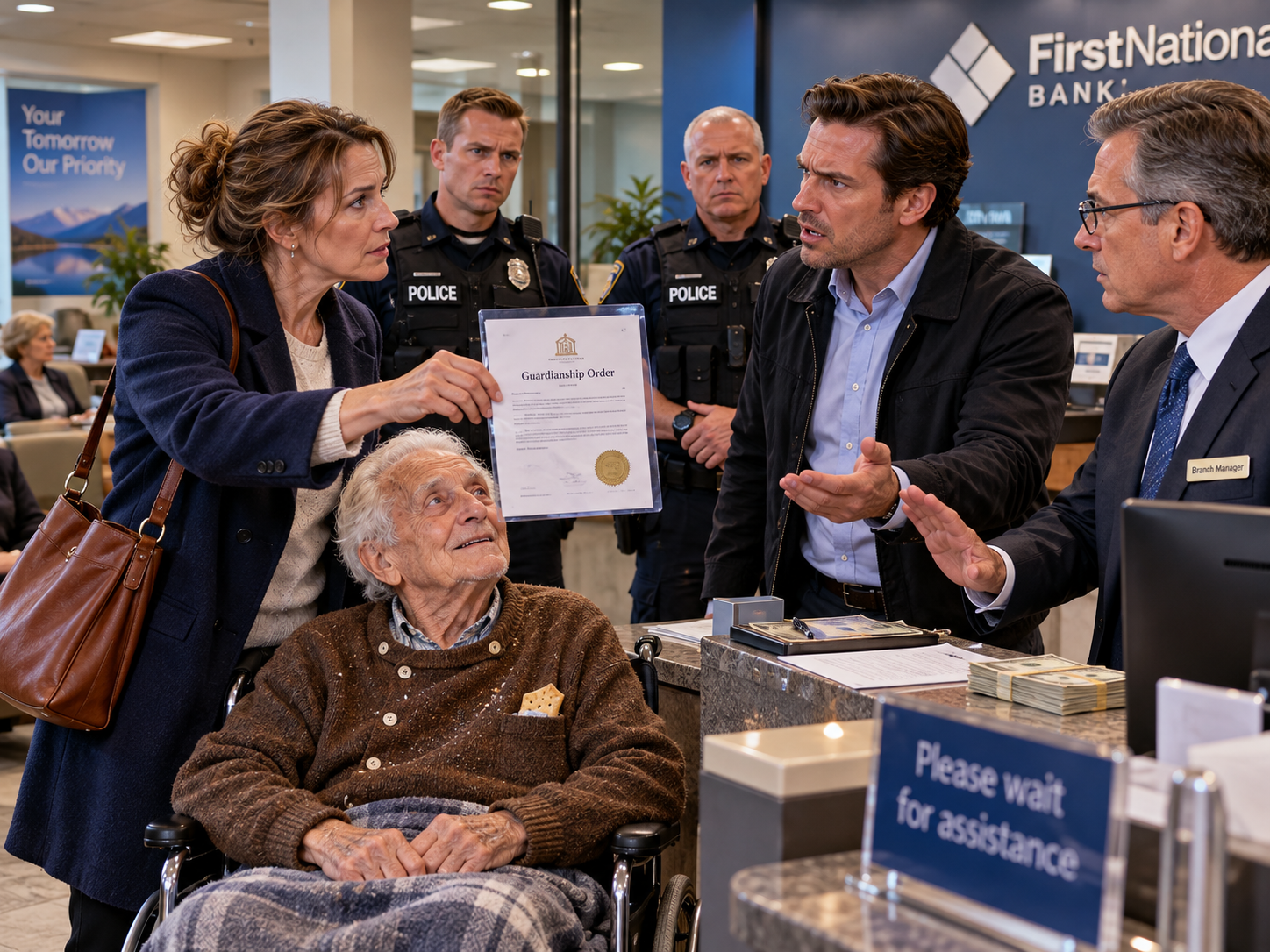
My Brother Thought Our Father’s Memory Loss Had Made Him Easy to Rob, Until the Bank Manager Read the Papers I Had Brought
Part 9 of 20

