
The change began with the hallway. Arthur had walked through it thousands of times, from the front door to the kitchen and from the kitchen to the bedroom where he had slept for years. He knew the uneven floorboard near the stairs and the small patch of paint that had never matched the rest of the wall. Then, one evening, he stopped beside the coat rack and asked where the bathroom was.
I guided him down the hall, keeping my voice calm. He reached for my hand as if he were a child in an unfamiliar building. The next morning, he found the bathroom without help and complained that I had moved his slippers. I did not tell him that nothing had moved. The confusion had frightened him, and arguing over the exact location of a pair of slippers would not restore the confidence he had lost.
At the next appointment, I explained what had happened to the doctor. I described the questions, the restless evenings, and the moments when Arthur seemed unable to connect a familiar room with the memories attached to it. The doctor reviewed his overall condition and recommended that we reassess his supervision and home safety. We were told to report sudden or unusual changes promptly rather than automatically attributing every new symptom to dementia.
Hugh attended the appointment with me. He had started arriving with his notebook and the medication schedule, and he asked questions about what to watch for when Arthur was tired or disoriented. He also asked whether the care coordinator could help us compare additional in-home assistance with supported living options. The question surprised me. A few months earlier, he had treated every suggestion of more care as evidence that I was exaggerating the problem.
The doctor did not tell us that Arthur had to leave his home immediately. Instead, we discussed what would make remaining there safer, what level of supervision might become necessary, and what signs would tell us that our current arrangement was no longer enough. I wrote down each recommendation. Hugh asked for a copy and kept it rather than leaving it on the chair.
On the drive home, neither of us spoke much. Arthur sat in the back seat with his coat buttoned incorrectly, watching the passing shops. He had forgotten the appointment before we reached the next intersection. When we pulled into the driveway, he asked whether we were visiting someone.
“We’re home, Dad,” I said.
He looked at the house, then at me. “Are you sure?”
I opened his door and helped him out. “Yes. We’re home.”
For the first time, the word did not feel like a complete answer.
Over the following weeks, we made small changes. A motion light illuminated the hallway at night. We moved loose rugs, placed clearer signs near the bathroom, and kept Arthur’s daily necessities in consistent locations. The care coordinator arranged additional support for several hours each week, giving me time to work and rest without leaving Arthur alone. Hugh contributed toward the documented expense as agreed, and I recorded every payment.
The new schedule helped, but it did not make our lives predictable. Arthur sometimes slept through the night and sometimes woke before dawn, convinced he had overslept for work. On difficult mornings, he could become distressed when I explained that he had retired years ago. I learned to redirect him toward breakfast or a familiar task instead of insisting that he accept a fact his mind could no longer hold securely.
Hugh witnessed one of those mornings when he arrived to take Arthur to a routine appointment. Dad was standing by the front door with his old work jacket draped over his arm. He kept asking where his lunch tin was. Hugh looked at me, waiting for an explanation, but I was too tired to provide one.
“Let’s get your lunch ready,” Hugh told him. “We can take something with us.”
Arthur brightened. Together they packed a sandwich, although Arthur forgot why they were making it twice before they reached the car. Hugh did not become impatient. He asked Dad about the railway yard and listened as the same story repeated itself with small differences. When they left, I stood in the doorway, grateful and uneasy at once. My brother was learning how to help, but the need for help was growing faster than his learning.
A week later, Hugh called to say that he had been offered extra shifts at work. He wanted to know whether we could rearrange his visits. His tone was careful, but I felt the old anxiety return immediately. I had begun to rely on the evenings he covered, and the thought of losing them made my shoulders tighten.
“Which shifts?” I asked.
He explained the schedule and offered different days. One of his alternatives overlapped with my bakery hours, and the other conflicted with the care aide’s visit. We looked at the calendar together by phone. It took several minutes, but we found a workable arrangement that preserved the additional supervision.
“I don’t want you thinking I’m backing out,” he said.
“I’m not going to guess what you mean. I need to know what you can reliably do.”
“I can do these two evenings.”
“Then those are the evenings we’ll plan around. If that changes, tell me as early as you can.”
He agreed. The conversation was ordinary, practical, and free of accusations. Still, after I ended the call, I checked the calendar again. I was learning that cooperation could be real without being unconditional, and that planning around another person’s limits was not the same as trusting them blindly.
The more difficult conversation came at the next care review. The coordinator explained that Arthur’s needs could eventually exceed what our home schedule could safely provide. If that happened, we might need more extensive supervision or a supported setting. There was no demand to decide that day, but we needed to understand the options before an emergency forced our hand.
I felt an immediate resistance. Arthur had worked hard for the house. His tools were still arranged in the shed, his old railway cap hung near the back door, and the kitchen table bore small scratches from years of family meals. The idea of moving him from those familiar things felt like taking away another part of his life while he was still here to lose it.
Hugh sat across from me. “We should at least look at the options,” he said quietly.
I looked at him, surprised that the words had come from him. “You know what that would mean to him?”
“I do. But I also know what happens if you get sick or if he needs more help than we can arrange here.”
I wanted to remind him that I had been the one thinking about those possibilities for years while he had been withdrawing the money meant to pay for care. The old anger rose, hot and immediate. Then I looked at the notebook in front of him, filled with dates, contact details, and questions for the coordinator. His presence did not erase the past. It did mean he was finally looking at the same problem.
We agreed to gather information without making a decision. The coordinator gave us questions to ask about staffing, visits, familiar belongings, medical oversight, and how a move could be introduced if it ever became necessary. We would not choose a place based on convenience or price alone. Arthur’s safety mattered, but so did his comfort, privacy, and dignity.
That evening, I found him in the living room holding a photograph of our family. He traced the edge of the frame and asked whether the young boy standing beside him was Hugh. I told him it was. He smiled and said Hugh had always been a restless child who wanted to run ahead. Then he looked at me and asked whether I had been in the picture too.
“You were holding me,” I said.
He examined the photograph. “Were you small?”
“Very small.”
He laughed softly, pleased by the idea. For a moment, the house seemed to contain both the father I remembered and the man who now needed help finding the bathroom. I sat beside him, not trying to force the moment to last. Memory came and went on its own terms.
Later, Hugh called to ask how Dad had been after he left. I told him about the photograph. He was silent for several seconds, then asked if he could come the next afternoon and look through some of the old albums with Arthur. I said yes, provided we kept the visit calm and did not overwhelm him with too many questions.
The next day, Hugh arrived carrying no groceries and no promises about the future. He brought only a notebook and a willingness to sit. He and Arthur looked at photographs from the railway years, and Hugh let Dad tell the same story more than once. When Arthur confused a date, Hugh did not correct him. He asked about the people in the picture instead.
I watched them from the kitchen. The sight did not make me forget the pension, the missing money, or the months of fear that had followed. But I understood that the present could be allowed to contain something other than the worst thing Hugh had done. I did not have to call him trustworthy to recognize a good afternoon.
After Hugh left, I returned to the care folder. The next review date was written on the cover, along with the questions we still needed answered. I added one more: how could we preserve Arthur’s sense of home if his memory no longer recognized the place? There was no simple answer. For now, we would keep the rooms familiar, the routines steady, and the people around him as consistent as we could.
Before bed, I checked the front door, set out Arthur’s clothes for morning, and placed his slippers beside the bed. When he called for me a little later, I went in without irritation. He wanted to know whether he would be late for his shift. I told him that work was taken care of and he could rest. He closed his eyes, trusting me with a certainty that I wished the rest of the world could give him.
Click here to continue reading: PART 11: A Question Arthur Asked at the Kitchen Table Forced Hugh and Me to Face the Difference Between Protecting Him and Telling Him Everything
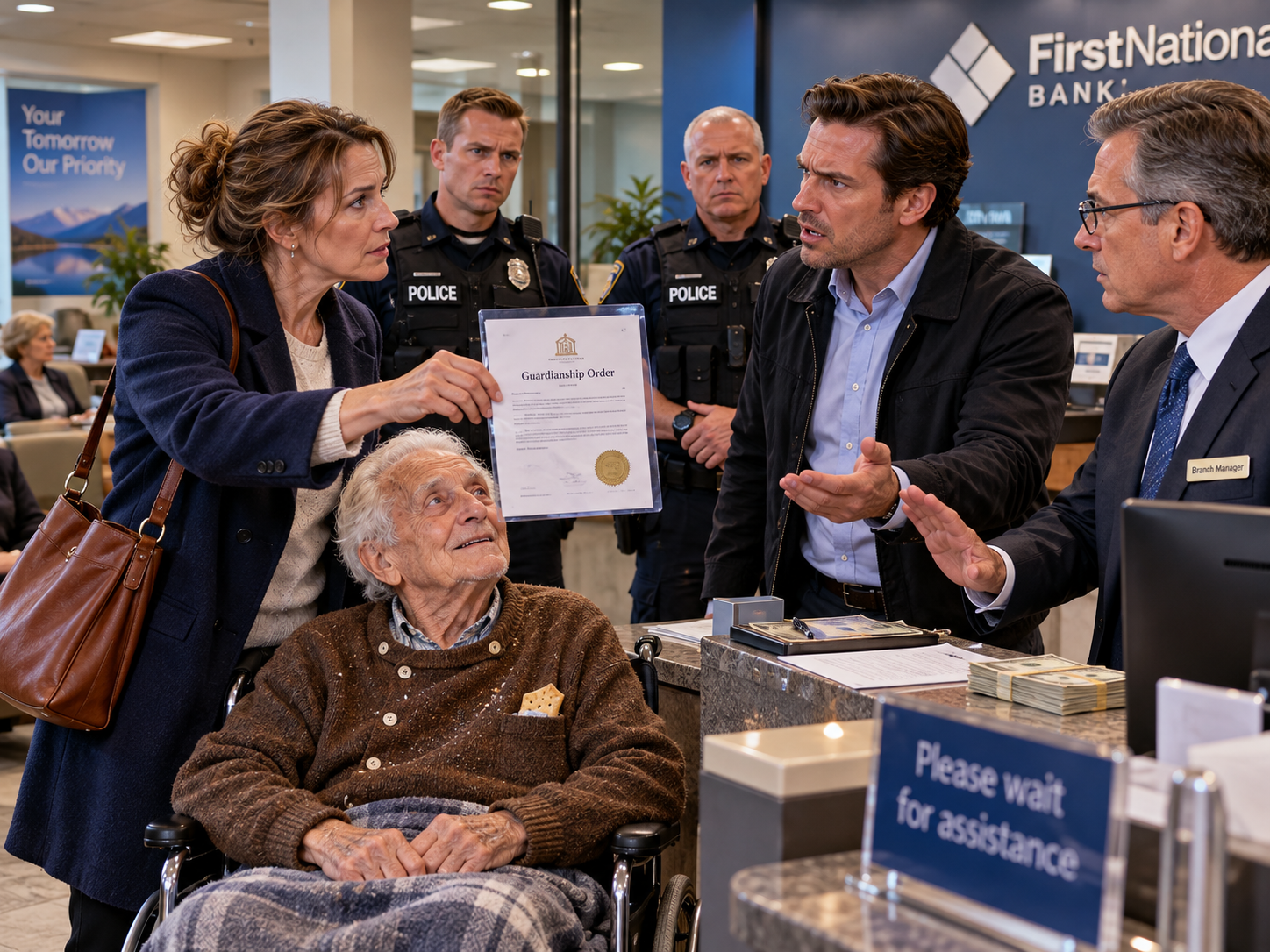
My Brother Thought Our Father’s Memory Loss Had Made Him Easy to Rob, Until the Bank Manager Read the Papers I Had Brought
Part 10 of 20

