The first morning without the white pillow felt almost embarrassing.
I woke before sunrise and stared at the empty space beside me.
For eighteen years, I had opened my eyes and seen that pillow before I saw Arvind.
It had been there through monsoons, summer heat, festivals, illnesses, arguments, birthdays, and nights when neither of us slept.
Now it was gone.
Arvind was still asleep.
His face looked softer without the expression he usually wore when he was awake.
I watched him for a moment, then quietly got out of bed.
In the kitchen, I put water on the stove and measured two spoons of sugar into his cup.
I stopped.
For years, I had prepared his tea without expecting him to notice.
Now I wondered whether I was doing it because I wanted to or because habit had become stronger than thought.
I made the tea anyway.
When Arvind entered the kitchen, he looked surprised.
“You woke early.”
“I always wake early.”
“I know.”
He sat down.
I placed the cup in front of him.
He looked at it.
“Two spoons?”
“Two.”
He smiled.
“I remember.”
“So do I.”
Neither of us knew what to say after that.
The silence was not hostile.
That almost made it stranger.
He drank his tea.
I washed the cups.
Then he said, “Naina.”
“Yes?”
“Come sit.”
I dried my hands and sat opposite him.
He folded his hands on the table.
“I don't know how to do this.”
“Neither do I.”
“I mean being your husband again.”
I looked at him.
“You haven't stopped being my husband.”
“I know.”
“But you stopped being my companion.”
His eyes lowered.
“Yes.”
“That is what we have to figure out.”
He nodded.
There was no grand promise.
We simply agreed to try.
A week later, Arvind had another medical appointment.
I drove him.
He used to dislike hospitals.
Now he disliked them even more.
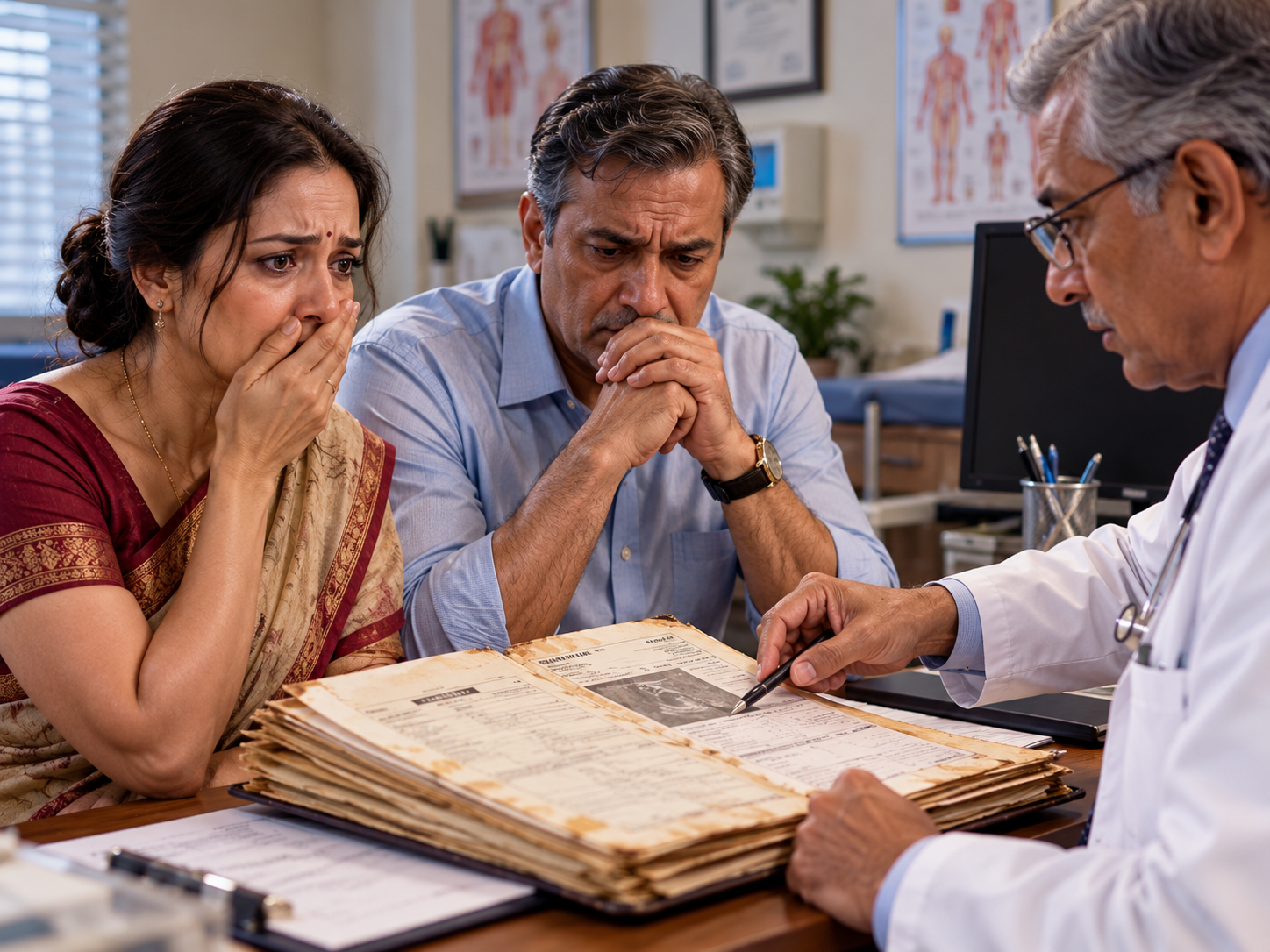
The smell of antiseptic reminded him of the old file.
When we sat in the waiting room, he looked at me.
“You don't have to come every time.”
“I know.”
“Then why do you?”
“Because I want to.”
He looked away.
That answer seemed to trouble him.
Perhaps he had spent so long believing my presence was an obligation that he didn't know what to do with my choice.
The specialist reviewed his latest results.
“Your counts are improving.”
Arvind smiled.
“That sounds good.”
“It is.”
He looked at me.
I smiled.
The doctor continued with the treatment plan.
Medication.
Monitoring.
Follow-up appointments.
Dietary changes.
Nothing dramatic.
That was one of the strange things about illness.
The fear could be enormous while the daily treatment was ordinary.
A pill.
A blood test.
A doctor's appointment.
A glass of water.
A reminder on the phone.
Life continued through small instructions.
On the way home, Arvind said, “I thought I would die before anyone knew the truth.”
I glanced at him.
“You were thinking about death?”
“Sometimes.”
“For eighteen years?”
“Yes.”
I tightened my grip on the steering wheel.
“Why didn't you tell me?”
“I told myself you had already suffered enough because of me.”
I shook my head.
“That makes no sense.”
“I know now.”
“You weren't protecting me.”
“No.”
“You were deciding for me.”
“Yes.”
He looked out the window.
“I did the same thing to you that I hated when you lied to me.”
The comparison hurt.
But it was fair.
I had hidden something from him.
He had hidden something from me.
The circumstances were not equal.
The wounds were not identical.
But secrecy had become the language of our marriage.
We had both believed silence could control consequences.
It couldn't.
A few days later, Meera visited.
She brought groceries and immediately noticed something different.
“You're both talking.”
Arvind laughed.
“Were we not supposed to?”
She gave us a suspicious look.
“I've lived here long enough to know.”
I looked at her.
“Your father is recovering.”
“I know.”
“And we're trying to do better.”
She became quiet.
“Is everything okay?”
I glanced at Arvind.
He nodded.
“We owe you and Rohan some truth,” I said.
Meera sat down.
“What kind of truth?”
“The kind adults sometimes keep because they think silence protects their children.”
She looked between us.
“Does this have something to do with why you two were always… like this?”
I knew what she meant.
“Yes.”
Arvind took a breath.
“Your mother made a serious mistake eighteen years ago.”
Meera's eyes moved to me.
I didn't look away.
“I was unfaithful.”
She froze.
The room seemed suddenly smaller.
“Mom?”
I nodded.
“One time?”
I hesitated.
“It continued for three months.”
She looked down.
“I didn't know.”
“You weren't supposed to.”
She turned toward Arvind.
“And you knew?”
“Yes.”
“For how long?”
“From the night she came home.”
Meera stared at him.
“Then why did you stay?”
Arvind answered honestly.
“I loved her.”
Meera looked confused.
“You treated her like…”
“I know.”
He stopped.
“I was hurt, and I handled it badly.”
Meera looked at me.
“Did you forgive him?”
I almost smiled.
“It wasn't my place to forgive him.”
She shook her head.
“I mean did you forgive yourself?”
That question caught me.
I looked down at my hands.
“Not completely.”
Meera reached across the table.
“Mom.”
I looked up.
“You made a terrible mistake.”
“Yes.”
“But you don't have to remain the worst thing you've ever done.”
Tears filled my eyes.
Arvind looked at his daughter.
She was no longer a child.
She had understood something it had taken us decades to learn.
That evening, Rohan came too.
We told him the same truth.
He was quieter than Meera.
When we finished, he asked his father, “Did you really sleep with a pillow between you for eighteen years?”
Arvind nodded.
Rohan stared at him.
“That sounds exhausting.”
“It was.”
“Why didn't you both just talk?”
I laughed sadly.
“Because we were afraid.”
“Of what?”
“Of hearing the truth.”
Rohan thought about that.
Then he said, “I hope you don't do that again.”
Arvind nodded.
“Neither do I.”
After they left, I sat on the balcony.
Arvind joined me.
“You handled that well.”
“So did you.”
“I thought they would hate you.”
“I thought they would hate me too.”
“Did you?”
“No.”
I looked at him.
“Did you hate me?”
He was silent for a long time.
“Sometimes.”
I nodded.
“Thank you for telling me.”
He looked surprised.
“Why?”
“Because pretending you never hated me would be another lie.”
He smiled faintly.
“I don't want to lie anymore.”
The rain started shortly afterward.
We remained on the balcony until the drops became heavier.
Then Arvind reached for my hand.
I let him.
Neither of us spoke.
Inside the bedroom, the empty space between our pillows remained.
But it no longer felt like a grave.
It felt like room.
Room for something neither of us could name yet.
Something fragile.
Something possible.
Click here to continue reading: PART 6: Our children learned what had happened between us, but their reaction forced Arvind and me to confront a deeper question about what forgiveness actually requires
The old medical file on the doctor’s desk carried a date I recognized, and suddenly the eighteen years of silence in our bedroom felt different
Part 5 of 20