The message came on a Sunday morning.
Bring two.
I smiled before I even read the rest.
My mother had become efficient.
No greeting.
No explanation.
Just two words.
I typed:
Already making them.
Her response arrived immediately.
Good.
I laughed.
Then I walked into the kitchen.
Two lemons sat on the counter.
I began preparing the first cake.
As I worked, I thought about how strange it was that something as ordinary as lemon had become woven through the entire history of my family.
Lemon had been part of the night I finally understood I needed to leave.
It had been part of the first apology.
Part of the first dinner after everything changed.
Part of the years that followed.
A flavor could not repair anything.
But memories could attach themselves to ordinary things.
Sometimes that was how healing happened.
Not through dramatic transformation.
Through repetition.
A new memory laid over an old one.
A better ending added after a painful beginning.
By noon, both cakes were ready.
I loaded them into the car.
Before leaving, I stood by the front door and looked around the house.
This was the place I had chosen after winning.
It was private.
Quiet.
Comfortable.
But I had stopped thinking of it as an escape.
It was simply my home.
There was a difference.
I drove to my parents' house.
When I arrived, my mother was outside.
She pointed at the boxes.
“Two?”
“Always.”
She smiled.
“I knew I raised you properly.”
“You almost didn't.”
She froze for half a second.
Then she laughed.
“Too soon?”
“No.”
We hugged.
My father came outside.
“You two already started.”
“Started what?”
“Being difficult.”
“That's hereditary.”
He shook his head.
“Come inside.”
Trent was there.
He had brought flowers again.
My mother looked at him.
“You're trying to become my favorite.”
“I thought I'd make an effort.”
“Too late.”
He looked at me.
“See?”
I laughed.
The four of us went inside.
The afternoon was warm.
Windows were open.
Music played softly in the background.
My father cooked.
My mother prepared the table.
Trent helped.
I cut the cakes.
Nobody needed instructions.
Nobody had to prove anything.
The rhythm had become natural.
During dinner, my father asked about my charitable work.
I told him about a new education initiative.
He asked how it was structured.
I explained.
He listened.
Then he said, “Sounds worthwhile.”
He didn't tell me what I should do.
He didn't tell me how to do it.
He simply listened.
My mother asked whether I was happy with the direction my life had taken.
I looked at her.
“Yes.”
She smiled.
“Good.”
Trent leaned back.
“That's a dangerous answer.”
“Why?”
“Because now Mom will ask what makes you happy.”
My mother laughed.
“What makes you happy?”
I thought about it.
The answer came easily.
“Having choices.”
Nobody spoke for a moment.
Then my father nodded.
“I understand that.”
I looked at him.
He continued.
“I used to think choices came from success.”
“And now?”
“I think success is being able to live with the choices you make.”
I smiled.
“That sounds right.”
After dinner, we ate the cakes.
My mother took a bite from the first.
Then the second.
She closed her eyes.
“I can't decide.”
“That's why I made two.”
She laughed.
Trent tasted both.
“I vote for the first.”
My father disagreed.
“The second.”
My mother looked at me.
“You've started a war.”
“Worth it.”
We laughed.
The room felt warm.
For a second, I closed my eyes.
I remembered another room.
Another dinner.
Another cake.
Another version of us.
I could see my mother lifting the cake.
I could see Trent laughing.
I could see my father looking away.
I could feel the humiliation.
Then I opened my eyes.
The present was still there.
My father was laughing.
My mother was cutting another slice.
Trent was arguing about frosting.
The past hadn't disappeared.
But it had stopped being the loudest thing in the room.
That was enough.
Later, I went outside with my father.
We stood beside the driveway.
He looked at the Bugatti.
“You still like that thing?”
“Yes.”
“Good.”
He smiled.
Then he said, “I want you to know something.”
“What?”
“When you first drove up in that car, I was ashamed.”
“Of what?”
“Of myself.”
I looked at him.
“I thought you were showing me that you had succeeded without us.”
“I wasn't.”
“I know that now.”
He looked toward the house.
“I realized something that day.”
“What?”
“I had spent years teaching you that worth was something you had to demonstrate.”
He swallowed.
“And then you demonstrated that you didn't need me to believe in you.”
I didn't respond.
He continued.
“That hurt.”
“I know.”
“But it also taught me.”
I nodded.
“You changed me too,” he said.
I smiled.
“I didn't mean to.”
“I know.”
We stood quietly.
Then he placed a hand on my shoulder.
“I'm glad you came back.”
I looked at him.
“So am I.”
That was all.
No speech.
No dramatic embrace.
Just two people standing in a driveway after years of misunderstanding each other.
When I went inside, my mother was waiting.
“Your father got sentimental?”
“Yes.”
She smiled.
“He does that now.”
“I noticed.”
She walked me to the kitchen.
The cake was almost gone.
She pointed at the empty plates.
“We'll need three next time.”
I laughed.
“Absolutely not.”
“Why?”
“Because then you really will spoil yourselves.”
She smiled.
“We can afford it.”
I stared at her.
She laughed.
“Sorry.”
“No, that's good.”
We hugged.
Before I left, Trent walked me outside.
“Drive safe.”
“I will.”
He hesitated.
“Daniel?”
“Yeah?”
“Thanks.”
“For what?”
“For being my brother again.”
I smiled.
“You never stopped being my brother.”
“I know.”
He looked toward the house.
“I just stopped acting like it.”
“That too.”
He laughed.
I got into the car.
As I drove away, I thought about that sentence.
You never stopped being my brother.
It was true.
Relationships could become damaged.
They could become distant.
They could become complicated.
But history didn't vanish because people failed each other.
Sometimes it simply waited.
Waiting for honesty.
Waiting for accountability.
Waiting for people to become brave enough to stop defending themselves.
I drove through the familiar roads.
The night was clear.
My thoughts returned to the lottery ticket.
I remembered the gas station.
The basement.
The numbers.
The shock.
The attorney.
The trust.
The fortune.
I remembered thinking that money would solve everything.
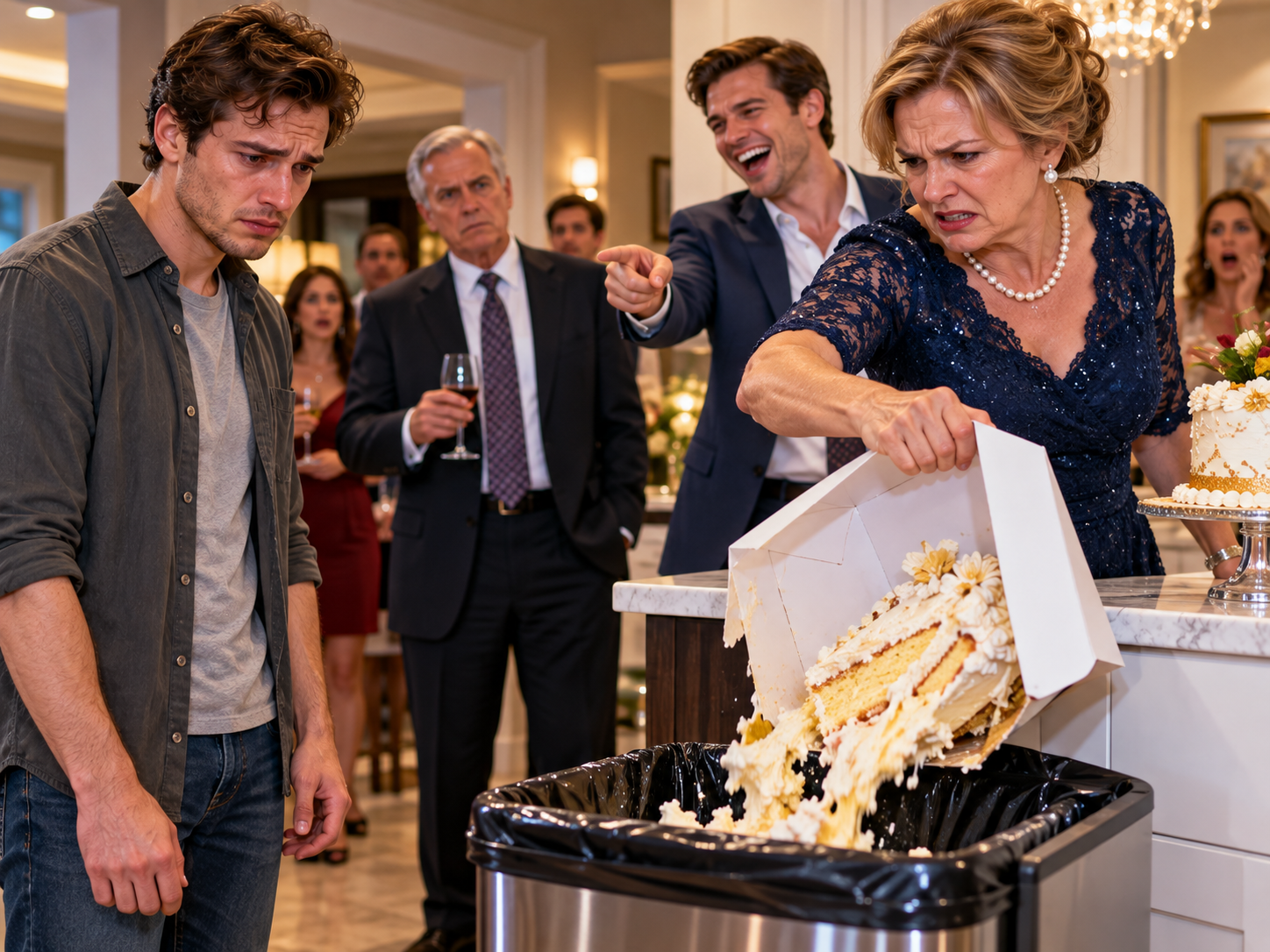
Then I remembered the anniversary party.
The cake.
The trash.
The laughter.
My departure.
The Bugatti.
The confrontation.
The consequences.
The apologies.
The dinners.
The second cakes.
The years.
The truth was almost embarrassingly simple.
The money had never been the story.
It had been the test.
It had shown me what I needed to know.
Then I had spent years learning what to do with that knowledge.
I didn't use the money to punish my family.
I didn't use it to buy their loyalty.
I didn't use it to make them regret underestimating me.
I simply stopped protecting them from the consequences of their choices.
That was enough.
They changed because they had to face themselves.
I changed because I finally stopped asking them to define me.
Trent changed because he finally stopped pretending.
My parents changed because they learned that love without respect could still cause damage.
None of us became perfect.
We didn't need to.
When I reached home, I carried the remaining cake inside.
I placed it on the counter.
The kitchen was quiet.
I made tea.
Then I sat by the window.
For a long time, I watched the trees moving in the night wind.
I thought about the man who had once slept downstairs in his parents' house.
He had believed he was waiting for his life to begin.
I wanted to tell him something.
You don't have to wait.
You don't have to prove yourself.
You don't have to become rich.
You don't have to become impressive.
You don't even have to make everyone understand.
You only have to decide what you will accept.
And what you won't.
I wish I could have told him that before the lottery.
Before the cake.
Before the Bugatti.
Before everything.
But maybe some lessons arrive only when we're ready to understand them.
The next morning, I woke to another message from my mother.
Sunday next week?
I smiled.
I typed:
Yes.
Then she wrote:
Two?
I answered:
Always two.
I put the phone down.
Outside, sunlight moved across the trees.
My life was still imperfect.
My family was still imperfect.
The past was still the past.
The money was still there.
The Bugatti was still parked outside.
None of those things needed to change.
Because I finally understood what I had been trying to prove for years.
I wasn't a failure when I lived in the basement.
I wasn't valuable because I won the lottery.
I wasn't successful because I owned a house.
I wasn't worthy because my father finally said he was proud of me.
I was worthy before any of it.
The lottery hadn't given me that.
My family hadn't given me that.
I had simply stopped waiting for someone else to give it to me.
And that was the part no one could ever take away.
Click here to continue reading: PART 17: The first time my mother asked me what I needed instead of what I had accomplished, I realized our family had finally learned how to speak without keeping score
The night I realized my family would never see me differently was also the night I quietly decided that leaving them behind would require more than simply walking away
Part 16 of 20