
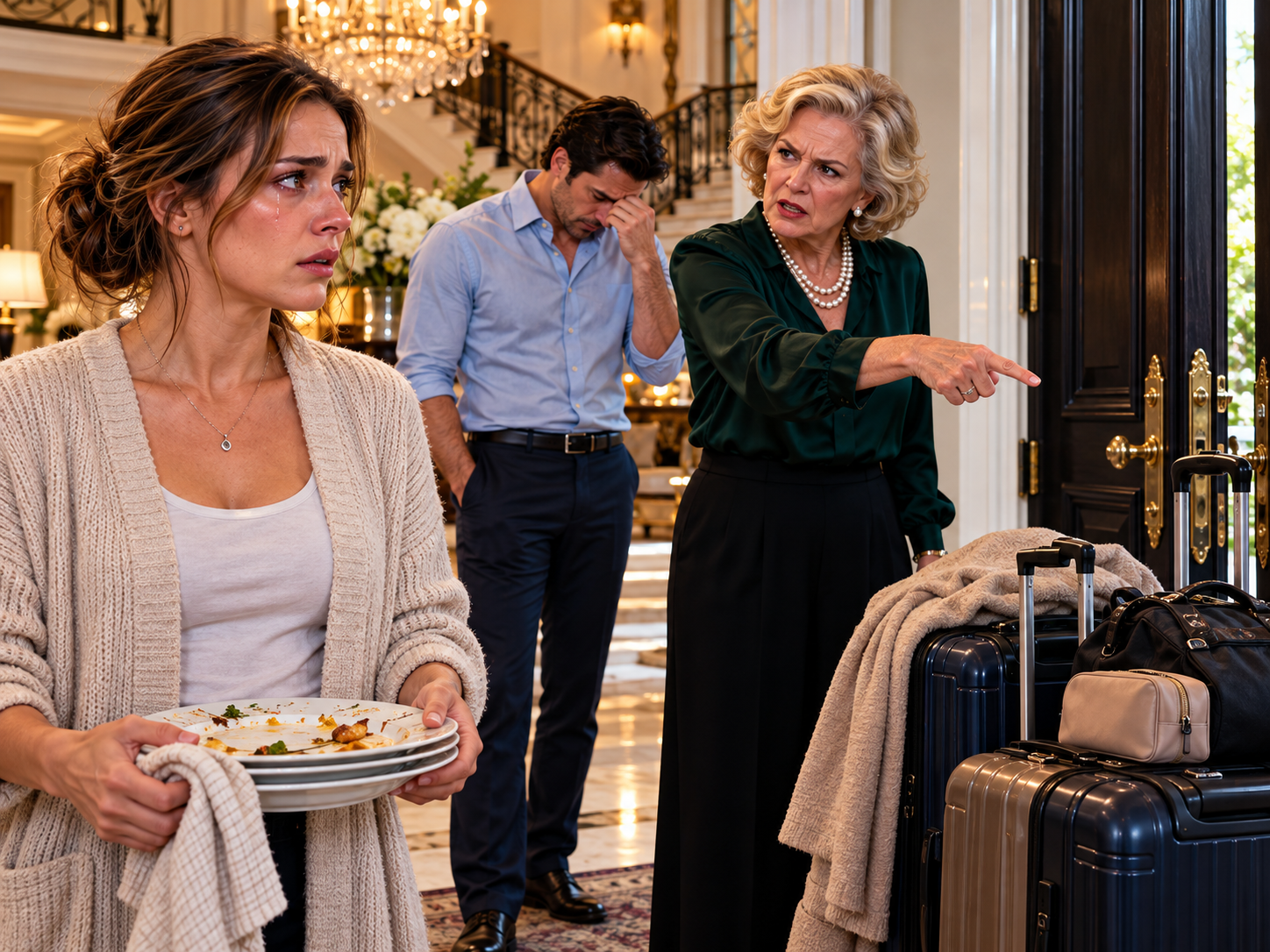
Three days after dinner with Michael, Charles called to tell me the estate review had reached its final administrative stage. His voice was calm and precise, the same way it had been when he arrived at the mansion with the brown folder. The independent review had documented which property expenses were adequately supported, which needed additional records, and what steps were required to restore the reserve to the agreed level. The remaining work was procedural, he explained, and no longer required me to sit through another family meeting.
“That sounds like good news,” I said.
“It is,” Charles replied. “But I wanted to make one distinction clear. The review addressed the agreement and the financial records. It did not decide every question about how the family should behave toward one another.”
“I don’t think a document could do that.”
“Neither do I. Still, people sometimes expect legal clarity to produce emotional clarity. It rarely does.”
After we hung up, I made tea and stood beside the window. I was relieved that the formal process was nearly finished. I had never wanted the mansion, and I had not called Charles because I believed I could take something from Eleanor. I had called because she had treated my presence as a privilege she could withdraw whenever she pleased, and because Jonathan’s agreement established that the family had made a different arrangement long before that evening.
I wanted the arrangement respected. I wanted the facts recorded accurately. Beyond that, I wanted to stop spending my days thinking about a house where I no longer lived.
That afternoon, Eleanor called.
I watched her name appear on my screen for several seconds before answering. I had no idea what she wanted, but I was no longer willing to mistake every unexpected call for an emergency.
“Lisa,” she began, “I hope I’m not disturbing you.”
“You’re not. What is it?”
“I understand the review is almost finished.”
“Charles told me the administrative work is nearly complete.”
“Yes. I’m relieved about that.” She paused. “There are some family members who have been asking questions. People have heard fragments of what happened, and I think it would be better if we could present a united account.”
I leaned against the kitchen counter. “What do you mean by a united account?”
“I don’t want anyone to believe that there was some terrible dispute over the house. It was a difficult family situation. Emotions ran high. I think we should explain that the legal process clarified the arrangement and that we’re moving forward.”
“That’s not necessarily inaccurate,” I said. “Depending on what you tell them.”
“I was hoping you might agree that we should keep the details private.”
“I haven’t been discussing private financial records with anyone.”
“I know, but you could help by saying that you understand why things happened as they did.”
There it was: the quiet shift from asking for privacy to asking for absolution.
“I understand that you wanted me out of the house,” I said. “I understand that Michael packed my belongings before speaking to me. I understand that you told the family I had decided to stay somewhere else. I can describe those things without exaggerating them, but I won’t say they happened differently.”
“I’m not asking you to lie.”
“Then don’t ask me to make your choices sound harmless.”
Silence followed. I could hear a faint rustling on her end, perhaps paper being moved across a desk.
“I apologized to you,” Eleanor said at last.
“You did. And I appreciated that you acknowledged what happened.”
“But you still seem determined to hold on to it.”
“I’m not holding on to it. I’m trying to stop it from becoming another thing I’m expected to manage for you.”
Her breathing sharpened. “I’m not asking you to manage anything.”
“You’re asking me to help you decide what everyone should believe about the night you ordered me to leave. That is your concern, Eleanor. You can tell the truth without my permission.”
She said nothing for so long that I wondered whether the call had disconnected.
Finally, she said, “You’ve changed.”
“I had to.”
The words came out more quietly than I expected. I had spent years trying to become the sort of woman Eleanor could not criticize. I had tried to be helpful without being intrusive, patient without being weak, gracious without appearing to claim too much. Every adjustment had been made in the hope that she might eventually see me as family rather than an unwelcome addition.
The effort had not protected me. It had simply taught everyone that I would absorb the discomfort.
“I don’t want another argument,” I said. “I hope the family moves forward. But I won’t take responsibility for making this easier to explain.”
Eleanor ended the call a few seconds later. She did not shout or threaten me. She simply said she had to go, and the line went quiet.
For a while, I stood where I was, holding the phone in my hand. I was not triumphant. I felt tired, and a little sad. Some part of me still wanted her to understand that I had not set out to humiliate her or take her place. I had wanted to belong without having to prove, every day, that I deserved to be there.
I sent Charles a short message telling him Eleanor had called about how the family would describe the dispute. I did not ask him to intervene. I simply wanted him to know that the estate process and the family’s public version of events were beginning to overlap again.
His reply arrived a few minutes later.
You are not required to endorse anyone’s preferred account. If she raises questions about the agreement, direct her to me. If she wants to discuss family matters, you may decide for yourself whether to engage.
I thanked him and put my phone away.
That evening, Michael called. He had spoken with Eleanor, he said, and she had told him I was refusing to help the family heal.
“What did you tell her?” I asked.
“I told her I hadn’t heard you say you wanted to hurt anyone. I also told her that healing isn’t the same as agreeing to pretend something didn’t happen.”
I closed my eyes for a moment. “How did she take that?”
“Not well. She said I was repeating your arguments.”
“And what did you say?”
“I told her they were my words.”
It was a small answer, but it mattered. Michael had once treated his mother’s displeasure as proof that he had failed her. Now he was allowing her to be unhappy without immediately trying to reverse it.
“I’m glad you said what you believed,” I told him. “But I don’t want you fighting with her on my behalf every time she says something I don’t like.”
“I know. I’m not trying to make you responsible for what I do, either. I just don’t want to keep pretending I agree with things I don’t agree with.”
We spoke a little longer, then ended the call without making plans. I noticed that I was beginning to appreciate these conversations because they no longer demanded a decision from me. Michael could tell me what he was learning without expecting me to reward him with closeness.
The following morning, Eleanor sent a message to the family group chat. She said the review had clarified the estate arrangements, that the financial matters were being handled through the proper channels, and that everyone should respect one another’s privacy. She did not describe me as disloyal or claim I had invented the dispute. She also did not mention that she had ordered me out.
I read the message once and left it unanswered.
My silence was not an attempt to punish her. It was simply a refusal to volunteer myself as the family’s spokesperson. Other relatives could form their own opinions. Eleanor could explain her choices in her own words. Michael could decide how honestly he wanted to speak about his part.
For years, I had believed that if I did not repair every uncomfortable moment, the family would fall apart. Now I could see that the family had never depended on my willingness to swallow my feelings. It had depended on everyone becoming accustomed to my silence.
That afternoon, I carried a bag of groceries up the stairs to my apartment. The woman with the stubborn smoke detector was in the hallway, watering a small plant on her windowsill. She asked whether I wanted another orange from the bowl she had filled that morning.
I laughed and accepted one.
Inside my apartment, I placed the orange beside the blue-and-white dish. The sight of the two objects together made me smile. Neither was valuable. Neither proved that I belonged anywhere. They were simply things I had chosen to keep.
And for once, that was enough.
Click here to continue reading: PART 11: Michael’s Progress Became Real When He Stopped Asking Me to Judge It, and I Began to See What a Future Without Fear Might Actually Look Like
My Mother-in-Law Had Packed My Life Into Two Suitcases, but the Question My Husband Refused to Answer Was Only the Beginning
Part 10 of 20

