There was a morning when I realized I no longer remembered the exact sound of the kitchen clock.
That may seem insignificant.
It wasn't.
For years, certain details had remained unusually clear.
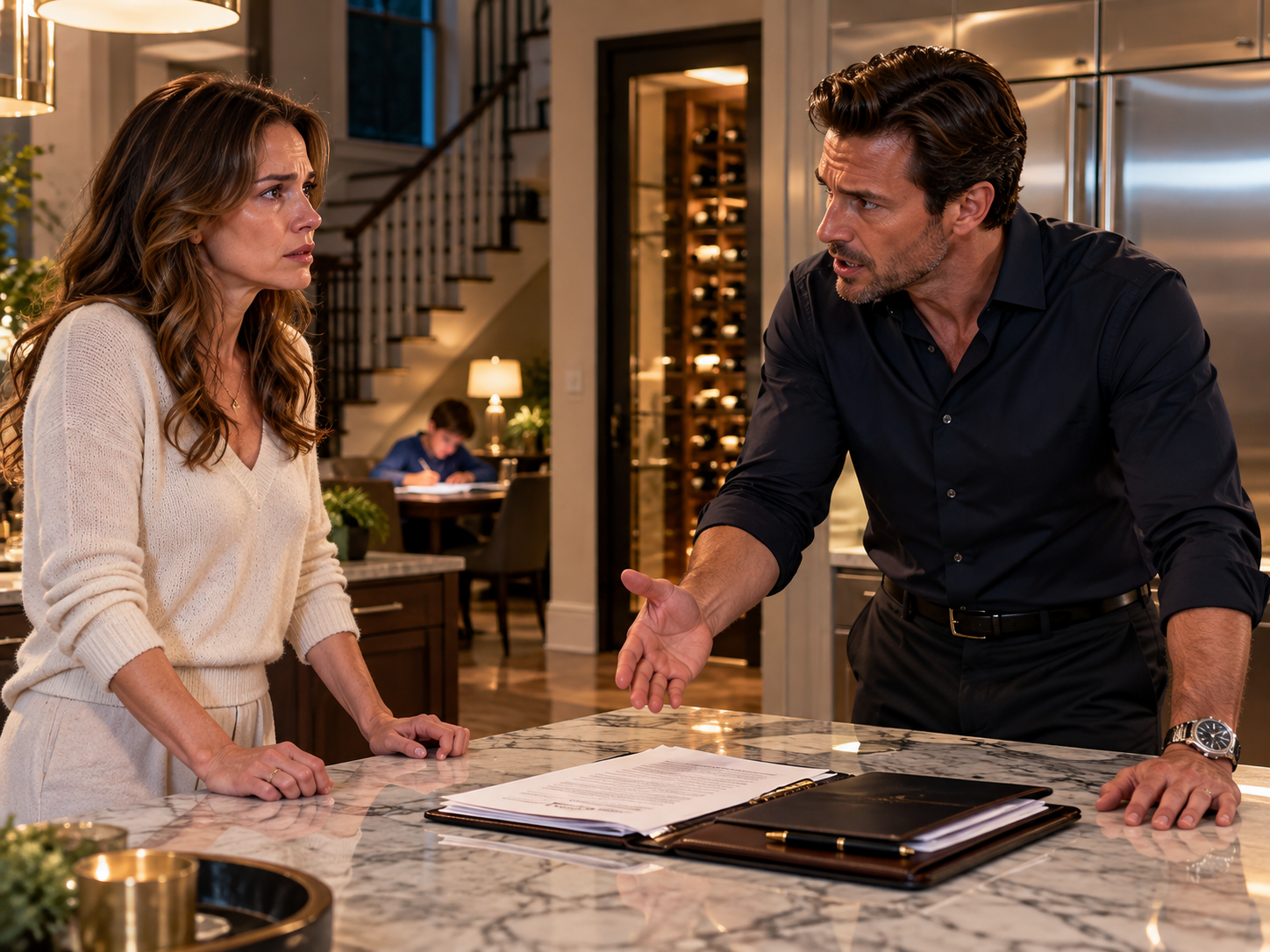
The light above the island.
David's hands.
The chair he pulled out.
The silence before he spoke.
The way he avoided saying Sam's name.
The sentence about the house.
The cars.
Everything.
Except the boy.
Those details had once lived inside me like they had happened yesterday.
Then, slowly, they became less precise.
Not forgotten.
Just farther away.
I understood that as healing.
Not because the memory had disappeared.
Because it no longer demanded attention.
I was sitting in my garden when I realized it.
Sam's child was playing nearby.
Sam was talking with his wife.
David was helping with lunch.
The afternoon was warm.
There was music playing softly.
I looked around.
This was my life.
Not the life I had planned.
Not the life I had expected.
Mine.
David came outside.
“You're quiet.”
“Thinking.”
“About what?”
“Nothing important.”
He sat beside me.
“That usually means something important.”
I smiled.
“I was thinking about the night you asked for everything.”
He sighed.
“I knew that was coming.”
“I don't think about it often anymore.”
“That's good.”
“I was remembering how frightened I was.”
“You had every reason.”
“Yes.”
He looked toward the house.
“What do you think she would think of you now?”
I laughed softly.
“Who?”
“The woman sitting in that kitchen.”
I thought about it.
“She would be surprised.”
“Why?”
“She thought she was barely surviving.”
“And now?”
“Now she has grandchildren.”
He smiled.
“That's a pretty good ending.”
“It isn't an ending.”
“What is it?”
“A life.”
He nodded.
I continued.
“She thought the divorce was going to define her.”
“But it didn't.”
“No.”
“She thought giving up the house meant losing everything.”
“It didn't.”
“She thought Sam might be damaged forever.”
“He wasn't.”
“She thought she needed certainty.”
“You didn't.”
“No.”
I looked at him.
“I needed courage.”
He nodded.
“And you found it.”
“Eventually.”
He smiled.
“I'm glad.”
We sat quietly.
Then he said, “I'm glad too.”
The child ran toward us.
“Grandma!”
I opened my arms.
The child climbed into my lap.
David smiled.
“That's your favorite person.”
“One of them.”
“Who's the other?”
I looked at Sam.
“My son.”
David nodded.
“Fair.”
The afternoon continued.
There was food.
Laughter.
A spilled drink.
A disagreement about dessert.
Someone took too many photographs.
It was ordinary.
Beautifully ordinary.
After everyone left, I went inside.
The house was quiet.
I opened the closet.
The old settlement box was still there.
I took it down.
For the first time, I did not open it.
I simply held it.
Then I returned it to the shelf.
I didn't need to read the papers again.
I knew what they said.
More importantly, I knew what they had not said.
They had not said that I was weak.
They had not said that David had won.
They had not said that my marriage was worthless.
They had not said that my future was over.
They had only recorded a legal division of property and responsibilities.
Everything else had been decided afterward.
That distinction changed everything.
I had spent years believing that the courtroom was the climax.
It wasn't.
The climax was the ordinary morning when I got out of bed and realized I was no longer afraid.
The victory was accepting a job because I wanted it.
The victory was laughing without guilt.
The victory was watching Sam grow without making him carry my pain.
The victory was forgiving David without surrendering my boundaries.
The victory was allowing the past to be true without allowing it to become my identity.
Those were the things no document could record.
My phone rang.
It was Sam.
“Mom?”
“Yes?”
“Are you home?”
“Yes.”
“Dad left something there.”
“What?”
“I don't know. He said you'd know.”
A few minutes later, David returned.
He held a small photograph.
“I found this in my car.”
He handed it to me.
It was old.
Very old.
Sam as a child.
David beside him.
I was standing on the other side.
We were all smiling.
I looked at it.
“You kept this?”
“For years.”
I smiled.
“Why?”
“I don't know.”
Then he corrected himself.
“I do know.”
“Why?”
“Because that was my family.”
I looked at him.
“It still is.”
He smiled.
“Different.”
“Yes.”
“But still.”
“Yes.”
He nodded.
“I wanted you to have it.”
I took the photograph.
“Thank you.”
He turned toward the door.
Then stopped.
“Claire?”
“Yes?”
“I know I have said this before.”
“What?”
“I am sorry.”
I smiled.
“I know.”
“I mean it.”
“I know that too.”
He nodded.
“Good.”
He left.
I placed the photograph on the table.
For a long time, I looked at it.
Not with longing.
Not with anger.
With tenderness.
Those people had existed.
They had loved each other.
They had made mistakes.
They had become parents.
They had failed at marriage.
They had learned how to become something else.
There was no reason to hate them.
They had done the best they knew how to do.
Sometimes that had not been enough.
But enough had eventually come from somewhere else.
From courage.
From responsibility.
From time.
From Sam.
From the decision to keep moving.
I put the photograph beside another one.
Sam as an adult.
Then another.
His wedding.
Then another.
His child.
The photographs formed a quiet timeline.
A marriage.
A child.
A divorce.
A new life.
A wedding.
A grandchild.
I smiled.
That was the story.
Not one moment.
All of them.
The next morning, Sam came by.
He saw the photographs.
“You finally put them out.”
“Yes.”
“Why?”
“Because I don't need to hide the past anymore.”
He looked at them.
“That's nice.”
“Do you think so?”
“Yes.”
He picked up the oldest photograph.
“You both look happy.”
“We were.”
He smiled.
Then he picked up the photograph from his wedding.
“I like this one better.”
“So do I.”
He laughed.
We stood together.
Then he hugged me.
“Thank you.”
“For what?”
“For everything.”
I held him.
“You don't owe me anything.”
“I know.”
“Live your life.”
“I am.”
“Good.”
He smiled.
“I learned from you.”
I shook my head.
“You learned from your own life.”
“Maybe.”
He put the photograph down.
“But you gave me the chance.”
That was enough.
After he left, I returned to the garden.
The day was bright.
The air was warm.
I sat beneath the tree and thought about the sentence that had started everything.
I want the house.
The vehicles.
Everything.
Except the boy.
For years, I had believed the story was about what David wanted.
It wasn't.
It was about what I chose.
He chose possessions.
I chose my son.
He chose certainty through ownership.
I chose uncertainty with freedom.
He chose a life he believed would look successful.
I chose one that felt honest.
Neither of us understood everything at the beginning.
But I eventually understood enough.
The house could be replaced.
Cars could be sold.
Money could be earned again.
A career could be rebuilt.
A marriage could end.
Even trust could sometimes be rebuilt in a different form.
But time with a child could not be returned.
That was the one thing I refused to gamble.
And years later, watching Sam with his own family, I knew I had made the right decision.
Not because the settlement had worked.
Not because David had struggled.
Not because anyone had lost.
I had made the right decision because I had chosen a life I could live with.
That was the real victory.
Not the house.
Not the accounts.
Not the courtroom.
Not the documents.
Not even the satisfaction of knowing David had underestimated me.
The victory was becoming someone I respected.
The woman in the kitchen had been afraid.
The woman who walked out of the courtroom had been relieved.
The woman who rebuilt her life had been determined.
The woman sitting in the garden years later was simply at peace.
I thought about everything that had happened since that night.
The settlement.
The house.
The cars.
The debts.
The apologies.
The arguments.
The quiet conversations.
The weddings.
The children.
The photographs.
The ordinary days.
None of it had happened according to the plan I once had.
But perhaps that was the point.
A life does not become meaningful because it follows the plan.
It becomes meaningful because, when the plan breaks, you decide what remains worth protecting.
For me, that had been Sam.
Then it became my own future too.
Eventually, I understood that those two things were never separate.
Protecting my son did not mean destroying myself.
Choosing myself did not mean abandoning him.
Building a future did not mean denying the past.
Forgiving David did not mean returning to him.
Remembering the marriage did not mean wanting it back.
Everything could exist together.
That was the freedom I had not understood on the night of the divorce.
I had thought freedom meant getting away.
It turned out freedom meant becoming myself again.
The sun moved across the garden.
I heard laughter from the neighboring yard.
Somewhere inside the house, my phone buzzed.
I didn't answer immediately.
I simply sat there.
For once, there was nothing I needed to fix.
Nothing I needed to prove.
Nothing I needed to defend.
The life I had fought to protect was already here.
And I finally understood the truth I had spent years learning:
I had never won because David lost.
I had won because I refused to lose myself.
The End
Read more original stories on Feel Every Story.
David Asked for the House, the Cars, and Every Dollar We Owned, But the One Thing He Refused to Take Was the Detail That Made His Demand Dangerous
Part 28 of 28